Gallery
Книжная серия | Лучшие компьютерные игры [13 выпусков] (1998 - 2002) [PDF, DJVU]
В книге представлены подробные руководства и прохождения самых лучших игр для персональных компьютеров. Приведены коды, пароли и секреты для 136 игр.
Всего было 13 томов. Все они присутствуют в раздаче. Номера раздаются как в PDF, так и в DJVU.
В книге могут присутствовать ошибки (допущенные в том числе самими авторами).Жанр: Компьютерные игрыИздательство: АстреяФормат: PDF, DJVUКачество: Обработанный скан

Книжная серия | Лучшие компьютерные игры [13 выпусков] (1998 - 2002) [PDF, DJVU]
1.0 MB · 1600×1600
Книжная серия | Лучшие компьютерные игры [13 выпусков] (1998 - 2002) [PDF, DJVU] Автор: Книжная серия
Издательство: Астрея
Жанр: Компьютерные игры
Формат: PDF, DJVU
Качество: Обработанный скан
Иллюстрации: Черно-белые
Описание:
В книге представлены подробные руководства и прохождения самых лучших игр для персональных компьютеров. Приведены коды, пароли и секреты для 136 игр.
Всего было 13 томов. Все они присутствуют в раздаче. Номера раздаются как в PDF, так и в DJVU.
В книге могут присутствовать ошибки (допущенные в том числе самими авторами).
Скриншоты:
---->https://i.ibb.co/6RLQFm31/LKI-1-02.jpg<----
---->https://i.ibb.co/RG4MzC0L/LKI-2-01.jpg<----
---->https://i.ibb.co/zT7q2xF6/LKI-3-01.jpg<----
---->https://i.ibb.co/HfHMKDWY/LKI-4-01.jpg<----
Время раздачи: 24/7 (минимум до появления первых 3-5 скачавших)
Книжная серия | Компьютерные игры [12 выпусков в 11 книгах] (1994 - 1996) [PDF]
Сборник описаний и прохождений компьютерных игр от издательств "Аквариум" и "Библион".Жанр: Компьютерные игрыИздательство: Аквариум, БиблионФормат: PDFКачество: Обработанный скан

Книжная серия | Компьютерные игры [12 выпусков в 11 книгах] (1994 - 1996) [PDF]
1.0 MB · 1600×1600
Книжная серия | Компьютерные игры [12 выпусков в 11 книгах] (1994 - 1996) [PDF] Автор: Книжная серия
Издательство: Аквариум, Библион
Жанр: Компьютерные игры
Формат: PDF
Качество: Обработанный скан
Иллюстрации: Черно-белые
Описание:
Сборник описаний и прохождений компьютерных игр от издательств "Аквариум" и "Библион".
Скриншоты:
---->https://i.ibb.co/bgxqg0tz/3-1994-02.jpg<----
---->https://i.ibb.co/rf3z3PFY/4-1994-01.jpg<----
---->https://i.ibb.co/fdkjPLY1/5-1994-01.jpg<----
---->https://i.ibb.co/M5BwxnZB/12-1996-01.jpg<----
Время раздачи: 24/7 (минимум до появления первых 3-5 скачавших)
Кэти Сьерра, Берт Бэйтс, Триша Джи | Изучаем Java. Погружение в реальное программирование. 3-е изд. (2025) [PDF, DJVU]
Станьте Java-программистом, откройте секрет обучения, который действительно работает!
Вы мечтаете о карьере в IT, но боитесь столкнуться с "сухой" теорией и непонятными концепциями? Хотите не просто зубрить синтаксис, а сразу создавать работающие программы? Книга "Изучаем Java" перевернет ваше представление об обучении программированию.
Это не ( Читать дальше... )Жанр: Компьютерная литератураИздательство: Астана иностранная прессаФормат: PDF, DJVUКачество: Обработанный скан

Кэти Сьерра, Берт Бэйтс, Триша Джи | Изучаем Java. Погружение в реальное программирование. 3-е изд. (2025) [PDF, DJVU]
1.0 MB · 1600×1600
Кэти Сьерра, Берт Бэйтс, Триша Джи | Изучаем Java. Погружение в реальное программирование. 3-е изд. (2025) [PDF, DJVU] Автор: Кэти Сьерра, Берт Бэйтс, Триша Джи
Издательство: Астана иностранная пресса
Серия: O'Reilly. Книги по программированию
ISBN: 978-601-12-3826-7
Жанр: Компьютерная литература
Формат: PDF, DJVU
Качество: Обработанный скан
Иллюстрации: Черно-белые
Описание:
Станьте Java-программистом, откройте секрет обучения, который действительно работает!
Вы мечтаете о карьере в IT, но боитесь столкнуться с "сухой" теорией и непонятными концепциями? Хотите не просто зубрить синтаксис, а сразу создавать работающие программы? Книга "Изучаем Java" перевернет ваше представление об обучении программированию.
Это не сборник скучных текстов. Это ваш персональный наставник, который проведет вас от первого "Hello, World!" до уверенного создания сложных Java-приложений. Мы не просто учим, мы делаем вас настоящими программистами!
Инновационный подход: забудьте о бесконечных параграфах! Мы используем уникальный метод визуального обучения, который задействует несколько органов чувств одновременно. Это значит, что вы будете усваивать материал в разы быстрее и эффективнее, чем обычно. От основ до продвинутых тем: вы освоите всё самое нужное в действии:
* Синтаксис и концепции Java: поймите логику языка, а не просто запоминайте команды.
* Объектно-ориентированное программирование (ООП): овладейте мощными принципами, которые лежат в основе современного программирования.
* Работа с потоками (Threads): научитесь создавать быстрые и надежные приложения.
* Сетевое программирование: развивайте приложения, которые взаимодействуют с миром.
* Распределенное программирование: создавайте системы, которые работают на разных устройствах.
Закрепление через практику: каждая новая концепция — это не просто объяснение, а интереснейший пример и интерактивный тест. Вы будете применять знания тут же, закрепляя их на практике и убеждаясь в работоспособности. Скриншоты:
---->https://s01.pic4net.com/di-VXT5V9.jpeg<----
---->https://s01.pic4net.com/di-Y2E8XZ.jpeg<----
---->https://s01.pic4net.com/di-PX2Y1T.jpeg<----
---->https://s01.pic4net.com/di-YF63S8.jpeg<----
Время раздачи: с 10 до 20 (минимум до появления первых 3-5 скачавших)
Крис Брэдфилд | Godot 4. Разработка игр. Создайте пять кросс-платформенных 2D- и 3D-игр с помощью одного из самых мощных игровых движков с открытым исходным кодом (Godot 4. Game Development Project ...
Новейшая версия открытого игрового движка Godot 4 предлагает огромное количество функций и возможностей и является достойной альтернативой дорогим коммерческим решениям. Для новичков это удобный и эффективный способ освоить основы разработки игр. Опытным дизайнерам Godot предлагает мощный, гибкий и настраиваемый инструмент для воплощения творческих идей. В основе ( Читать дальше... )Жанр: Компьютерная литератураПеревод: Е.В. ШевчукИздательство: ДМК ПрессФормат: PDFКачество: Изначально электронное (ebook)

Крис Брэдфилд | Godot 4. Разработка игр. Создайте пять кросс-платформенных 2D- и 3D-игр с помощью одного из самых мощных игровых движков с открытым исходным кодом (Godot 4. Game Development Project ...
1.0 MB · 1600×1600
Крис Брэдфилд | Godot 4. Разработка игр. Создайте пять кросс-платформенных 2D- и 3D-игр с помощью одного из самых мощных игровых движков с открытым исходным кодом (Godot 4. Game Development Projects. Second Edition) (2026) [PDF] Автор: Крис Брэдфилд
Перевод: Е.В. Шевчук
Издательство: ДМК Пресс
ISBN: 978-5-93700-437-6
Жанр: Компьютерная литература
Формат: PDF
Качество: Изначально электронное (ebook)
Иллюстрации: Цветные и черно-белые
Описание:
Новейшая версия открытого игрового движка Godot 4 предлагает огромное количество функций и возможностей и является достойной альтернативой дорогим коммерческим решениям. Для новичков это удобный и эффективный способ освоить основы разработки игр. Опытным дизайнерам Godot предлагает мощный, гибкий и настраиваемый инструмент для воплощения творческих идей. В основе книги лежит проектный подход. Вы последовательно создадите пять игровых проектов, а дополнительные ресурсы помогут глубже разобраться в принципах создания игр в Godot.
Книга предназначена всем, кто хочет научиться создавать игры на современном игровом движке. Приветствуется наличие навыков программирования на любом языке. Оглавление:
Об авторе...................................................................................................... 11
О рецензенте................................................................................................. 12
Предисловие.................................................................................................. 13
Глава 1. Введение в Godot 4.0......................................................................... 16
Общие рекомендации.......................................................................................16
Как учиться эффективно...................................................................................17
Что такое игровой движок?...............................................................................18
Что такое Godot?................................................................................................19
Загрузка Godot...................................................................................................20
Альтернативные способы загрузки....................................................................... 21
Обзор интерфейса Godot...................................................................................22
Диспетчер проектов................................................................................................ 22
Окно редактора....................................................................................................... 24
Ноды и сцены.....................................................................................................27
Создание скриптов в Godot...............................................................................28
О языке GDScript..................................................................................................... 28
Итоги главы........................................................................................................29
Глава 2. Coin Dash – создание первой 2D-игры.................................................. 30
Технические требования...................................................................................31
Настройка проекта............................................................................................31
Векторы и 2D-координатные системы.................................................................33
Часть 1 – Сцена игрока......................................................................................35
Создание сцены....................................................................................................... 35
Анимация спрайтов................................................................................................ 36
Форма столкновений.............................................................................................. 39
Скрипт поведения игрока....................................................................................... 40
Управление движением игрока.............................................................................. 41
Переключение анимации....................................................................................... 43
Управление началом и завершением движения игрока...................................... 44
Подготовка к обработке столкновений................................................................. 44
Часть 2 – Сцена монеты....................................................................................47
Настройка нод......................................................................................................... 47
Скрипт монеты........................................................................................................ 48
Часть 3 – Главная сцена.....................................................................................49
Настройка нод......................................................................................................... 49
Скрипт главной сцены............................................................................................ 50
Подготовка к новой игре........................................................................................ 50
Часть 4 – Пользовательский интерфейс...........................................................52
Настройка нод......................................................................................................... 52
Настройка сообщений............................................................................................. 53
Отображение счета и времени............................................................................... 54
Динамическое обновление интерфейса с помощью GDScript............................. 55
Завершение игры.................................................................................................... 56
Подключение HUD к Main....................................................................................... 56
Часть 5 – Завершающие штрихи.......................................................................58
Визуальные эффекты.............................................................................................. 58
Звук........................................................................................................................... 59
Усиления.................................................................................................................. 59
Анимация монет..................................................................................................... 62
Препятствия............................................................................................................ 62
Итоги главы........................................................................................................64
Глава 3. Space Rocks – создание классической 2D-аркады с физикой.65
Технические требования...................................................................................66
Настройка проекта............................................................................................66
Физика твердых тел................................................................................................ 67
Корабль игрока..................................................................................................69
Настройка тела и физики........................................................................................ 70
Конечные автоматы................................................................................................ 72
Управление кораблем игрока................................................................................. 74
Обработка выхода за границы игровой области................................................... 76
Реализация стрельбы.............................................................................................. 77
Создание астероидов........................................................................................81
Настройка сцены..................................................................................................... 81
Астероиды разного размера................................................................................... 81
Создание экземпляров астероидов....................................................................... 82
Взрывающиеся астероиды...................................................................................... 84
Создание пользовательского интерфейса.............................................................89
Компоновка............................................................................................................. 89
Скрипт пользовательского интерфейса................................................................ 91
Код интерфейса главной сцены............................................................................. 93
Код игрока................................................................................................................ 94
Завершение игры...............................................................................................96
Обнаружение столкновений твердых тел.............................................................. 97
Пауза в игре........................................................................................................97
Противники........................................................................................................98
Движение по контуру.............................................................................................. 99
Сцена противника..................................................................................................101
Движение противника...........................................................................................101
Генерация противников........................................................................................102
Стрельба и столкновения.......................................................................................103
Щит игрока.......................................................................................................106
Звуковые и визуальные эффекты........................................................................109
Звуки и музыка.......................................................................................................109
Частицы...................................................................................................................110
След противника....................................................................................................113
Итоги главы........................................................................................................113
Глава 4. Jungle Jump – создание 2D-платформера с бегом и прыжками................... 115
Технические требования.......................................................................................116
Настройка проекта...............................................................................................116
Знакомство с кинематическими телами..................................................................118
Реакция на столкновение......................................................................................118
Создание сцены игрока.........................................................................................119
Слои и маски столкновений...................................................................................120
Об AnimationPlayer................................................................................................120
Анимации.............................................................................................................121
Форма столкновений..............................................................................................122
Завершение сцены игрока......................................................................................123
Состояния игрока...................................................................................................123
Скрипт игрока........................................................................................................124
Движение игрока....................................................................................................125
Здоровье игрока.....................................................................................................128
Предметы для сбора........................................................................................129
Настройка сцены....................................................................................................129
Скрипт предметов..................................................................................................130
Проектирование уровня..................................................................................131
Использование TileMap.........................................................................................132
Проектирование первого уровня..........................................................................135
Добавление ловушек..............................................................................................137
Прокручивающийся фон.......................................................................................138
Добавление противников...............................................................................141
Настройка сцены....................................................................................................141
Скрипт противника................................................................................................142
Нанесение урона противнику...............................................................................143
Скрипт игрока........................................................................................................144
Создание интерфейса......................................................................................147
Настройка сцены....................................................................................................147
Скрипт HUD............................................................................................................148
Подключение HUD.................................................................................................149
Стартовый экран..............................................................................................150
Настройка сцены....................................................................................................150
Настройка главной сцены...............................................................................151
Переход между уровнями...............................................................................153
Сцена двери............................................................................................................153
Настройки экрана...................................................................................................155
Завершающие штрихи....................................................................................155
Звуковые эффекты.................................................................................................155
Двойной прыжок....................................................................................................155
Частицы пыли.........................................................................................................156
Лестницы................................................................................................................158
Движущиеся платформы.......................................................................................160
Итоги главы......................................................................................................162
Глава 5. 3D Minigolf – погружение в 3D и создание поля для мини-гольфа................. 163
Технические требования...................................................................................163
Введение в 3D..................................................................................................164
Ориентация в трехмерном пространстве.............................................................164
3D-редактор Godot.................................................................................................165
Добавление 3D-объектов.......................................................................................166
Глобальное и локальное пространство.................................................................167
Трансформации......................................................................................................168
Меши.......................................................................................................................168
Камеры....................................................................................................................170
Настройка проекта..........................................................................................172
Создание поля..................................................................................................173
Принцип работы GridMaps....................................................................................173
Создание первой лунки.........................................................................................174
Окружение и освещение........................................................................................175
Добавление лунки..................................................................................................176
Создание мяча.................................................................................................177
Тестирование мяча.................................................................................................177
Улучшение физики мяча.......................................................................................177
Создание интерфейса......................................................................................179
Создание стрелки прицеливания..........................................................................179
Реализация интерфейса.........................................................................................181
Создание скриптов..........................................................................................183
Скрипт интерфейса................................................................................................183
Главный скрипт......................................................................................................184
Скрипт мяча............................................................................................................186
Тестирование..........................................................................................................187
Улучшение системы прицеливания......................................................................187
Улучшение системы прицеливания (вариант 2)..................................................188
Настройка камеры..................................................................................................190
Создание полноценного поля...............................................................................193
Визуальные эффекты......................................................................................194
Добавление материалов........................................................................................195
Освещение и окружение.................................................................................197
Итоги главы......................................................................................................199
Глава 6. Infinite Flyer...................................................................................... 200
Технические требования.................................................................................201
Настройка проекта..........................................................................................201
Настройка ввода.....................................................................................................201
Сцена самолета................................................................................................202
Формы столкновений............................................................................................203
Скрипт самолета.....................................................................................................204
Создание игрового мира.....................................................................................207
Объекты мира.........................................................................................................207
Чанки.......................................................................................................................210
Главная сцена...................................................................................................214
Создание новых чанков.........................................................................................216
Усложнение.............................................................................................................217
Столкновения.........................................................................................................219
Топливо и счет........................................................................................................221
Стартовый экран..............................................................................................224
Звуковое оформление.......................................................................................225
Сохранение рекорда........................................................................................225
О расположении файлов...................................................................................226
Доступ к файлам...............................................................................................226
Дополнительные функции..................................................................................228
Итоги главы......................................................................................................228
Глава 7. Дальнейшие шаги и дополнительные ресурсы........................................ 229
Работа со встроенной документацией Godot..........................................................229
Чтение документации API.....................................................................................231
Контроль версий и использование Git с Godot........................................................232
Использование Blender с Godot.............................................................................233
Подсказки для импорта.........................................................................................233
Работа с файлами .blend........................................................................................234
Экспорт проектов..................................................................................................235
Шаблоны экспорта.................................................................................................236
Пресеты экспорта...................................................................................................236
Как экспортировать проект...................................................................................237
Экспорт для различных платформ........................................................................237
Введение в шейдеры...........................................................................................238
Создание 2D-шейдеров........................................................................................240
3D-шейдеры........................................................................................................245
Дополнительные материалы.................................................................................247
Использование других языков программирования в Godot.......................................247
C#......................................................................................................................247
Другие языки и GDExtension.................................................................................249
Помощь и ресурсы сообщества..............................................................................250
Godot Recipes.......................................................................................................251
Участие в развитии Godot.....................................................................................252
Участие в разработке движка................................................................................252
Написание документации.....................................................................................252
Финансовая поддержка.........................................................................................253
Итоги главы.........................................................................................................253
Заключение........................................................................................................ 254
Предметный указатель......................................................................................... 255 Скриншоты:
---->https://s01.pic4net.com/di-ZIJ2V4.jpeg<----
---->https://s01.pic4net.com/di-F3N66I.jpeg<----
---->https://s01.pic4net.com/di-CQKFUJ.jpeg<----
---->https://s01.pic4net.com/di-MZCWCJ.jpeg<----
Время раздачи: с 10 до 20 (минимум до появления первых 3-5 скачавших)
Jay Wengrow | A Common-Sense Guide to Data Structures and Algorithms in Python. Volume 2. Level Up Your Core Programming Skills (2025) [PDF, EPUB] [EN]
Want to write code that pushes the boundaries of speed, space savings, and scalability? Then you need more advanced data structures and algorithms. Go beyond Big O notation and evaluate the true efficiency of each algorithm you design. Pull out data structures such as B-trees, bit vectors, and Bloom filters to wrangle big data. Wield techniques like caching, randomization, ( Читать дальше... )Жанр: Data Modeling & Design, Data Modeling & Design, Programming AlgorithmsЯзык: АнглийскийИздательство: Pragmatic BookshelfФормат: PDF, EPUBКачество: Изначально электронное (ebook)
Jay Wengrow | A Common-Sense Guide to Data Structures and Algorithms in Python. Volume 2. Level Up Your Core Programming Skills (2025) [PDF, EPUB] [EN]
1.0 MB · 1600×1600
Jay Wengrow | A Common-Sense Guide to Data Structures and Algorithms in Python. Volume 2. Level Up Your Core Programming Skills (2025) [PDF, EPUB] Автор: Jay Wengrow
Издательство: Pragmatic Bookshelf
ISBN: 979-8888651322, 979-8888651889
Жанр: Data Modeling ; Design, Data Modeling ; Design, Programming Algorithms
Язык: Английский
Формат: PDF, EPUB
Качество: Изначально электронное (ebook)
Иллюстрации: Черно-белые
Описание:
Want to write code that pushes the boundaries of speed, space savings, and scalability? Then you need more advanced data structures and algorithms. Go beyond Big O notation and evaluate the true efficiency of each algorithm you design. Pull out data structures such as B-trees, bit vectors, and Bloom filters to wrangle big data. Wield techniques like caching, randomization, and fingerprinting to tame even the most demanding applications. With simple language, clear diagrams, and practice exercises and solutions, this book makes these topics easy to grasp. Go beyond the basics and use these next-level concepts to build software that's ready to take on the challenges of the real world.
The applications you write get more complex by the day. To keep up, you need to ensure your knowledge and techniques grow, too. A mastery of data structures and algorithms lets you write software more quickly; software that works, performs, and scales. Volume 2 of the series takes your knowledge of data structures and algorithms to the next level. With this practical and easy-to-understand guide, you'll create software that can tackle today's challenging problems head on. This Python edition uses Python exclusively for all code examples, exercises, and solutions. Benchmark your Python code to learn its true speed. Design fast and elegant solutions by connecting different data structures together. Use Monte Carlo algorithms to push the limits of your application's speed and memory savings in surprising ways. Wrangle big data with B-trees and other specialized algorithms. Design efficient algorithms by cleverly sprinkling in a bit of randomization. Cram tons of data into tiny bit vectors and Bloom filters. And leverage caching to make your software blazingly fast.
Learn these sophisticated techniques and create great software that meets today's challenges.
What You Need:
To explore and execute the book's code, you'll need your favorite text editor and an environment that can run Python 3. While you needn't have read Volume 1 of this book to understand the current volume, you do need to be familiar with the concepts discussed there. Preface
1. Getting Things in Order with Mergesort
2. Benchmarking Code
3. How Random Is That?
4. Cache Is King
5. The Great Balancing Act of Red-Black Trees
6. Randomized Treaps: Haphazardly Achieving
7. To B-Tree or Not to B-Tree: External-Memory
8. Wrangling Big Data with M/B-Way Mergesort
9. Counting on Monte Carlo Algorithms
10. Designing Great Hash Tables with
11. Keeping Your Text Search Sharp with a Little
12. Saving Space: Every Bit Helps
13. Cultivating Efficiency with Bloom Filters
Exercises
Index Скриншоты:
---->https://s01.pic4net.com/di-ULVT1D.jpeg<----
---->https://s01.pic4net.com/di-HXUIJE.jpeg<----
---->https://s01.pic4net.com/di-5UN8Q2.jpeg<----
---->https://s01.pic4net.com/di-WD7JVA.jpeg<----
Время раздачи: с 10 до 20 (минимум до появления первых 3-5 скачавших)
Jay Wengrow | A Common-Sense Guide to Data Structures and Algorithms in Python. Volume 1. Level Up Your Core Programming Skills (2023) [PDF, EPUB] [EN]
If you thought data structures and algorithms were all just theory, you're missing out on what they can do for your Python code. Learn to use Big O notation to make your code run faster by orders of magnitude. Choose from data structures such as hash tables, trees, and graphs to increase your code's efficiency exponentially. With simple language and clear diagrams, ( Читать дальше... )Жанр: Computer Programming Structured Design, Computer Algorithms, Data Modeling & DesignЯзык: АнглийскийИздательство: Pragmatic BookshelfФормат: PDF, EPUBКачество: Изначально электронное (ebook)
Jay Wengrow | A Common-Sense Guide to Data Structures and Algorithms in Python. Volume 1. Level Up Your Core Programming Skills (2023) [PDF, EPUB] [EN]
1.0 MB · 1600×1600
Jay Wengrow | A Common-Sense Guide to Data Structures and Algorithms in Python. Volume 1. Level Up Your Core Programming Skills (2023) [PDF, EPUB] Автор: Jay Wengrow
Издательство: Pragmatic Bookshelf
ISBN: 979-8888650783, 979-8888650356
Жанр: Computer Programming Structured Design, Computer Algorithms, Data Modeling ; Design
Язык: Английский
Формат: PDF, EPUB
Качество: Изначально электронное (ebook)
Иллюстрации: Черно-белые
Описание:
If you thought data structures and algorithms were all just theory, you're missing out on what they can do for your Python code. Learn to use Big O notation to make your code run faster by orders of magnitude. Choose from data structures such as hash tables, trees, and graphs to increase your code's efficiency exponentially. With simple language and clear diagrams, this book makes this complex topic accessible, no matter your background. Every chapter features practice exercises to give you the hands-on information you need to master data structures and algorithms for your day-to-day work.
Algorithms and data structures are much more than abstract concepts. Mastering them enables you to write code that runs faster and more efficiently, which is particularly important for today's web and mobile apps. Take a practical approach to data structures and algorithms, with techniques and real-world scenarios that you can use in your daily production code. The Python edition uses Python exclusively for all code examples, exercise, and solutions.
Use Big O notation to measure and articulate the efficiency of your code, and modify your algorithm to make it faster. Find out how your choice of arrays, linked lists, and hash tables can dramatically affect the code you write. Use recursion to solve tricky problems and create algorithms that run exponentially faster than the alternatives. Dig into advanced data structures such as binary trees and graphs to help scale specialized applications such as social networks and mapping software. You'll even encounter a single keyword that can give your code a turbo boost. Practice your new skills with exercises in every chapter, along with detailed solutions.
Use these techniques today to make your Python code faster and more scalable. Preface
Acknowledgments
1. Why Data Structures Matter
2. Why Algorithms Matter
3. O Yes! Big O Notation
4. Speeding Up Your Code with Big O
5. Optimizing Code With and Without Big O
6. Optimizing for Optimistic Scenarios
7. Big O in Everyday Code
8. Blazing Fast Lookup with Hash Tables
9. Crafting Elegant Code with Stacks and Queues
10. Recursively Recurse with Recursion
11. Learning to Write in Recursive
12. Dynamic Programming
13. Recursive Algorithms for Speed
14. Node-Based Data Structures
15. Speeding Up All the Things with Binary Search Trees
16. Keeping Your Priorities Straight with Heaps
17. It Doesn’t Hurt to Trie
18. Connecting Everything with Graphs
19. Dealing with Space Constraints
20. Techniques for Code Optimization
Exercises
Index Скриншоты:
---->https://s01.pic4net.com/di-Y9QWOZ.jpeg<----
---->https://s01.pic4net.com/di-905IAO.jpeg<----
---->https://s01.pic4net.com/di-XVJTFA.jpeg<----
---->https://s01.pic4net.com/di-UOP2JZ.jpeg<----
Время раздачи: с 10 до 20 (минимум до появления первых 3-5 скачавших)
Adrián González Sánchez, Jaime De Mora, Jorge García Ximénez | Generative AI on Microsoft Azure. From Large Language Models to Advanced Multi-Agent Systems (2026) [PDF, EPU ...
Companies are now moving generative AI projects out of the lab and into production environments. To support these increasingly sophisticated applications, they’re turning to advanced practices such as multi-agent architectures and complex code-based frameworks. This practical handbook shows you how to leverage cutting-edge techniques using Microsoft’s powerful ecosystem ( Читать дальше... )Жанр: Microsoft Programming, Natural Language Processing, Cloud ComputingЯзык: АнглийскийИздательство: O’Reilly MediaФормат: PDF, EPUBКачество: Изначально электронное (ebook)
Adrián González Sánchez, Jaime De Mora, Jorge García Ximénez | Generative AI on Microsoft Azure. From Large Language Models to Advanced Multi-Agent Systems (2026) [PDF, EPU ...
1.0 MB · 1600×1600
Adri n Gonz lez S nchez, Jaime De Mora, Jorge Garc a Xim nez | Generative AI on Microsoft Azure. From Large Language Models to Advanced Multi-Agent Systems (2026) [PDF, EPUB] Автор: Adri n Gonz lez S nchez, Jaime De Mora, Jorge Garc a Xim nez
Издательство: O’Reilly Media
ISBN: 979-8-341-62328-6, 979-8341623255
Жанр: Microsoft Programming, Natural Language Processing, Cloud Computing
Язык: Английский
Формат: PDF, EPUB
Качество: Изначально электронное (ebook)
Иллюстрации: Цветные и черно-белые
Описание:
Companies are now moving generative AI projects out of the lab and into production environments. To support these increasingly sophisticated applications, they’re turning to advanced practices such as multi-agent architectures and complex code-based frameworks. This practical handbook shows you how to leverage cutting-edge techniques using Microsoft’s powerful ecosystem of tools to deploy trustworthy AI systems tailored to your organization’s needs.
Written for and by AI professionals, Generative AI on Microsoft Azure goes beyond the technical core aspects, examining underlying principles, tools, and practices in depth, from the art of prompt engineering to strategies for fine-tuning models to advanced techniques like retrieval-augmented generation (RAG) and agentic AI. Through real-world case studies and insights from top experts, you’ll learn how to harness AI’s full potential on Azure, paving the way for groundbreaking solutions and sustainable success in today’s AI-driven landscape. Understand the technical foundations of generative AI and how the technology has evolved over the last few years
Implement advanced GenAI applications using services like Microsoft Foundry or Copilot, among others
Leverage patterns, tools, frameworks, and platforms to customize AI projects
Manage, govern, and secure your AI-enabled systems with responsible AI practices
Learn to avoid common pitfalls, future-proof your applications, and more Preface ix
1. Technical Fundamentals of Generative AI Models and Applications 1
2. From Prototype to Production: AI on Azure 27
3. Model Selection and Prompt Engineering Best Practices 73
4. Retrieval-Augmented Generation 97
5. Fine-Tuning Generative AI Models in Azure 121
6. Agentic Systems 143
7. GenAIOps and LLMOps in Azure 169
8. Generative AI Governance Framework 201
9. Expert Interviews 241
A. AI Performance Metrics 263
B. Additional Resources and Reading Materials 267
Glossary 275
Index 289 Скриншоты:
---->https://s01.pic4net.com/di-5WR3PA.jpeg<----
---->https://s01.pic4net.com/di-2Z8EZF.jpeg<----
---->https://s01.pic4net.com/di-NTFBSF.jpeg<----
---->https://s01.pic4net.com/di-VTWP2O.jpeg<----
Время раздачи: с 10 до 20 (минимум до появления первых 3-5 скачавших)
Sean M. Tracey | Make games with Python. Create your own entertainment with Raspberry Pi (Essentials). 2nd Edition (2025) [PDF, EPUB] [EN]
This essential guide teaches how to develop games with Python and Pygame. Gain a better understanding of the games you play, and build the skills to create games of your own, including how to:
Create shapes and paths
Move sprites and detect collisions( Читать дальше... )Жанр: Computer Games Programming, Single Board Computers, Python Computer ProgrammingЯзык: АнглийскийИздательство: Raspberry Pi PressФормат: PDF, EPUBКачество: Изначально электронное (ebook)
Sean M. Tracey | Make games with Python. Create your own entertainment with Raspberry Pi (Essentials). 2nd Edition (2025) [PDF, EPUB] [EN]
1.0 MB · 1600×1600
Sean M. Tracey | Make games with Python. Create your own entertainment with Raspberry Pi (Essentials). 2nd Edition (2025) [PDF, EPUB] Автор: Sean M. Tracey
Издательство: Raspberry Pi Press
ISBN: 978-1916868465, 978-1916868472
Жанр: Computer Games Programming, Single Board Computers, Python Computer Programming
Язык: Английский
Формат: PDF, EPUB
Качество: Изначально электронное (ebook)
Иллюстрации: Цветные и черно-белые
Описание:
This essential guide teaches how to develop games with Python and Pygame. Gain a better understanding of the games you play, and build the skills to create games of your own, including how to:
Create shapes and paths
Move sprites and detect collisions
Handle keyboard, mouse, and gamepad input
Add sound and music
Simulate physics and forces
Tested to run on the latest Raspberry Pi hardware and operating system, the games and instructions in this book work on Windows, macOS, or Linux.
The Raspberry Pi Essentials series offers concise, hands-on learning to the most popular activities for Raspberry Pi's computers and add-on boards. Also available in the series:
Conquer the command line
Simple electronics with GPIO Zero
AI projects with Raspberry Pi
Experiment with the Sense HAT About the author
Colophon
Chapter 1: Draw Shapes and Paths
Chapter 2: Animate Shapes and Paths
Chapter 3: Take control: keyboard, mouse, and gamepad
Chapter 4: Your first game
Chapter 5: Pygame Soundboard
Chapter 6: Physics and forces
Chapter 7: Physics and Collisions
Chapter 8: Fred’s Bad Day
Chapter 9: The Aliens Are Trying to Kill Me!
Chapter 10: The Aliens Are Here and They’re Coming in Waves! Скриншоты:
---->https://s01.pic4net.com/di-ECJFCV.jpeg<----
---->https://s01.pic4net.com/di-WY4VJR.jpeg<----
---->https://s01.pic4net.com/di-V6CT03.jpeg<----
---->https://s01.pic4net.com/di-8JCMKY.jpeg<----
Время раздачи: с 10 до 20 (минимум до появления первых 3-5 скачавших)
Jesse Anderson | Data Teams. A Unified Management Model for Successful Data-Focused Teams (2020) [PDF, EPUB] [EN]
Learn how to run successful big data projects, how to resource your teams, and how the teams should work with each other to be cost effective. This book introduces the three teams necessary for successful projects, and what each team does.
Most organizations fail with big data projects and the failure is almost always blamed on the technologies used. To be successful, ( Читать дальше... )Жанр: Database Storage & Design, Databases & Big Data, StatisticsЯзык: АнглийскийИздательство: ApressФормат: PDF, EPUBКачество: Изначально электронное (ebook)
Jesse Anderson | Data Teams. A Unified Management Model for Successful Data-Focused Teams (2020) [PDF, EPUB] [EN]
1.0 MB · 1600×1600
Jesse Anderson | Data Teams. A Unified Management Model for Successful Data-Focused Teams (2020) [PDF, EPUB] Автор: Jesse Anderson
Издательство: Apress
ISBN: 78-1-4842-6228-3, 978-1484262276
Жанр: Database Storage ; Design, Databases ; Big Data, Statistics
Язык: Английский
Формат: PDF, EPUB
Качество: Изначально электронное (ebook)
Иллюстрации: Цветные и черно-белые
Описание:
Learn how to run successful big data projects, how to resource your teams, and how the teams should work with each other to be cost effective. This book introduces the three teams necessary for successful projects, and what each team does.
Most organizations fail with big data projects and the failure is almost always blamed on the technologies used. To be successful, organizations need to focus on both technology and management.
Making use of data is a team sport. It takes different kinds of people with different skill sets all working together to get things done. In all but the smallest projects, people should be organized into multiple teams to reduce project failure and underperformance.
This book focuses on management. A few years ago, there was little to nothing written or talked about on the management of big data projects or teams. Data Teams shows why management failures are at the root of so many project failures and how to proactively prevent such failures with your project. \What You Will Learn:
Discover the three teams that you will need to be successful with big data
Understand what a data scientist is and what a data science team does
Understand what a data engineer is and what a data engineering team does
Understand what an operations engineer is and what an operations team does
Know how the teams and titles differ and why you need all three teams
Recognize the role that the business plays in working with data teams and how the rest of the organization contributes to successful data projects
Who This Book Is For:
Management, at all levels, including those who possess some technical ability and are about to embark on a big data project or have already started a big data project. It will be especially helpful for those who have projects whichmay be stuck and they do not know why, or who attended a conference or read about big data and are beginning their due diligence on what it will take to put a project in place.
This book is also pertinent for leads or technical architects who are: on a team tasked by the business to figure out what it will take to start a project, in a project that is stuck, or need to determine whether there are non-technical problems affecting their project. About the Author xvii
About the Technical Reviewer xix
Acknowledgments xxi
Introduction xxiii
Part I: Introducing Data Teams 1
Chapter 1: Data Teams 3
Chapter 2: The Good, the Bad, and the Ugly Data Teams 19
Part II: Building Your Data Team 27
Chapter 3: The Data Science Team 29
Chapter 4: The Data Engineering Team 43
Chapter 5: The Operations Team 65
Chapter 6: Specialized Staff 83
Part III: Working Together and Managing Data Teams 95
Chapter 7: Working as a Data Team 97
Chapter 8: How the Business Interacts with Data Teams 109
Chapter 9: Managing Big Data Projects 135
Chapter 10: Starting a Team 151
Chapter 11: The Steps for Successful Big Data Projects 173
Chapter 12: Organizational Changes 187
Chapter 13: Diagnosing and Fixing Problems 201
Part IV: Case Studies and Interviews 227
Chapter 14: Interview with Eric Colson and Brad Klingenberg 229
Chapter 15: Interview with Dmitriy Ryaboy 243
Chapter 16: Interview with Bas Geerdink 253
Chapter 17: Interview with Harvinder Atwal 261
Chapter 18: Interview with a Large British Telecommunications Company 269
Chapter 19: Interview with Mikio Braun 277
Index 287 Скриншоты:
---->https://s01.pic4net.com/di-LPBPKU.jpeg<----
---->https://s01.pic4net.com/di-PJ99J3.jpeg<----
---->https://s01.pic4net.com/di-S87E7H.jpeg<----
---->https://s01.pic4net.com/di-ENQAC9.jpeg<----
Время раздачи: с 10 до 20 (минимум до появления первых 3-5 скачавших)
Randall Hyde | The Art of 64-Bit Assembly. Volume 2. Machine-Level OOP, Exceptions, and Concurrency (2026) [PDF, EPUB, MOBI] [EN]
No magic. No shortcuts. No runtime to blame.
You can ask an AI to explain how vtables work in x86. It will give you something that sounds right. What it won’t give you is what Windows actually expects the vtable to look like, why method dispatch behaves the way it does at the instruction level, or what breaks when you deviate from convention. This volume of The ( Читать дальше... )Жанр: Assembly Language Programming, API & Operating Environments, Microprocessor & System DesignЯзык: АнглийскийИздательство: No Starch Press, Inc.Формат: PDF, EPUB, MOBIКачество: Изначально электронное (ebook)
Randall Hyde | The Art of 64-Bit Assembly. Volume 2. Machine-Level OOP, Exceptions, and Concurrency (2026) [PDF, EPUB, MOBI] [EN]
1.0 MB · 1600×1600
Randall Hyde | The Art of 64-Bit Assembly. Volume 2. Machine-Level OOP, Exceptions, and Concurrency (2026) [PDF, EPUB, MOBI] Автор: Randall Hyde
Издательство: No Starch Press, Inc.
ISBN: 978-1718504356, 978-1718504349
Жанр: Assembly Language Programming, API ; Operating Environments, Microprocessor ; System Design
Язык: Английский
Формат: PDF, EPUB, MOBI
Качество: Изначально электронное (ebook)
Иллюстрации: Черно-белые
Описание:
No magic. No shortcuts. No runtime to blame.
You can ask an AI to explain how vtables work in x86. It will give you something that sounds right. What it won’t give you is what Windows actually expects the vtable to look like, why method dispatch behaves the way it does at the instruction level, or what breaks when you deviate from convention. This volume of The Art of 64-Bit Assembly closes the gap between a plausible explanation and genuine understanding.
Every chapter takes a construct you’ve used in C++, Python, or Rust, strips away the runtime, and rebuilds it from scratch in MASM, running under Windows. Objects, exceptions, closures, coroutines, concurrency: Each is dissected at the instruction level, with every decision made visible and explicit. What you’ll build:
Object-oriented programs in MASM: vtables, method dispatch, and inheritance, from scratch by hand
Windows structured exception handling (SEH) installed and managed at the instruction level
Thunks, closures, and iterators that behave like higher-order functions
Coroutines, generators, and fibers without resorting to HLL code
Concurrent programs with real synchronization primitives, directly from assembly
Unicode string handling done correctly, at the level where most code gets it wrong
Domain-specific macro languages inside MASM, built from first principles
If you already know assembly and want to stop taking the hard parts on faith, this is the book. Acknowledgments xvii
Introduction xix
Chapter 1: Advanced Macros 1
Chapter 2: Unicode Strings 75
Chapter 3: Transcendental Functions 139
Chapter 4: Advanced Procedures 203
Chapter 5: Concurrent Programming 295
Chapter 6: Object-Oriented Programming with MASM 397
Chapter 7: Exception Handling 481
Chapter 8: Thunks and Closures 581
Chapter 9: Advanced Parameter Implementation 609
Chapter 10: Iterators 651
Chapter 11: Coroutines, Generators, and Fibers 675
Appendix A: ASCII Character Set 731
Appendix B: Glossary 737
Appendix C: Installing and Using Visual Studio 743
Index 751 Скриншоты:
---->https://s01.pic4net.com/di-JU6UDN.jpeg<----
---->https://s01.pic4net.com/di-SIYUDX.jpeg<----
---->https://s01.pic4net.com/di-ITNT2O.jpeg<----
---->https://s01.pic4net.com/di-W6WW88.jpeg<----
Время раздачи: с 10 до 20 (минимум до появления первых 3-5 скачавших)
Randall Hyde | The Art of 64-Bit Assembly. Volume 1. x86-64 Machine Organization and Programming (2022) [PDF, EPUB] [EN]
Randall Hyde's The Art of Assembly Language has been the go-to book for learning assembly language for decades. Hyde's latest work, Art of 64-bit Assembly Language is the 64-bit version of this popular text. This book guides you through the maze of assembly language programming by showing how to write assembly code that mimics operations in High-Level Languages. ( Читать дальше... )Жанр: Assembly Language Programming, Microsoft Programming, Computer Programming LanguagesЯзык: АнглийскийИздательство: No Starch PressФормат: PDF, EPUBКачество: Изначально электронное (ebook)
Randall Hyde | The Art of 64-Bit Assembly. Volume 1. x86-64 Machine Organization and Programming (2022) [PDF, EPUB] [EN]
1.0 MB · 1600×1600
Randall Hyde | The Art of 64-Bit Assembly. Volume 1. x86-64 Machine Organization and Programming (2022) [PDF, EPUB] Автор: Randall Hyde
Издательство: No Starch Press
ISBN: 978-1718501096, 978-1718501089
Жанр: Assembly Language Programming, Microsoft Programming, Computer Programming Languages
Язык: Английский
Формат: PDF, EPUB
Качество: Изначально электронное (ebook)
Иллюстрации: Черно-белые
Описание:
Randall Hyde's The Art of Assembly Language has been the go-to book for learning assembly language for decades. Hyde's latest work, Art of 64-bit Assembly Language is the 64-bit version of this popular text. This book guides you through the maze of assembly language programming by showing how to write assembly code that mimics operations in High-Level Languages. This leverages your HLL knowledge to rapidly understand x86-64 assembly language.
This new work uses the Microsoft Macro Assembler (MASM), the most popular x86-64 assembler today. Hyde covers the standard integer set, as well as the x87 FPU, SIMD parallel instructions, SIMD scalar instructions (including high-performance floating-point instructions), and MASM's very powerful macro facilities. You'll learn in detail: how to implement high-level language data and control structures in assembly language; how to write parallel algorithms using the SIMD (single-instruction, multiple-data) instructions on the x86-64; and how to write stand alone assembly programs and assembly code to link with HLL code. You'll also learn how to optimize certain algorithms in assembly to produce faster code.
Скриншоты:
---->https://s01.pic4net.com/di-BJALDU.jpeg<----
---->https://s01.pic4net.com/di-84Y5L6.jpeg<----
---->https://s01.pic4net.com/di-F8OLVU.jpeg<----
---->https://s01.pic4net.com/di-PNS12Z.jpeg<----
Время раздачи: с 10 до 20 (минимум до появления первых 3-5 скачавших)
Martin Hander | Building AI Systems with Python. Practical Machine Learning and Agentic Workflows with Python and PyTorch (2026) [PDF, EPUB] [EN]
This book is a practical, end-to-end guide for engineers and practitioners who want to move beyond prototypes and confidently deploy machine learning and large language model solutions in real-world environments.
This book guides through the entire modern machine learning lifecycle. You’ll start with foundations using NumPy, Pandas, and PyArrow for data pipelines, ( Читать дальше... )Жанр: Python Programming, Artificial Intelligence, StatisticsЯзык: АнглийскийИздательство: ApressФормат: PDF, EPUBКачество: Изначально электронное (ebook)
Martin Hander | Building AI Systems with Python. Practical Machine Learning and Agentic Workflows with Python and PyTorch (2026) [PDF, EPUB] [EN]
1.0 MB · 1600×1600
Martin Hander | Building AI Systems with Python. Practical Machine Learning and Agentic Workflows with Python and PyTorch (2026) [PDF, EPUB] Автор: Martin Hander
Издательство: Apress
ISBN: 979-8-8688-2758-7, 979-8868827570
Жанр: Python Programming, Artificial Intelligence, Statistics
Язык: Английский
Формат: PDF, EPUB
Качество: Изначально электронное (ebook)
Иллюстрации: Отсутствуют
Описание:
This book is a practical, end-to-end guide for engineers and practitioners who want to move beyond prototypes and confidently deploy machine learning and large language model solutions in real-world environments.
This book guides through the entire modern machine learning lifecycle. You’ll start with foundations using NumPy, Pandas, and PyArrow for data pipelines, then build solid baselines with scikit-learn. From there, you advance into deep learning with PyTorch, transformers, and LLM adaptation techniques such as LoRA and QLoRA. You’ll explore diffusion and multimodal models, and learn to build retrieval-augmented generation systems with FAISS and pgvector. Practical chapters cover agents, tool use, evaluation frameworks, observability, and responsible AI practices including privacy, safety, and governance. Finally, you’ll master deployment techniques using FastAPI, Ray Serve, TorchServe, and cutting-edge LLM serving engines like vLLM and TGI. Each concept is paired with clear code examples, testing patterns, and operational checklists. Instead of one-off tricks, you’ll adopt repeatable workflows: schema-first tooling, reproducible training pipelines, evaluation with golden datasets, and secure production rollouts with monitoring and compliance checkpoints. In the end, this book helps you build systems that are robust, auditable, and optimized—whether you're deploying your first model or managing complex enterprise workloads. For engineers who want to ship AI confidently and responsibly, this is your practical playbook for the GenAI era.
What you will learn:
Implement modern AI models including transformers, diffusion, multimodal, recommenders, and RL using practical PyTorch examples.
Fine tune and serve LLMs with LoRA/QLoRA, quantization, RAG, tool calling, structured prompts, and robust evaluation techniques.
Design agentic AI systems with memory, planning, safe tool execution, multi agent patterns, and autonomy evaluation frameworks.
Deploy and run production grade AI with MLOps/LLMOps covering serving, performance tuning, monitoring, cost control, compliance, and edge deployments.
Who this book is for:
This book is designed for practicing machine learning and AI engineers, software engineers moving into applied AI, data scientists building production systems, MLOps/LLMOps practitioners, and technical builders who want to go beyond demos and deploy real-world GenAI, LLM, and PyTorch-based systems at scale. About the Author xxiii
About the Technical Reviewer xxv
Acknowledgments xxvii
Introduction xxix
Part I: Foundations That Ship (with Python) 1
Chapter 1: ML for Builders 3
Chapter 2: Data Engineering for ML 11
Chapter 3: Evaluation, Testing, and Measurement 27
Chapter 4: ML Software Engineering 35
Chapter 5: Optimization 101 in PyTorch 49
Chapter 6: Transformers in PyTorch 67
Chapter 7: Diffusion and Generative Media 79
Chapter 8: Multimodal Learning 87
Chapter 9: Classical Models That Still Deliver 97
Chapter 10: Reinforcement Learning in Practice 107
Chapter 11: LLM Fundamentals 119
Chapter 12: Adapting Models Efficiently 125
Chapter 13: Prompt Engineering That Lasts 133
Chapter 14: Retrieval-Augmented Generation 143
Chapter 15: Tool Using LLMs 153
Chapter 16: LLM Evaluation and Observability 163
Chapter 17: Responsible AI Foundations 175
Chapter 18: Agent Architectures 187
Chapter 19: Memory and State 199
Chapter 20: Tools and Environments for Agents 209
Chapter 21: Multi-agent Systems 223
Chapter 22: Reliability and Determinism 233
Chapter 23: Agent Evals and Benchmarks 245
Chapter 24: From Experiment to Production 257
Chapter 25: Serving and Inference (Rewrite with Code) 267
Chapter 26: Performance Engineering 275
Chapter 27: Monitoring, Drift, and Feedback Loops 285
Chapter 28: Cost Management 295
Chapter 29: Compliance and Auditability 305
Chapter 30: On-Device and Edge AI 321
Chapter 31: Enterprise Systems and Knowledge 333
Chapter 32: Security for GenAI Systems 345
Chapter 33: Conversational and Helpdesk Bots 359
Chapter 34: Code and DevOps Assistants 369
Chapter 35: Analytics Copilots 383
Chapter 36: Ecommerce and Marketing 395
Chapter 37: Autonomous Ops and RPA 2. 409
Chapter 38: Enterprise Search and RAG 421
Index 433 Скриншоты:
---->https://s01.pic4net.com/di-X8THI9.jpeg<----
---->https://s01.pic4net.com/di-E3HUKM.jpeg<----
---->https://s01.pic4net.com/di-SNY7N1.jpeg<----
---->https://s01.pic4net.com/di-4CGU3D.jpeg<----
Время раздачи: с 10 до 20 (минимум до появления первых 3-5 скачавших)
Eric Broda, Davis Broda | Agentic Mesh. The GenAI-Powered Autonomous Agent Ecosystem (2026) [PDF, EPUB] [EN]
With the rise of autonomous agents, the question is no longer "How do we build agents?" but rather, "How do we manage an entire ecosystem of them?" This book explores the next frontier of this technology, where interconnected agents collaborate, transact, and fulfill tasks autonomously. Building on established concepts like API service mesh and ( Читать дальше... )Жанр: Web Services & APIs, Web Services, Neural NetworksЯзык: АнглийскийИздательство: O'Reilly MediaФормат: PDF, EPUBКачество: Изначально электронное (ebook)
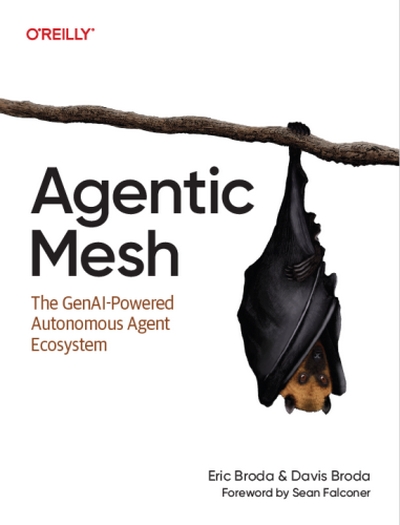
Eric Broda, Davis Broda | Agentic Mesh. The GenAI-Powered Autonomous Agent Ecosystem (2026) [PDF, EPUB] [EN]
1.0 MB · 1600×1600
Eric Broda, Davis Broda | Agentic Mesh. The GenAI-Powered Autonomous Agent Ecosystem (2026) [PDF, EPUB] Автор: Eric Broda, Davis Broda
Издательство: O'Reilly Media
ISBN: 979-8341621619
Жанр: Web Services ; APIs, Web Services, Neural Networks
Язык: Английский
Формат: PDF, EPUB
Качество: Изначально электронное (ebook)
Иллюстрации: Цветные и черно-белые
Описание:
With the rise of autonomous agents, the question is no longer "How do we build agents?" but rather, "How do we manage an entire ecosystem of them?" This book explores the next frontier of this technology, where interconnected agents collaborate, transact, and fulfill tasks autonomously. Building on established concepts like API service mesh and data mesh, authors Eric and Davis Broda introduce agentic mesh as a transformative architecture designed to safely manage growing ecosystems of agents at scale.
This practical guide unpacks how agentic mesh works, explains its key components—such as agent registries, marketplaces, trust-building mechanisms, and human-in-the-loop oversight—and illustrates how agents can discover, interact, and transact with ease. Through accessible explanations and compelling use cases, you'll gain a clear understanding of how to implement and govern agent ecosystems, ensuring security, transparency, and efficiency. Whether you're a tech leader, developer, or enterprise strategist, Agentic Mesh provides a road map to navigate the future of autonomous agents with confidence. Understand the concept of agentic mesh and its transformative potential
Learn how autonomous agents find, collaborate, and transact within a mesh ecosystem
Explore critical components like agent registries, marketplaces, and trust frameworks
Address safety, security, and governance challenges in agent ecosystems
Apply practical use cases to begin designing and implementing your own agentic mesh Скриншоты:
---->https://s01.pic4net.com/di-SN3HT9.jpeg<----
---->https://s01.pic4net.com/di-65FNEZ.jpeg<----
---->https://s01.pic4net.com/di-9LGXA5.jpeg<----
---->https://s01.pic4net.com/di-5X09OE.jpeg<----
Время раздачи: с 10 до 20 (минимум до появления первых 3-5 скачавших)
П.В. Румянцев | Исследование программ Win32 до дизассемблера и отладчика. 2-е издание (2021) [PDF, DJVU]
Приведена обширная информация о структуре PE-файлов (исполняемых файлов операционных систем семейства Microsoft Windows) Рассмотрены структура исполняемого файла в целом, а также структура составляющих его частей. Особое внимание уделено вопросам не отражённым в документации Microsoft, а также неточностям в документации.
Рассмотрены методы исследования программ, ( Читать дальше... )Жанр: Компьютерная литература, АссемблерИздательство: Горячая линия - ТелекомФормат: PDF, DJVUКачество: Обработанный скан
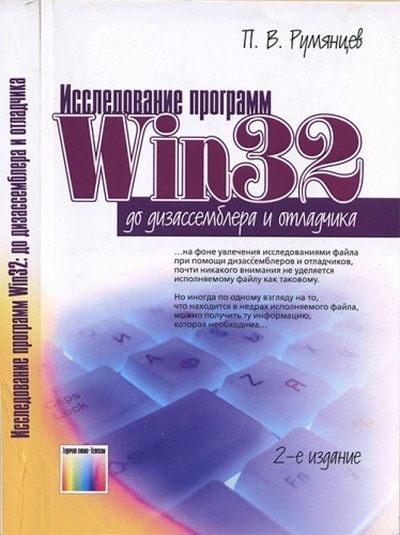
П.В. Румянцев | Исследование программ Win32 до дизассемблера и отладчика. 2-е издание (2021) [PDF, DJVU]
1.0 MB · 1600×1600
П.В. Румянцев | Исследование программ Win32 до дизассемблера и отладчика. 2-е издание (2021) [PDF, DJVU] Автор: П.В. Румянцев
Издательство: Горячая линия - Телеком
ISBN: 978-5-9912-0681-5
Жанр: Компьютерная литература, Ассемблер
Формат: PDF, DJVU
Качество: Обработанный скан
Иллюстрации: Черно-белые
Описание:
Приведена обширная информация о структуре PE-файлов (исполняемых файлов операционных систем семейства Microsoft Windows) Рассмотрены структура исполняемого файла в целом, а также структура составляющих его частей. Особое внимание уделено вопросам не отражённым в документации Microsoft, а также неточностям в документации.
Рассмотрены методы исследования программ, используемые до начала исследования программ при помощи дизассемблеров и отладчиков. Книга содержит многочисленные примеры, иллюстрирующие работу с отдельными частями исполняемого файла, такими как таблицы экспорта, импорта, ресурсы.
Несмотря на то, что книга рассчитана на программистов, она позволит понять всем интересующимся « внутренностями» исполняемых файлов - из каких «составных частей» состоят файлы .ехе и .dll.
Для программистов, будет полезна специалистам по защите информации, студентам и аспирантам. Оглавление:
Предисловие. Немного философии...........................3
Введение................................................11
Заголовки исполняемого (РЕ) файла.......................14
Заголовок DOS...........................................14
Заголовки РЕ-файла......................................23
«Обязательный» заголовок РЕ-файла ......................24
«Необязательный» заголовок РЕ-файла.....................28
Таблица разделов....................................... 56
Разделы.................................................72
Раздел экспорта.........................................76
Раздел импорта..........................................91
Раздел ресурсов........................................112
Окно диалога...........................................119
Информация о версии программы..........................174
Ресурс типа меню.......................................210
Строковые ресурсы......................................222
Формат метаданных, используемых платформой .NET........225
Структура таблиц метаданных............................248
Логическая структура метаданных........................251
Как «добраться» до кода................................256
Обработчики исключений............................... 261
Ресурсы в исполняемых файлах .NET......................265
Работа с ресурсами в приложениях.......................266
Программное добавление ресурсов........................266
Добавление ресурсов из командной строки................268
Добавление ресурсов в VS.NET...........................269
Использование ресурсов в приложении....................272
Физическая организация ресурсов в исполняемом файле.....276
Формат .resourses......................................280
Логическое представление данных.....................286
Формирование манифеста сборки.......................287
Формирование данных о сборке........................287
Формирование списка файлов..........................297
Формирование описания ресурсов......................299
Формирование описания модуля........................302
Получение логической структуры данных из физической структуры.........................................303
Сигнатуры и их раскодирование.......................308
Получение исходного кода программы..................316
Дизассемблирование программ.........................316
Приложения...................................... 326
Приложение А. Описание работы программы-просмотрщика ...........................326
Приложение Б. Возможные значения поля Characteristics в структуре IMAGE—SECTION—HEADER..................357
Приложение В. Возможные значения битов логической шкалы в описании элемента меню.........360
Приложение Г. Список таблиц, используемых CLR.......362
Приложение Д. Список закодированных токенов и число разрядов, на которые необходимо производить сдвиг.364 Скриншоты:
---->https://s01.pic4net.com/di-7YQ07W.jpeg<----
---->https://s01.pic4net.com/di-FJUU6U.jpeg<----
---->https://s01.pic4net.com/di-3QQ9GC.jpeg<----
---->https://s01.pic4net.com/di-E8MRZN.jpeg<----
Время раздачи: с 10 до 20 (минимум до появления первых 3-5 скачавших)
Фабио Нелли | Параллельное программирование на Python. Код на Python для ПК и кластеров с использованием CUDA, PyTorch и Dask (2026) [PDF]
Книга последовательно знакомит с методами параллельного программирования на Python – от базовых концепций до современных инструментов для распределенных и ускоренных вычислений. Практические примеры демонстрируют применение параллельных подходов в аналитике данных, машинном обучении и научном моделировании. Рассмотрены современные тенденции развития параллельных ( Читать дальше... )Жанр: Компьютерная литератураПеревод: В.И. БахураИздательство: ДМК ПрессФормат: PDFКачество: Изначально электронное (ebook)

Фабио Нелли | Параллельное программирование на Python. Код на Python для ПК и кластеров с использованием CUDA, PyTorch и Dask (2026) [PDF]
1.0 MB · 1600×1600
Фабио Нелли | Параллельное программирование на Python. Код на Python для ПК и кластеров с использованием CUDA, PyTorch и Dask (2026) [PDF] Автор: Фабио Нелли
Перевод: В.И. Бахура
Издательство: ДМК Пресс
Серия: Легкий старт
ISBN: 978-5-93700-451-2
Жанр: Компьютерная литература
Формат: PDF
Качество: Изначально электронное (ebook)
Иллюстрации: Цветные и черно-белые
Описание:
Книга последовательно знакомит с методами параллельного программирования на Python – от базовых концепций до современных инструментов для распределенных и ускоренных вычислений. Практические примеры демонстрируют применение параллельных подходов в аналитике данных, машинном обучении и научном моделировании. Рассмотрены современные тенденции развития параллельных вычислений и их влияние на экосистему Python. Вы узнаете, какие ограничения и компромиссы сопровождают различные модели параллелизма и научитесь выбирать архитектурные решения в зависимости от характера нагрузки.
Издание будет полезно как практикующим инженерам, так и студентам технических специальностей, изучающим параллельное и распределённое программирование. Желательны базовые навыки программирования на Python и понимание принципов работы операционных систем. Оглавление:
Об авторе...................................................................................................9
Технический рецензент.............................................................................. 10
Благодарности........................................................................................... 11
Предисловие.............................................................................................. 12
Глава 1. Введение в параллельное программирование.................................. 14
Параллельное программирование.................................................................15
Технологическая эволюция компьютеров и параллелизм................................15
Процессоры, ядра, потоки и процессы..........................................................17
Многозадачное и параллельное программирование........................................20
Потоки и процессы в Python для моделей многозадачности
и параллелизма...........................................................................................22
Распределение и использование памяти........................................................30
Оценка эффективности параллельного программирования..............................34
Заключение.................................................................................................38
Глава 2. Параллельное программирование с потоками................................... 40
Потоки........................................................................................................40
Метод join().................................................................................................42
Механизмы синхронизации...........................................................................50
Заключение.................................................................................................77
Глава 3. Многопроцессорные вычисления и библиотека mpi4py...................... 79
Процессы и модуль multiprocessing................................................................80
Каналы взаимодействия между процессами....................................................89
Отображение функции через пул процессов...................................................96
Параллельное отображение с chunksize..........................................................99
Класс ProcessPoolExecutor..............................................................................100
Библиотека mpi4py.......................................................................................103
Параллелизм процессов................................................................................104
Основные области применения mpi4py ..........................................................107
Реализация двухточечных коммуникаций.......................................................108
Коллективные коммуникации........................................................................109
Оптимизация коммуникаций при помощи топологий........................................116
Заключение.................................................................................................119
Глава 4. Асинхронное программирование с AsyncIO....................................... 120
Асинхронное и синхронное программирование...............................................120
Библиотека AsyncIO......................................................................................123
Оглавление 7
Асинхронные итерации с async for и без async for ...........................................135
Очередь в асинхронной модели......................................................................138
Альтернативы библиотеке AsyncIO .................................................................140
Заключение...................................................................................................140
Глава 5. Реализация параллелизма с помощью
распределенных систем................................................................................. 141
Распределенные системы и программирование.................................................142
Celery............................................................................................................144
Библиотека Dramatiq как альтернатива Celery...................................................162
Библиотека SCOOP..........................................................................................169
Заключение....................................................................................................175
Глава 6. Программирование GPU с CUDA для максимальной
производительности....................................................................................... 176
Архитектура GPU.............................................................................................176
Программирование GPU на Python.....................................................................178
Numba............................................................................................................179
PyOpenCL........................................................................................................195
Заключение.....................................................................................................211
Глава 7. Эпоха параллельных вычислений....................................................... 212
Высокопроизводительные вычисления (HPC)...................................................212
Параллельные вычисления.............................................................................213
Проекты и примеры параллельных вычислений..............................................215
Развлечения – игры и фильмы.......................................................................231
Заключение....................................................................................................238
Глава 8. Масштабирование приложений для обработки данных
с помощью Dask............................................................................................. 240
Аналитика данных, библиотека Pandas и параллельные вычисления....................240
Библиотека Dask..............................................................................................242
Начало работы на одном компьютере.................................................................244
Коллекции Dask................................................................................................247
Методы для коллекций....................................................................................252
Вычисления и графы задач.............................................................................253
Низкоуровневое взаимодействие с Dask Delayed..........................................255
Начало работы на кластере машин..............................................................256
Приступая к программированию кластера...................................................260
Заключение..............................................................................................266
Глава 9. Раскрытие потенциала ИИ с параллельными вычислениями............ 268
Искусственный интеллект (ИИ)...................................................................269
ИИ, машинное обучение и глубокое обучение..............................................270
Контролируемое и неконтролируемое обучение..........................................272
Искусственный интеллект и параллельные вычисления...............................273
Параллельное и распределенное машинное обучение.................................274
Машинное обучение с помощью Scikit-learn................................................275
Масштабирование Scikit-learn с Dask-ML......................................................278
Параллельное и распределенное глубокое обучение....................................280
PyTorch и TensorFlow...................................................................................281
Пример глубокого обучения с PyTorch...........................................................282
Пример глубокого обучения с использованием PyTorch и GPU..........................292
Масштабирование PyTorch с помощью Dask....................................................294
Заключение.................................................................................................304
Глава 10. Приложения параллельных вычислений......................................... 306
Массивно-параллельный искусственный интеллект ........................................307
Пограничные вычисления..............................................................................308
Распределенная вычислительная инфраструктура с киберфизическими
системами.....................................................................................................310
Искусственный интеллект в кибербезопасности................................................312
Вступление в эпоху Web 5.0............................................................................313
Экзафлопсные вычисления.............................................................................315
Квантовые вычисления...................................................................................315
Новые профессиональные возможности...........................................................316
Необходимые улучшения в параллельных вычислениях для Python....................317
Будущее PyTorch и TensorFlow..........................................................................318
Заключение....................................................................................................320
Предметный указатель.................................................................................... 322 Скриншоты:
---->https://s01.pic4net.com/di-YVSOBH.jpeg<----
---->https://s01.pic4net.com/di-SXR0O3.jpeg<----
---->https://s01.pic4net.com/di-ANUPVT.jpeg<----
---->https://s01.pic4net.com/di-F9FF3O.jpeg<----
Время раздачи: с 10 до 20 (минимум до появления первых 3-5 скачавших)
Di Wu | Bitesize Python for Intermediate Learners. With Practice Labs, Real-world Examples, and Generative Ai Assistance (Chapman & Hall/CRC The Python Series) (2026) [PDF, EPUB] [EN]
This book is an introduction to Python for intermediate learners. It allows readers to take a slow and steady approach to building upon their understanding of Python code. While there are many books, websites, and online courses about the topic, Python programming is broken down here into easily digestible lessons of less than 5 minutes each, following a tried and ( Читать дальше... )Жанр: Object-Oriented Design, Python Programming, Computer Programming LanguagesЯзык: АнглийскийИздательство: CRC PressФормат: PDF, EPUBКачество: Изначально электронное (ebook)
Di Wu | Bitesize Python for Intermediate Learners. With Practice Labs, Real-world Examples, and Generative Ai Assistance (Chapman & Hall/CRC The Python Series) (2026) [PDF, EPUB] [EN]
1.0 MB · 1600×1600
Di Wu | Bitesize Python for Intermediate Learners. With Practice Labs, Real-world Examples, and Generative Ai Assistance (Chapman ; Hall/CRC The Python Series) (2026) [PDF, EPUB] Автор: Di Wu
Издательство: CRC Press
Серия: The Python Series
ISBN: 978-1-041-03684-5, 978-1041036821, 978-1040571163
Жанр: Object-Oriented Design, Python Programming, Computer Programming Languages
Язык: Английский
Формат: PDF, EPUB
Качество: Изначально электронное (ebook)
Иллюстрации: Цветные и черно-белые
Описание:
This book is an introduction to Python for intermediate learners. It allows readers to take a slow and steady approach to building upon their understanding of Python code. While there are many books, websites, and online courses about the topic, Python programming is broken down here into easily digestible lessons of less than 5 minutes each, following a tried and tested BiteSize approach.
Each lesson begins with a clear and concise introduction to the topic, giving the reader a strong base to start from and gets them ready for deeper learning. This is followed by coding demonstrations that further explore the ideas discussed. The book offers practice tasks in different difficulty levels, so readers can test their knowledge and grow their confidence. The reader will also play with case studies to solve real-world problems. Tips on how to incorporate Generative AI into a learning toolkit are provided, for purposes like feedback, practice exercises, code reviews, and exploring advanced topics. Recommended AI prompts can help readers identify areas for improvement, review key concepts, and track progress.
This book is designed for intermediate learners with a basic understanding of Python. It is ideal for individuals with busy schedules or limited time for studying. Section I: Object-Oriented Programming
Chapter 1: Introduction to OOP
Chapter 2: Inheritance Chapter 3: Polymorphism
Chapter 4: Encapsulation
Chapter 5: Abstraction
Chapter 6: Documentation
Chapter 7: Case Studies
Section II: Data Manipulation
Chapter 8: N-dimensional Arrays
Chapter 9: NumPy
Chapter 10: Series
Chapter 11: DataFrame
Chapter 12: Pandas
Section III: Data Visualization
Chapter 13: Matplotlib (Basic)
Chapter 14: Matplotlib (Advanced)
Chapter 15: Seaborn
Chapter 16: Plotly Скриншоты:
---->https://s01.pic4net.com/di-APR59F.jpeg<----
---->https://s01.pic4net.com/di-A6H18W.jpeg<----
---->https://s01.pic4net.com/di-DUUHAA.jpeg<----
---->https://s01.pic4net.com/di-IZPDYL.jpeg<----
Время раздачи: с 10 до 20 (минимум до появления первых 3-5 скачавших)
Jason Edwards | Cloud Security Fundamentals. Building the Foundations for Secure Cloud Platforms (2026) [PDF, EPUB] [EN]
A hands-on toolkit for securing contemporary cloud environments
In Cloud Security Fundamentals: Building the Foundations for Secure Cloud Platforms, cybersecurity leader and educator, Jason Edwards, delivers a comprehensive guide to safeguarding data, applications, and infrastructure in the cloud. The author offers a complete walkthrough of cloud security, moving ( Читать дальше... )Жанр: Cloud Computing, Network Security, Career Advancement & Professional DevelopmentЯзык: АнглийскийИздательство: WileyФормат: PDF, EPUBКачество: Изначально электронное (ebook)

Jason Edwards | Cloud Security Fundamentals. Building the Foundations for Secure Cloud Platforms (2026) [PDF, EPUB] [EN]
1.0 MB · 1600×1600
Jason Edwards | Cloud Security Fundamentals. Building the Foundations for Secure Cloud Platforms (2026) [PDF, EPUB] Автор: Jason Edwards
Издательство: Wiley
ISBN: 978-1394377763, 978-1394377749, 978-1394377732
Жанр: Cloud Computing, Network Security, Career Advancement ; Professional Development
Язык: Английский
Формат: PDF, EPUB
Качество: Изначально электронное (ebook)
Иллюстрации: Цветные и черно-белые
Описание:
A hands-on toolkit for securing contemporary cloud environments
In Cloud Security Fundamentals: Building the Foundations for Secure Cloud Platforms, cybersecurity leader and educator, Jason Edwards, delivers a comprehensive guide to safeguarding data, applications, and infrastructure in the cloud. The author offers a complete walkthrough of cloud security, moving from foundational concepts to advanced, forward-looking practices.
The book is filled with practical examples, hands-on guidance, and lessons drawn from real-world cloud security incidents and breaches. It equips readers with the tools and knowledge they need to defend against threats in cloud environments and how to understand coming developments in cloud technology that will impact organizations in all industries. Inside the book:
A thorough introduction to cloud-native and advanced security practices for contemporary firms
A chapter on relevant cloud security certifications and professional growth advice
Practical discussions of foundational concepts in cloud security, including IAM, Zero Trust, and DevSecOps
Complete treatments of advanced cloud security themes, like leadership strategies, operational best practices, and techniques for dealing with common and emerging threats
Perfect for cloud security professionals, IT managers, and DevOps professionals, Cloud Security Fundamentals will also benefit system administrators, compliance and risk officers, consultants, auditors, and technology students in a variety of fields who require a foundational understanding of cloud security concepts. Скриншоты:
---->https://s01.pic4net.com/di-XEFPRF.jpeg<----
---->https://s01.pic4net.com/di-J39QCO.jpeg<----
---->https://s01.pic4net.com/di-DW4MLF.jpeg<----
---->https://s01.pic4net.com/di-CRMMYU.jpeg<----
Время раздачи: с 10 до 20 (минимум до появления первых 3-5 скачавших)
Saineshwar Bageri | Learning Rabbit MQ with C#. A magical tool for the IT world (2019) [PDF, EPUB] [EN]
Step by Step guide to develop solutions using RabbitMQ message queuing with .Net application.
Key Features
• How to Setup RabbitMQ on Windows( Читать дальше... )Жанр: ASP.NET Programming, C# Programming, Open Source Programming, Computer Science, Computers & TechnologyЯзык: АнглийскийИздательство: BPB PublicationsФормат: PDF, EPUBКачество: OCR
Saineshwar Bageri | Learning Rabbit MQ with C#. A magical tool for the IT world (2019) [PDF, EPUB] [EN]
1.0 MB · 1600×1600
Saineshwar Bageri | Learning Rabbit MQ with C#. A magical tool for the IT world (2019) [PDF, EPUB] Автор: Saineshwar Bageri
Издательство: BPB Publications
ISBN: 978-93-88176-94-1
Жанр: ASP.NET Programming, C# Programming, Open Source Programming, Computer Science, Computers ; Technology
Язык: Английский
Формат: PDF, EPUB
Качество: OCR
Иллюстрации: Черно-белые
Описание:
Step by Step guide to develop solutions using RabbitMQ message queuing with .Net application.
Key Features
• How to Setup RabbitMQ on Windows
• What are RabbitMQ Exchanges and its Types
• What are Queues and Bindings
• How to Create Users in RabbitMQ and Setting privilege
• How to Publish /Read/Delete Messages Using C#
Description
This book is meant for developers, architects, solution providers, consultants and engineers, Primarily the book requires knowledge of C#, but it can also be understood by anybody with a bit of programming background. This book contains instructions on how to set up and Install RabbitMQ on Windows and how to use Web Management Plugin of RabbitMQ. It also discusses topics such as Exchanges, types of Rabbit MQ Exchanges and Queue along with Binding in RabbitMQ and creating RabbitMQ Users, Publishing/ Reading/ Deleting Messages Using C# What will you learn
• RabbitMQ, its Setup, Exchanges, Queues, users and Binding.
• RabbitMQ Virtual hosts, Connections, Channels
• Publishing, Reading, Delete Message
• Publish Message Using C# to RabbitMQ
• Using RabbitMQ Direct Message Exchanges, Topic Message Exchanges, Fanout Message Exchanges and Headers Message Exchanges with .Net Application
Who this book is for
This book is for developers, architects, solution providers, consultant, and engineers to develop solutions using RabbitMQ message and queuing with .Net applications. Table of Contents
1. RabbitMQ Introduction
2. RabbitMQ Setup
3. RabbitMQ Exchanges
4. RabbitMQ Queues
5. Binding in RabbitMQ
6. RabbitMQ Users
7. RabbitMQ Virtual hosts
8. Connections
9. Channels
10. Publishing Message
11. Reading Message
12. Delete Message
13. Publish Message Using C# to RabbitMQ
14. Using RabbitMQ Direct Message Exchanges with .Net Application
15. Using RabbitMQ Topic Message Exchanges with .Net Application
16. Using RabbitMQ Fanout Message Exchanges with .Net Application
17. Using RabbitMQ Headers Message Exchanges with .Net Application
About the Author
Saineshwar Bageri is a Software Developer working on .NET Web Technologies for six years. His expertise also includes Visual Studio, Team Foundation Server, Entity Framework, Unit Testing AngularJS and JavaScrip. He has been presented with MVP awards by Microsoft (2018) and C# Corner (2014-2018) for his contribution to the community. Скриншоты:
---->https://s01.pic4net.com/di-ST8AO4.jpeg<----
---->https://s01.pic4net.com/di-OK674Y.jpeg<----
---->https://s01.pic4net.com/di-6CHZNW.jpeg<----
---->https://s01.pic4net.com/di-R0UI5V.jpeg<----
Время раздачи: с 10 до 20 (минимум до появления первых 3-5 скачавших)
Giovanni Moruzzi | Essential Python for the Physicist. 2nd Edition (2025) [PDF] [EN]
This second edition introduces Python programming to readers with little or no prior experience, specifically tailored for physicists and natural sciences students. The book begins with interactive Python exercises to foster familiarity with the language. It then progresses to more complex Python scripts (programs) that readers are encouraged to run on their own ( Читать дальше... )Жанр: Computer Graphics, Mathematical Physics, Graphics & Multimedia ProgrammingЯзык: АнглийскийИздательство: SpringerФормат: PDFКачество: Изначально электронное (ebook)
Giovanni Moruzzi | Essential Python for the Physicist. 2nd Edition (2025) [PDF] [EN]
1.0 MB · 1600×1600
Giovanni Moruzzi | Essential Python for the Physicist. 2nd Edition (2025) [PDF] Автор: Giovanni Moruzzi
Издательство: Springer
ISBN: 978-3031945939, 978-3031945922
Жанр: Computer Graphics, Mathematical Physics, Graphics ; Multimedia Programming
Язык: Английский
Формат: PDF
Качество: Изначально электронное (ebook)
Иллюстрации: Цветные и черно-белые
Описание:
This second edition introduces Python programming to readers with little or no prior experience, specifically tailored for physicists and natural sciences students. The book begins with interactive Python exercises to foster familiarity with the language. It then progresses to more complex Python scripts (programs) that readers are encouraged to run on their own computers. Each program listing is thoroughly explained, and readers are encouraged to experiment by modifying code lines or blocks to observe and understand their effects. The text introduces Matplotlib graphics for creating figures representing data, function plots, and visualizations like field lines and equipotential surfaces. It also explores 3D graphics and animated function plots. A dedicated chapter covers the numerical solution of algebraic and transcendental equations. The underlying mathematical principles are thoroughly discussed and the available Python tools for solving these equations are presented. A further chapter is dedicated to the numerical solution of ordinary differential equations (ODEs). This is of vital importance for the physicist, since differential equations are at the base of both classical physics (Newton’s equations) and quantum mechanics (Schroedinger’s equation). The shooting method for the numerical solution of ordinary differential equations with boundary conditions is also presented. Python programs for the solution of two quantum-mechanics problems are discussed as examples. Two chapters are dedicated to Tkinter graphics, which gives the user more freedom than Matplotlib, and to Tkinter animation. A special chapter is dedicated to computer animation involving differential equations, with a discussion of the effect of the accumulation of truncation errors, particularly relevant for such fields as molecular dynamics or celestial mechanics, which often require integrating Newton’s equations over a very long time starting from some initial conditions. Symplectic algorithms for tackling this problem are introduced. Programs displaying the animation of physical problems involving the solution of ordinary differential equations (for which in most cases there is no algebraic solution) in real time are presented and discussed. Finally, 3D animation is presented with Vpython. 1. Python Basics and the Interactive Mode
2. Python Scripts
3. Plotting with Matplotlib
4. Numerical Solution of Equations
5. Numerical Solution of Ordinary Differential Equations (ODE)
6. Tkinter Graphics
7. Tkinter Animation
8. Matrix Operations and the numpy Library
9. Animation and Ordinary Differential Equations
10. Classes
11. Exercises
12. Answers to the Exercises
Index Скриншоты:
---->https://s01.pic4net.com/di-PNF3HX.jpeg<----
---->https://s01.pic4net.com/di-AHFDMT.jpeg<----
---->https://s01.pic4net.com/di-6KQ619.jpeg<----
---->https://s01.pic4net.com/di-1CFI49.jpeg<----
Время раздачи: с 10 до 20 (минимум до появления первых 3-5 скачавших)
Peter De Tender | Migrating a Two-Tier Application to Azure. A Hands-on Walkthrough of Azure Infrastructure, Platform, and Container Services (2021) [PDF, EPUB] [EN]
Understand and build a proof of concept by migrating a multi-tiered .NET Core web application to the Azure public cloud, leveraging different Azure Infrastructure as a Service (IAAS), Azure Platform as a Service (PaaS), and Azure Container offerings. These include Azure Container Instance (ACI), Azure Kubernetes Services (AKS), and CI/CD pipeline deployments using ( Читать дальше... )Жанр: Microsoft Programming, Cloud Computing, Software DevelopmentЯзык: АнглийскийИздательство: ApressФормат: PDF, EPUBКачество: Изначально электронное (ebook)
Peter De Tender | Migrating a Two-Tier Application to Azure. A Hands-on Walkthrough of Azure Infrastructure, Platform, and Container Services (2021) [PDF, EPUB] [EN]
1.0 MB · 1600×1600
Peter De Tender | Migrating a Two-Tier Application to Azure. A Hands-on Walkthrough of Azure Infrastructure, Platform, and Container Services (2021) [PDF, EPUB] Автор: Peter De Tender
Издательство: Apress
ISBN: 978-1-4842-6437-9, 978-1484264362
Жанр: Microsoft Programming, Cloud Computing, Software Development
Язык: Английский
Формат: PDF, EPUB
Качество: Изначально электронное (ebook)
Иллюстрации: Цветные и черно-белые
Описание:
Understand and build a proof of concept by migrating a multi-tiered .NET Core web application to the Azure public cloud, leveraging different Azure Infrastructure as a Service (IAAS), Azure Platform as a Service (PaaS), and Azure Container offerings. These include Azure Container Instance (ACI), Azure Kubernetes Services (AKS), and CI/CD pipeline deployments using Azure DevOps.
After a first chapter in which you set up the baseline for the lab scenarios, you will start with the basics of automating Azure resource deployments using Visual Studio and powerful Azure Resource Manager (ARM) templates. Next, you’ll learn about the importance of performing proper assessments and the tools Microsoft offers to help in this migration preparation phase. After that, you will validate the virtual machine deployment and learn about SQL Server database migration to SQL Azure PaaS, as well as deploying and migrating web applications to Azure Web Apps.
After covering these foundational platform components, the next chapters focus on the core concepts and advantages of using containers for running business workloads. These labs are based on Docker, Azure Container Registry (ACR), ACI, and Web App for Containers, and show you how to enable container orchestration and cloud-scale using AKS. In the last part of the book, you will work with Azure DevOps, the Microsoft application lifecycle environment, building a CI/CD pipeline to publish workloads using the DevOps principles and concepts. You’ll see the integration with the rest of the Azure services, closing with a module on overall Azure monitoring and operations and what tools Azure has available to assist your IT teams in this challenge.
What You Will Learn
Use Azure to enable digital transformation
Carry out Azure automated deployments using ARM templates and Azure DevOps
Run VM-based workloads on Azure
Migrate VM-based workloads to Azure platform services
Monitor Azure running workloads with Azure Monitor and Log Analytics
Who This Book Is For
Anyone who wants to learn about different Azure architectures by going through hands-on exercises. About the Author ix
About the Technical Reviewer xi
Acknowledgments XIII
Chapter 1: Introduction 1
Chapter 2: Prerequisite Lab: Deploying Your Lab Virtual Machine 7
Chapter 3: Lab 1: Deploying an Azure Virtual Machine Baseline Application Workload 23
Chapter 4: Lab 2: Performing Assessment of Your As-Is Situation 51
Chapter 5: Lab 3: Deploying an Azure SQL Database and Migrating from SQLVM 67
Chapter 6: Lab 4: Deploying an Azure Web App and Migrating from WebVM 109
Chapter 7: Lab 5: Deploying Docker and Running Azure Container Workloads 131
Chapter 8: Lab 6: Deploying and Running Azure Kubernetes Service (AKS) 187
Chapter 9: Lab 7: Managing and Monitoring Azure Kubernetes Service (AKS) 207
Chapter 10: Lab 8: Deploying Azure Workloads Using Azure DevOps 233
Index 317 Скриншоты:
---->https://s01.pic4net.com/di-XJIFYO.jpeg<----
---->https://s01.pic4net.com/di-880U1M.jpeg<----
---->https://s01.pic4net.com/di-ZDUU1I.jpeg<----
---->https://s01.pic4net.com/di-EQY2EO.jpeg<----
Время раздачи: с 10 до 20 (минимум до появления первых 3-5 скачавших)
Mahadi Hasan Miraz, Narishah Mohamed Salleh, Hwang Ha Jin | Python for Business Analytics. Unlocking Data Insights for Strategic Decision-Making (2025) [PDF] [EN]
This book provides a thorough introduction to Python, specifically designed for those in business analytics. It starts with the fundamentals of Python and gradually covers more advanced topics, including data manipulation, visualization, and analytics techniques. The content is structured to help readers build a strong foundation in Python, essential for success ( Читать дальше... )Жанр: Business Intelligence Tools, Python Programming, Computer Programming LanguagesЯзык: АнглийскийИздательство: SpringerФормат: PDFКачество: Изначально электронное (ebook)
Mahadi Hasan Miraz, Narishah Mohamed Salleh, Hwang Ha Jin | Python for Business Analytics. Unlocking Data Insights for Strategic Decision-Making (2025) [PDF] [EN]
1.0 MB · 1600×1600
Mahadi Hasan Miraz, Narishah Mohamed Salleh, Hwang Ha Jin | Python for Business Analytics. Unlocking Data Insights for Strategic Decision-Making (2025) [PDF] Автор: Mahadi Hasan Miraz, Narishah Mohamed Salleh, Hwang Ha Jin
Издательство: Springer
ISBN: 978-9819682904
Жанр: Business Intelligence Tools, Python Programming, Computer Programming Languages
Язык: Английский
Формат: PDF
Качество: Изначально электронное (ebook)
Иллюстрации: Цветные и черно-белые
Описание:
This book provides a thorough introduction to Python, specifically designed for those in business analytics. It starts with the fundamentals of Python and gradually covers more advanced topics, including data manipulation, visualization, and analytics techniques. The content is structured to help readers build a strong foundation in Python, essential for success in data science and business analytics. The book also features real-world case studies and practical examples, demonstrating how Python can be applied in business decision-making. These insights make it a valuable resource for students and professionals who want to use Python to solve real business problems. Python's importance in today’s data-driven industries cannot be overstated. Proficiency in this programming language enhances the ability to tackle complex challenges and supports strategic decision-making. For organizations, Python enables the setting of data-driven goals, improved performance, and the fostering of continuous learning. Its open-source nature and wide range of online resources make it accessible to everyone, ensuring that users are equipped with the skills needed in a rapidly evolving workplace. This book serves as a comprehensive guide for those aiming to excel in the field of business analytics through the effective use of Python. Chapter 1: Python for Business Analytics: Unlocking Data Insights for Strategic Decision-Making
Chapter 2: Basics of Python Programming
Chapter 3: Data Manipulation with Pandas
Chapter 4: Data Visualisation with Matplotlib and Seaborn
Chapter 5: Descriptive Analytics
Chapter 6: Predictive Analytics with Scikit-Learn
Chapter 7: Advanced Analytics and Machine Learning
Chapter 8: Case Studies and Real-World Applications
Chapter 9: Automating Data Analysis with Python
Chapter 10: Best Practices and Future Trends
Chapter 11: Outline of the Study
Chapter 12: Python's Impact on AI and Medicine
Chapter 13: Web-Based Food Recommendation
Chapter 14: RateMyStay
Chapter 15: Integration of AI and Machine Learning
Chapter 16: Automotive Prices Analytics
Chapter 17: Analytics for Tour Package and Recommendation System Скриншоты:
---->https://s01.pic4net.com/di-ZEBS9I.jpeg<----
---->https://s01.pic4net.com/di-FAXN65.jpeg<----
---->https://s01.pic4net.com/di-APBGO2.jpeg<----
---->https://s01.pic4net.com/di-FGWCLO.jpeg<----
Время раздачи: с 10 до 20 (минимум до появления первых 3-5 скачавших)
Mark F. Russo, William Neil | Streamlining Your Research Laboratory with Python (2025) [PDF, EPUB] [EN]
Enables scientists and researchers to efficiently use one of the most popular programming languages in their day-to-day work
Streamlining Your Research Laboratory with Python covers the Python programming language and its ecosystem of tools applied to tasks encountered by laboratory scientists and technicians working in the life sciences. After opening with the ( Читать дальше... )Жанр: Microscopes & Microsocopy, Molecular Chemistry, General ChemistryЯзык: АнглийскийИздательство: WileyФормат: PDF, EPUBКачество: Изначально электронное (ebook)
Mark F. Russo, William Neil | Streamlining Your Research Laboratory with Python (2025) [PDF, EPUB] [EN]
1.0 MB · 1600×1600
Mark F. Russo, William Neil | Streamlining Your Research Laboratory with Python (2025) [PDF, EPUB] Автор: Mark F. Russo, William Neil
Издательство: Wiley
ISBN: 978-1394249886, 978-1394249893
Жанр: Microscopes ; Microsocopy, Molecular Chemistry, General Chemistry
Язык: Английский
Формат: PDF, EPUB
Качество: Изначально электронное (ebook)
Иллюстрации: Цветные и черно-белые
Описание:
Enables scientists and researchers to efficiently use one of the most popular programming languages in their day-to-day work
Streamlining Your Research Laboratory with Python covers the Python programming language and its ecosystem of tools applied to tasks encountered by laboratory scientists and technicians working in the life sciences. After opening with the basics of Python, the chapters move through working with and analyzing data, generating reports, and automating the lab environment.
The book includes example processes within chapters and code listings on nearly every page along with schematics and plots that can clearly illustrate Python at work in the lab. The book also explores some real-world examples of Python’s application in research settings, demonstrating its potential to streamline processes, improve productivity, and foster innovation. Streamlining Your Research Laboratory with Python includes information on:
Language basics including the interactive console, data types, variables and literals, strings, and expressions using operators
Custom functions and exceptions such as arguments and parameters, names and scope, and decorators
Conditional and repeated execution as methods to control the flow of a program
Tools such as JupyterLab, Matplotlib, NumPy, pandas DataFrame, and SciPy
Report generation in Microsoft Word and PowerPoint, PDF report generation, and serving results through HTTP and email automatically
Whether you are a biologist analyzing genetic data, a chemist scouting synthesis routes, an engineer optimizing machine parameters, or a social scientist studying human behavior, Streamlining Your Research Laboratory with Python serves as a logical and practical guide to add Python to your research toolkit. Preface
Chapter 1: Introduction
Chapter 2: Language Basics
Chapter 3: Data Structures
Chapter 4: Controlling the Flow of a Program
Chapter 5: Custom Functions and Exceptions
Chapter 6: Regular Expressions
Chapter 7: Working with Data
Chapter 8: Web Resources
Chapter 9: Data Analysis and Visualization
Chapter 10: Report Generation
Chapter 11: Control and Automation
Postface
References
Index Скриншоты:
---->https://s01.pic4net.com/di-YEWOJE.jpeg<----
---->https://s01.pic4net.com/di-BAYOMF.jpeg<----
---->https://s01.pic4net.com/di-QH3Z4J.jpeg<----
---->https://s01.pic4net.com/di-U3QKLB.jpeg<----
Время раздачи: с 10 до 20 (минимум до появления первых 3-5 скачавших)
Bernhard Eidel (Editor) | GPT for Python-Coding in Computational Materials Science and Mechanics. From Prompt Engineering to Solutions in Worked-Out Examples (Studies in Computational Intelligence ...
This book covers all the topics about ChatGPT required to successfully generate Python code to solve problems in computational materials science and mechanics, complemented by numerous fully worked-out applications. The complete work flow for AI-assisted coding is given, including: (i) prompt engineering providing a powerful toolset for how to give coding assignments ( Читать дальше... )Жанр: Компьютерная литератураЯзык: АнглийскийИздательство: SpringerФормат: PDFКачество: Изначально электронное (ebook)
Bernhard Eidel (Editor) | GPT for Python-Coding in Computational Materials Science and Mechanics. From Prompt Engineering to Solutions in Worked-Out Examples (Studies in Computational Intelligence ...
1.0 MB · 1600×1600
Bernhard Eidel (Editor) | GPT for Python-Coding in Computational Materials Science and Mechanics. From Prompt Engineering to Solutions in Worked-Out Examples (Studies in Computational Intelligence 1198) (2025) [PDF] Автор: Bernhard Eidel (Editor)
Издательство: Springer
ISBN: 978-3031854699, 978-3031854705
Жанр: Компьютерная литература
Язык: Английский
Формат: PDF
Качество: Изначально электронное (ebook)
Иллюстрации: Цветные и черно-белые
Описание:
This book covers all the topics about ChatGPT required to successfully generate Python code to solve problems in computational materials science and mechanics, complemented by numerous fully worked-out applications. The complete work flow for AI-assisted coding is given, including: (i) prompt engineering providing a powerful toolset for how to give coding assignments to ChatGPT effectively; (ii) commented code listings; and (iii) tips and tricks to verify the codes in rigorous tests including human interventions to fix issues and gaps. Finally, (iv) the coding projects are critically reviewed to address the strengths and remaining weaknesses of the Chatbot, including explicit recommendations on how to communicate with GPT. For the steps (i)–(iv) the book presents a curated selection of intriguing problems from computational materials science and computational mechanics including machine learning for problem-solving. These problems are carefully chosen for their relevance to current research and industrial applications and their suitability for showcasing the advanced capabilities of GPT-4 for code generation. Spanning from predicting material behavior under various conditions to simulating complex mechanical interactions, the problems serve as a canvas on which GPT-4 paints its solutions, demonstrating not just accuracy but creativity in problem-solving. Therefore, the book serves as a valuable primer for both undergraduate and graduate students, as well as a review for research scientists and practicing engineers. Front Matter
Topics of Computational Materials Science
Generation of Atomic Scale Single Crystals
Molecular Dynamics Simulation of Noble Gases
Phase Field Modeling of Grain Growth
Modeling Corrosion Using a Cellular Automaton
Instationary Heat Conduction on Rectangular Domains with Arbitrary Circular Holes
Topics of Deep Learning Based Materials Science
Transfer Learning for Alloy Classification Based on Microstructure Images
Transfer Learning for Microstructure Image Segmentation
Topics of Computational Analysis of Waves and Fluid Mechanics
Elastic Wave Propagation
Electromagnetic Wave Propagation in Dielectric Media
Flow Around an Obstacle Using the Lattice Boltzmann Method
Conclusions
Learned Lessons—Recommendations
Back Matter Скриншоты:
---->https://s01.pic4net.com/di-M6BSA6.jpeg<----
---->https://s01.pic4net.com/di-GZ118F.jpeg<----
---->https://s01.pic4net.com/di-N5DGU3.jpeg<----
---->https://s01.pic4net.com/di-XBC0PJ.jpeg<----
Время раздачи: с 10 до 20 (минимум до появления первых 3-5 скачавших)
Victor J. Valcarcel | Intelligent Banking. Python Programming for Banking and Finance (2025) [PDF, EPUB] [EN]
Traditional money and banking textbooks establish the central tenets of the economics of financial markets in a theoretical, academic fashion and rarely offer any knowledge of computer skills. Intelligent Banking bridges this gap by introducing the fundamentals of finance in tandem with the development of programming skills. This book leans heavily on Python programming, ( Читать дальше... )Жанр: Banking, Financial Services Industry, Banks & Banking, Python ProgrammingЯзык: АнглийскийИздательство: De GruyterФормат: PDF, EPUBКачество: Изначально электронное (ebook)
Victor J. Valcarcel | Intelligent Banking. Python Programming for Banking and Finance (2025) [PDF, EPUB] [EN]
1.0 MB · 1600×1600
Victor J. Valcarcel | Intelligent Banking. Python Programming for Banking and Finance (2025) [PDF, EPUB] Автор: Victor J. Valcarcel
Издательство: De Gruyter
ISBN: 978-3111192789, 978-3111193366
Жанр: Banking, Financial Services Industry, Banks ; Banking, Python Programming
Язык: Английский
Формат: PDF, EPUB
Качество: Изначально электронное (ebook)
Иллюстрации: Цветные и черно-белые
Описание:
Traditional money and banking textbooks establish the central tenets of the economics of financial markets in a theoretical, academic fashion and rarely offer any knowledge of computer skills. Intelligent Banking bridges this gap by introducing the fundamentals of finance in tandem with the development of programming skills. This book leans heavily on Python programming, while teaching fundamental concepts of money and banking to undergraduate and masters level students.
Along with discussions on the fundamentals, including topics like debt measurement, monetary aggregates and money supply, asset value, risk management, bonds and stocks, the book also teaches the basics of coding and machine learning.
Intelligent Banking is a one-stop-shop for learning first-principle financial concepts with direct coding applications within the span of a college term. The detailed glossaries at the end of chapters and the Python code examples and coursework will help students be better prepared to meet the demands of today’s banking and financial companies who are increasingly demanding these skills from their job applicants. Part I: Money and the Government
1. Debt and the U.S. Treasury
2. Money and the Federal Reserve
Part II: Time, Probability, and Risk
3. Time Value of Money
4. Primer on Probability Theory
5. The Fundamentals of Risk
Part III: Financial Markets
6. The Bond Market
7. Interest Rates
8. Equities and the Stock Market
Part IV: Machine Learning
9. The Basics of Machine Learning Скриншоты:
---->https://s01.pic4net.com/di-KFAMCI.jpeg<----
---->https://s01.pic4net.com/di-2A4S7O.jpeg<----
---->https://s01.pic4net.com/di-29HZNI.jpeg<----
---->https://s01.pic4net.com/di-FLTUE5.jpeg<----
Время раздачи: с 10 до 20 (минимум до появления первых 3-5 скачавших)
Yuri Diogenes, Orin Thomas | Exam Ref AZ-500 Microsoft Azure Security Technologies. 3rd Edition (2025) [EPUB] [EN]
Prepare for Microsoft Exam AZ-500 and demonstrate your real-world knowledge of Microsoft Azure security, including the skills needed to implement security controls, maintain an organization’s security posture, and identify and remediate security vulnerabilities. Designed for professionals with Azure security experience, this Exam Ref focuses on the critical thinking ( Читать дальше... )Жанр: Microsoft Certification Guides, Security Certifications, Computer Operating SystemsЯзык: АнглийскийИздательство: Microsoft PressФормат: EPUBКачество: Изначально электронное (ebook)

Yuri Diogenes, Orin Thomas | Exam Ref AZ-500 Microsoft Azure Security Technologies. 3rd Edition (2025) [EPUB] [EN]
1.0 MB · 1600×1600
Yuri Diogenes, Orin Thomas | Exam Ref AZ-500 Microsoft Azure Security Technologies. 3rd Edition (2025) [EPUB] Автор: Yuri Diogenes, Orin Thomas
Издательство: Microsoft Press
ISBN: 978-0-13-536489-5, 978-0135364987
Жанр: Microsoft Certification Guides, Security Certifications, Computer Operating Systems
Язык: Английский
Формат: EPUB
Качество: Изначально электронное (ebook)
Иллюстрации: Цветные и черно-белые
Описание:
Prepare for Microsoft Exam AZ-500 and demonstrate your real-world knowledge of Microsoft Azure security, including the skills needed to implement security controls, maintain an organization’s security posture, and identify and remediate security vulnerabilities. Designed for professionals with Azure security experience, this Exam Ref focuses on the critical thinking and decision-making acumen needed for success at the Microsoft Certified: Azure Security Engineer Associate level.
Focus on the expertise measured by these objectives:
Manage identity and access
Secure networking
Secure compute, storage, and databases
Manage security operations This Microsoft Exam Ref:
Organizes its coverage by exam objectives
Features strategic, what-if scenarios to challenge you
Assumes you have experience in administration of Microsoft Azure and hybrid environments, and familiarity with compute, network, and storage in Azure and Microsoft Entra ID
About the Exam
Exam AZ-500 focuses on knowledge needed to manage Microsoft Entra identities, authentication, authorization, and application access; plan and implement security for virtual networks, as well as for private and public access to Azure resources; plan and implement advanced security for compute, storage, Azure SQL Database, and Azure SQL managed instance; plan, implement, and manage governance for security, manage security posture and configure and manage threat protection using Microsoft Defender for Cloud, and configure and manage security monitoring and automation solutions.
About Microsoft Certification
Passing this exam fulfills your requirements for the Microsoft Certified: Azure Security Engineer Associate credential, demonstrating your expertise as an Azure Security Engineer capable of managing an organization’s security posture, identifying, and remediating vulnerabilities, performing threat modeling, implementing threat protection, responding to security incident escalations, and participating in the planning and implementation of cloud-based management and security.
See full details at: microsoft.com/learn About the authors
Introduction
CHAPTER 1 Microsoft Entra Security
CHAPTER 2 Secure Azure Networks
CHAPTER 3 Secure Azure Compute
CHAPTER 4 Secure Azure Storage
CHAPTER 5 Secure Azure SQL
CHAPTER 6 Security governance
CHAPTER 7 Microsoft Defender for Cloud
CHAPTER 8 Security Monitoring and Automation
CHAPTER 9 AZ-500 Microsoft Azure Security Technologies
Exam Updates
Index Скриншоты:
---->https://s01.pic4net.com/di-69ZR7B.jpeg<----
---->https://s01.pic4net.com/di-9U7KN7.jpeg<----
---->https://s01.pic4net.com/di-RK84V7.jpeg<----
---->https://s01.pic4net.com/di-8Z1M5D.jpeg<----
Время раздачи: с 10 до 20 (минимум до появления первых 3-5 скачавших)
Valliappa Lakshmanan, Hannes Hapke | Generative AI Design Patterns. Solutions to Common Challenges When Building GenAI Agents and Applications (2026) [PDF, EPUB] [EN]
Generative AI enables powerful new capabilities, but they come with some serious limitations that you'll have to tackle to ship a reliable application or agent. Luckily, experts in the field have compiled a library of 32 tried-and-true design patterns to address the challenges you're likely to encounter when building applications using LLMs, such as hallucinations, ( Читать дальше... )Жанр: Software Design Tools, Software Design & Engineering, Generative AIЯзык: АнглийскийИздательство: O’ReillyФормат: PDF, EPUBКачество: Изначально электронное (ebook)
Valliappa Lakshmanan, Hannes Hapke | Generative AI Design Patterns. Solutions to Common Challenges When Building GenAI Agents and Applications (2026) [PDF, EPUB] [EN]
1.0 MB · 1600×1600
Valliappa Lakshmanan, Hannes Hapke | Generative AI Design Patterns. Solutions to Common Challenges When Building GenAI Agents and Applications (2026) [PDF, EPUB] Автор: Valliappa Lakshmanan, Hannes Hapke
Издательство: O’Reilly
ISBN: 979-8-341-62266-1, 979-8341622630
Жанр: Software Design Tools, Software Design ; Engineering, Generative AI
Язык: Английский
Формат: PDF, EPUB
Качество: Изначально электронное (ebook)
Иллюстрации: Цветные и черно-белые
Описание:
Generative AI enables powerful new capabilities, but they come with some serious limitations that you'll have to tackle to ship a reliable application or agent. Luckily, experts in the field have compiled a library of 32 tried-and-true design patterns to address the challenges you're likely to encounter when building applications using LLMs, such as hallucinations, nondeterministic responses, and knowledge cutoffs.
This book codifies research and real-world experience into advice you can incorporate into your projects. Each pattern describes a problem, shows a proven way to solve it with a fully coded example, and discusses trade-offs.
Design around the limitations of LLMs
Ensure that generated content follows a specific style, tone, or format
Maximize creativity while balancing different types of risk
Build agents that plan, self-correct, take action, and collaborate with other agents
Compose patterns into agentic applications for a variety of use cases Preface vii
1. Introduction 1
2. Controlling Content Style 31
3. Adding Knowledge: Bass 107
4. Adding Knowledge: Syncopation 153
5. Extending Model Capabilities 211
6. Improving Reliability 277
7. Enabling Agents to Take Action 317
8. Addressing Constraints 357
9. Setting Safeguards 423
10. Composable Agentic Workflows 451
Index 469 Скриншоты:
---->https://s01.pic4net.com/di-3C2Q9N.jpeg<----
---->https://s01.pic4net.com/di-PQRR1V.jpeg<----
---->https://s01.pic4net.com/di-OT5F5J.jpeg<----
---->https://s01.pic4net.com/di-WO00CH.jpeg<----
Время раздачи: с 10 до 20 (минимум до появления первых 3-5 скачавших)
Christopher W. Kulp, Vasilis Pagonis | Classical Mechanics. A Computational Approach with Examples Using Mathematica and Python. 2nd Edition (2025) [PDF, EPUB] [EN]
Classical Mechanics: A Computational Approach with Examples using Python and Mathematica provides a unique, contemporary introduction to classical mechanics, with a focus on computational methods. In addition to providing clear and thorough coverage of key topics, this textbook includes integrated instructions and treatments of computation.
This newly updated and ( Читать дальше... )Жанр: Mathematical Physics, Applied Mathematics, Statistics, PhysicsЯзык: АнглийскийИздательство: CRC PressФормат: PDF, EPUBКачество: Изначально электронное (ebook)
Christopher W. Kulp, Vasilis Pagonis | Classical Mechanics. A Computational Approach with Examples Using Mathematica and Python. 2nd Edition (2025) [PDF, EPUB] [EN]
1.0 MB · 1600×1600
Christopher W. Kulp, Vasilis Pagonis | Classical Mechanics. A Computational Approach with Examples Using Mathematica and Python. 2nd Edition (2025) [PDF, EPUB] Автор: Christopher W. Kulp, Vasilis Pagonis
Издательство: CRC Press
ISBN: 978-1040388495, 978-1032594750, 978-1032590516
Жанр: Mathematical Physics, Applied Mathematics, Statistics, Physics
Язык: Английский
Формат: PDF, EPUB
Качество: Изначально электронное (ebook)
Иллюстрации: Цветные и черно-белые
Описание:
Classical Mechanics: A Computational Approach with Examples using Python and Mathematica provides a unique, contemporary introduction to classical mechanics, with a focus on computational methods. In addition to providing clear and thorough coverage of key topics, this textbook includes integrated instructions and treatments of computation.
This newly updated and revised second edition includes two new appendices instructing the reader in both the Python and Mathematica languages. All worked example problems in the second edition contain both Python and Mathematica code. New end-of-chapter problems explore the application of computational methods to classical mechanics problems.
Full of pedagogy, it contains both analytical and computational example problems within the body of each chapter. The example problems teach readers both analytical methods and how to use computer algebra systems and computer programming to solve problems in classical mechanics. End-of-chapter problems allow students to hone their skills in problem solving with and without the use of a computer. The methods presented in this book can then be used by students when solving problems in other fields both within and outside of physics. It is an ideal textbook for undergraduate students in physics, mathematics, and engineering studying classical mechanics.
Key Features:
Gives readers the "big picture" of classical mechanics and the importance of computation in the solution of problems in physics
Numerous example problems using both analytical and computational methods, as well as explanations as to how and why specific techniques were used
Online resources containing specific example codes to help students learn computational methods and write their own algorithms
A solutions manual is available via the Routledge Instructor Hub and all example codes in the book are available via the Support Material tab, and at the book’s GitHub page:
---->https://github.com/vpagonis/Classical_Mechanics_2nd_Edition<----https://github.com/vpagonis/Classical_Mechanics_2nd_Edition 1. Foundations of Motion and Computation.
2. Single-Particle Motion in One Dimesnison.
3. Motion in Two and Three Dimensions.
4. Momentum, Angular Momentum, and Multi-Particle Systems.
5. Energy.
6. Harmonic Oscillations.
7. The Calculus of Variations.
8. Lagrangian and Hamiltonian Dynamics.
9. Central Forces and Planetry Motions.
10. Motion in Non-Inertial Reference Frames.
11. Rigid Body Motion.
12. Coupled Oscillations.
13. Nonlinear Systems Скриншоты:
---->https://s01.pic4net.com/di-6NRH39.jpeg<----
---->https://s01.pic4net.com/di-ZK8LWP.jpeg<----
---->https://s01.pic4net.com/di-3O4KNK.jpeg<----
---->https://s01.pic4net.com/di-MK85M9.jpeg<----
Время раздачи: с 10 до 20 (минимум до появления первых 3-5 скачавших)
Srikrishnan Sundararajan | Multivariate Analysis and Machine Learning Techniques. Feature Analysis in Data Science Using Python (Transactions on Computer Systems and Networks) (2024) [PDF] [EN]
This book offers a comprehensive first-level introduction to data analytics. The book covers multivariate analysis, AI / ML, and other computational techniques for solving data analytics problems using Python. The topics covered include (a) a working introduction to programming with Python for data analytics, (b) an overview of statistical techniques – probability ( Читать дальше... )Жанр: Python Programming, Probability & Statistics, Databases & Big DataЯзык: АнглийскийИздательство: SpringerФормат: PDFКачество: Изначально электронное (ebook)
Srikrishnan Sundararajan | Multivariate Analysis and Machine Learning Techniques. Feature Analysis in Data Science Using Python (Transactions on Computer Systems and Networks) (2024) [PDF] [EN]
1.0 MB · 1600×1600
Srikrishnan Sundararajan | Multivariate Analysis and Machine Learning Techniques. Feature Analysis in Data Science Using Python (Transactions on Computer Systems and Networks) (2024) [PDF] Автор: Srikrishnan Sundararajan
Издательство: Springer
ISBN: 978-9819903528, 978-9819903535
Жанр: Python Programming, Probability ; Statistics, Databases ; Big Data
Язык: Английский
Формат: PDF
Качество: Изначально электронное (ebook)
Иллюстрации: Цветные и черно-белые
Описание:
This book offers a comprehensive first-level introduction to data analytics. The book covers multivariate analysis, AI / ML, and other computational techniques for solving data analytics problems using Python. The topics covered include (a) a working introduction to programming with Python for data analytics, (b) an overview of statistical techniques – probability and statistics, hypothesis testing, correlation and regression, factor analysis, classification (logistic regression, linear discriminant analysis, decision tree, support vector machines, and other methods), various clustering techniques, and survival analysis, (c) introduction to general computational techniques such as market basket analysis, and social network analysis, and (d) machine learning and deep learning. Many academic textbooks are available for teaching statistical applications using R, SAS, and SPSS. However, there is a dearth of textbooks that provide a comprehensiveintroduction to the emerging and powerful Python ecosystem, which is pervasive in data science and machine learning applications.
The book offers a judicious mix of theory and practice, reinforced by over 100 tutorials coded in the Python programming language. The book provides worked-out examples that conceptualize real-world problems using data curated from public domain datasets. It is designed to benefit any data science aspirant, who has a basic (higher secondary school level) understanding of programming and statistics. The book may be used by analytics students for courses on statistics, multivariate analysis, machine learning, deep learning, data mining, and business analytics. It can be also used as a reference book by data analytics professionals. 1. Introduction and Overview
2. Python for Data Analytics
3. Introduction to Probability and Statistics
4. Hypothesis Testing
5. Regression Analysis
6. Classification
7. Factor Analysis
8. Cluster Analysis
9. Survival Analysis
10. Computational Techniques
11. Machine Learning
12. Artificial Intelligence and Deep Neural Networks Скриншоты:
---->https://s01.pic4net.com/di-IVOUEM.jpeg<----
---->https://s01.pic4net.com/di-KUHHPF.jpeg<----
---->https://s01.pic4net.com/di-8QUGWS.jpeg<----
---->https://s01.pic4net.com/di-GIRET9.jpeg<----
Время раздачи: с 10 до 20 (минимум до появления первых 3-5 скачавших)
Самер Буна | Эффективный Node.js. От базовых навыков к профессиональной разработке (2026) [PDF]
Node.js – это технология, которая изменила современный веб. Более 10 миллионов разработчиков по всему миру используют ее для создания быстрых и масштабируемых приложений. Эта книга поможет вам присоединиться к их числу и превратить знания JavaScript в уверенные навыки бэкенд-разработки. Вы научитесь создавать надежные, быстрые и масштабируемые приложения, востребованные ( Читать дальше... )Жанр: JavaScript, Веб-программирование, Программирование, Разработка программного обеспечения, ФреймворкиПеревод: М. ЛидманИздательство: Спринт БукФормат: PDFКачество: Изначально электронное (ebook)

Самер Буна | Эффективный Node.js. От базовых навыков к профессиональной разработке (2026) [PDF]
1.0 MB · 1600×1600
Самер Буна | Эффективный Node.js. От базовых навыков к профессиональной разработке (2026) [PDF] Автор: Самер Буна
Перевод: М. Лидман
Издательство: Спринт Бук
ISBN: 978-601-12-5945-3
Жанр: JavaScript, Веб-программирование, Программирование, Разработка программного обеспечения, Фреймворки
Формат: PDF
Качество: Изначально электронное (ebook)
Иллюстрации: Черно-белые
Описание:
Node.js – это технология, которая изменила современный веб. Более 10 миллионов разработчиков по всему миру используют ее для создания быстрых и масштабируемых приложений. Эта книга поможет вам присоединиться к их числу и превратить знания JavaScript в уверенные навыки бэкенд-разработки. Вы научитесь создавать надежные, быстрые и масштабируемые приложения, востребованные в таких компаниях, как Amazon, Netflix, LinkedIn.
Самер Буна, эксперт с более чем 20-летним опытом в проектировании API и создании масштабируемых систем, шаг за шагом проведет вас от базовых принципов до продвинутых тем. Вы научитесь работать с асинхронностью, потоками, событиями и встроенными модулями Node.js, а затем осознанно использовать популярные библиотеки и инструменты экосистемы. Оглавление:
От издательства 11
Предисловие 12
Глава 1. Что такое Node? 16
Глава 2. Скрипты и модули 48
Глава 3. Асинхронность и события 70
Глава 4. Ошибки и отладка 92
Глава 5. Управление пакетами 107
Глава 6. Потоки данных 125
Глава 7. Дочерние процессы 147
Глава 8. Тестирование в Node 158
Глава 9. Масштабирование в Node 176
Глава 10. Node на практике 195
Об авторе 218
Иллюстрация на обложке 219 Скриншоты:
---->https://s01.pic4net.com/di-G9XI5F.jpeg<----
---->https://s01.pic4net.com/di-TAYH6O.jpeg<----
---->https://s01.pic4net.com/di-BDLMQ1.jpeg<----
---->https://s01.pic4net.com/di-M4433P.jpeg<----
Время раздачи: с 10 до 20 (минимум до появления первых 3-5 скачавших)
Микаэль Криф | Terraform: лучшие практики. Подготовка, запуск и масштабирование облачной архитектуры на реальных примерах. 2-е издание (2026) [PDF]
С появлением Terraform, замечательного инструмента управления инфраструктурой как кодом (IaC), язык конфигурирования HashiCorp (HCL) изменил подход к определению и формированию инфраструктуры центров обработки данных. Узнайте, как Terraform упрощает управление сложной инфраструктурой.
Обновленное издание включает практические примеры развертывания инфраструктуры ( Читать дальше... )Жанр: DevOps, Kubernetes, Архитектура информационных систем, Информационные технологии (IT), Облачные технологии, Развертывание систем, Технологии контейнеровПеревод: Владимир СаульИздательство: Спринт БукФормат: PDFКачество: Изначально электронное (ebook)

Микаэль Криф | Terraform: лучшие практики. Подготовка, запуск и масштабирование облачной архитектуры на реальных примерах. 2-е издание (2026) [PDF]
1.0 MB · 1600×1600
Микаэль Криф | Terraform: лучшие практики. Подготовка, запуск и масштабирование облачной архитектуры на реальных примерах. 2-е издание (2026) [PDF] Автор: Микаэль Криф
Перевод: Владимир Сауль
Издательство: Спринт Бук
ISBN: 978-601-12-5029-0
Жанр: DevOps, Kubernetes, Архитектура информационных систем, Информационные технологии (IT), Облачные технологии, Развертывание систем, Технологии контейнеров
Формат: PDF
Качество: Изначально электронное (ebook)
Иллюстрации: Черно-белые
Описание:
С появлением Terraform, замечательного инструмента управления инфраструктурой как кодом (IaC), язык конфигурирования HashiCorp (HCL) изменил подход к определению и формированию инфраструктуры центров обработки данных. Узнайте, как Terraform упрощает управление сложной инфраструктурой.
Обновленное издание включает практические примеры развертывания инфраструктуры Azure, AWS и GCP с помощью Terraform. Углубитесь в изучение ручных и автоматизированных подходов к тестированию конфигураций Terraform и познакомьтесь с приемами создания сбалансированной, эффективной и универсальной инфраструктуры и управления ею с помощью модулей Terraform. Вы узнаете, как автоматизировать развертывание конфигурации Terraform с помощью непрерывной интеграции и непрерывной поставки (CI/CD).
Кроме того, в издание добавлено несколько новых глав, в которых описывается использование Terraform вместе с Docker и Kubernetes, рассматриваются сложные вопросы, связанные с практикой GitOps, и объясняется, как тестировать конфигурации Terraform с помощью различных инструментов и проверять их соответствие требованиям безопасности. В последней главе исследуются вопросы устранения распространенных проблем с Terraform и предлагаются решения для часто встречающихся ошибок.
Извлеките максимальную пользу из Terraform и организуйте эффективное управление инфраструктурой. Оглавление:
Предисловие 12
Введение 15
Глава 1. Настройка окружения Terraform 21
Глава 2. Написание конфигураций Terraform 51
Глава 3. Масштабирование своей инфраструктуры с помощью Terraform .88
Глава 4. Использование в Terraform внешних данных 111
Глава 5. Управление состоянием Terraform 129
Глава 6. Выполнение основного рабочего процесса Terraform 158
Глава 7. Обеспечение совместного использования конфигураций Terraform с помощью модулей . 199
Глава 8. Выделение инфраструктуры Azure с помощью Terraform 237
Глава 9. Основы использования Terraform для выделения инфраструктуры AWS и GCP 293
Глава 10. Использование Terraform для развертывания ресурсов Docker и Kubernetes . 319
Глава 11. Тестирование конфигурации Terraform на соответствие требованиям и обеспечение безопасности 339
Глава 12. Глубокое погружение в Terraform 384
Глава 13. Автоматический запуск Terraform в конвейере CI/CD 425
Глава 14. Использование Terraform Cloud для улучшения командного взаимодействия 458
Глава 15. Устранение ошибок Terraform 523
Краткий справочник по Terraform 534
Приложение. Ресурсы с информацией о Terraform 540 Скриншоты:
---->https://s01.pic4net.com/di-USFWYT.jpeg<----
---->https://s01.pic4net.com/di-K9NLMI.jpeg<----
---->https://s01.pic4net.com/di-1V68CD.jpeg<----
---->https://s01.pic4net.com/di-DXYN4V.jpeg<----
Время раздачи: с 10 до 20 (минимум до появления первых 3-5 скачавших)
Ryan Day | Hands-On APIs for AI and Data Science. Python Development with FastAPI (2025) [PDF, EPUB] [EN]
Are you ready to grow your skills in AI and data science? A great place to start is learning to build and use APIs in real-world data and AI projects. API skills have become essential for AI and data science success, because they are used in a variety of ways in these fields. With this practical book, data scientists and software developers will gain hands-on experience ( Читать дальше... )Жанр: Web Services & APIs, Web Services, Web ProgrammingЯзык: АнглийскийИздательство: O'Reilly MediaФормат: PDF, EPUBКачество: Изначально электронное (ebook)

Ryan Day | Hands-On APIs for AI and Data Science. Python Development with FastAPI (2025) [PDF, EPUB] [EN]
1.0 MB · 1600×1600
Ryan Day | Hands-On APIs for AI and Data Science. Python Development with FastAPI (2025) [PDF, EPUB] Автор: Ryan Day
Издательство: O'Reilly Media
ISBN: 978-1098164379, 978-1-098-16441-6
Жанр: Web Services ; APIs, Web Services, Web Programming
Язык: Английский
Формат: PDF, EPUB
Качество: Изначально электронное (ebook)
Иллюстрации: Цветные и черно-белые
Описание:
Are you ready to grow your skills in AI and data science? A great place to start is learning to build and use APIs in real-world data and AI projects. API skills have become essential for AI and data science success, because they are used in a variety of ways in these fields. With this practical book, data scientists and software developers will gain hands-on experience developing and using APIs with the Python programming language and popular frameworks like FastAPI and StreamLit.
As you complete the chapters in the book, you'll be creating portfolio projects that teach you how to:
Design APIs that data scientists and AIs love
Develop APIs using Python and FastAPI
Deploy APIs using multiple cloud providers
Create data science projects such as visualizations and models using APIs as a data source
Access APIs using generative AI and LLMs Part I: Building APIs for Data Science
Chapter 1: Creating APIs That Data Scientists Will Love – Designing for data scientist needs and identifying user stories.
Chapter 2: Selecting Your API Architecture – Exploring REST, GraphQL, and gRPC architectural styles.
Chapter 3: Creating Your Database – Using SQLite and SQLAlchemy to build and test database tables.
Chapter 4: Developing the FastAPI Code – Core implementation using FastAPI, Pydantic, and Uvicorn.
Chapter 5: Documenting Your API – Utilizing Swagger UI and Redoc for automated documentation.
Chapter 6: Deploying Your API to the Cloud – Deployment strategies using Docker, Render, and AWS Lightsail.
Chapter 7: Batteries Included: Creating a Python SDK – Building client-side SDKs to simplify API consumption.
Part II: Using APIs in Your Data Science Project
Chapter 8: What Data Scientists Should Know About APIs – Core principles like separation of concerns and version control.
Chapter 9: Using APIs for Data Analytics – Extracting data into Jupyter Notebooks and pandas for custom metrics.
Chapter 10: Using APIs in Data Pipelines – Orchestrating data movement with Apache Airflow.
Chapter 11: Using APIs in Streamlit Data Apps – Creating interactive dashboards and visualizations.
Part III: Using APIs with Artificial Intelligence
Chapter 12: Using APIs with Artificial Intelligence – Intersection of generative AI, LLMs, and agentic applications.
Chapter 13: Deploying a Machine Learning API – Training and serving models with scikit-learn and ONNX Runtime.
Chapter 14: Using APIs with LangChain – Building AI agents that call APIs using LangGraph and LangChain.
Chapter 15: Using ChatGPT to Call Your API – Integrating custom GPTs with your API through GPT Actions Скриншоты:
---->https://s01.pic4net.com/di-831R15.jpeg<----
---->https://s01.pic4net.com/di-97A9IT.jpeg<----
---->https://s01.pic4net.com/di-2468FX.jpeg<----
---->https://s01.pic4net.com/di-GRXIK5.jpeg<----
Время раздачи: с 10 до 20 (минимум до появления первых 3-5 скачавших)
Jay Wengrow | A Common-Sense Guide to Data Structures and Algorithms. Level Up Your Core Programming Skills. 2nd Edition (2020) [PDF, EPUB] [EN]
Algorithms and data structures are much more than abstract concepts. Mastering them enables you to write code that runs faster and more efficiently, which is particularly important for today’s web and mobile apps. Take a practical approach to data structures and algorithms, with techniques and real-world scenarios that you can use in your daily production ( Читать дальше... )Жанр: Computer Programming Structured Design, Computer Algorithms, Computer Systems Analysis & DesignЯзык: АнглийскийИздательство: Pragmatic BookshelfФормат: PDF, EPUBКачество: Изначально электронное (ebook)
Jay Wengrow | A Common-Sense Guide to Data Structures and Algorithms. Level Up Your Core Programming Skills. 2nd Edition (2020) [PDF, EPUB] [EN]
1.0 MB · 1600×1600
Jay Wengrow | A Common-Sense Guide to Data Structures and Algorithms. Level Up Your Core Programming Skills. 2nd Edition (2020) [PDF, EPUB] Автор: Jay Wengrow
Издательство: Pragmatic Bookshelf
ISBN: 978-1680507225
Жанр: Computer Programming Structured Design, Computer Algorithms, Computer Systems Analysis ; Design
Язык: Английский
Формат: PDF, EPUB
Качество: Изначально электронное (ebook)
Иллюстрации: Черно-белые
Описание:
Algorithms and data structures are much more than abstract concepts. Mastering them enables you to write code that runs faster and more efficiently, which is particularly important for today €™s web and mobile apps. Take a practical approach to data structures and algorithms, with techniques and real-world scenarios that you can use in your daily production code, with examples in JavaScript, Python, and Ruby. This new and revised second edition features new chapters on recursion, dynamic programming, and using Big O in your daily work.
Use Big O notation to measure and articulate the efficiency of your code, and modify your algorithm to make it faster. Find out how your choice of arrays, linked lists, and hash tables can dramatically affect the code you write. Use recursion to solve tricky problems and create algorithms that run exponentially faster than the alternatives. Dig into advanced data structures such as binary trees and graphs to help scale specialized applications such as social networks and mapping software. You €™ll even encounter a single keyword that can give your code a turbo boost. Practice your new skills with exercises in every chapter, along with detailed solutions.
Use these techniques today to make your code faster and more scalable. Preface
1. Why Data Structures Matter
2. Why Algorithms Matter
3. O Yes! Big O Notation
4. Speeding Up Your Code with Big O
5. Optimizing Code with and Without Big O
6. Optimizing for Optimistic Scenarios
7. Big O in Everyday Code
8. Blazing Fast Lookup with Hash Tables
9. Crafting Elegant Code with Stacks and Queues
10. Recursively Recurse with Recursion
11. Learning to Write in Recursive
12. Dynamic Programming
13. Recursive Algorithms for Speed
14. Node-Based Data Structures
15. Speeding Up All the Things with Binary Search Trees
16. Keeping Your Priorities Straight with Heaps
17. It Doesn’t Hurt to Trie
18. Connecting Everything with Graphs
19. Dealing with Space Constraints
20. Techniques for Code Optimization
Exercises
Index Скриншоты:
---->https://s01.pic4net.com/di-JG0Q0X.jpeg<----
---->https://s01.pic4net.com/di-7THJLV.jpeg<----
---->https://s01.pic4net.com/di-8DDUB3.jpeg<----
---->https://s01.pic4net.com/di-UFOCTA.jpeg<----
Время раздачи: с 10 до 20 (минимум до появления первых 3-5 скачавших)
Brando Marzio Sabatini | Kubernetes for Absolute Beginners. Getting Familiar with K8s and Container Technologies (2026) [PDF, EPUB] [EN]
Learn modern application deployment practices using containers and gain the foundational knowledge and practical skills that can be applied in real-world scenariosThis book aims to make Kubernetes and container technologies easier to understand for those new to cloud computing and containerization.
Aided by clear explanations, pictures, and diagrams, you’ll start ( Читать дальше... )Жанр: Cloud Computing, Operating Systems, Software DevelopmentЯзык: АнглийскийИздательство: ApressФормат: PDF, EPUBКачество: Изначально электронное (ebook)
Brando Marzio Sabatini | Kubernetes for Absolute Beginners. Getting Familiar with K8s and Container Technologies (2026) [PDF, EPUB] [EN]
1.0 MB · 1600×1600
Brando Marzio Sabatini | Kubernetes for Absolute Beginners. Getting Familiar with K8s and Container Technologies (2026) [PDF, EPUB] Автор: Brando Marzio Sabatini
Издательство: Apress
ISBN: 979-8-8688-2445-6, 979-8868824449
Жанр: Cloud Computing, Operating Systems, Software Development
Язык: Английский
Формат: PDF, EPUB
Качество: Изначально электронное (ebook)
Иллюстрации: Цветные и черно-белые
Описание:
Learn modern application deployment practices using containers and gain the foundational knowledge and practical skills that can be applied in real-world scenariosThis book aims to make Kubernetes and container technologies easier to understand for those new to cloud computing and containerization.
Aided by clear explanations, pictures, and diagrams, you’ll start by reviewing the basics of container technologies, how Kubernetes works, how to deploy applications, and how networking works within this open-source system. Then, guided by a step-by-step approach to learning complex topics, the book explains why containers and Kubernetes are important in modern software development and shows you how these technologies are changing the way we build and run software.
Featuring shorter chapters that break down difficult concepts, Kubernetes for Absolute Beginners is your starting point for understanding the future of software infrastructure and how this important system will help super-charge your career. You Will:
Understand the basics of Kubernetes, including its architecture and core components, and how it manages containerized applications
Acquire hands-on skills in deploying, managing, and scaling applications using Docker and Kubernetes
Explore advanced topics such as networking, security, storage solutions, and resource management in Kubernetes
Use YAML files, ConfigMaps, and Secrets for configuration management
This Book Is For
IT professionals and developers who are new to Kubernetes and container technologies. About the Author xv
About the Technical Reviewer xvii
Introduction xix
Chapter 1: Introduction to Kubernetes and Containers 1
Chapter 2: Getting Started with Docker 7
Chapter 3: Understanding Kubernetes Basics 21
Chapter 4: Kubernetes Architecture 33
Chapter 5: Core Kubernetes Components 41
Chapter 6: Working with YAML Files 49
Chapter 7: Managing Pods in Kubernetes 59
Chapter 8: Deployments and ReplicaSets 73
Chapter 9: Kubernetes Networking 83
Chapter 10: ConfigMaps and Secrets 97
Chapter 11: Labels, Selectors, and Annotations 105
Chapter 12:Exploring Namespaces 111
Chapter 13: Monitoring Health and Performance 121
Chapter 14: Stateful vs. Stateless Applications 129
Chapter 15: Security in Kubernetes 139
Chapter 16: Storage Solutions in Kubernetes 153
Chapter 17: Job Management with DaemonSets and Jobs 171
Chapter 18: DNS Services in Kubernetes 179
Chapter 19: Resource Management 191
Chapter 20: Certificates and Encryption 199
Index 209 Скриншоты:
---->https://s01.pic4net.com/di-TAMX6B.jpeg<----
---->https://s01.pic4net.com/di-FOKAOG.jpeg<----
---->https://s01.pic4net.com/di-4WLTF8.jpeg<----
---->https://s01.pic4net.com/di-S0WGZ9.jpeg<----
Время раздачи: с 10 до 20 (минимум до появления первых 3-5 скачавших)
Rakesh Sengupta, Maganti Madhavilatha | Introduction to Psychophysics with Python (2026) [PDF] [EN]
Introduction to Psychophysics with Python is a hands-on guide to exploring how we sense and perceive the world—powered by modern Python programming. Bridging classical theory with today’s computational tools, it equips students and researchers to design, run, and analyze psychophysical experiments with confidence.
Starting from the foundations laid by Weber, Fechner, ( Читать дальше... )Жанр: General Psychology, Programming & Programming Languages, Psychological Science, Behavioral Sciences, Software Engineering & Systems Development, Computer ScienceЯзык: АнглийскийИздательство: River PublishersФормат: PDFКачество: Изначально электронное (ebook)
Rakesh Sengupta, Maganti Madhavilatha | Introduction to Psychophysics with Python (2026) [PDF] [EN]
1.0 MB · 1600×1600
Rakesh Sengupta, Maganti Madhavilatha | Introduction to Psychophysics with Python (2026) [PDF] Автор: Rakesh Sengupta, Maganti Madhavilatha
Издательство: River Publishers
ISBN: 978-87-438-0944-9
Жанр: General Psychology, Programming ; Programming Languages, Psychological Science, Behavioral Sciences, Software Engineering ; Systems Development, Computer Science
Язык: Английский
Формат: PDF
Качество: Изначально электронное (ebook)
Иллюстрации: Цветные и черно-белые
Описание:
Introduction to Psychophysics with Python is a hands-on guide to exploring how we sense and perceive the world—powered by modern Python programming. Bridging classical theory with today’s computational tools, it equips students and researchers to design, run, and analyze psychophysical experiments with confidence.
Starting from the foundations laid by Weber, Fechner, and Stevens, the book traces the evolution of psychophysics into contemporary practice. Readers gain a clear grounding in sensory physiology, experimental design, and statistical analysis, always tied to the central challenge: connecting physical stimuli to perceptual responses and making sense of the data.
What sets this book apart is its practical, step-by-step approach. Through tutorials and annotated code using PsychoPy, readers learn Python essentials—loops, conditionals, data handling—while building real experiments. These skills extend seamlessly into advanced methods like curve fitting, bootstrapping, and statistical inference.
Illustrated with intuitive explanations, diagrams, and thought-provoking exercises, the book blends conceptual clarity with real-world application. By the end, readers will not only understand the principles of psychophysics but also have the coding expertise to create and analyze their own experiments—opening the door to deeper insights into sensation and perception. 1. History of Psychophysics
2. Understanding Sensory Systems
3. Signal Detection Theory and Experimental Design
4. Using PsychoPy to Build Experiments Скриншоты:
---->https://s01.pic4net.com/di-PVO7VK.jpeg<----
---->https://s01.pic4net.com/di-C656QN.jpeg<----
---->https://s01.pic4net.com/di-2DE1XA.jpeg<----
---->https://s01.pic4net.com/di-ORHKLA.jpeg<----
Время раздачи: с 10 до 20 (минимум до появления первых 3-5 скачавших)
Алекс Сюй, Шон Гунавардан | Паттерны Coding Interview. Подготовка к сложному техническому интервью (2026) [PDF]
Хотите успешно пройти Coding Interview в ведущую IT-компанию? Эта книга меняет правила игры в подготовке к кодинг-интервью. Алекс Сюй предлагает структурированный подход к распространенным паттернам, разбирает сложные концепции и делает реальные задачи намного доступнее.
Практические примеры, детальные объяснения и реальные задачи помогут не только пережить интервью, ( Читать дальше... )Жанр: Кодирование информации, Машинное обучение, Модели и алгоритмы, Паттерны программирования, Подготовка IT-специалистов, Программирование, Системное программирование, Собеседование, Структуры данныхПеревод: М. ХамидоваИздательство: ПитерФормат: PDFКачество: Изначально электронное (ebook)
Алекс Сюй, Шон Гунавардан | Паттерны Coding Interview. Подготовка к сложному техническому интервью (2026) [PDF]
1.0 MB · 1600×1600
Алекс Сюй, Шон Гунавардан | Паттерны Coding Interview. Подготовка к сложному техническому интервью (2026) [PDF] Автор: Алекс Сюй, Шон Гунавардан
Перевод: М. Хамидова
Издательство: Питер
Серия: Библиотека программиста (Питер)
ISBN: 978-5-4461-4338-2
Жанр: Кодирование информации, Машинное обучение, Модели и алгоритмы, Паттерны программирования, Подготовка IT-специалистов, Программирование, Системное программирование, Собеседование, Структуры данных
Формат: PDF
Качество: Изначально электронное (ebook)
Иллюстрации: Черно-белые
Описание:
Хотите успешно пройти Coding Interview в ведущую IT-компанию? Эта книга меняет правила игры в подготовке к кодинг-интервью. Алекс Сюй предлагает структурированный подход к распространенным паттернам, разбирает сложные концепции и делает реальные задачи намного доступнее.
Практические примеры, детальные объяснения и реальные задачи помогут не только пережить интервью, но и отточить навыки кодинга. А практические советы помогут понять на что именно обращают внимание эксперты, проводящие собеседования.
В ваших руках 464 страницы проверенного на практике знания, которое тысячи разработчиков уже использовали для карьерного взлета! Оглавление:
Глава 1. Два указателя 23
Глава 2. Хеш-таблицы и множества 47
Глава 3. Связные списки 68
Глава 4. Быстрый и медленный указатели 93
Глава 5. Скользящие окна 106
Глава 6. Бинарный поиск 123
Глава 7. Стеки 151
Глава 8. Кучи 169
Глава 9. Интервалы 187
Глава 10. Префиксные суммы 202
Глава 11. Деревья 216
Глава 12. Префиксные деревья 257
Глава 13. Графы 279
Глава 14. Поиск с возвратом 326
Глава 15. Динамическое программирование 342
Глава 16. Жадные алгоритмы 388
Глава 17. Сортировка и поиск 408
Глава 18. Побитовые операции 431
Глава 19. Математика и геометрия 443 Скриншоты:
---->https://s01.pic4net.com/di-QNXD7D.jpeg<----
---->https://s01.pic4net.com/di-E2RPC9.jpeg<----
---->https://s01.pic4net.com/di-B0TBVL.jpeg<----
---->https://s01.pic4net.com/di-M8UQVK.jpeg<----
Время раздачи: с 10 до 20 (минимум до появления первых 3-5 скачавших)
Paul Papanek Stork | Learning Microsoft Power Automate. Improving Productivity for Business Processes and Workflows (2023) [PDF, EPUB] [EN]
Processing information efficiently is critical to the successful operation of modern organizations. One particularly helpful tool is Microsoft Power Automate, a low-code/no-code development platform designed to help tech-savvy users create and implement workflows. This practical book explains how small-business and enterprise users can replace manual work that takes ( Читать дальше... )Жанр: SharePoint Guides, Office Automation, Computer Programming Logic, Microsoft Office GuidesЯзык: АнглийскийИздательство: O'Reilly MediaФормат: PDF, EPUBКачество: Изначально электронное (ebook)
Paul Papanek Stork | Learning Microsoft Power Automate. Improving Productivity for Business Processes and Workflows (2023) [PDF, EPUB] [EN]
1.0 MB · 1600×1600
Paul Papanek Stork | Learning Microsoft Power Automate. Improving Productivity for Business Processes and Workflows (2023) [PDF, EPUB] Автор: Paul Papanek Stork
Издательство: O'Reilly Media
ISBN: 978-1098136369, 978-1098136321
Жанр: SharePoint Guides, Office Automation, Computer Programming Logic, Microsoft Office Guides
Язык: Английский
Формат: PDF, EPUB
Качество: Изначально электронное (ebook)
Иллюстрации: Цветные и черно-белые
Описание:
Processing information efficiently is critical to the successful operation of modern organizations. One particularly helpful tool is Microsoft Power Automate, a low-code/no-code development platform designed to help tech-savvy users create and implement workflows. This practical book explains how small-business and enterprise users can replace manual work that takes days with an automated process you can set up in a few hours using Power Automate.
Paul Papanek Stork, principal architect at Don't Pa..Panic Consulting, provides a concise yet comprehensive overview of the foundational skills required to understand and work with Power Automate. You'll learn how to use these workflows, or flows, to automate repetitive tasks or complete business processes without manual intervention.
Whether you're transferring form responses to a list, managing document approvals, sending automatic reminders for overdue tasks, or archiving emails and attachments, these skills will help you:
Design and build flows with templates or from scratch
Select triggers and actions to automate a process
Add actions to a flow to retrieve and process information
Use functions to transform information
Control the logic of a process using conditional actions, loops, or parallel branches
Implement error checking to avoid potential problems Preface xi
1. What Is Microsoft Power Automate? 1
2. Getting Started: What You Need to Know 9
3. Building Your First Flow 43
4. Working with Triggers and Actions 85
5. Implementing Logic 147
6. Integrating with Other Power Platform Applications 179
7. Troubleshooting Tips 215
8. Desktop Flows 241
9. Business Process Flows 287
Conclusion 323
Index 327 Скриншоты:
---->https://s01.pic4net.com/di-ZFAS9G.jpeg<----
---->https://s01.pic4net.com/di-IAMMMM.jpeg<----
---->https://s01.pic4net.com/di-JJN543.jpeg<----
---->https://s01.pic4net.com/di-SBZR92.jpeg<----
Время раздачи: с 10 до 20 (минимум до появления первых 3-5 скачавших)
Кристиан Эрнандес, Эндрю Блок | Argo CD. Быстрый старт. Практика GitOps и Kubernetes (2026) [PDF]
Узнайте, как управлять кластерами Kubernetes и конфигурациями приложений с помощью Argo CD – простого и удобного инструмента GitOps с открытым исходным кодом. Благодаря этому практическому руководству команды разработчиков быстро освоят базовые навыки использования Argo CD для развертывания контейнерных приложений и управления ими – без полного доступа к существующей ( Читать дальше... )Жанр: DevOps, Kubernetes, Архитектура информационных систем, Информационные технологии (IT), Облачные технологии, Прикладная информатика, Развертывание системПеревод: Сергей ЧерниковИздательство: Спринт БукФормат: PDFКачество: Изначально электронное (ebook)
Кристиан Эрнандес, Эндрю Блок | Argo CD. Быстрый старт. Практика GitOps и Kubernetes (2026) [PDF]
1.0 MB · 1600×1600
Кристиан Эрнандес, Эндрю Блок | Argo CD. Быстрый старт. Практика GitOps и Kubernetes (2026) [PDF] Автор: Кристиан Эрнандес, Эндрю Блок
Перевод: Сергей Черников
Издательство: Спринт Бук
ISBN: 978-601-12-6908-7
Жанр: DevOps, Kubernetes, Архитектура информационных систем, Информационные технологии (IT), Облачные технологии, Прикладная информатика, Развертывание систем
Формат: PDF
Качество: Изначально электронное (ebook)
Иллюстрации: Черно-белые
Описание:
Узнайте, как управлять кластерами Kubernetes и конфигурациями приложений с помощью Argo CD – простого и удобного инструмента GitOps с открытым исходным кодом. Благодаря этому практическому руководству команды разработчиков быстро освоят базовые навыки использования Argo CD для развертывания контейнерных приложений и управления ими – без полного доступа к существующей среде Kubernetes.
С тех пор как Kubernetes прочно утвердился в качестве фундамента всей облачной экосистемы, его способность эффективно управлять конфигурациями платформы превратилась в первоочередную задачу. Авторы этой книги – Эндрю Блок из Red Hat и Кристиан Эрнандес из Akuity – расскажут, как с помощью Argo CD уверенно управлять и одной, и даже тысячами сред Kubernetes. Сначала вы познакомитесь с основами технологии Argo CD, а затем будете развивать эти знания, пока не научитесь быстро и безопасно развертывать свои приложения. Оглавление:
Предисловие 13
Глава 1. Введение в Argo CD 20
Глава 2. Установка Argo CD 29
Глава 3. Использование Argo CD 43
Глава 4. Управление приложениями 56
Глава 5. Синхронизация приложений 68
Глава 6. Аутентификация и авторизация 87
Глава 7. Управление кластерами 123
Глава 8. Многоарендность 140
Глава 9. Безопасность 149
Глава 10. Масштабирование приложений 176
Глава 11. Расширение возможностей Argo CD 194
Глава 12. Интеграция CI с Argo CD 214
Глава 13. Ввод Argo CD в эксплуатацию 233
Глава 14. Взгляд в будущее 257
Об авторах 270
Иллюстрация на обложке 271 Скриншоты:
---->https://s01.pic4net.com/di-QW9M5J.jpeg<----
---->https://s01.pic4net.com/di-4M2UCA.jpeg<----
---->https://s01.pic4net.com/di-RERLOK.jpeg<----
---->https://s01.pic4net.com/di-GZT2T1.jpeg<----
Время раздачи: с 10 до 20 (минимум до появления первых 3-5 скачавших)
Phillip J. Windley | Learning Digital Identity. Design, Deploy, and Manage Identity Architectures (2023) [PDF, EPUB] [EN]
Why is it difficult for so many companies to get digital identity right? If you're still wrestling with even simple identity problems like modern website authentication, this practical book has the answers you need. Author Phil Windley provides conceptual frameworks to help you make sense of all the protocols, standards, and solutions available and includes suggestions ( Читать дальше... )Жанр: Web Services, Privacy & Online Safety, Computer NetworkingЯзык: АнглийскийИздательство: O'Reilly MediaФормат: PDF, EPUBКачество: Изначально электронное (ebook)
Phillip J. Windley | Learning Digital Identity. Design, Deploy, and Manage Identity Architectures (2023) [PDF, EPUB] [EN]
1.0 MB · 1600×1600
Phillip J. Windley | Learning Digital Identity. Design, Deploy, and Manage Identity Architectures (2023) [PDF, EPUB] Автор: Phillip J. Windley
Издательство: O'Reilly Media
ISBN: 978-1-098-11769-6, 978-1098117658
Жанр: Web Services, Privacy ; Online Safety, Computer Networking
Язык: Английский
Формат: PDF, EPUB
Качество: Изначально электронное (ebook)
Иллюстрации: Цветные и черно-белые
Описание:
Why is it difficult for so many companies to get digital identity right? If you're still wrestling with even simple identity problems like modern website authentication, this practical book has the answers you need. Author Phil Windley provides conceptual frameworks to help you make sense of all the protocols, standards, and solutions available and includes suggestions for where and when you can apply them.
By linking current social login solutions to emerging self-sovereign identity issues, this book explains how digital identity works and gives you a firm grasp on what's coming and how you can take advantage of it to solve your most pressing identity problems. VPs and directors will learn how to more effectively leverage identity across their businesses.
This book helps you:
Learn why functional online identity is still a difficult problem for most companies
Understand the purpose of digital identity and why it's fundamental to your business strategy
Learn why "rolling your own" digital identity infrastructure is a bad idea
Differentiate between core ideas such as authentication and authorization
Explore the properties of centralized, federated, and decentralized identity systems
Determine the right authorization methods for your specific application
Understand core concepts such as trust, risk, security, and privacy
Learn how digital identity and self-sovereign identity can make a difference for you and your organization Foreword xiii
Preface xvii
1. The Nature of Identity 1
2. Defining Digital Identity 7
3. The Problems of Digital Identity 19
4. The Laws of Digital Identity 27
5. Relationships and Identity 43
6. The Digital Relationship Lifecycle 55
7. Trust, Confidence, and Risk 61
8. Privacy 73
9. Integrity, Nonrepudiation, and Confidentiality 99
10. Names, Identifiers, and Discovery 137
11. Authentication and Relationship Integrity 161
12. Access Control and Relationship Utility 1
13. Federated Identity—Leveraging Strong Relationships 205
14. Cryptographic Identifiers 239
15. Verifiable Credentials 261
16. Digital Identity Architectures 289
17. Authentic Digital Relationships 301
18. Identity Wallets and Agents 317
19. Smart Identity Agents 339
20. Identity on the Internet of Things 361
21. Identity Policies 385
22. Governing Identity Ecosystems 401
23. Generative Identity 417
Index 433 Скриншоты:
---->https://s01.pic4net.com/di-8CQZKR.jpeg<----
---->https://s01.pic4net.com/di-K72K2A.jpeg<----
---->https://s01.pic4net.com/di-TPA13D.jpeg<----
---->https://s01.pic4net.com/di-CSYLX3.jpeg<----
Время раздачи: с 10 до 20 (минимум до появления первых 3-5 скачавших)
Marco Cremonini | Data Visualization in R and Python (2024) [PDF, EPUB] [EN]
The advent of machine learning and neural networks in recent years, along with other technologies under the broader umbrella of ‘artificial intelligence,’ has produced an explosion in Data Science research and applications. Data Visualization, which combines the technical knowledge of how to work with data and the visual and communication skills required to present ( Читать дальше... )Жанр: Data Mining, Database Storage & Design, Python ProgrammingЯзык: АнглийскийИздательство: WileyФормат: PDF, EPUBКачество: Изначально электронное (ebook)

Marco Cremonini | Data Visualization in R and Python (2024) [PDF, EPUB] [EN]
1.0 MB · 1600×1600
Marco Cremonini | Data Visualization in R and Python (2024) [PDF, EPUB] Автор: Marco Cremonini
Издательство: Wiley
ISBN: 978-1394289486
Жанр: Data Mining, Database Storage ; Design, Python Programming
Язык: Английский
Формат: PDF, EPUB
Качество: Изначально электронное (ebook)
Иллюстрации: Цветные и черно-белые
Описание:
The advent of machine learning and neural networks in recent years, along with other technologies under the broader umbrella of ‘artificial intelligence,’ has produced an explosion in Data Science research and applications. Data Visualization, which combines the technical knowledge of how to work with data and the visual and communication skills required to present it, is an integral part of this subject. The expansion of Data Science is already leading to greater demand for new approaches to Data Visualization, a process that promises only to grow.
Data Visualization in R and Python offers a thorough overview of the key dimensions of this subject. Beginning with the fundamentals of data visualization with Python and R, two key environments for data science, the book proceeds to lay out a range of tools for data visualization and their applications in web dashboards, data science environments, graphics, maps, and more. With an eye towards remarkable recent progress in open-source systems and tools, this book offers a cutting-edge introduction to this rapidly growing area of research and technological development. Data Visualization in R and Python readers will also find:
Coverage suitable for anyone with a foundational knowledge of R and Python
Detailed treatment of tools including the Ggplot2, Seaborn, and Altair libraries, Plotly/Dash, Shiny, and others
Case studies accompanying each chapter, with full explanations for data operations and logic for each, based on Open Data from many different sources and of different formats
Data Visualization in R and Python is ideal for any student or professional looking to understand the working principles of this key field. 1. Scatterplots and Line Plots
2. Bar Plots
3. Facets
4. Histograms and Kernel Density Plots
5. Diverging Bar Plots and Lollipop Plots
6. Boxplots
7. Violin Plots
8. Overplotting, Jitter, and Sina Plots
9. Half-Violin Plots
10. Ridgeline Plots
11. Heatmaps
12. Marginals and Plots Alignment
13. Correlation Graphics and Cluster Maps
14. Altair Interactive Plots
15. Shiny Dashboards
16. Advanced Shiny Dashboards Скриншоты:
---->https://s01.pic4net.com/di-BMMYEA.jpeg<----
---->https://s01.pic4net.com/di-QPNK8A.jpeg<----
---->https://s01.pic4net.com/di-0VLRGN.jpeg<----
---->https://s01.pic4net.com/di-J1M6HO.jpeg<----
Время раздачи: с 10 до 20 (минимум до появления первых 3-5 скачавших)
Мари Круз, Льюис Прескотт | Контрактное тестирование в действии. С помощью Pact, PactFlow и GitHub Actions (2026) [PDF]
API и сервисы, основанные на событиях, часто одновременно используются множеством приложений через сложную сеть интеграций, поэтому их сложно тестировать. Контрактные тесты предлагают простое решение этой проблемы. Совместимость API или сервиса проверяется с помощью согласованных контрактов. Контракты понимают и соблюдают все компоненты системы (а также разработчики, ( Читать дальше... )Жанр: Микросервисы, Программирование, Разработка программного обеспечения, Тестирование программного обеспечения, Технологии разработки программного обеспеченияПеревод: О. АксеноваИздательство: ПитерФормат: PDFКачество: Изначально электронное (ebook)

Мари Круз, Льюис Прескотт | Контрактное тестирование в действии. С помощью Pact, PactFlow и GitHub Actions (2026) [PDF]
1.0 MB · 1600×1600
Мари Круз, Льюис Прескотт | Контрактное тестирование в действии. С помощью Pact, PactFlow и GitHub Actions (2026) [PDF] Автор: Мари Круз, Льюис Прескотт
Перевод: О. Аксенова
Издательство: Питер
Серия: Библиотека программиста (Питер)
ISBN: 978-5-4461-4399-3
Жанр: Микросервисы, Программирование, Разработка программного обеспечения, Тестирование программного обеспечения, Технологии разработки программного обеспечения
Формат: PDF
Качество: Изначально электронное (ebook)
Иллюстрации: Черно-белые
Описание:
API и сервисы, основанные на событиях, часто одновременно используются множеством приложений через сложную сеть интеграций, поэтому их сложно тестировать. Контрактные тесты предлагают простое решение этой проблемы. Совместимость API или сервиса проверяется с помощью согласованных контрактов. Контракты понимают и соблюдают все компоненты системы (а также разработчики, которые их создали). Этот инновационный метод помогает обнаружить проблемы интеграции на раннем этапе разработки и повышает жизненно важную для любой системы прозрачность.
Книга «Контрактное тестирование в действии» поможет командам внедрить этот вид тестирования для микросервисов и других систем, основанных на API. Узнайте, как интегрировать контрактное тестирование в процесс разработки, и рассмотрите практические методы внедрения контрактных тестов в ваш стек технологий и практик. Научитесь применять передовые инструменты, такие как Pact, PactFlow и GitHub Actions, чтобы построить собственную инфраструктуру контрактных тестов, и создавайте контрактные тесты, ориентированные на потребителя (CDCT), для REST и GraphQL API, а также интегрируйте их в процесс CI/CD. Оглавление:
Часть 1. Введение в контрактное тестирование
Глава 1. Общий обзор контрактного тестирования 31
Глава 2. Место контрактных тестов в общей стратегии тестирования . 47
Глава 3. Технический обзор контрактного тестирования 74
Часть 2. Контрактное тестирование, ориентированное на потребителя
Глава 4. Разработка контрактных тестов потребителя для веб приложений 101
Глава 5. Разработка контрактных тестов потребителя для мобильных клиентов 128
Глава 6. Разработка тестов провайдера в контрактном тестировании, ориентированном на потребителя 148
Глава 7. Контрактное тестирование для GraphQL 171
Глава 8. Контрактное тестирование для архитектуры, управляемой событиями 194
Глава 9. Сохранение, размещение и обеспечение безопасности контрактов 216
Глава 10. Интеграция контрактного тестирования в пайплайн CI/CD 239
Часть 3. Контрактное тестирование, ориентированное на провайдера
Глава 11. Реализация контрактного тестирования, ориентированного на провайдера 270
Глава 12. Замена интеграционных тестов контрактными 291
Приложения
Приложение А. Сравнение инструментов 308
Приложение Б. Подготовка окружения для контрактного тестирования потребителя (веб приложения) 315
Приложение В. Ответы на упражнения 323 Скриншоты:
---->https://s01.pic4net.com/di-W6CMQP.jpeg<----
---->https://s01.pic4net.com/di-RQT723.jpeg<----
---->https://s01.pic4net.com/di-3CRBPX.jpeg<----
---->https://s01.pic4net.com/di-D204UH.jpeg<----
Время раздачи: с 10 до 20 (минимум до появления первых 3-5 скачавших)
Mohammad Reza Mahdiani | Mastering Machine Learning Architecture and Solutions. From Design to Deployment (2026) [PDF, EPUB] [EN]
Mastering Machine Learning Architecture and Solutions is a comprehensive guide to designing and deploying end-to-end ML systems. Ideal for data scientists, machine learning engineers, and architects, this book bridges theoretical foundations with practical applications to help you navigate the complexities of modern ML development.
The book begins with the exploration ( Читать дальше... )Жанр: Компьютерная литератураЯзык: АнглийскийИздательство: ApressФормат: PDF, EPUBКачество: Изначально электронное (ebook)
Mohammad Reza Mahdiani | Mastering Machine Learning Architecture and Solutions. From Design to Deployment (2026) [PDF, EPUB] [EN]
1.0 MB · 1600×1600
Mohammad Reza Mahdiani | Mastering Machine Learning Architecture and Solutions. From Design to Deployment (2026) [PDF, EPUB] Автор: Mohammad Reza Mahdiani
Издательство: Apress
ISBN: 979-8-8688-2527-9, 979-8868825262
Жанр: Компьютерная литература
Язык: Английский
Формат: PDF, EPUB
Качество: Изначально электронное (ebook)
Иллюстрации: Цветные и черно-белые
Описание:
Mastering Machine Learning Architecture and Solutions is a comprehensive guide to designing and deploying end-to-end ML systems. Ideal for data scientists, machine learning engineers, and architects, this book bridges theoretical foundations with practical applications to help you navigate the complexities of modern ML development.
The book begins with the exploration of ML architecture, it introduces the core concepts and lifecycle stages necessary for successful implementation. It delves into designing robust data pipelines, emphasizing data cleaning, feature engineering, and scaling techniques to support high-performance ML systems. It further discusses model selection and optimization, covering advanced techniques for hyperparameter tuning and managing imbalanced datasets. Readers are introduced to scalable architectural patterns that ensure adaptability and performance, including modular designs and microservices. Infrastructure considerations, such as leveraging cloud solutions and hardware accelerators, are also examined to optimize costs and resources. It also discusses deployment strategies with detailed guidance on containerization, orchestration, and automation. Post-deployment challenges are addressed through chapters on managing, updating, and monitoring live models. Additional topics include rigorous testing, debugging, and ensuring explainability and fairness in models, critical for building trustworthy systems. The book concludes with insights into future trends and ethical considerations shaping the ML landscape. In the end, this book provides professionals with the tools to build effective and sustainable ML systems, helping them solve modern AI challenges.
What you will learn:
Gain foundational knowledge of machine learning architecture, lifecycle, and implementation strategies.
How to design robust data pipelines with feature engineering and scaling techniques for high-performance systems.
Explore scalable ML system designs, including modular architectures, microservices, and cloud infrastructure optimization.
Understand deployment, monitoring, and ethical considerations to build trustworthy, adaptable, and cost-efficient ML solutions
Who this book is for:
Data scientists, machine learning engineers, AI professionals, and technical professionals aiming to enhance their expertise in ML system architecture and deployment. About the Author xv
About the Technical Reviewers xvii
Introduction xix
Chapter 1: Introduction to Machine Learning Architecture 1
Chapter 2: Data Pipeline Design for Machine Learning 41
Chapter 3: Selecting and Optimizing Machine Learning Models 103
Chapter 4: Building Scalable and Modular ML Systems 133
Chapter 5: Infrastructure for Machine Learning Workloads 167
Chapter 6: Deployment Strategies for Machine Learning Models 197
Chapter 7: Managing and Updating ML Models in Production 241
Chapter 8: Testing and Debugging ML Systems 287
Chapter 9: Explainability and Interpretability in ML Models 311
Chapter 10: Future Trends and Challenges in Machine Learning Systems 337
Bibliography 359
Index 365 Скриншоты:
---->https://s01.pic4net.com/di-4AAGDD.jpeg<----
---->https://s01.pic4net.com/di-40ACNU.jpeg<----
---->https://s01.pic4net.com/di-03DWXQ.jpeg<----
---->https://s01.pic4net.com/di-F6HRGP.jpeg<----
Время раздачи: с 10 до 20 (минимум до появления первых 3-5 скачавших)
Dominik Polzer | RAG with Python Cookbook. Practical Recipes from Data Preprocessing to LLM Agents (2026) [PDF, EPUB] [EN]
As businesses race to unlock the full potential of large language models (LLMs), a critical challenge has emerged: How do you connect these tools to real-time, external data to solve real-world problems? Retrieval-augmented generation (RAG) is the answer. By combining LLMs with information retrieval, RAG empowers you to build everything from intelligent chatbots ( Читать дальше... )Жанр: Natural Language Processing, Data Processing, Natural Language ProcessingЯзык: АнглийскийИздательство: O’Reilly MediaФормат: PDF, EPUBКачество: Изначально электронное (ebook)
Dominik Polzer | RAG with Python Cookbook. Practical Recipes from Data Preprocessing to LLM Agents (2026) [PDF, EPUB] [EN]
1.0 MB · 1600×1600
Dominik Polzer | RAG with Python Cookbook. Practical Recipes from Data Preprocessing to LLM Agents (2026) [PDF, EPUB] Автор: Dominik Polzer
Издательство: O’Reilly Media
ISBN: 979-8-341-60056-0, 979-8341600539
Жанр: Natural Language Processing, Data Processing, Natural Language Processing
Язык: Английский
Формат: PDF, EPUB
Качество: Изначально электронное (ebook)
Иллюстрации: Цветные и черно-белые
Описание:
As businesses race to unlock the full potential of large language models (LLMs), a critical challenge has emerged: How do you connect these tools to real-time, external data to solve real-world problems? Retrieval-augmented generation (RAG) is the answer. By combining LLMs with information retrieval, RAG empowers you to build everything from intelligent chatbots to autonomous, task-solving agents.
Packed with over 70 practical recipes, this go-to guide tackles a wide range of GenAI applications through structured hands-on learning. Author Dominik Polzer provides the tools you need to design, implement, and optimize RAG systems for your unique use cases. Whether you're working with simple data retrieval or designing cutting-edge autonomous agents, this cookbook will help you stay ahead of the curve.
Learn core RAG components including embedding, retrieval, and generation techniques
Understand advanced workflows like semantic-aware chunking and multi-query prompting
Build custom solutions such as chatbots and autonomous agents for specific data challenges
Continuously evaluate and optimize systems for accuracy, relevance, and performance Preface vii
1. Getting Started with RAG 1
1.1 Identifying High-Value RAG Use Cases for Your Organization 3
1.2 Choosing Your IDE and Coding Agent Setup 6
1.3 Getting Started with Jupyter Notebooks in VS Code 8
1.4 Storing Secrets and API Keys with .env Files 10
1.5 Building Your First RAG App 13
1.6 Choosing the Frameworks and Libraries for Your RAG Applications 18
1.7 Running the Code Examples in the Book Repository 21
2. Foundation Models 23
2.1 Defining a Suitable Prompt Template 24
2.2 Selecting the Right Language Model for Your Task 26
2.3 Generating Content with the OpenAI API 29
2.4 Generating Content with Google’s Gemini Models 33
2.5 Generating Content with the Anthropic API 35
2.6 Running Open Source Models Locally with Ollama 37
2.7 Creating Structured Outputs with the OpenAI SDK and Pydantic 41
3. Loading Data 45
3.1 Loading Word Files in Python 47
3.2 Loading PDF Files 50
3.3 Loading and Handling Tabular Data from Excel and CSV Files 52
3.4 Loading Structured Data from a PostgreSQL Database 57
3.5 Loading Audio Files via Speech-to-Text Models 59
3.6 Extracting Text from Images and PDFs via Tesseract OCR 61
3.7 Extracting Text from Images via Multimodal Models 65
3.8 Generating Text Description for Images via Multimodal Models 68
3.9 Generating Text Summaries for Embedded Tables via Multimodal Models 70
3.10 Parsing PDFs with Multimodal Content 73
3.11 Loading Videos via Speech-to-Text and Multimodal Models 77
4. Data Preparation 83
4.1 Adding Metadata to Enable Metadata Filtering 84
4.2 Enhancing Data Quality by Replacing Abbreviations and Technical Terms 90
4.3 Improving Search Accuracy by Creating Hypothetical Questions for Text Chunks 95
4.4 Splitting Documents via Character Splitting 99
4.5 Splitting Documents with Recursive Text Splitters 101
4.6 Chunking Documents with Document-Aware Splitting 105
4.7 Splitting Text with Semantic-Aware Chunkers 108
4.8 Splitting Text with Agentic Chunkers 111
5. Embeddings 117
5.1 Mapping the Linguistic Meaning of Text Chunks to a Numerical Representation 118
5.2 Visualizing Semantic Relationships Between Text Chunks via Dimensionality Reduction Techniques 123
5.3 Calculating the Distance Between Embeddings 127
5.4 Choosing the Right Embedding Model 131
5.5 Generating Embeddings for Images and Text with CLIP 133
5.6 Performing Text Classification with Embeddings 137
5.7 Improving Search Results with a Hybrid Search Approach 141
6. Vector Databases and Similarity Searches 147
6.1 Choosing the Right Vector Database 148
6.2 Storing and Searching Embeddings with FAISS 151
6.3 Storing and Working with Embeddings in a Chroma Vector Database 155
6.4 Storing Embeddings in PostgreSQL with the pgvector Extension 159
6.5 Performing Similarity Search in PostgreSQL 164
6.6 Accelerating Vector Searches in PostgreSQL with Indexing Techniques 167
6.7 Combining Keyword and Similarity Search to Improve Retrieval Accuracy with PostgreSQL 173
7. Retrieval 177
7.1 Optimizing Query Results via Metadata Filtering in PostgreSQL 180
7.2 Enhancing Retrieval Accuracy with HyDE 184
7.3 Improving Search Results with Multiquery Retrieval 188
7.4 Addressing Complex Requests by Designing a Query Routing System 192
7.5 Enhancing Retrieved Documents by Designing an Auto-Merging Retriever 197
7.6 Retrieving More Complete Text Chunks with a Sentence Window Retriever 200
7.7 Improving Retrieval Relevancy with Reranking Methods 203
7.8 Decomposing Complex Queries into Multiple Subqueries 206
8. Agentic RAG 211
8.1 Designing a Custom Tool in Python 215
8.2 Using Workflow Patterns in Multiagent Systems 216
8.3 Choosing an Agentic Framework 221
8.4 Building an Agentic System via Function Calling 224
8.5 Accelerating Agents with asyncio 231
8.6 Building a Sales Negotiation Agent with OpenAI’s Agents SDK and Chroma 236
8.7 Enriching Your Agent’s Capabilities with MCP Tools 245
8.8 Building an Agentic System with LangGraph 250
9. Graph RAG 261
9.1 Creating Your First Neo4j Knowledge Graph and Feeding It with Text from Documents 263
9.2 Extending the Knowledge Graph with Structured Data 271
9.3 Building Your First Cypher Query 275
9.4 Enabling Semantic Search on a Neo4j Knowledge Graph 278
9.5 Optimizing the Knowledge Graph for RAG Systems 281
10. Evaluating RAG Systems 285
10.1 Choosing the Right Evaluation Metrics for RAG Systems 289
10.2 Evaluating RAG Systems by Humans 293
10.3 Creating Synthetic Data for Automated Testing 296
10.4 Evaluating the Retriever Step by Calculating Context Precision@k 301
10.5 Evaluating Faithfulness During Generation with LLM-as-a-Judge 308
10.6 Evaluating the Response Relevancy of Your RAG System 316
11. RAG Web Apps323
11.1 Building Your First Streamlit App 324
11.2 Building a Chatbot App with Streamlit 326
11.3 Adding PDF Analyzer Functionality to Your Chatbot 336
11.4 Connecting Your RAG App to a SQL Database 341
11.5 Deploying Your Streamlit App with Docker and AWS 347
Index 351 Скриншоты:
---->https://s01.pic4net.com/di-SMR6MG.jpeg<----
---->https://s01.pic4net.com/di-ZYSJA0.jpeg<----
---->https://s01.pic4net.com/di-95D4TN.jpeg<----
---->https://s01.pic4net.com/di-OC9H0C.jpeg<----
Время раздачи: с 10 до 20 (минимум до появления первых 3-5 скачавших)
Keith W. Boone | The CDA TM book (2011) [PDF]
The CDA book provides clear and easy to use guidance to implement the standard, with numerous examples covering many of the nuances of the standard. Readers can learn not only how to implement healthcare IT using the CDA standard, but to "speak" in the language of the standard, and to understand its idioms.Жанр: Medical Informatics, Medical Administration & PolicyЯзык: АнглийскийИздательство: SpringerФормат: PDFКачество: OCR
Keith W. Boone | The CDA TM book (2011) [PDF]
1.0 MB · 1600×1600
Keith W. Boone | The CDA TM book (2011) [PDF] Автор: Keith W. Boone
Издательство: Springer
ISBN: 978-0-85729-335-0, 978-0857293367
Жанр: Medical Informatics, Medical Administration ; Policy
Язык: Английский
Формат: PDF
Качество: OCR
Иллюстрации: Цветные и черно-белые
Описание:
The CDA book provides clear and easy to use guidance to implement the standard, with numerous examples covering many of the nuances of the standard. Readers can learn not only how to implement healthcare IT using the CDA standard, but to "speak" in the language of the standard, and to understand its idioms. 1 Organization of This Book
2 Clinical Documentation
3 The HL7 Clinical Document Architecture
4 Extensible Markup Language
5 Basic Data Types
6 Text and Multimedia
7 Demographic Data
8 Codes and Vocabularies
9 Codes
10 Dates and Times
11 Collections
12 HL7 Version 3 Modeling
13 Clinical Document Infrastructure
14 The CDA Header
15 The CDA Body
16 Clinical Statements in the CDA
17 HL7 Version 2 to CDA Release 2
18 Extracting Data from a CDA Document
19 Templates
20 Validating the Content of a CDA Document
21 Implementation Guides on CDA Скриншоты:
---->https://s01.pic4net.com/di-F93LTP.jpeg<----
---->https://s01.pic4net.com/di-TSKUSD.jpeg<----
---->https://s01.pic4net.com/di-2UI7VC.jpeg<----
---->https://s01.pic4net.com/di-01FX52.jpeg<----
Время раздачи: с 10 до 20 (минимум до появления первых 3-5 скачавших)
Pramod Gupta, Naresh Kumar Sehgal, John M. Acken | Introduction to Machine Learning with Security. Theory and Practice Using Python in the Cloud. Second Edition (Synthesis Lectures on Engineering, ...
This book provides an introduction to machine learning, security and cloud computing, from a conceptual level, along with their usage with underlying infrastructure. The authors emphasize fundamentals and best practices for using AI and ML in a dynamic infrastructure with cloud computing and high security, preparing readers to select and make use of appropriate techniques. ( Читать дальше... )Жанр: Cloud Computing, Artificial Intelligence, Statistics, CyberneticsЯзык: АнглийскийИздательство: SpringerФормат: PDFКачество: Изначально электронное (ebook)
Pramod Gupta, Naresh Kumar Sehgal, John M. Acken | Introduction to Machine Learning with Security. Theory and Practice Using Python in the Cloud. Second Edition (Synthesis Lectures on Engineering, ...
1.0 MB · 1600×1600
Pramod Gupta, Naresh Kumar Sehgal, John M. Acken | Introduction to Machine Learning with Security. Theory and Practice Using Python in the Cloud. Second Edition (Synthesis Lectures on Engineering, Science, and Technology) (2025) [PDF] Автор: Pramod Gupta, Naresh Kumar Sehgal, John M. Acken
Издательство: Springer
ISBN: 978-3031591716, 978-3031591693, 978-3031591709
Жанр: Cloud Computing, Artificial Intelligence, Statistics, Cybernetics
Язык: Английский
Формат: PDF
Качество: Изначально электронное (ebook)
Иллюстрации: Цветные и черно-белые
Описание:
This book provides an introduction to machine learning, security and cloud computing, from a conceptual level, along with their usage with underlying infrastructure. The authors emphasize fundamentals and best practices for using AI and ML in a dynamic infrastructure with cloud computing and high security, preparing readers to select and make use of appropriate techniques. Important topics are demonstrated using real applications and case studies. 1. Machine Learning Concepts
2. Machine Learning Algorithms
3. Deep Learning and Cloud Computing
4. Cloud Computing Concepts
5. Information Security and Cloud Computing
6. Trust and Security in a Cloud Environment
7. Hardware Based AI and ML
8. Hardware Based Security
9. Practical Aspects in Machine Learning
10. Analytics in the Cloud
11. Healthcare in the Cloud: A Few Case Studies
12. Evolution and Risks of LLMs
13. Machine Learning Operations
Summary
References
Appendix A
Appendix B
Appendix C
Appendix D
Glossary
Index Скриншоты:
---->https://s01.pic4net.com/di-V2RD5E.jpeg<----
---->https://s01.pic4net.com/di-6H7JIU.jpeg<----
---->https://s01.pic4net.com/di-O815IK.jpeg<----
---->https://s01.pic4net.com/di-N8QRV3.jpeg<----
Время раздачи: с 10 до 20 (минимум до появления первых 3-5 скачавших)
Joseph Awange, Béla Paláncz, Lajos Völgyesi | Hybrid Imaging and Visualization. Employing Machine Learning with Mathematica - Python. Second Edition (2025) [PDF] [EN]
This second edition of the book that targets those in computer algebra and artificial intelligence introduces Black Hole algorithm that is essential for optimizing hyperparameters, an important task in machine learning where mostly, stochastic global methods are used as well as ChatGPT, a novel and in the last few years, very popular Generative AI technology. In ( Читать дальше... )Жанр: Computer Vision & Pattern Recognition, Astronomy & Astrophysics, Computer Graphics, Computer Graphics & DesignЯзык: АнглийскийИздательство: SpringerФормат: PDFКачество: Изначально электронное (ebook)
Joseph Awange, Béla Paláncz, Lajos Völgyesi | Hybrid Imaging and Visualization. Employing Machine Learning with Mathematica - Python. Second Edition (2025) [PDF] [EN]
1.0 MB · 1600×1600
Joseph Awange, B la Pal ncz, Lajos V lgyesi | Hybrid Imaging and Visualization. Employing Machine Learning with Mathematica - Python. Second Edition (2025) [PDF] Автор: Joseph Awange, B la Pal ncz, Lajos V lgyesi
Издательство: Springer
ISBN: 978-3031728174, 978-3031728167
Жанр: Computer Vision ; Pattern Recognition, Astronomy ; Astrophysics, Computer Graphics, Computer Graphics ; Design
Язык: Английский
Формат: PDF
Качество: Изначально электронное (ebook)
Иллюстрации: Цветные и черно-белые
Описание:
This second edition of the book that targets those in computer algebra and artificial intelligence introduces Black Hole algorithm that is essential for optimizing hyperparameters, an important task in machine learning where mostly, stochastic global methods are used as well as ChatGPT, a novel and in the last few years, very popular Generative AI technology. In addition, fisher discriminant, a linear discriminant that can provide an optimal separation of objects, and the conversion of time series into images thereby making it possible to employ convolution neural network to classify time series effectively are presented. Introduction
1. Dimension reduction
2. Classification
3. Clustering
4. Regression
5. Neural Networks
6. Optimizing Hyperparameters
7. ChatGPT
References Скриншоты:
---->https://s01.pic4net.com/di-UZXUM6.jpeg<----
---->https://s01.pic4net.com/di-RK7CBN.jpeg<----
---->https://s01.pic4net.com/di-6D1EGB.jpeg<----
---->https://s01.pic4net.com/di-ZI832V.jpeg<----
Время раздачи: с 10 до 20 (минимум до появления первых 3-5 скачавших)
В.С. Манохин | Современное прогнозирование временных рядов (2026) [PDF]
Книга представляет собой комплексное руководство по прогнозированию временны́х рядов, объединяющее классические статистические методы (ARIMA, ETS) градиентный бустинг и современные нейросетевые архитектуры в едином рабочем процессе на Python. Ключевая особенность издания — глава о прогнозируемости (forecastability): семнадцать количественных метрик оценки предсказуемости ( Читать дальше... )Жанр: Компьютерная литератураПеревод: А.В. СнастинИздательство: ДМК ПрессФормат: PDFКачество: Изначально электронное (ebook)

В.С. Манохин | Современное прогнозирование временных рядов (2026) [PDF]
1.0 MB · 1600×1600
В.С. Манохин | Современное прогнозирование временных рядов (2026) [PDF] Автор: В.С. Манохин
Перевод: А.В. Снастин
Издательство: ДМК Пресс
ISBN: 978-5-93700-423-9
Жанр: Компьютерная литература
Формат: PDF
Качество: Изначально электронное (ebook)
Иллюстрации: Цветные и черно-белые
Описание:
Книга представляет собой комплексное руководство по прогнозированию временны х рядов, объединяющее классические статистические методы (ARIMA, ETS) градиентный бустинг и современные нейросетевые архитектуры в едином рабочем процессе на Python. Ключевая особенность издания — глава о прогнозируемости (forecastability): семнадцать количественных метрик оценки предсказуемости ряда, позволяющих определить теоретический предел точности еще до выбора модели. Отдельные разделы посвящены корректному проектированию схемы валидации, обнаружению и компенсации дрейфа данных, а также построению воспроизводимых production-решений.
Издание предназначено специалистам по анализу данных, инженерам машинного обучения и исследователям, работающим с временны ми рядами. Она также будет полезна аспирантам, преподавателям и техническим руководителям в области прогнозной аналитики. Оглавление
От издательства.......................................................................................................16
Глава 1. Развитие и основные принципы прогнозирования
временны х рядов......................................................................................................17
1.1. Введение...........................................................................................................17
1.2. Подробная история развития прогнозирования в древних
цивилизациях (до 1800 г. н. э.)..................................................................................18
1.2.1. Месопотамия (практические методы в Вавилоне и Ассирии)................................18
1.2.2. Древний Египет...............................................................................................19
1.2.3. Древний Китай................................................................................................21
1.2.4. Древняя Индия................................................................................................23
1.2.5. Мезоамериканские цивилизации (майя и ацтеки)...............................................25
1.2.6. Древняя Греция и греко-римская цивилизация..................................................28
1.2.7. Золотой век ислама.........................................................................................30
1.2.8. Средневековая Европа и Европа раннего Нового времени.........................33
1.3. Первоначальный научный вклад в прогнозирование временны х рядов..........36
1.3.1. Уильям Стенли Джевонс (William Stanley Jevons) (1835–1882)....................37
1.3.2. Артур Шустер (Arthur Schuster) (1851–1934).................................................37
1.3.3. Андрей Андреевич Марков (1856–1922).......................................................38
1.3.4. Джордж Удни Юл (George Udny Yule) (1871–1951)........................................40
1.3.5. Евгений Слуцкий (1880–1948)........................................................................42
1.4. Расцвет эконометрического моделирования: Фриш и Тинберген.....................43
1.4.1. Рагнар Фриш (Ragnar Frisch) (1895–1973).....................................................44
1.4.2. Ян Тинберген (Jan Tinbergen) (1903–1994)....................................................45
1.5. Выделение тренда и статистическая декомпозиция: Маколей и Волд..............46
1.5.1. Фредерик Робертсон Маколей (Frederick Robertson Macaulay)
(1882–1970)...............................................................................................................46
1.5.2. Херман Оле Андреас Волд (Herman Ole Andreas Wold) (1908–1992)............47
1.6. Винер и Колмогоров: основы современной теории прогнозирования.............48
1.6.1. Норберт Винер (Norbert Wiener) (1894–1964)...............................................48
1.6.2. Андрей Колмогоров (1903–1987)...................................................................50
1.7. Ирвинг Фишер и Роджер Бэбсон: ранние эмпирические исследования
экономических колебаний...........................................................................................51
1.7.1. Ирвинг Фишер (Irving Fisher) (1867–1947).....................................................51
1.7.2. Роджер Бэбсон (Roger Babson) (1875–1967)...................................................52
1.8. Состояние науки о прогнозировании с 1950 до 1980 г. :
основополагающие модели и статистические инновации........................................53
1.9. Прогнозирование с 1980 по 2000 г. : институционализация, истоки
машинного обучения и рост значимости глобальных данных.................................54
1.9.1. Роберт Ф. Энгл (р. 1942 г.)...............................................................................54
1.9.2. Клайв У. Дж. Грейнджер (1934–2009).............................................................54
1.10. Прогнозирование с 2000 г. до настоящего времени : большие данные
глубокое обучение и прогнозирование в эпоху нестабильности..............................56
1.11. Благодарности......................................................................................................58
Глава 2. Прогнозируемость временны х рядов: анализ
ограничений..............................................................................................................59
2.1. Сущность прогнозирования..................................................................................60
2.1.1. Когда задача становится задачей прогнозирования (а когда нет)..............64
2.1.2. Сравнение прогнозирования и других методик прогностического
моделирования.........................................................................................................73
2.1.3. Сравнение прогнозирования и обнаружения аномалий.............................76
2.1.4. Сравнение прогнозирования и регрессии (обобщенное
прогностическое моделирование)..........................................................................78
2.1.5. Определение и критерии...............................................................................80
2.1.6. Сравнение прогнозирования с другими методиками.................................81
2.1.7. Где прогнозирование работает превосходно................................................81
2.1.8. Воздействие точности прогнозирования на бизнес....................................83
2.2. Почему так важна прогнозируемость...................................................................84
2.3. Определение прогнозируемости в различных областях деятельности.............86
2.4. Основные метрики прогнозируемости................................................................90
2.4.1. Коэффициент вариации (CV) и фреймворк ADI-CV.....................................92
2.4.2. Отношение дисперсий и теоретические пределы предсказуемости............93
2.4.3. Функция автокорреляции (ACF): измерение линейной
предсказуемости......................................................................................................95
2.4.4. Частичная автокорреляция и экономность модели.....................................96
2.4.5. Отношение дисперсий как метрика прогнозируемости.............................96
2.4.6. Информационно-теоретические метрики (энтропия
и предсказуемость)..................................................................................................98
2.4.7. Выборочная энтропия (SampEn)..................................................................106
2.4.8. Энтропия перестановок (PE)........................................................................111
2.4.9. Многомасштабная энтропия (MSE): концепция и интерпретация...........117
2.4.10. Спектральная энтропия: сложность частотной области..........................124
2.4.11. SVD-энтропия: сложность размерности вложенных рядов.....................131
2.4.12. Анализ прогнозируемых компонентов (ForeCA)......................................135
2.4.13. Плоскость причинно-следственной связи сложность–энтропия...........140
2.4.14. Метрики энтропии и прогнозируемость...................................................146
2.4.15. Метод разложения сигнала на эмпирические моды (EMD):
сложность адаптивных сигналов..........................................................................148
2.4.16. Разложение по вариационным модам (VMD)...........................................150
2.4.17. Ограничения горизонта прогнозирования с помощью экспоненты
Ляпунова.................................................................................................................152
2.5. Области практического применения и рекомендации.....................................156
2.5.1. Финансы и экономика..................................................................................156
2.5.2. Прогнозирование спроса (цепочка поставок)............................................157
2.5.3. Энергетическая нагрузка и генерация электроэнергии............................157
2.5.4. Биомедицинские сигналы............................................................................157
2.5.5. Климат и погода............................................................................................158
2.5.6. Итоговый обзор метрик прогнозируемости и соответствующих
формул....................................................................................................................158
2.6. Резюме..................................................................................................................160
Глава 3. Метрики прогнозирования................................................................161
3.1. Метрики точности точечных прогнозов (детерминированные прогнозы).....162
3.1.1. Метрика смещения в оценке точечного прогноза.....................................163
3.1.2. Метрики относительных ошибок в процентах и проблемы MAPE...........164
3.1.3. Независимые от масштаба метрики ошибок (MASE, RMSSE)....................170
3.2. Прогнозируемая добавленная стоимость (FVA): количественная оценка
воздействия модели...................................................................................................172
3.3. Метрики вероятностных прогнозов (неопределенность
и распределенная точность)......................................................................................173
3.3.1. Квантильные и интервальные метрики......................................................174
3.3.2. Распределительные оценки (CRPS и расширения)....................................175
3.4. Временной паттерн и метрики формы..............................................................180
3.5. Иерархические и групповые метрики прогнозов.............................................184
3.6. Использование прогнозируемости для информационных метрик
и моделей....................................................................................................................186
3.7. Агрегация метрик по горизонтам прогнозов и временны м рядам.................189
3.7.1. Агрегация по горизонтам.............................................................................189
3.7.2. Агрегация по нескольким рядам..................................................................189
3.7.3. Агрегация вероятностных прогнозов..........................................................190
3.7.4. Резюме...........................................................................................................191
3.8. Фреймворк для выбора метрик на практике.....................................................191
3.8.1. StatsForecast от группы разработчиков Nixtla............................................194
3.9. Расширенные и новые метрики..........................................................................196
3.10. Справочная информация по характеристикам метрик: выбор метрик
по свойствам...............................................................................................................200
3.11. Краткое руководство по выбору метрик..........................................................201
3.12. Резюме по главе.................................................................................................202
Глава 4. Моделирование ARIMA: теория, практика
и расширенные методики..................................................................................205
4.1. Введение...............................................................................................................206
4.2. Модели ARIMA и методология Бокса–Дженкинса.............................................208
4.2.1. Компоненты авторегрессии (AR) и скользящего среднего (MA)...............209
4.2.2. Дифференцирование и интегрированный (I) компонент.........................210
4.2.3. Понимание сущности моделей ARIMA(p, d, q)............................................211
4.2.4. Часто используемые конфигурации ARIMA и их интерпретации............214
4.2.5. Методика Бокса–Дженкинса........................................................................215
4.2.6. Примеры реализации на языке Python.......................................................218
4.2.7. Использование ACF/PACF в методологии Бокса–Дженкинса.....................219
4.2.8. Дополнительные условия.............................................................................219
4.2.9. Определение, формула и предпосылки для модели ARIMA......................224
4.2.10. Сезонная модель ARIMA (SARIMA)............................................................231
4.2.11. Обзор преобразования Бокса–Кокса.........................................................237
4.2.12. ARIMAX и другие расширения...................................................................243
4.3. AutoARIMA............................................................................................................244
4.4. Сравнение реализаций AutoARIMA на Python, R и Julia...................................258
4.4.1. Реализации на Python...................................................................................259
4.4.2. Реализации в среде R....................................................................................263
4.4.3. Реализации ARIMA на языке Julia................................................................267
4.4.4. Реализации ARIMA на основе языка Rust...................................................268
4.5. Сравнительные оценки эффективности и точности.........................................269
4.6. Интуитивное понимание и исторические заметки о модели ARIMA..............271
4.7. Сравнение моделей: AutoARIMA и вручную определяемая SARIMA...............273
4.7.1. Общие итоги теста Диболда–Мариано (Diebold–Mariano Test).................275
4.8. Сравнение моделей – автоматической и выбранной вручную SARIMA
(StatsForecast и Statsmodels)......................................................................................277
4.8.1. Таблица подробного сравнения моделей...................................................277
4.8.2. Интерпретация результатов........................................................................278
4.8.3. Общий вывод и рекомендации....................................................................281
4.8.4. Компромиссы: статистическое соответствие и интерпретируемость......282
4.9. Практическое руководство по выбору модели ARIMA......................................284
4.9.1. Рабочий процесс итеративного выбора модели ARIMA............................284
4.9.2. Типовые характеристики ARIMA и варианты использования..................286
4.10. Резюме и выводы по содержанию главы..........................................................287
Глава 5. Прогнозирование с использованием экспоненциального
сглаживания – от основ к моделям пространства состояний...............288
5.1. Введение и обоснование.....................................................................................290
5.1.1. Почему именно экспоненциальное сглаживание?.....................................290
5.1.2. Варианты использования из реальной практики......................................291
5.1.3. Когда следует использовать экспоненциальное сглаживание..................291
5.1.4. Механизмы экспоненциально убывающих весов......................................291
5.1.5. История развития: от Брауна до Винтерса..................................................294
5.1.6. От эвристики к статистической основе.......................................................302
5.1.7. Самые последние инновации: не только классические формы................308
5.2. Основные модели экспоненциального сглаживания: механизмы
и обоснование.............................................................................................................312
5.2.1. Простое экспоненциальное сглаживание (SES)..........................................313
5.2.2. Метод линейного тренда Холта (двойное экспоненциальное
сглаживание)..........................................................................................................315
5.2.3. Метод Холта–Винтерса (тройное экспоненциальное сглаживание)........319
5.2.4. Метод Холта–Винтерса с мультипликативной сезонностью.....................321
5.2.5. Модификации с демпфированным трендом..............................................323
5.2.6. Неопределенность прогноза и интервалы прогнозирования...................328
5.2.7. Практические рекомендации по использованию основных моделей......330
5.3. Что в действительности делают современные библиотеки поддержки
прогнозирования........................................................................................................333
5.4. Прогнозирование с использованием подогнанных ETS-моделей...................338
5.5. Взаимосвязи и сравнение с моделями ARIMA...................................................340
5.5.1. Области пересечения и различающиеся теоретические
основополагающие принципы..............................................................................340
5.5.2. Схожесть ETS-моделей с моделями ARIMA (линейная связь)...................341
5.5.3. ETS-модели, не имеющие эквивалентов ARIMA: нелинейная
и комплексная связь..............................................................................................342
5.5.4. Выводы по эффективности прогнозирования...........................................343
5.5.5. Вывод эквивалентов ARIMA из линейных ETS-моделей...........................345
5.5.7. Замечания об условиях равнозначности.....................................................345
5.5.8. Основы: стационарность во временны х рядах...........................................346
5.5.9. Модели ARIMA: обеспечение стационарности с помощью
вычисления разностей...........................................................................................346
5.5.10. Сравнение обработки нестационарности в ETS и ARIMA........................351
5.5.11. Когда следует использовать ETS, а когда ARIMA: практические
рекомендации........................................................................................................352
5.6. Исторический и теоретический контекст разработки......................................354
5.7. Сравнительный анализ библиотек поддержки экспоненциального
сглаживания на языках Python, R, Julia и Rust..........................................................356
5.7.1. Реализации метода экспоненциального сглаживания на языке Python....356
5.8. Сравнение моделей и оценок прогноза: ETS и ARIMA......................................388
5.8.1. Общий обзор результатов............................................................................391
5.8.2. Модель SARIMA, определенная вручную....................................................392
5.8.3. Эффективность AutoETS...............................................................................394
5.8.4. Эффективность модели AutoARIMA............................................................395
5.8.5. Визуальное сравнение прогнозов...............................................................395
5.8.6. Выводы..........................................................................................................396
5.9. Резюме..................................................................................................................397
Глава 6. Современная оценка эффективности прогнозирования
временны х рядов..................................................................................................399
6.1. Введение: необходимость надежной оценки прогнозирования......................400
6.2. Основные концепции надежного прогнозирования.........................................401
6.2.1. Принципы строгой оценки: научный подход к анализу прогнозов...........403
6.2.2. Качество данных: стратегии обработки выбросов, отсутствующих
значений и шума....................................................................................................405
6.2.3. Устойчивые функции потерь для оценки прогноза...................................409
6.3. Стабильность прогноза при прогнозировании временны х рядов :
модели, метрики и промышленные перспективы...................................................411
6.3.1. Промышленные перспективы в отношении стабильности прогнозов....412
6.3.2. Характеристики стабильности различных моделей прогнозирования...417
6.3.3. Измерение и мониторинг стабильности прогнозов..................................422
6.3.4. Улучшение стабильности прогнозов: наилучшие практические
методики.................................................................................................................425
6.3.5. Оперативные последствия нестабильности прогнозов и меры
по ее снижению......................................................................................................428
6.4. Выявление дрейфа в прогнозировании: освоение динамичной среды..........430
6.4.1. Обнаружение ковариантного дрейфа (входных данных)..........................430
6.4.2. Обнаружение концептуального дрейфа по остаткам................................436
6.4.3. Ответная реакция на дрейф: стратегии адаптации модели......................445
6.4.4. Сравнение моделей при временн й агрегации (устойчивость
к гранулярности)....................................................................................................449
6.5. Перекрестная проверка со скользящей исходной точкой (пошаговая
проверка).....................................................................................................................452
6.6. Блочная перекрестная проверка.........................................................................453
6.7. Продвинутые методики для зависимых данных: очистка и наложение
запрета........................................................................................................................454
6.7.1. Сравнительный анализ методов перекрестной проверки на основе
времени...................................................................................................................456
6.7.2. Компромисс смещение–дисперсия в схемах перекрестной проверки.....456
6.8. Расширенное сравнение моделей и методик выбора.......................................458
6.8.1. Статистические тесты для сравнения прогнозов.......................................459
6.9. Резюме и выводы по содержанию главы............................................................471
Глава 7. Инженерия признаков для прогнозирования
временны х рядов..................................................................................................473
7.1. Введение в инженерию признаков для временны х рядов................................473
7.1.1. Почему инженерия признаков является основой для
прогнозирования временны х рядов.....................................................................474
7.1.2. Что мы будем изучать в этой главе..............................................................474
7.2. Статистические признаки и признаки распределений.....................................476
7.2.1. Глобальная сводная статистика....................................................................477
7.2.2. Скользящие признаки и признаки на основе окон....................................478
7.2.3. Признаки распределений и связанные с хвостами признаки...................480
7.2.4. Надежные статистические дескрипторы и моменты высшего порядка.....481
7.2.5. Приложения и стратегическое использование...........................................482
7.3. Временные и автокорреляционные признаки...................................................483
7.3.1. Лаговые признаки.........................................................................................484
7.3.2. Разностные признаки...................................................................................486
7.3.3. Признаки на основе автокорреляции..........................................................489
7.4. Признаки диапазона частот и спектральные признаки....................................492
7.4.1. Преобразование Фурье и коэффициенты БПФ...........................................492
7.4.2. Вейвлет-преобразования..............................................................................497
7.4.3. Приложения и стратегическое использование...........................................498
7.4.4. Наилучшие практические методики для спектральной инженерии
признаков...............................................................................................................499
7.4.5. Оценка спектральной плотности и пиков периодограмм.........................499
7.5. Признаки на основе формы и паттернов...........................................................503
7.5.1. Динамическая трансформация времени.....................................................503
7.5.2. Расстояние, инвариантное относительно сложности.................................506
7.5.3. Обнаружение повторяющихся фрагментов с использованием
профиля разреженной матрицы...........................................................................509
7.5.4. Шейплеты и символьные представления....................................................512
7.5.5. Символьные представления (SAX)...............................................................514
7.5.6. Распознавание режимов и кластеризация
подпоследовательностей.......................................................................................516
7.5.7. Использование энтропии для конструирования признаков
для прогнозирования.............................................................................................517
7.5.8. Показатель Хёрста и фрактальные индикаторы.........................................520
7.5.9. Показатели Ляпунова и хаотические системы............................................522
7.5.10. Резюме: энтропия, память и сложность в прогнозировании..................524
7.6. Признаки на основе декомпозиции....................................................................525
7.6.1. Обзор методов декомпозиции.....................................................................525
7.6.2. STL: декомпозиция сезонность–тренд, использующая LOESS..................526
7.6.3. Сингулярный спектральный анализ SSA: подробно о теоретическом
обосновании, источниках и полезности для прогнозирования.........................529
7.6.4. Метод разложения сигнала на эмпирические моды EMD..........................537
7.6.5. Преобразование Фурье, вейвлет-преобразование и EMD:
предпосылки и различия.......................................................................................542
7.6.6. Декомпозиция по вариационным модам VMD...........................................543
7.6.7. Замечания по реализации............................................................................545
7.6.8. Сравнительный обзор методов декомпозиции..........................................545
7.7. Вложенные признаки и признаки представления.............................................546
7.7.1. Вложения с задержкой по времени (теорема Такенса)...............................547
7.7.2. Представления на основе изображений......................................................551
7.7.3. Поле перехода Маркова MTF.........................................................................553
7.7.4. Позиционное кодирование для трансформеров.........................................555
7.7.5. Резюме............................................................................................................558
7.8. Обучение представлениям данных временны х рядов: TS2Vec и TS-TCC........558
7.9. Многомерные и причинно-следственные признаки.........................................561
7.9.1. Признаки взаимной корреляции (кросс-корреляции)...............................561
7.9.2. Взаимная информация.................................................................................562
7.9.3. Коинтеграция................................................................................................562
7.9.4. Причинность по Грейнджеру........................................................................562
7.9.5. Энтропия переноса.......................................................................................563
7.9.6. Резюме...........................................................................................................565
7.10. Календари событий, праздничных и выходных дней.....................................565
7.10.1. Пометка событий скользящего окна с использованием библиотеки
pandas........................................................................................................................566
7.11. Признаки устойчивости и признаки на основе шума.....................................568
7.12. Хаотические и нелинейно динамические признаки.......................................569
7.12.1. Рекуррентный количественный анализ RQA............................................569
7.12.2. Наибольший показатель Ляпунова LLE.....................................................570
7.12.3. Метрики бифуркации.................................................................................570
7.12.4. Практическое применение.........................................................................570
7.13. Стратегии определения горизонта прогноза и инженерия признаков..........571
7.14. Неконтролируемые и основанные на автокодировании признаки...............572
7.15. Наборы признаков, специфических для предметной области.......................573
7.16. Экосистема инструментальных средств и проектирование конвейера.........575
7.17. Наилучшие практические методики для реализации.....................................577
7.18. Методы определения целей прогнозирования................................................579
7.19. Резюме и перспективные направления............................................................579
7.20. Ссылки на реализации и библиотеки...............................................................581
Глава 8. Расширенное машинное обучение
для прогнозирования временны х рядов.....................................................582
8.1. Ограничения классических методов..................................................................584
8.2. Современное конструирование признаков для временны х рядов..................588
8.2.1. Теоретические основы..................................................................................588
8.2.2. Информационно-теоретический лаг и выбор признаков.........................601
8.3. Расширенная инженерия признаков для прогнозирования временны х
рядов : методики, наилучшие практические методы и практические
приложения.................................................................................................................603
8.3.1. Чрезвычайно важная роль конструирования признаков
в прогнозировании временны х рядов..................................................................603
8.3.2. Основные временны е признаки: лаги и окна............................................605
8.3.3. Кодирование времени: календарные и сезонные признаки.....................615
8.3.4. Учет многомасштабной динамики..............................................................622
8.3.5. Вейвлет-признаки и сверточные признаки для обработки
многомасштабной временн й динамики............................................................627
8.3.6. Включение категориальной и статической информации.........................630
8.3.7. Робастность и надежность: обработка аномалий в данных.......................636
8.3.8. Безусловная необходимость проверки с учетом временны х
факторов и предотвращения утечек.....................................................................640
8.3.9. Резюме: высокая эффективность хорошо информированного
конструирования признаков.................................................................................644
8.4. Обнаружение тренда и моделирование для временны х рядов........................646
8.4.1. Статистические методы для обнаружения тренда.....................................646
8.4.2. Деревья решений с градиентным бустингом для обработки
трендовых данных.................................................................................................649
8.4.3. Предварительная обработка трендов и восстановление после
прогнозирования...................................................................................................652
8.4.4. Практические рекомендации по бустингу для временных рядов:
прогнозирование на основе декомпозиции........................................................655
8.4.5. Подкрепление на основе более широкой практики
прогнозирования: стационарность, декомпозиция и проектирование
моделей...................................................................................................................658
8.5. Сезонность во временны х рядах: обнаружение, проверка и обработка
с использованием моделей машинного обучения...................................................661
8.5.1. Обнаружение и проверка сезонности.........................................................662
8.5.2. Учет сезонности в моделях машинного обучения......................................664
8.5.3. Обнаружение гибридной и ансамблевой сезонности................................665
8.5.4. Резюме...........................................................................................................665
8.6. Кластеризация в прогнозировании временны х рядов.....................................666
8.7. Градиентный бустинг для прогнозирования временны х рядов.......................670
8.7.1. Основы: процесс итеративной коррекции..................................................670
8.8. Ограничения деревьев решений с градиентным бустингом и стратегии
их устранения для прогнозирования временны х рядов.........................................674
8.9. Глобальные модели машинного обучения.........................................................679
8.10. Методы реализации...........................................................................................681
8.10.1. Слияние данных: от широкого формата к длинному...............................681
8.11. Режимы отказов в деревьях решений с градиентным бустингом (GBDT).....685
8.11.1. Введение......................................................................................................685
8.11.2. Почему GBDT испытывают трудности с долгосрочными
временны ми зависимостями................................................................................685
8.11.3. Теоретическое обоснование: отсутствие памяти или
последовательного моделирования......................................................................686
8.11.4. Практическое подтверждение отказов, связанных
с долгосрочными зависимостями.........................................................................689
8.11.5. Другие режимы отказов GBDT-моделей в различных вариантах
использования........................................................................................................690
8.12. Резюме................................................................................................................696
Глава 9. Глубокое обучение для прогнозирования временны х
рядов.........................................................................................................................698
9.1. Введение: от классического до глубокого прогнозирования временны х
рядов............................................................................................................................699
9.1.1. Основы прогнозирования: от ARIMA до нейронных сетей.......................699
9.1.2. Начало применения методов глубокого обучения в прогнозировании....700
9.1.3. Почему в этой главе не рассматриваются трансформеры.........................700
9.1.4. Промышленные эталонные тесты и возврат к простоте...........................701
9.1.5. Индуктивное смещение и его взаимосвязь со статистической
теорией обучения...................................................................................................702
9.1.6. Как организована эта глава..........................................................................706
9.2. Рекуррентные нейронные сети: LSTM, GRU, DeepAR и DeepState....................707
9.2.1. История развития и эмпирическая оценка рекуррентных
нейронных сетей, используемых для прогнозирования временны х рядов......707
9.2.2. Практическая эффективность моделей прогнозирования на основе
RNN..........................................................................................................................709
9.2.3. Почему именно рекуррентность? Память, состояние
и последовательные зависимости.........................................................................711
9.2.4. Архитектура LSTM и формулы обновления................................................711
9.2.5. Управляемые рекуррентные блоки с вентилями GRU...............................712
9.2.6. DeepAR...........................................................................................................713
9.2.7. DeepState: гибрид RNN + пространство состояний.....................................715
9.2.8. Компромиссы рекуррентных архитектур...................................................716
9.2.9. Разбор кода: простая модель прогнозирования LSTM...............................716
9.3. Сверточные нейронные сети для прогнозирования временны х рядов :
историческое развитие..............................................................................................717
9.3.1. Первые шаги в применении одномерной свертки к временны м
данным (1980–2000 гг.)..........................................................................................717
9.3.2. Архитектурные нововведения: TCN, LSTNet и гибридные модели
(2017–2019 гг.).........................................................................................................719
9.3.3. Современные достижения и внедрение в промышленность
(2020-е гг.)...............................................................................................................720
9.3.4. Сравнение практической эффективности CNN и RNN: оценки Бая
и др. (2018 г.)...........................................................................................................721
9.3.5. Резюме...........................................................................................................721
9.4. Многослойные перцептроны для прогнозирования временны х рядов :
N-Beats, N-HiTS, DLinear, TSMixer..............................................................................722
9.4.1. N-Beats: базисное разложение для прогнозирования...............................722
9.4.2. N-HiTS: иерархическая интерполяция для временн го масштаба...........724
9.4.3. NLinear: упрощенная линейная базовая модель........................................726
9.4.4. DLinear: минималистичная декомпозиция и проекция............................728
9.4.5. TSMixer: смешивание MLP для временны х рядов......................................730
9.4.6. TimesNet: временны е сверточные нейронные сети, учитывающие
частоту ....................................................................................................................732
9.4.7. TiDE: кодировщик уплотнения временны х рядов......................................734
9.4.8. SOFTS: слияние рядов в общее ядро для многомерного
прогнозирования...................................................................................................736
9.4.9. Сводная таблица: где каждая модель превосходит остальные..................738
9.4.10. MLPMultivariate: полносвязное прогнозирование для групп
(панелей).................................................................................................................739
9.4.11. StemGNN: структурированное прогнозирование с использованием
графовых нейронных сетей...................................................................................741
9.4.12. TimeMixer: многомасштабное смешивание с возможностью
декомпозиции для прогнозирования временны х рядов....................................743
9.5. Гибридные и модульные архитектуры: классические + нейронные
методы.........................................................................................................................745
9.5.1. ES-RNN: экспоненциальное сглаживание + рекуррентная нейросеть......745
9.5.2. DeepState: прогнозирование с использованием пространства
состояний и обучаемой динамики........................................................................747
9.5.3. NeuralProphet: интерпретируемое прогнозирование временны х
рядов.......................................................................................................................748
9.5.4. AR-Net: обучающие авторегрессионные модели с использованием
MLP..........................................................................................................................750
9.5.5. Варианты использования.............................................................................751
9.6. Новейшие архитектуры без механизмов внимания:
Mamba и диффузионные модели...............................................................................752
9.6.1. Mamba: моделирование последовательности с использованием
пространства состояний........................................................................................752
9.6.2. Диффузионные модели для прогнозирования временны х рядов............753
9.7. Анализ эффективности по категориям моделей...............................................754
9.7.1. Сравнение моделей глубокого обучения с обычными
статистическими моделями..................................................................................754
9.7.2. Сравнение моделей глубокого обучения с обычными моделями
машинного обучения.............................................................................................755
9.7.3. Теорема «бесплатных обедов не бывает» в прогнозировании..................756
9.8. Роль гибридных моделей в прогнозировании...................................................757
9.8.1. Репрезентативные гибридные архитектуры..............................................757
9.8.2. Почему гибридные модели так важны........................................................758
9.8.3. Варианты использования для конкретных предметных областей...........758
9.8.4. Резюме...........................................................................................................758
Глава 10. Трансформеры для прогнозирования временны х рядов.....760
10.1. Введение.............................................................................................................762
10.2. Основы и важные разработки...........................................................................764
10.2.1. Модели на основе трансформеров для прогнозирования
временны х рядов...................................................................................................764
10.2.2. Упрощенные модели и классические базовые модели............................766
10.3. Критический анализ опубликованных результатов........................................768
10.3.1. Отсутствие сильных базовых моделей......................................................769
10.3.2. Предвзято выбранные наборы данных и метрики...................................770
10.3.3. Сравнение метабенчмарков.......................................................................773
10.3.4. Компромиссы по масштабированию, сложности и эффективности.......775
10.4. Обсуждение........................................................................................................777
10.4.1. Почему трансформеры испытывают трудности при обработке
временны х рядов...................................................................................................777
10.4.2. Новые альтернативные решения для использования
трансформеров в прогнозировании временны х рядов......................................779
10.5. Самые современные архитектуры трансформеров для
прогнозирования временны х рядов.........................................................................782
10.5.1. Трансформеры, занявшие высокие места в таблице результатов
эталонных тестов...................................................................................................782
10.5.2. PatchTST: независимый от канала патчинг в трансформерах................784
10.5.3. TimeXer: усиленные трансформеры для прогнозирования
временны х рядов с внешними переменными.....................................................787
10.5.4. Crossformer: механизм внимания по измерениям для
многомерного прогнозирования..........................................................................789
10.5.5. TFT: трансформер временн го слияния для интерпретируемого
прогнозирования с несколькими горизонтами...................................................791
10.5.6. Scaleformer: итеративное многомасштабное улучшение для
прогнозирования с длинным горизонтом...........................................................794
Глава 11. Базовые и большие языковые модели
для прогнозирования временны х рядов.....................................................797
11.1. Что такое базовые модели для временны х рядов............................................798
11.2. Самые значимые базовые модели для временны х рядов...............................800
11.2.1. Лучшие базовые модели из таблицы GIFT-Eval........................................800
11.2.2. Chronos: обучение языку временны х рядов.............................................801
11.2.3. Sundial: генеративные базовые модели для временны х рядов...............803
11.2.4. Moirai-MoE: разреженная маршрутизация «смеси экспертов»
для эффективного прогнозирования....................................................................805
11.2.5. Toto: оптимизированный трансформер временны х рядов
для обеспечения наблюдаемости..........................................................................807
11.2.6. TimeGPT: коммерческое прогнозирование с использованием
предварительно обученного API...........................................................................809
Список литературы...............................................................................................812
Предметный указатель........................................................................................826 Скриншоты:
---->https://s01.pic4net.com/di-ZAGWW9.jpeg<----
---->https://s01.pic4net.com/di-Q43FED.jpeg<----
---->https://s01.pic4net.com/di-MVZRIF.jpeg<----
---->https://s01.pic4net.com/di-H0J9HJ.jpeg<----
Время раздачи: с 10 до 20 (минимум до появления первых 3-5 скачавших)
Rohit Salecha | Practical GitOps. Infrastructure Management Using Terraform, AWS, and GitHub Actions (2023) [PDF, EPUB] [EN]
Infrastructure as Code (IaC) is gaining popularity and developers today are deploying their application environments through IaC tools to the cloud. However, it can become extremely difficult and time-consuming to manage the state of the infrastructure that has been deployed. This book will provide a complete walkthrough of deploying a SpringBoot application on AWS ( Читать дальше... )Жанр: Web Scripting & Programming, Open Source Programming, Security & Encryption, Computer NetworkingЯзык: АнглийскийИздательство: ApressФормат: PDF, EPUBКачество: Изначально электронное (ebook)
Rohit Salecha | Practical GitOps. Infrastructure Management Using Terraform, AWS, and GitHub Actions (2023) [PDF, EPUB] [EN]
1.0 MB · 1600×1600
Rohit Salecha | Practical GitOps. Infrastructure Management Using Terraform, AWS, and GitHub Actions (2023) [PDF, EPUB] Автор: Rohit Salecha
Издательство: Apress
ISBN: 978-1-4842-8673-9, 978-1484286722
Жанр: Web Scripting ; Programming, Open Source Programming, Security ; Encryption, Computer Networking
Язык: Английский
Формат: PDF, EPUB
Качество: Изначально электронное (ebook)
Иллюстрации: Цветные и черно-белые
Описание:
Infrastructure as Code (IaC) is gaining popularity and developers today are deploying their application environments through IaC tools to the cloud. However, it can become extremely difficult and time-consuming to manage the state of the infrastructure that has been deployed. This book will provide a complete walkthrough of deploying a SpringBoot application on AWS with multiple environments like production, staging and development. Everything is orchestrated through GitHub Actions and executed through Terraform Cloud to monitor changes in your infrastructure and manage its state.
You'll start by reviewing how your infrastructure can be stored in code by spinning up an EC2 server first through the console, then AWS CLI and then using Terraform. You'll then be presented with a practical scenario of setting up a simple EC2 server in a multi-environment (production, staging and development) using GitHub Actions and Terraform Cloud. In the advanced section that follows, this simple EC2 server is expanded into an application that is deployed on an AWS EKS (Elastic Kubernetes Service) using AWS RDS (Relational Database Service) exposed through an AWS ALB (Application Load Balancer) protected using AWS ACM (AWS Certificate Manager), and accessible by setting the AWS Route53.
The book then builds up on this infrastructure and demonstrates how it can be deployed in a multi-environment scenario by implementing accounts through AWS organizations. You'll see how to put in restrictions through Service Control Policies, how to protect secrets using AWS Secrets Manager, and how to work with least privileges using IRSA (IAM Roles for Service Accounts). Finally, you'll make the infrastructure more observable using Graphana, Prometheus, and AWS OpenSearch, run security tools, host Route53 zones dynamically based on environments, and implement CloudWatch Alarms for various use cases. About the Author xiii
About the Technical Reviewers xv
Preface xvii
Chapter 1: What Is GitOps? 1
Chapter 2: Introduction to AWS 31
Chapter 3: Introduction to Terraform 67
Chapter 4: Introduction to Terraform Cloud and Workspaces 123
Chapter 5: Terraform Automation with Git 169
Chapter 6: Practical GitOps 221
Chapter 7: Spring Boot App on AWS EKS 263
Chapter 8: Authentication and Authorization 323
Chapter 9: Security and Secrets Management 397
Chapter 10: Observability 449
Annexure A: Manually Delete Resources 505
Annexure B: Terraform Cloud Destroy Problem 511
Annexure C: Code Compatibility on OS 515
Index 519 Скриншоты:
---->https://s01.pic4net.com/di-9QUYE3.jpeg<----
---->https://s01.pic4net.com/di-9W904V.jpeg<----
---->https://s01.pic4net.com/di-6ASPJ2.jpeg<----
---->https://s01.pic4net.com/di-JCY3B9.jpeg<----
Время раздачи: с 10 до 20 (минимум до появления первых 3-5 скачавших)
Roman Canlas | Pro API Security Testing in ASP.NET Core. Detect and Prevent Vulnerabilities Using C# and WebApplicationFactory (2026) [PDF, EPUB] [EN]
Proactively identify and mitigate API security risks using practical testing techniques in an ASP.NET Core development workflow. With APIs becoming the backbone of modern applications and digital transformation, they have also become prime targets for cyberattacks. This book empowers you to take control of your API security by integrating security testing directly ( Читать дальше... )Жанр: Microsoft C & C++ Windows Programming, Software Testing, Software Design & EngineeringЯзык: АнглийскийИздательство: ApressФормат: PDF, EPUBКачество: Изначально электронное (ebook)

Roman Canlas | Pro API Security Testing in ASP.NET Core. Detect and Prevent Vulnerabilities Using C# and WebApplicationFactory (2026) [PDF, EPUB] [EN]
1.0 MB · 1600×1600
Roman Canlas | Pro API Security Testing in ASP.NET Core. Detect and Prevent Vulnerabilities Using C# and WebApplicationFactory (2026) [PDF, EPUB] Автор: Roman Canlas
Издательство: Apress
ISBN: 979-8-8688-2391-6, 979-8868823909
Жанр: Microsoft C ; C++ Windows Programming, Software Testing, Software Design ; Engineering
Язык: Английский
Формат: PDF, EPUB
Качество: Изначально электронное (ebook)
Иллюстрации: Цветные и черно-белые
Описание:
Proactively identify and mitigate API security risks using practical testing techniques in an ASP.NET Core development workflow. With APIs becoming the backbone of modern applications and digital transformation, they have also become prime targets for cyberattacks. This book empowers you to take control of your API security by integrating security testing directly into your development process.
Through hands-on C# code examples using WebApplicationFactory and real-world scenarios from a vulnerable Banking API, you will learn to write security tests that verify your defenses against each of the OWASP Top 10 API Security risks. From broken authorization and authentication flaws to server-side request forgery and security misconfiguration, each chapter provides concrete testing strategies that catch vulnerabilities before they reach production.
By following the testing patterns and practices presented in this book, you will build APIs that are not just functional but comprehensively secure. What You Will Learn
Write security-focused integration tests using WebApplicationFactory and C# that integrate seamlessly into your development workflow
Test and defend your APIs against all OWASP Top 10 API Security risks, including broken authorization, authentication bypass, and injection vulnerabilities
Integrate API security testing as a natural part of the ASP.NET Core API development process
Build a security mindset that treats security as a fundamental quality attribute of your APIs
Who This Book is For
This book is for ASP.NET Core developers, QA engineers, and DevOps professionals who want to take ownership of API security testing. Whether you are building new APIs or securing existing ones, you will benefit from the practical testing techniques presented here. Familiarity with C# and basic ASP.NET Core development is assumed, but no prior security expertise is required. This is an evergreen book that is not specific to any particular version of ASP.NET Core. About the Author xiii
About the Technical Reviewer xv
Acknowledgments xvii
Introduction xix
Chapter 1: Introduction to API Security 1
Chapter 2: Setting Up Your API Security Testing Environment 17
Chapter 3: Broken Object Level Authorization 37
Chapter 4: Broken Authentication 57
Chapter 5: Broken Object Property Level Authorization 85
Chapter 6: Unrestricted Resource Consumption 111
Chapter 7: Broken Function-Level Authorization 137
Chapter 8: Unrestricted Access to Sensitive Business Flow 171
Chapter 9: Server-Side Request Forgery 187
Chapter 10: Security Misconfiguration 217
Chapter 11: Improper Inventory Management 241
Chapter 12: Unsafe Consumption of APIs 261
Chapter 13: Integrating Security Testing into the Development Lifecycle 287
Chapter 14: Conclusion and Next Steps 315
Index 337 Скриншоты:
---->https://s01.pic4net.com/di-2UQ7QX.jpeg<----
---->https://s01.pic4net.com/di-BCO6IH.jpeg<----
---->https://s01.pic4net.com/di-ZW9BV4.jpeg<----
---->https://s01.pic4net.com/di-62JKZF.jpeg<----
Время раздачи: с 10 до 20 (минимум до появления первых 3-5 скачавших)
Angelica Lim, Victor Cheung | Python Practice Lab. Learn How to Code through Interactive Examples (2025) [PDF, EPUB] [EN]
This classroom-tested, workbook-style text teaches basic programming by guiding readers to write Python programs that mimic interactive chatbots. Unlike textbooks with opaque examples explained in dry, monotonous code, Python Practice Lab engages readers immediately, with more than thirty motivating and hands-on examples. Readers learn by writing fun, working programs ( Читать дальше... )Жанр: Python Programming, Computer Programming LanguagesЯзык: АнглийскийИздательство: Princeton University PressФормат: PDF, EPUBКачество: Изначально электронное (ebook)
Angelica Lim, Victor Cheung | Python Practice Lab. Learn How to Code through Interactive Examples (2025) [PDF, EPUB] [EN]
1.0 MB · 1600×1600
Angelica Lim, Victor Cheung | Python Practice Lab. Learn How to Code through Interactive Examples (2025) [PDF, EPUB] Автор: Angelica Lim, Victor Cheung
Издательство: Princeton University Press
ISBN: 978-0691243603, 978-0691282626
Жанр: Python Programming, Computer Programming Languages
Язык: Английский
Формат: PDF, EPUB
Качество: Изначально электронное (ebook)
Иллюстрации: Черно-белые
Описание:
This classroom-tested, workbook-style text teaches basic programming by guiding readers to write Python programs that mimic interactive chatbots. Unlike textbooks with opaque examples explained in dry, monotonous code, Python Practice Lab engages readers immediately, with more than thirty motivating and hands-on examples. Readers learn by writing fun, working programs that gradually become more difficult as new concepts are introduced. Most exercises are open ended, promoting creativity in the process of learning. Along with coding practice, the book offers brief introductions to a range of other topics in computer science, including recommendation systems, computer vision, and big data, and relates these subjects to the programming concepts covered in the book. Python Practice Lab will be an essential resource for anyone who wants to learn to program, instructors teaching Python to beginners, and students who want to supplement their coursework by building complete and functional programs.
Uses natural language and text strings rather than math as the main building blocks for learning about program structure
Rewrites code comprehension exercises in equivalent code with inclusive and approachable variables rather than terse, single-letter variables
Challenges readers to write a full program in each chapter
Presents a selection of projects at the end of the book that integrates the concepts introduced in previous chapters Preface
Guiding Principles
1 INTRODUCTIONTOCOMPUTERSCIENCE
2 CHATBOTS
3 RECOMMENDATIONSYSTEMS
3.1PopularityContest
4 GRAPHICSANDCOMPUTERVISION
5 INTERNETANDBIGDATA
6 EXPERTPROJECTS
Index Скриншоты:
---->https://s01.pic4net.com/di-I45OWR.jpeg<----
---->https://s01.pic4net.com/di-RRHW4I.jpeg<----
---->https://s01.pic4net.com/di-LFSXP3.jpeg<----
---->https://s01.pic4net.com/di-QSMATY.jpeg<----
Время раздачи: с 10 до 20 (минимум до появления первых 3-5 скачавших)
Atdhe Buja | AI and ML-Driven Cybersecurity. Industrial IoT and WSN with Python Scripting (2025) [PDF, EPUB] [EN]
While the Industrial Internet of Things (IIoT) and Wireless Sensor Networks (WSNs) continue to redefine industrial infrastructure, the need for proactive, intelligent, and scalable cybersecurity solutions has never been more pressing. This book provides a hands-on, research-driven guide to building, deploying, and understanding machine learning models tailored for ( Читать дальше... )Жанр: Privacy & Online Safety, Computer Network SecurityЯзык: АнглийскийИздательство: CRC PressФормат: PDF, EPUBКачество: Изначально электронное (ebook)

Atdhe Buja | AI and ML-Driven Cybersecurity. Industrial IoT and WSN with Python Scripting (2025) [PDF, EPUB] [EN]
1.0 MB · 1600×1600
Atdhe Buja | AI and ML-Driven Cybersecurity. Industrial IoT and WSN with Python Scripting (2025) [PDF, EPUB] Автор: Atdhe Buja
Издательство: CRC Press
ISBN: 978-1041051411, 978-1040694640
Жанр: Privacy ; Online Safety, Computer Network Security
Язык: Английский
Формат: PDF, EPUB
Качество: Изначально электронное (ebook)
Иллюстрации: Черно-белые
Описание:
While the Industrial Internet of Things (IIoT) and Wireless Sensor Networks (WSNs) continue to redefine industrial infrastructure, the need for proactive, intelligent, and scalable cybersecurity solutions has never been more pressing. This book provides a hands-on, research-driven guide to building, deploying, and understanding machine learning models tailored for securing IIoT and WSN environments.
Whether you’re a student, researcher, or professional, this book takes you through the full data science lifecycle—from data collection and EDA to model development and deployment—with a special focus on real-world attack detection, anomaly analysis, and predictive defense strategies.
You’ll learn:
How to run a cybersecurity-focused exploratory data analysis (EDA)
Step-by-step model design, training, and evaluation for threat detection
Building and deploying web-based AI cybersecurity solutions
Practical use of Python
Visualizing attacks and insights to drive decision-making
Future trends including Edge AI, federated learning, and zero-trust security
This book is intended for cybersecurity professionals working in industrial or smart environments, including smart cities, aerospace, manufacturing, etc. It is also a valuable resource for data scientists and ML engineers applying AI to security, industrial engineers, and university students and educators in computer science, data science, and security. Build secure, data-driven defenses for the next generation of connected systems—start here. Preface
hapapter 1 Cybersecurity for IIIIoT and WSNSNs
hapapter 2 Data Sources for Predictive Cybersecurity
hapapter 3 Data Analalytics
hapapter 4 Explploratory Data Analalysis (EDEDA) for Cybersecurity Insights
hapapter 5 The Cybersecurity Model Design
hapapter 6 The AI ML Model Developmpment for IIIIoT and WSNSN Security
hapapter 7 The Cybersecurity Model Deplployment
hapapter 8 Artificialal Intelllligence in IIIIoT and WSNSN Security
hapapter 9 Research Insights
hapapter 10 The Path Ahead
BIBLIOGRAPHY Скриншоты:
---->https://s01.pic4net.com/di-MHH37R.jpeg<----
---->https://s01.pic4net.com/di-J09KGT.jpeg<----
---->https://s01.pic4net.com/di-LP9NN4.jpeg<----
---->https://s01.pic4net.com/di-7WWL6K.jpeg<----
Время раздачи: с 10 до 20 (минимум до появления первых 3-5 скачавших)
Mohammad Heidarzadeh, Payam Khazaeinejad | Applied Engineering Mathematics with MATLAB® and Python. From Theory to Practice (2026) [PDF, EPUB] [EN]
This comprehensive new textbook bridges the gap between mathematical theory and practical engineering applications. Organized into eight chapters, it introduces programming skills in MATLAB and Python alongside essential mathematical concepts, progressing from basic computation and linear algebra to more advanced topics such as differential equations, Fourier series, ( Читать дальше... )Жанр: Civil Engineering, Applied Mathematics, Civil & Environmental EngineeringЯзык: АнглийскийИздательство: CRC PressФормат: PDF, EPUBКачество: Изначально электронное (ebook)

Mohammad Heidarzadeh, Payam Khazaeinejad | Applied Engineering Mathematics with MATLAB® and Python. From Theory to Practice (2026) [PDF, EPUB] [EN]
1.0 MB · 1600×1600
Mohammad Heidarzadeh, Payam Khazaeinejad | Applied Engineering Mathematics with MATLAB® and Python. From Theory to Practice (2026) [PDF, EPUB] Автор: Mohammad Heidarzadeh, Payam Khazaeinejad
Издательство: CRC Press
ISBN: 978-1032836355, 978-1040523346
Жанр: Civil Engineering, Applied Mathematics, Civil ; Environmental Engineering
Язык: Английский
Формат: PDF, EPUB
Качество: Изначально электронное (ebook)
Иллюстрации: Цветные и черно-белые
Описание:
This comprehensive new textbook bridges the gap between mathematical theory and practical engineering applications. Organized into eight chapters, it introduces programming skills in MATLAB and Python alongside essential mathematical concepts, progressing from basic computation and linear algebra to more advanced topics such as differential equations, Fourier series, and Laplace transforms.
The book develops both mathematical reasoning and computational proficiency, equipping students with essential tools for modern engineering practice. It includes numerous MATLAB and Python scripts, presented within the text and available through a dedicated GitHub repository for hands-on learning and reproducibility. Each chapter concludes with problems—many with solutions—that reinforce understanding and encourage practical application. By integrating theory with coding exercises, the book ensures that students not only grasp key concepts but also gain the skills to apply them in real-world contexts.
The book is intended for undergraduate engineering students in Civil, Mechanical, Electrical, and Chemical Engineering. It is particularly suited for modules in Engineering Mathematics, Programming, Computations, and Analytical Studies, and can also serve as a supplementary reference for postgraduate students seeking applied mathematical and computational skills. Instructors will find it a valuable teaching resource that integrates theory with practice, adaptable for both semester- and year-long courses.
The GitHub repository can be accesses at
---->https://github.com/prog871/CRC-book2025.<----https://github.com/prog871/CRC-book2025. Preface
Authors
Chapter1 Basics ofMATLABandPythonforEngineers
Chapter2 Matrices,Vectors,andSystemsofEquations
Chapter3 Limits, Differentiation,andIntegration
Chapter4 DerivativesandDifferentialEquations
Chapter5 RootFinding,Interpolation,andCurveFitting
Chapter6 FourierSeriesandTransforms
Chapter7 Laplace TransformsandApplications
Chapter8 StatisticsandProbabilities
References
Index Скриншоты:
---->https://s01.pic4net.com/di-CHH26Q.jpeg<----
---->https://s01.pic4net.com/di-2CSW9P.jpeg<----
---->https://s01.pic4net.com/di-GU7QAC.jpeg<----
---->https://s01.pic4net.com/di-5J7C1S.jpeg<----
Время раздачи: с 10 до 20 (минимум до появления первых 3-5 скачавших)
Dilyan Grigorov | Building Large Language Models from Scratch. Design, Train, and Deploy LLMs with PyTorch (2026) [PDF, EPUB] [EN]
This book is a complete, hands-on guide to designing, training, and deploying your own Large Language Models (LLMs)—from the foundations of tokenization to the advanced stages of fine-tuning and reinforcement learning. Written for developers, data scientists, and AI practitioners, it bridges core principles and state-of-the-art techniques, offering a rare, transparent ( Читать дальше... )Жанр: Statistics, Artificial Intelligence, Python ProgrammingЯзык: АнглийскийИздательство: ApressФормат: PDF, EPUBКачество: Изначально электронное (ebook)
Dilyan Grigorov | Building Large Language Models from Scratch. Design, Train, and Deploy LLMs with PyTorch (2026) [PDF, EPUB] [EN]
1.0 MB · 1600×1600
Dilyan Grigorov | Building Large Language Models from Scratch. Design, Train, and Deploy LLMs with PyTorch (2026) [PDF, EPUB] Автор: Dilyan Grigorov
Издательство: Apress
ISBN: 979-8-8688-2297-1, 979-8868822964
Жанр: Statistics, Artificial Intelligence, Python Programming
Язык: Английский
Формат: PDF, EPUB
Качество: Изначально электронное (ebook)
Иллюстрации: Цветные и черно-белые
Описание:
This book is a complete, hands-on guide to designing, training, and deploying your own Large Language Models (LLMs)—from the foundations of tokenization to the advanced stages of fine-tuning and reinforcement learning. Written for developers, data scientists, and AI practitioners, it bridges core principles and state-of-the-art techniques, offering a rare, transparent look at how modern transformers truly work beneath the surface.
Starting from the essentials, you’ll learn how to set up your environment with Python and PyTorch, manage datasets, and implement critical fundamentals such as tensors, embeddings, and gradient descent. You’ll then progress through the architectural heart of modern models, covering RMS normalization, rotary positional embeddings (RoPE), scaled dot-product attention, Grouped Query Attention (GQA), Mixture of Experts (MoE), and SwiGLU activations, each explored in depth and built step by step in code. As you advance, the book introduces custom CUDA kernel integration, teaching you how to optimize key components for speed and memory efficiency at the GPU level—an essential skill for scaling real-world LLMs. You’ll also gain mastery over the phases of training that define today’s leading models: Pretraining - Building general linguistic and semantic understanding.
Midtraining - Expanding domain-specific capabilities and adaptability.
Supervised Fine-Tuning (SFT) - Aligning behavior with curated, task-driven data.
Reinforcement Learning from Human Feedback (RLHF) - Refining responses through reward-based optimization for human alignment.
The final chapters guide you through dataset preparation, filtering, deduplication, and training optimization, culminating in model evaluation and real-world prompting with a custom TokenGenerator for text generation and inference.
By the end of this book, you’ll have the knowledge and confidence to architect, train, and deploy your own transformer-based models, equipped with both the theoretical depth and practical expertise to innovate in the rapidly evolving world of AI.
What You’ll Learn
How to configure and optimize your development environment using PyTorch
The mechanics of tokenization, embeddings, normalization, and attention mechanisms.
How to implement transformer components like RMSNorm, RoPE, GQA, MoE, and SwiGLU from scratch.
How to integrate custom CUDA kernels to accelerate transformer computations.
The full LLM training pipeline: pretraining, midtraining, supervised fine-tuning, and RLHF.
Techniques for dataset preparation, deduplication, model debugging, and GPU memory management.
How to train, evaluate, and deploy a complete GPT-like architecture for real-world tasks.
Who this book is for:
Software developers, data scientists, machine learning engineers and AI enthusiasts looking to build their models from scratch. About the Author xxi
About the Technical Reviewer xxiii
Introduction xxv
Chapter 1: What Is a Large Language Model? Getting Started with Libraries and Environment Setup for Building an LLM from Scratch 1
Chapter 2: Foundational Concepts in LLM Development 47
Chapter 3: Building a Tokenizer for the Transformers Architecture Model 75
Chapter 4: RMS Normalization and Model Configuration 133
Chapter 5: Rotary Positional Embeddings: Integrating NTK and YaRN Scaling 161
Chapter 6: Scaled Dot-Product Attention Core—Sliding Window and Grouped Query Attention—The Core Behind All Transformer Models 207
Chapter 7: AttentionBlock with Rotary Embedding, GQA, Sliding Window, and Sink Tokens 241
Chapter 8: Multilayer Perceptron Block with Mixture of Experts (MoE) and SwiGLU 277
Chapter 9: Transformer Block and Full Transformer Model—It’s Time to Put the Puzzle Together 325
Chapter 10: Dataset Preparation, Model Training, Token Generator for Inference and Prompting—The BIG Moment 367
Chapter 11: Advanced Training and CUDA Kernels 453
Index 513 Скриншоты:
---->https://s01.pic4net.com/di-4GOCBW.jpeg<----
---->https://s01.pic4net.com/di-W1PSGI.jpeg<----
---->https://s01.pic4net.com/di-P1P7N0.jpeg<----
---->https://s01.pic4net.com/di-DQOVXF.jpeg<----
Время раздачи: с 10 до 20 (минимум до появления первых 3-5 скачавших)
Alan Agresti, Maria Kateri, Ranjini Grove | Foundations of Bayesian Statistics for Data Scientists. With R and Python (Chapman & Hall/CRC Texts in Statistical Science) (2026) [PDF] [EN]
This book is an overview of the Bayesian approach to applying the most important inferential methods of statistical science. It is designed as a textbook for advanced undergraduate and master’s students in Data Science, Statistics, or Mathematics who are interested in learning about Bayesian statistics.
The reader should be familiar with calculus and should have ( Читать дальше... )Жанр: Mathematical & Statistical Software, Statistics, Probability & StatisticsЯзык: АнглийскийИздательство: Chapman and HallФормат: PDFКачество: Изначально электронное (ebook)
Alan Agresti, Maria Kateri, Ranjini Grove | Foundations of Bayesian Statistics for Data Scientists. With R and Python (Chapman & Hall/CRC Texts in Statistical Science) (2026) [PDF] [EN]
1.0 MB · 1600×1600
Alan Agresti, Maria Kateri, Ranjini Grove | Foundations of Bayesian Statistics for Data Scientists. With R and Python (Chapman ; Hall/CRC Texts in Statistical Science) (2026) [PDF] Автор: Alan Agresti, Maria Kateri, Ranjini Grove
Издательство: Chapman and Hall
ISBN: 978-1040845196, 978-1041202912
Жанр: Mathematical ; Statistical Software, Statistics, Probability ; Statistics
Язык: Английский
Формат: PDF
Качество: Изначально электронное (ebook)
Иллюстрации: Цветные и черно-белые
Описание:
This book is an overview of the Bayesian approach to applying the most important inferential methods of statistical science. It is designed as a textbook for advanced undergraduate and master’s students in Data Science, Statistics, or Mathematics who are interested in learning about Bayesian statistics.
The reader should be familiar with calculus and should have taken a statistical inference Statistics course covering the basic rules of probability, probability distributions and expectations, as well as the fundamentals of the traditional, frequentist approach to statistics, including sampling distributions, likelihood functions, basic inferential methods such as point estimation, confidence intervals, significance tests, and linear regression models. Key Features:
Uses real world data examples and contains numerous exercises.
Includes software appendices in R and Python.
Offers slides, labs, and other materials on the book’s website (https://bayes4ds.rwth-aachen.de).
Each chapter begins with a brief review of the primary frequentist methods for its topic before introducing corresponding Bayesian methods. This book presents some substantive theory as well as the methods, and is therefore intended for a reader who wishes to understand Bayesian methods rather than merely apply them. The focus is not just on presenting statistical methodologies but also on demonstrating how to implement them with modern software, emphasizing appropriate simulation methods. Preface
1. Introduction to Bayesian Statistics
2. Bayesian Inference for Proportions
3. Bayesian Inference for Means
4. Bayesian Inference for Linear Models
5. Bayesian Inference for Generalized Linear Models
6. Bayesian MCMC Posterior Computation and Diagnostics
7. Choosingand Extending Bayesian Models Скриншоты:
---->https://s01.pic4net.com/di-ZBDS9Z.jpeg<----
---->https://s01.pic4net.com/di-PWV2TN.jpeg<----
---->https://s01.pic4net.com/di-QQHETJ.jpeg<----
---->https://s01.pic4net.com/di-2HW4K7.jpeg<----
Время раздачи: с 10 до 20 (минимум до появления первых 3-5 скачавших)
Marco Gähler | Python Made Easy. A Beginner's Guide to Coding, Data Structures, and Practical Applications (2026) [PDF, EPUB] [EN]
Python has become one of the most versatile and widely used programming languages, known for its simplicity and efficiency. Python Made Easy is designed to help beginner developers easily learn the fundamentals and intermediate concepts of Python. This book provides a structured approach to learning Python, covering essential topics from basic syntax to complex data ( Читать дальше... )Жанр: Компьютерная литература, Programming Language, Adaptive Learning Systems and Student EngagementЯзык: АнглийскийИздательство: ApressФормат: PDF, EPUBКачество: Изначально электронное (ebook)
Marco Gähler | Python Made Easy. A Beginner's Guide to Coding, Data Structures, and Practical Applications (2026) [PDF, EPUB] [EN]
1.0 MB · 1600×1600
Marco G hler | Python Made Easy. A Beginner's Guide to Coding, Data Structures, and Practical Applications (2026) [PDF, EPUB] Автор: Marco G hler
Издательство: Apress
ISBN: 979-8868821325
Жанр: Компьютерная литература, Programming Language, Adaptive Learning Systems and Student Engagement
Язык: Английский
Формат: PDF, EPUB
Качество: Изначально электронное (ebook)
Иллюстрации: Черно-белые
Описание:
Python has become one of the most versatile and widely used programming languages, known for its simplicity and efficiency. Python Made Easy is designed to help beginner developers easily learn the fundamentals and intermediate concepts of Python. This book provides a structured approach to learning Python, covering essential topics from basic syntax to complex data structures and numerical computing.
The book starts with an introduction to Python, explaining its advantages, drawbacks, and the importance of style guides. It then delves into key programming concepts, including variables, lists, strings, dictionaries, tuples, and rare data structures, helping readers build a strong foundation. Readers will also explore loops, conditional statements, Boolean logic, essential mathematical operations, and NumPy's use for numerical computations. Complex topics such as object-oriented programming, inheritance, file handling, unit testing, and data visualization using Matplotlib are covered in depth. Additionally, the book introduces practical applications in numerical mathematics, including Monte Carlo integration and differential equations.
By the end, readers will have an understanding of Python’s core principles and practical applications, empowering them to write efficient, scalable, and well-structured code. This book is particularly helpful if you already know some other programming language and you want to kick start your Python knowledge. What you will learn:
Understand Python fundamentals, including variables, loops, and data structures.
What is object-oriented programming, inheritance, and file handling.
Explore numerical computing with NumPy and data visualization using Matplotlib.
Gain hands-on experience with unit testing, Monte Carlo integration, and real-world applications.
Who this book is for:
Beginners and aspiring programmers, software professionals transitioning to Python and students Chapter 1: About Python
Chapter 2: Naming
Chapter 3: Components of Code
Chapter 4: Loops and If Statements
Chapter 5: Basic Mathematics
Chapter 6: Functions and Methods
Chapter 7: Classes
Chapter 8: Python Modules and Packages
Chapter 9: Util
Chapter 10: Unit Tests
Chapter 11: Matplotlib
Chapter 12: Pandas
Chapter 13: Numerical Mathematics
Chapter 14: Some Examples Скриншоты:
---->https://s01.pic4net.com/di-BJOBRT.jpeg<----
---->https://s01.pic4net.com/di-LOY8VL.jpeg<----
---->https://s01.pic4net.com/di-QF10D9.jpeg<----
---->https://s01.pic4net.com/di-158STU.jpeg<----
Время раздачи: с 10 до 20 (минимум до появления первых 3-5 скачавших)
Erik Cuevas, Alma Nayeli Rodriguez-Vazquez, Beatriz A. Rivera-Aguilar и др. | Image Processing with Python. Theory, Practice, and Applications (Signals and Communication Technology) (2026) [PDF, EP ...
This book provides a comprehensive material tailored for students and professionals studying image processing. Designed to support both theoretical learning and practical implementation, the book covers a broad spectrum of essential topics in the field. These include foundational concepts such as pixel-level operations and geometric transformations, as well as advanced ( Читать дальше... )Жанр: Signal Processing, Computer Vision & Pattern Recognition, Python ProgrammingЯзык: АнглийскийИздательство: SpringerФормат: PDF, EPUBКачество: Изначально электронное (ebook)
Erik Cuevas, Alma Nayeli Rodriguez-Vazquez, Beatriz A. Rivera-Aguilar и др. | Image Processing with Python. Theory, Practice, and Applications (Signals and Communication Technology) (2026) [PDF, EP ...
1.0 MB · 1600×1600
Erik Cuevas, Alma Nayeli Rodriguez-Vazquez, Beatriz A. Rivera-Aguilar и др. | Image Processing with Python. Theory, Practice, and Applications (Signals and Communication Technology) (2026) [PDF, EPUB] Автор: Erik Cuevas, Alma Nayeli Rodriguez-Vazquez, Beatriz A. Rivera-Aguilar и др.
Издательство: Springer
ISBN: 978-3032132840
Жанр: Signal Processing, Computer Vision ; Pattern Recognition, Python Programming
Язык: Английский
Формат: PDF, EPUB
Качество: Изначально электронное (ebook)
Иллюстрации: Черно-белые
Описание:
This book provides a comprehensive material tailored for students and professionals studying image processing. Designed to support both theoretical learning and practical implementation, the book covers a broad spectrum of essential topics in the field. These include foundational concepts such as pixel-level operations and geometric transformations, as well as advanced techniques like spatial filtering, image segmentation, edge detection, and color image processing. By integrating detailed explanations with practical examples, the book aims to equip readers with a deep understanding of image processing methods and their real-world applications, making it an invaluable guide for mastering the subject. Written with a teaching perspective, this book is designed to serve as a comprehensive textbook for undergraduate and postgraduate students specializing in Science, Electrical Engineering, or Computational Mathematics. 1. Introduction
2. Pixel Operations
3. Geometric Operations in Images
4. Histograms
5. Spatial Filters
6. Edges and Contours
7. Determination of Corners
8. Detection of Lines and Curves
9. Image Segmentation
10. Morphological Operations Скриншоты:
---->https://s01.pic4net.com/di-X1ATD4.jpeg<----
---->https://s01.pic4net.com/di-C692O8.jpeg<----
---->https://s01.pic4net.com/di-PVGXAF.jpeg<----
---->https://s01.pic4net.com/di-ET0TXH.jpeg<----
Время раздачи: с 10 до 20 (минимум до появления первых 3-5 скачавших)
Chunwei Zhang, Tianpeng Li, Ying Dai и др.| Practical Neural Networks in Python and MATLAB (2026) [PDF, EPUB] [EN]
A Comprehensive Guide to Theory and Implementation.
Bridging the gap between theory and practice with this extensive guide to neural networks, featuring parallel implementations in both Python and MATLAB.
( Читать дальше... )Жанр: Genetic Algorithms, Artificial Intelligence, Artificial Intelligence & SemanticsЯзык: АнглийскийИздательство: SpringerФормат: PDF, EPUBКачество: Изначально электронное (ebook)
Chunwei Zhang, Tianpeng Li, Ying Dai и др.| Practical Neural Networks in Python and MATLAB (2026) [PDF, EPUB] [EN]
1.0 MB · 1600×1600
Chunwei Zhang, Tianpeng Li, Ying Dai и др.| Practical Neural Networks in Python and MATLAB (2026) [PDF, EPUB] Автор: Chunwei Zhang, Tianpeng Li, Ying Dai и др.
Издательство: Springer
ISBN: 978-3032147455
Жанр: Genetic Algorithms, Artificial Intelligence, Artificial Intelligence ; Semantics
Язык: Английский
Формат: PDF, EPUB
Качество: Изначально электронное (ebook)
Иллюстрации: Цветные и черно-белые
Описание:
A Comprehensive Guide to Theory and Implementation.
Bridging the gap between theory and practice with this extensive guide to neural networks, featuring parallel implementations in both Python and MATLAB.
Navigating the complex landscape of neural networks requires not only a firm grasp of theoretical foundations but also the practical skills to implement them effectively. Practical Neural Networks in Python and MATLAB is designed to be a definitive resource, offering a unique dual-language approach to mastering these powerful models.
Key Features:
A Dual-Language, Integrated Approach: This book provides a side-by-side exploration of neural networks in both Python and MATLAB. This methodology allows you to leverage Python's rich deep learning ecosystem (TensorFlow, Keras, PyTorch) and MATLAB's specialized toolboxes, giving you the flexibility to work within your preferred environment or across different project requirements. Comprehensive Coverage of Algorithms and Architectures: Move beyond basic backpropagation. The text provides a systematic review of fundamental and advanced training algorithms, including Gradient Descent, Newton's Method, Levenberg-Marquardt, Recursive Least Squares (RLS), and metaheuristics like Genetic Algorithms and Particle Swarm Optimization. Furthermore, it offers a detailed survey of over 25 major neural network architectures, from foundational Perceptrons and Feedforward Networks to advanced systems like CNNs, RNNs (LSTM, GRU), Autoencoders, GANs, and Deep Belief Networks.
Practical, Code-Oriented Learning: Each concept and architecture is accompanied by ready-to-run code examples. This practical focus ensures that you can immediately translate theoretical understanding into functional code, experiment with parameters, and adapt the implementations to your own unique challenges.
Real-World Application and Case Studies: The learning is grounded in practicality through diverse case studies across multiple domains. You will find applications in medical diagnostics (e.g., diabetes classification), time-series forecasting (e.g., air quality prediction), system identification, natural language processing, and more. These examples provide complete pipelines from data preprocessing and model training to evaluation and visualization.
This Book is Ideal For:
University students and researchers in Computer Science, Artificial Intelligence, Engineering, and related fields.
R;D engineers and scientists working in algorithm development, data analysis, and intelligent systems.
Any practitioner seeking a thorough, hands-on understanding of neural networks with the flexibility to work in both Python and MATLAB environments.
In essence, Practical Neural Networks in Python and MATLAB serves as an invaluable companion for anyone looking to deepen their expertise in neural networks. It is more than a textbook; it is a practical toolkit designed to accelerate your research, enhance your projects, and provide a clear, comprehensive reference for the key architectures and algorithms shaping the field of AI today. 1. Introduction
2. Multilayer Perceptron (MLP) Neural Networks
3. Recursive Least Squares (RLS) Based Neural Network Training
4. Neural Networks Training Based on Second-Order Optimization Technique
5. Neural Network Training Based on Genetic Algorithm
6. Neural Network Training Based on Particle Swarm Optimization (PSO)
7. UKF-Based Neural Network Training
8. Introduction of Machine Learning Libraries in Python with Illustrative Example
9. A Summary of Different Type of Neural Networks in Matlab and Python Скриншоты:
---->https://s01.pic4net.com/di-LVD1J2.jpeg<----
---->https://s01.pic4net.com/di-P685KD.jpeg<----
---->https://s01.pic4net.com/di-0HJQBP.jpeg<----
---->https://s01.pic4net.com/di-OVYR7Z.jpeg<----
Время раздачи: с 10 до 20 (минимум до появления первых 3-5 скачавших)
Joakim Sundnes | Solving Ordinary Differential Equations in Python (Simula SpringerBriefs on Computing) (2024) [PDF] [EN]
This open access volume explains the foundations of modern solvers for ordinary differential equations (ODEs). Formulating and solving ODEs is an essential part of mathematical modeling and computational science, and numerous solvers are available in commercial and open source software. However, no single ODE solver is the best choice for every single problem, and ( Читать дальше... )Жанр: Python Programming, Pure Mathematics, Software Design, Testing & EngineeringЯзык: АнглийскийИздательство: SpringerФормат: PDFКачество: Изначально электронное (ebook)
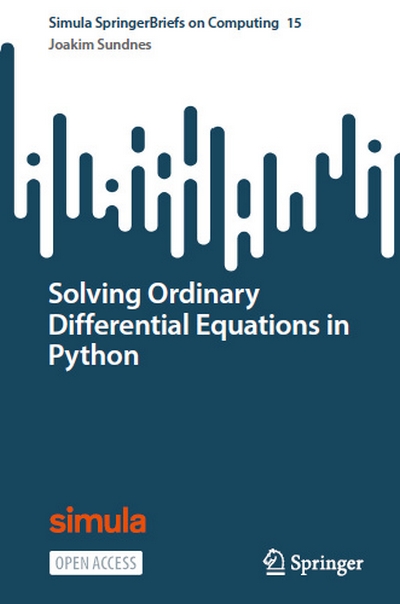
Joakim Sundnes | Solving Ordinary Differential Equations in Python (Simula SpringerBriefs on Computing) (2024) [PDF] [EN]
1.0 MB · 1600×1600
Joakim Sundnes | Solving Ordinary Differential Equations in Python (Simula SpringerBriefs on Computing) (2024) [PDF] Автор: Joakim Sundnes
Издательство: Springer
ISBN: 978-3031467677
Жанр: Python Programming, Pure Mathematics, Software Design, Testing ; Engineering
Язык: Английский
Формат: PDF
Качество: Изначально электронное (ebook)
Иллюстрации: Цветные и черно-белые
Описание:
This open access volume explains the foundations of modern solvers for ordinary differential equations (ODEs). Formulating and solving ODEs is an essential part of mathematical modeling and computational science, and numerous solvers are available in commercial and open source software. However, no single ODE solver is the best choice for every single problem, and choosing the right solver requires fundamental insight into how the solvers work. This book will provide exactly that insight, to enable students and researchers to select the right solver for any ODE problem of interest, or implement their own solvers if needed. The presentation is compact and accessible, and focuses on the large and widely used class of solvers known as Runge-Kutta methods. Explicit and implicit methods are motivated and explained, as well as methods for error control and automatic time step selection, and all the solvers are implemented as a class hierarchy in Python. 1 Programming a Simple ODE Solver
2 Improving the Accuracy
3 Stable Solvers for Stiff ODE Systems
4 Adaptive Time Step Methods
5 Modeling Infectious Diseases
References
Index Скриншоты:
---->https://s01.pic4net.com/di-9H7A9U.jpeg<----
---->https://s01.pic4net.com/di-8LKNCH.jpeg<----
---->https://s01.pic4net.com/di-EODX0N.jpeg<----
---->https://s01.pic4net.com/di-ZTKDRY.jpeg<----
Время раздачи: с 10 до 20 (минимум до появления первых 3-5 скачавших)
Christoffer Noring | Ship an MCP Server in Python - Fast. Build, test, and deploy a production-ready MCP server with MCP Inspector, mcp.json, and Streamable HTTP (2026) [PDF] [EN]
Build and ship a production-ready Python MCP server fast. Add tools, resources, and prompts, validate with Inspector, then deploy over secure HTTP with confidence.
Key Features
Build a Python MCP server end-to-end: tools, resources, and prompts that actually work( Читать дальше... )Жанр: Web Services & APIs, Web Services, Python Computer ProgrammingЯзык: АнглийскийИздательство: Packt PublishingФормат: PDFКачество: Изначально электронное (ebook)
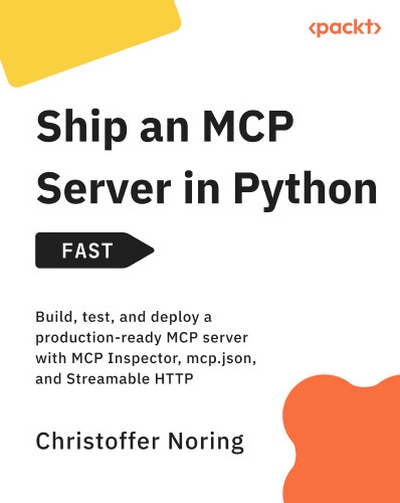
Christoffer Noring | Ship an MCP Server in Python - Fast. Build, test, and deploy a production-ready MCP server with MCP Inspector, mcp.json, and Streamable HTTP (2026) [PDF] [EN]
1.0 MB · 1600×1600
Christoffer Noring | Ship an MCP Server in Python - Fast. Build, test, and deploy a production-ready MCP server with MCP Inspector, mcp.json, and Streamable HTTP (2026) [PDF] Автор: Christoffer Noring
Издательство: Packt Publishing
ISBN: 978-1807609085
Жанр: Web Services ; APIs, Web Services, Python Computer Programming
Язык: Английский
Формат: PDF
Качество: Изначально электронное (ebook)
Иллюстрации: Цветные и черно-белые
Описание:
Build and ship a production-ready Python MCP server fast. Add tools, resources, and prompts, validate with Inspector, then deploy over secure HTTP with confidence.
Key Features
Build a Python MCP server end-to-end: tools, resources, and prompts that actually work
Integrate with real hosts via mcp.json, including VS Code agent mode and Claude Desktop
Validate and harden for production using MCP Inspector + CI smoke tests + secure HTTP transport
Book Description
Discover how to build and ship a Python MCP server Fast so your AI workflows can call real tools with confidence. This short book gives you a clear, end-to-end path from a working local server to a deployable service, without wading through scattered docs or guesswork.
This book takes you through creating an MCP reference server in Python: you implement practical tools, add a reusable resource, and package prompt templates that make tool use more reliable. You also wire everything into real hosts using mcp.json, so you can run your server from environments like VS Code agent mode and Claude Desktop. You validate behavior early using MCP Inspector in both GUI and CLI modes, so you can list tools, call them deterministically, and turn your checks into CI-friendly smoke tests. You then migrate from local stdio to streamable HTTP, applying pragmatic security patterns (such as bearer tokens and OAuth-style middleware) to prepare your MCP server for real-world deployment.
By the end, you can confidently implement, test, and integrate a production-ready Python MCP server, and reuse the same approach to expose new capabilities as your agentic applications grow.
What you will learn
Build a working Python MCP server from scratch
Define tools, resources, and prompt templates for agents
Connect your server to hosts using mcp.json configuration
Run MCP tools in VS Code agent mode and Claude Desktop
Test and debug tool calls using MCP Inspector
Automate smoke tests for CI using the Inspector CLI
Move from local stdio to streamable HTTP transport
Secure MCP endpoints with tokens, scopes, and roles
Who this book is for
Python developers, AI/product engineers, and platform engineers who want to build, integrate, test, and deploy a production-ready MCP server in Python. You need beginner-to-intermediate Python skills plus basic comfort with the command line and HTTP APIs. Table of Contents:
1. Anchor Your MCP Server and Mental Model
2. Set Up and Build a Minimal Python MCP Server
3. Design Tools, Resources, and Prompts That AIs Select Correctly
4. Integrate With Hosts Using mcp.json (VS Code Agent Mode and Claude Desktop)
5. Build a Programmatic Client With an LLM in the Loop
6. Migrate to Streamable HTTP and Add Pragmatic Security
7. Putting It All Together: Build and Rollout Plan Скриншоты:
---->https://s01.pic4net.com/di-9DDJO4.jpeg<----
---->https://s01.pic4net.com/di-I5GRSW.jpeg<----
---->https://s01.pic4net.com/di-9XLUKT.jpeg<----
---->https://s01.pic4net.com/di-6OWKQV.jpeg<----
Время раздачи: с 10 до 20 (минимум до появления первых 3-5 скачавших)
Habib Izadkhah, Rashid Behzadidoost | Challenging Programming in Python: A Problem Solving Perspective (2023) [PDF] [EN]
This book aims to strengthen programming skills and foster creative thinking by presenting and solving 90 challenging problems. The book is intended for individuals with elementary, intermediate, and advanced Python programming skills who aspire to take their abilities to the next level. Additionally, the book is valuable for individuals interested in enhancing their ( Читать дальше... )Жанр: Python Programming, Computer Programming Languages, Applied MathematicsЯзык: АнглийскийИздательство: SpringerФормат: PDFКачество: Изначально электронное (ebook)
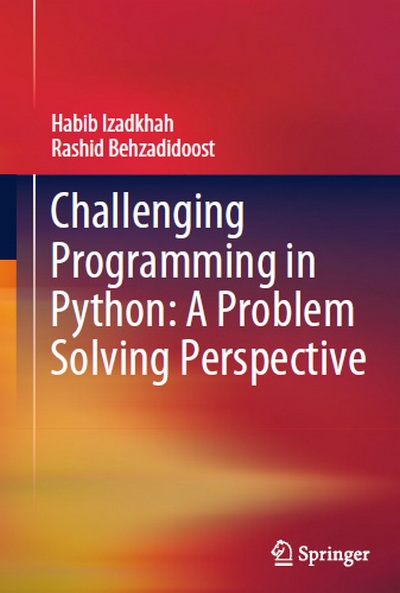
Habib Izadkhah, Rashid Behzadidoost | Challenging Programming in Python: A Problem Solving Perspective (2023) [PDF] [EN]
1.0 MB · 1600×1600
Habib Izadkhah, Rashid Behzadidoost | Challenging Programming in Python: A Problem Solving Perspective (2023) [PDF] Автор: Habib Izadkhah, Rashid Behzadidoost
Издательство: Springer
ISBN: 978-3031399985, 978-3031400018
Жанр: Python Programming, Computer Programming Languages, Applied Mathematics
Язык: Английский
Формат: PDF
Качество: Изначально электронное (ebook)
Иллюстрации: Цветные и черно-белые
Описание:
This book aims to strengthen programming skills and foster creative thinking by presenting and solving 90 challenging problems. The book is intended for individuals with elementary, intermediate, and advanced Python programming skills who aspire to take their abilities to the next level. Additionally, the book is valuable for individuals interested in enhancing their creative thinking and logical reasoning skills. It is a self-instructional book meant to provide readers with the ability to solve challenging problems independently. The presented challenges are lucidly and succinctly expressed, facilitating readers to follow along and comprehend the problem-solving process. The challenges cover various fields, making it suitable for a wide range of individuals.
The book is divided into eight chapters, beginning with an introduction in chapter one. The second chapter presents essential Python basics for programming challenging problems, while the subsequent chapters focuson specific types of challenges. These include math-based challenges in chapter three, number-based challenges in chapter four, string-based challenges in chapter five, game-based challenges in chapter six, count-based challenges in chapter seven, and miscellaneous challenges in chapter eight. Each chapter comprises a set of challenges with examples, hints, algorithms, and Python code solutions. The target audience of the book includes computer science and engineering students, teachers, software developers, and participants in programming competitions. Chapter 1: Introduction
Chapter 2: Python Basics
Chapter 3: Math (28 Problems)
Chapter 4: Number (21 Problems)
Chapter 5: String (13 Problems)
Chapter 6: Game (14 Problems)
Chapter 7: Count (8 Problems)
Chapter 8: Miscellaneous Problems (6 Problems) Скриншоты:
---->https://s01.pic4net.com/di-96XE9U.jpeg<----
---->https://s01.pic4net.com/di-ZY3VIF.jpeg<----
---->https://s01.pic4net.com/di-2DUYOI.jpeg<----
---->https://s01.pic4net.com/di-S5SQZJ.jpeg<----
Время раздачи: с 10 до 20 (минимум до появления первых 3-5 скачавших)
Pradeep Singh, Balasubramanian Raman | Python for Mathematical Thinking (2026) [PDF, EPUB] [EN]
This book offers a rigorous yet approachable pathway to applying Python for mathematical problem-solving, spanning foundational concepts to advanced theoretical frameworks. It bridges the gap between abstract mathematics and computational execution, guiding readers through a logically structured, step-by-step journey. Emphasizing mathematical reasoning, symbolic ( Читать дальше... )Жанр: Python Programming, Computer Programming Languages, EngineeringЯзык: АнглийскийИздательство: SpringerФормат: PDF, EPUBКачество: Изначально электронное (ebook)

Pradeep Singh, Balasubramanian Raman | Python for Mathematical Thinking (2026) [PDF, EPUB] [EN]
1.0 MB · 1600×1600
Pradeep Singh, Balasubramanian Raman | Python for Mathematical Thinking (2026) [PDF, EPUB] Автор: Pradeep Singh, Balasubramanian Raman
Издательство: Springer
ISBN: 978-9819540792
Жанр: Python Programming, Computer Programming Languages, Engineering
Язык: Английский
Формат: PDF, EPUB
Качество: Изначально электронное (ebook)
Иллюстрации: Цветные и черно-белые
Описание:
This book offers a rigorous yet approachable pathway to applying Python for mathematical problem-solving, spanning foundational concepts to advanced theoretical frameworks. It bridges the gap between abstract mathematics and computational execution, guiding readers through a logically structured, step-by-step journey. Emphasizing mathematical reasoning, symbolic computation, and real-world problem modeling, it equips readers to analyze, simulate, and visualize complex structures with clarity and efficiency. Ideal for students, researchers, and professionals in Mathematics, Data Science, AI, Physics, and Computational Science, it cultivates both programming skill and deep mathematical intuition. Chapter 1: Introduction.
Chapter 2: Mathematical Foundations: Translates core university-level arithmetic, algebra, and inequalities into code.
Chapter 3: Calculus with Python: Covers symbolic differentiation/integration (SymPy) and numerical methods.
Chapter 4: Data Structures ; Algorithms: Covers complexity, search, sorting, and graph algorithms (BFS/DFS).
Chapter 5: Probability ; Statistics: Addresses random variables, distributions, and inferential statistics.
Chapter 6: Differential Equations: Covers analytical and numerical solvers (Runge–Kutta, Finite Element) for various equation types.
Chapter 7: Discrete Mathematics: Explores sets, logic, and combinatorics using itertools and networkx.
Chapter 8: Numerical Methods: Details root-finding, interpolation, and matrix factorization.
Chapter 9: Chaos ; Dynamical Systems: Covers complex systems analysis, bifurcation, and forecasting.
Chapter 10: Data Science ; ML: Covers feature engineering, regression, and neural networks.
Chapter 11: Advanced Topics: Explores Fourier/wavelet analysis and quantum computing basics Скриншоты:
---->https://s01.pic4net.com/di-00SVAK.jpeg<----
---->https://s01.pic4net.com/di-KU1CCO.jpeg<----
---->https://s01.pic4net.com/di-J59Y1H.jpeg<----
---->https://s01.pic4net.com/di-NNGVKK.jpeg<----
Время раздачи: с 10 до 20 (минимум до появления первых 3-5 скачавших)
Filippo Biscarini , Nelson Nazzicari | Deep Learning for Life Sciences. With Python Notebooks for Examples and Exercises (2026) [PDF] [EN]
Artificial intelligence is already ubiquitous in the life sciences, from cancer diagnosis to medical image analysis, from precision agriculture to wildlife monitoring. It is therefore essential for any scientist, especially life scientists, to have a basic understanding of deep learning, the statistical engine behind AI.
This book explains the theory behind neural ( Читать дальше... )Жанр: Applications of Mathematics, Biological Sciences, Data Analysis and Big Data, Machine Learning, Artificial Intelligence, Statistics, Artificial Intelligence Applications in Healthcare Decision SupportЯзык: АнглийскийИздательство: SpringerФормат: PDFКачество: Изначально электронное (ebook)
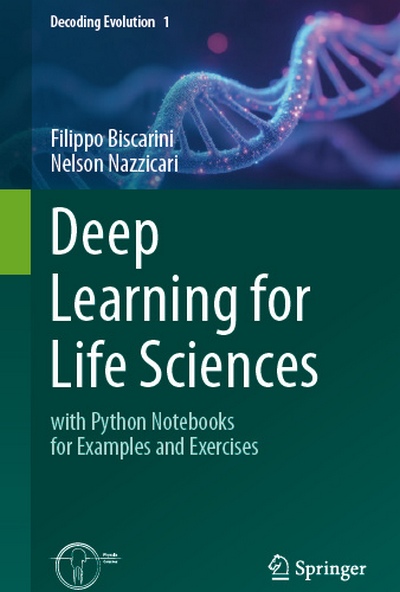
Filippo Biscarini , Nelson Nazzicari | Deep Learning for Life Sciences. With Python Notebooks for Examples and Exercises (2026) [PDF] [EN]
1.0 MB · 1600×1600
Filippo Biscarini , Nelson Nazzicari | Deep Learning for Life Sciences. With Python Notebooks for Examples and Exercises (2026) [PDF] Автор: Filippo Biscarini , Nelson Nazzicari
Издательство: Springer
ISBN: 978-3031968518
Жанр: Applications of Mathematics, Biological Sciences, Data Analysis and Big Data, Machine Learning, Artificial Intelligence, Statistics, Artificial Intelligence Applications in Healthcare Decision Support
Язык: Английский
Формат: PDF
Качество: Изначально электронное (ebook)
Иллюстрации: Цветные и черно-белые
Описание:
Artificial intelligence is already ubiquitous in the life sciences, from cancer diagnosis to medical image analysis, from precision agriculture to wildlife monitoring. It is therefore essential for any scientist, especially life scientists, to have a basic understanding of deep learning, the statistical engine behind AI.
This book explains the theory behind neural networks and their internal workings in clear terms and with numerous examples. The authors cover the building blocks of neural networks, the mathematical theory, different types of network architectures, the problem of overfitting, and the strategies to avoid it. The most common data types encountered in biological problems are discussed, with suggestions on how to apply deep learning to different cases. Success and failure stories are presented through interviews with leading experts in the field.
The book is accompanied by several Python notebooks with practical examples and clearly commented code. 1 Introduction
2 What Is Statistical Learning?
3 Measuring the Error: Validation of Learning Models
4 Neural Networks and Deep Learning Decoded
5 Recurrent Neural Networks (RNN)
6 Making It Work
7 Deep Learning Research and Applications: A Few Interesting Stories Скриншоты:
---->https://s01.pic4net.com/di-45MJPW.jpeg<----
---->https://s01.pic4net.com/di-DKE84J.jpeg<----
---->https://s01.pic4net.com/di-0E6KWH.jpeg<----
---->https://s01.pic4net.com/di-6G389N.jpeg<----
Время раздачи: с 10 до 20 (минимум до появления первых 3-5 скачавших)
Larysa Visengeriyeva | The AI Engineer's Guide to Surviving the EU AI Act. Navigating the EU Regulatory Requirements (2025) [PDF, EPUB] [EN]
With the introduction of the EU AI Act, companies employing AI systems face a new set of comprehensive and stringent regulations. Dr. Larysa Visengeriyeva offers a much-needed guide for navigating these unfamiliar regulatory waters to help you meet compliance challenges with confidence.
From explaining the legislative framework to sharing strategies for implementing ( Читать дальше... )Жанр: Computers & Technology Industry, Software Design & Engineering, Artificial IntelligenceЯзык: АнглийскийИздательство: O’ReillyФормат: PDF, EPUBКачество: Изначально электронное (ebook)

Larysa Visengeriyeva | The AI Engineer's Guide to Surviving the EU AI Act. Navigating the EU Regulatory Requirements (2025) [PDF, EPUB] [EN]
1.0 MB · 1600×1600
Larysa Visengeriyeva | The AI Engineer's Guide to Surviving the EU AI Act. Navigating the EU Regulatory Requirements (2025) [PDF, EPUB] Автор: Larysa Visengeriyeva
Издательство: O’Reilly
ISBN: 978-1-098-17249-7
Жанр: Computers ; Technology Industry, Software Design ; Engineering, Artificial Intelligence
Язык: Английский
Формат: PDF, EPUB
Качество: Изначально электронное (ebook)
Иллюстрации: Цветные и черно-белые
Описание:
With the introduction of the EU AI Act, companies employing AI systems face a new set of comprehensive and stringent regulations. Dr. Larysa Visengeriyeva offers a much-needed guide for navigating these unfamiliar regulatory waters to help you meet compliance challenges with confidence.
From explaining the legislative framework to sharing strategies for implementing robust MLOps and data governance practices, this wide-ranging book shows you the way to thrive, not just survive, under the EU AI Act. It's an indispensable tool for engineers, data scientists, and policymakers engaged in or planning for AI deployments within the EU.
By reading, you'll gain:
An in-depth understanding of the EU AI Act, including the four risk categories and what they mean for you
Strategies for compliance, including practical approaches to achieving technical readiness
Actionable advice on applying MLOps methodologies to ensure ongoing compliance
Insights on the implications of the EU's pioneering approach to AI regulation and its global effects Preface vii
1. Understanding the AI Regulations 1
2. AI Engineering: A Proactive Compliance Catalyst 31
3. Data and AI Governance and AI Engineering 53
4. AI System Assessment and Tailoring AI Engineering for Different Risk Levels. 75
5. AI Engineering for High-Risk AI Systems 101
6. AI Engineering for Limited-Risk AI Systems 155
7. Toward Trustworthy General-Purpose AI and Generative AI 187
A. Designing AI-Powered Applications 221
B. Data Products and Data Contracts 235
C. The Integration of AI Governance and MLOps 239
D. Emerging Roles in Organizations for EU AI Act Compliance 247
Index 255 Скриншоты:
---->https://s01.pic4net.com/di-2CVXYB.jpeg<----
---->https://s01.pic4net.com/di-R133RP.jpeg<----
---->https://s01.pic4net.com/di-JNMCHZ.jpeg<----
---->https://s01.pic4net.com/di-G8NT3Z.jpeg<----
Время раздачи: с 10 до 20 (минимум до появления первых 3-5 скачавших)
Gary Archer, Judith Kahrer, Michał Trojanowski | Cloud Native Data Security with OAuth. A Scalable Zero Trust Architecture (2025) [PDF, EPUB] [EN]
With the growth of cloud native applications, developers increasingly rely on APIs to make everything work. But security often lags behind, making APIs an attractive target for bad actors looking to access valuable business data. OAuth, a powerful framework for API security, offers tools to protect sensitive business data and enforce dynamic access controls. But ( Читать дальше... )Жанр: Computer Network Administration, Cloud Computing, Computer Security & EncryptionЯзык: АнглийскийИздательство: O’ReillyФормат: PDF, EPUBКачество: Изначально электронное (ebook)

Gary Archer, Judith Kahrer, Michał Trojanowski | Cloud Native Data Security with OAuth. A Scalable Zero Trust Architecture (2025) [PDF, EPUB] [EN]
1.0 MB · 1600×1600
Gary Archer, Judith Kahrer, Micha Trojanowski | Cloud Native Data Security with OAuth. A Scalable Zero Trust Architecture (2025) [PDF, EPUB] Автор: Gary Archer, Judith Kahrer, Micha Trojanowski
Издательство: O’Reilly
ISBN: 978-1-098-17285-5, 978-1098164881
Жанр: Computer Network Administration, Cloud Computing, Computer Security ; Encryption
Язык: Английский
Формат: PDF, EPUB
Качество: Изначально электронное (ebook)
Иллюстрации: Цветные и черно-белые
Описание:
With the growth of cloud native applications, developers increasingly rely on APIs to make everything work. But security often lags behind, making APIs an attractive target for bad actors looking to access valuable business data. OAuth, a powerful framework for API security, offers tools to protect sensitive business data and enforce dynamic access controls. But to harness its full potential, you need more than standards—you need strategies for adapting to evolving security demands.
Designed for developers, architects, and security professionals, this guide provides everything you need to secure APIs in the cloud native era—ensuring your business data stays protected. You'll learn how to combine OAuth's token-based model with cloud native platforms like Kubernetes to build a scalable, zero trust security architecture. With OAuth, you can go beyond simple allow/deny rules and create security policies that align with business needs, while Kubernetes provides best-in-class deployment patterns to keep systems secure and efficient.
Understand why user identity must be part of your cloud native security stack
Discover how to integrate user identity into APIs
Learn to externalize security and secure data access using OAuth
Uncover methods for running security components in a Kubernetes cluster
Get the latest security best practices for client applications and APIs Foreword
Preface
Chapter 1. Why Do You Need OAuth?
Chapter 2. OAuth 2.0 Distilled
Chapter 3. Security Architecture
Chapter 4. OAuth Data Design
Chapter 5. Secure API Development
Chapter 6. Access Token Design
Chapter 7. Secure Access Tokens
Chapter 8. Proxies, Gateways, and Sidecars
Chapter 9. Entitlements
Chapter 10. Workload Identities
Chapter 11. Managing a Cloud Native Authorization Server
Chapter 12. OAuth for Native Applications
Chapter 13. OAuth for Browser-Based Applications
Chapter 14. User Authentication
Index Скриншоты:
---->https://s01.pic4net.com/di-2KHJ6X.jpeg<----
---->https://s01.pic4net.com/di-U10WTQ.jpeg<----
---->https://s01.pic4net.com/di-GS4BAI.jpeg<----
---->https://s01.pic4net.com/di-A3OT7P.jpeg<----
Время раздачи: с 10 до 20 (минимум до появления первых 3-5 скачавших)
Antonio Zinilli | Elements of Network Science. Theory, Methods and Applications in Stata, R and Python (Statistics and Computing) (2025) [PDF] [EN]
This book provides readers with a comprehensive guide to designing rigorous and effective network science tools using the statistical software platforms Stata, R, and Python.
Network science offers a means to understand and analyze complex systems that involve various types of relationships. This text bridges the gap between theoretical understanding and practical ( Читать дальше... )Жанр: Mathematical & Statistical Software, Business Statistics, StatisticsЯзык: АнглийскийИздательство: SpringerФормат: PDFКачество: Изначально электронное (ebook)
Antonio Zinilli | Elements of Network Science. Theory, Methods and Applications in Stata, R and Python (Statistics and Computing) (2025) [PDF] [EN]
1.0 MB · 1600×1600
Antonio Zinilli | Elements of Network Science. Theory, Methods and Applications in Stata, R and Python (Statistics and Computing) (2025) [PDF] Автор: Antonio Zinilli
Издательство: Springer
ISBN: 978-3031847127, 978-3031847110
Жанр: Mathematical ; Statistical Software, Business Statistics, Statistics
Язык: Английский
Формат: PDF
Качество: Изначально электронное (ebook)
Иллюстрации: Цветные и черно-белые
Описание:
This book provides readers with a comprehensive guide to designing rigorous and effective network science tools using the statistical software platforms Stata, R, and Python.
Network science offers a means to understand and analyze complex systems that involve various types of relationships. This text bridges the gap between theoretical understanding and practical application, making network science more accessible to a wide range of users. It presents the statistical models pertaining to individual network techniques, followed by empirical applications that use both built-in and user-written packages, and reveals the mathematical and statistical foundations of each model, along with demonstrations involving calculations and step-by-step code implementation. In addition, each chapter is complemented by a case study that illustrates one of the several techniques discussed.
The introductory chapter serves as a roadmap for readers, providing an initial understanding of network science and guidance on the required packages, the second chapter focuses on the main concepts related to network properties. The next two chapters present the primary definitions and concepts in network science and various classes of graphs observed in real contexts. The final chapter explores the main social network models, including the family of exponential random graph models. Each chapter includes real-world data applications from the social sciences, using at least one of the platforms Stata, R, and Python, providing a more comprehensive understanding of the availability of network science methods across different software platforms. The underlying computer code and data sets are available online.
The book will appeal to graduate students, researchers and data scientists, mainly from the social sciences, who seek theoretical and applied tools to implement network science techniques in their work. Introduction
1. Introduction
2. Network Science: Concepts and Definitions
3. Network Metrics
4. Theoretical Models of Networks
5. Statistical Social Network Models
References Скриншоты:
---->https://s01.pic4net.com/di-MZHXJK.jpeg<----
---->https://s01.pic4net.com/di-DV19DX.jpeg<----
---->https://s01.pic4net.com/di-24W4SQ.jpeg<----
---->https://s01.pic4net.com/di-7QYAC9.jpeg<----
Время раздачи: с 10 до 20 (минимум до появления первых 3-5 скачавших)
Chi Wang, Peiheng Hu | Hands-On LLM Serving and Optimization. Hosting LLMs at Scale (2026) [PDF, EPUB] [EN]
Large language models (LLMs) are the reasoning engines of modern AI. Today, a major inflection point has arrived: as the world races to deploy AI at scale, model inference has moved to the center of the stack. Welcome to the inference era.
Without proper optimization, however, LLMs can be expensive and slow to serve. Hands-On LLM Serving and Optimization is a comprehensive ( Читать дальше... )Жанр: Software Design Tools, Natural Language Processing, Computer ScienceЯзык: АнглийскийИздательство: O’ReillyФормат: PDF, EPUBКачество: Изначально электронное (ebook)

Chi Wang, Peiheng Hu | Hands-On LLM Serving and Optimization. Hosting LLMs at Scale (2026) [PDF, EPUB] [EN]
1.0 MB · 1600×1600
Chi Wang, Peiheng Hu | Hands-On LLM Serving and Optimization. Hosting LLMs at Scale (2026) [PDF, EPUB] Автор: Chi Wang, Peiheng Hu
Издательство: O’Reilly
ISBN: 979-8-341-62149-7, 979-8341621466
Жанр: Software Design Tools, Natural Language Processing, Computer Science
Язык: Английский
Формат: PDF, EPUB
Качество: Изначально электронное (ebook)
Иллюстрации: Цветные и черно-белые
Описание:
Large language models (LLMs) are the reasoning engines of modern AI. Today, a major inflection point has arrived: as the world races to deploy AI at scale, model inference has moved to the center of the stack. Welcome to the inference era.
Without proper optimization, however, LLMs can be expensive and slow to serve. Hands-On LLM Serving and Optimization is a comprehensive guide to the complexities of deploying and optimizing LLMs at scale.
In this hands-on, engineering-focused book, authors Chi Wang and Peiheng Hu combine practical examples, code, and strategies for building robust, performant, and cost-efficient AI token factories. Whether you're building the LLM inference infrastructure or the applications that consume it, a deep understanding of LLM serving will make you a more effective, future-ready engineer as AI transforms how we work and build.
Learn the foundations of model serving with core concepts, design paradigms, and industry best practices
Understand the common challenges of hosting LLMs at scale
Balance latency and throughput to meet the demands of AI applications and business requirements
Host LLMs cost-effectively with practical, code-backed techniques Preface ix
Chapter 1. Introduction to Model Serving and Optimization 1
Chapter 2. Large Language Model Serving 31
Chapter 3. Model Serving System Design: A Deep Dive 65
Chapter 4. Model Serving Best Practices 107
Chapter 5. Challenges When Serving LLMs 157
Chapter 6. Essential LLM Optimization Techniques 189
Chapter 7. Advanced LLM Optimization Techniques 233
Chapter 8. LLM Serving Frameworks 271
Chapter 9. LLM Optimization in Practice 293
Chapter 10. Advancements in LLM Serving 315
Index 333 Скриншоты:
---->https://s01.pic4net.com/di-ZBEMJJ.jpeg<----
---->https://s01.pic4net.com/di-RT3R29.jpeg<----
---->https://s01.pic4net.com/di-M8CQKJ.jpeg<----
---->https://s01.pic4net.com/di-F8ZBL5.jpeg<----
Время раздачи: с 10 до 20 (минимум до появления первых 3-5 скачавших)
Vincent Arel-Bundock | Model to Meaning. How to Interpret Statistical Models with R and Python (2025) [PDF] [EN]
Our world is complex. To make sense of it, data analysts routinely fit sophisticated statistical or machine learning models. Interpreting the results produced by such models can be challenging, and researchers often struggle to communicate their findings to colleagues and stakeholders. Model to Meaning is a book designed to bridge that gap. It is a practical guide ( Читать дальше... )Жанр: Statistics, Probability & StatisticsЯзык: АнглийскийИздательство: Chapman and HallФормат: PDFКачество: Изначально электронное (ebook)
Vincent Arel-Bundock | Model to Meaning. How to Interpret Statistical Models with R and Python (2025) [PDF] [EN]
1.0 MB · 1600×1600
Vincent Arel-Bundock | Model to Meaning. How to Interpret Statistical Models with R and Python (2025) [PDF] Автор: Vincent Arel-Bundock
Издательство: Chapman and Hall
ISBN: 978-1032908724, 978-1040434451
Жанр: Statistics, Probability ; Statistics
Язык: Английский
Формат: PDF
Качество: Изначально электронное (ebook)
Иллюстрации: Черно-белые
Описание:
Our world is complex. To make sense of it, data analysts routinely fit sophisticated statistical or machine learning models. Interpreting the results produced by such models can be challenging, and researchers often struggle to communicate their findings to colleagues and stakeholders. Model to Meaning is a book designed to bridge that gap. It is a practical guide for anyone who needs to translate model outputs into accurate insights that are accessible to a wide audience.
Features:
Presents a simple and powerful conceptual framework to interpret the results from a wide variety of statistical or machine learning models.
Features in-depth case studies covering topics such as causal inference, experiments, interactions, categorical variables, multilevel regression, weighting, and machine learning.
Includes extensive practical examples in both R and Python using the marginal effects software.
Accompanied by comprehensive online documentation, tutorials, and bonus case studies.
Model to Meaning introduces a simple and powerful conceptual framework to help analysts describe the statistical quantities that can shed light on their research questions, estimate those quantities, and communicate the results clearly and rigorously. Based on this framework, the book proposes a consistent workflow that can be applied to (almost) any statistical or machine learning model. Readers will learn how to transform complex parameter estimates into quantities that are readily interpretable, intuitive, and understandable.
Written for data scientists, researchers, and students, the book speaks to newcomers seeking practical skills, and to experienced analysts who are ready to adopt new tools and rethink entrenched habits. It offers useful ideas, concrete workflows, powerful software, and detailed case studies, presented using real-world data and code examples. Part I: Interpretation
1. Who is this book for?
2. Models and Meaning
3. Conceptual Framework
Part II: Quantities and Tests
4. Hypothesis and Equivalence Tests
5. Predictions
6. Counterfactual Comparisons
7. Slopes
Part III: Case Studies
8. G-Computation
9. Experiments
10. Interactions, Polynomials, and Splines
11. Categorical and Ordinal Outcomes
12. Multilevel Regression and Post-stratification
13. Machine Learning
14. Uncertainty and Conformal Prediction
Part IV: Tutorials ; Miscellaneous
Specialized Tutorials
Technical Appendices Скриншоты:
---->https://s01.pic4net.com/di-CZPNHN.jpeg<----
---->https://s01.pic4net.com/di-P1SM47.jpeg<----
---->https://s01.pic4net.com/di-XU30RW.jpeg<----
---->https://s01.pic4net.com/di-Q6WEKL.jpeg<----
Время раздачи: с 10 до 20 (минимум до появления первых 3-5 скачавших)
Michael Washington | Blazor Succinctly (2026) [PDF, EPUB, MOBI] [EN]
Blazor technology enables you to create sophisticated, manageable, and extensible single-page applications using C# and Razor syntax. Blazor Succinctly will cover the core elements of Blazor, then explore additional features by building a sample help desk application. Michael Washington will take readers from creating the project in Visual Studio to implementing ( Читать дальше... )Жанр: Компьютерная литератураЯзык: АнглийскийИздательство: Syncfusion, Inc.Формат: PDF, EPUB, MOBIКачество: Изначально электронное (ebook)

Michael Washington | Blazor Succinctly (2026) [PDF, EPUB, MOBI] [EN]
1.0 MB · 1600×1600
Michael Washington | Blazor Succinctly (2026) [PDF, EPUB, MOBI] Автор: Michael Washington
Издательство: Syncfusion, Inc.
ISBN: 978-1-64200-252-2
Жанр: Компьютерная литература
Язык: Английский
Формат: PDF, EPUB, MOBI
Качество: Изначально электронное (ebook)
Иллюстрации: Цветные и черно-белые
Описание:
Blazor technology enables you to create sophisticated, manageable, and extensible single-page applications using C# and Razor syntax. Blazor Succinctly will cover the core elements of Blazor, then explore additional features by building a sample help desk application. Michael Washington will take readers from creating the project in Visual Studio to implementing email notifications.
Скриншоты:
---->https://s01.pic4net.com/di-TLEQ28.jpeg<----
---->https://s01.pic4net.com/di-7XMNZM.jpeg<----
---->https://s01.pic4net.com/di-NG53NQ.jpeg<----
---->https://s01.pic4net.com/di-MLZDDL.jpeg<----
Время раздачи: с 10 до 20 (минимум до появления первых 3-5 скачавших)
Ху Чуньсюй, Ли Цяолун | ROS 2. Программирование интеллектуальных роботов (2025) [PDF]
Книга посвящена основным принципам работы с операционной системой для роботов ROS 2 и практике разработки роботов. В ней подробно описаны ключевые концепции, компоненты и инструменты ROS 2 и рассмотрены методы построения симуляционных и реальных робототехнических систем, а также способы применения ROS 2 для задач компьютерного зрения, построения карт и автономной ( Читать дальше... )Жанр: Компьютерная литератураПеревод: И.А. ШевкунИздательство: ДМК ПрессФормат: PDFКачество: Изначально электронное (ebook)

Ху Чуньсюй, Ли Цяолун | ROS 2. Программирование интеллектуальных роботов (2025) [PDF]
1.0 MB · 1600×1600
Ху Чуньсюй, Ли Цяолун | ROS 2. Программирование интеллектуальных роботов (2025) [PDF] Автор: Ху Чуньсюй, Ли Цяолун
Перевод: И.А. Шевкун
Издательство: ДМК Пресс
ISBN: 978-5-93700-412-3
Жанр: Компьютерная литература
Формат: PDF
Качество: Изначально электронное (ebook)
Иллюстрации: Черно-белые
Описание:
Книга посвящена основным принципам работы с операционной системой для роботов ROS 2 и практике разработки роботов. В ней подробно описаны ключевые концепции, компоненты и инструменты ROS 2 и рассмотрены методы построения симуляционных и реальных робототехнических систем, а также способы применения ROS 2 для задач компьютерного зрения, построения карт и автономной навигации. Большое количество иллюстраций, схем и исходного кода на языках C++ и Python позволит не только освоить базовые функции ROS 2, но и глубже понять методы разработки роботов и применить полученные знания на практике.
Издание адресовано как начинающим разработчикам, желающим познакомиться с системой ROS 2 и применять ее на практике, так и опытным инженерам-робототехникам, которые могут использовать книгу в качестве справочного пособия. Оглавление:
От издательства.......................................................................................................13
Рецензии.................................................................................................................14
Предисловие............................................................................................................18
Глава 1. ROS: душа умных роботов............................................................................23
1.1. Эра интеллектуальных роботов...........................................................................23
1.2. История развития ROS........................................................................................24
1.2.1. Создание ROS................................................................................................25
1.2.2. Развитие ROS.................................................................................................25
1.2.3. Преимущества ROS.......................................................................................28
1.3. ROS 2 и ROS 1..................................................................................................29
1.3.1. Ограничения ROS 1.......................................................................................29
1.3.2. Новая версия ROS 2.......................................................................................30
1.3.3. Сравнение ROS 2 и ROS 1.............................................................................32
1.4. Установка ROS 2...............................................................................................37
1.4.1. Что такое Linux..............................................................................................37
1.4.2. Что такое Ubuntu...........................................................................................38
1.4.3. Установка операционной системы Ubuntu.....................................................39
1.4.4. Установка системы ROS 2............................................................................42
1.5. Командная строка ROS 2................................................................................45
1.5.1. Командная строка в Linux...........................................................................45
1.5.2. Симулятор черепахи....................................................................................50
1.5.3. Командная строка в ROS 2...........................................................................50
1.6. Резюме.........................................................................................................57
Глава 2. Основные принципы ROS 2. Фундамент для создания роботов....................58
2.1. Процесс разработки роботов с использованием ROS 2..................................58
2.2. Рабочее пространство: база для разработки роботов....................................60
2.2.1. Что такое рабочее пространство................................................................60
2.2.2. Создание рабочего пространства...............................................................62
2.2.3. Компиляция рабочего пространства.........................................................63
2.2.4. Настройка переменных окружения...........................................................64
2.3. Пакеты: классификация функций робота........................................................65
2.3.1. Что такое пакет.............................................................................................65
2.3.2. Создание пакета............................................................................................66
2.3.3. Структура функционального пакета..........................................................67
2.3.4. Компиляция пакета......................................................................................72
2.4. Узлы: рабочие клетки робота.............................................................................73
2.4.1. Что такое узел................................................................................................73
2.4.2. Методика программирования узлов (Python)..........................................75
2.4.3. Методика программирования узлов (C++)...............................................77
2.4.4. Команды для работы с узлами....................................................................79
2.4.5. Пример использования узла: обнаружение объектов.............................80
2.5. Тема: мост для передачи данных между узлами.............................................83
2.5.1. Что такое тема...............................................................................................83
2.5.2. Модель коммуникации посредством темы..............................................84
2.5.3. Пример создания обмена сообщениями...................................................86
2.5.4. Метод программирования издателя темы (Python)................................87
2.5.5. Метод программирования подписчика темы (Python)...........................89
2.5.6. Метод программирования издателя темы (C++).....................................90
2.5.7. Метод программирования подписчика темы (C++).................................91
2.5.8. Команды для работы с темами..............................................................93
2.5.9. Пример использования тем: обнаружение объектов (периодическое)......94
2.6. Службы: взаимодействие между узлами в формате «вопрос–ответ»..........98
2.6.1. Что такое служба...............................................................................98
2.6.2. Модель коммуникации посредством службы..........................................99
2.6.3. Пример программирования коммуникации посредством службы..............101
2.6.4. Программирование клиента (Python).....................................................102
2.6.5. Программирование сервера (Python)......................................................103
2.6.6. Программирование клиента (C++)...........................................................104
2.6.7. Программирование сервера (C++)............................................................105
2.6.8. Команды для работы со службами...........................................................107
2.6.9. Пример использования службы: обнаружение цели (по запросу)...........107
2.7. Интерфейсы коммуникации: стандартная структура передачи данных.....110
2.7.1. Что такое интерфейс коммуникации.......................................................111
2.7.2. Определение интерфейсов коммуникации............................................113
2.7.3. Команды для работы с интерфейсами коммуникации............................115
2.7.4. Пример использования интерфейса службы: запрос координат
обнаруженного объекта................................................................................116
2.7.5. Пример использования интерфейса темы: периодическая
публикация координат обнаружения объекта.................................................120
2.8. Действие: управление процессом выполнения полной единицы
поведения.....................................................................................................123
2.8.1. Что такое действие...............................................................................123
2.8.2. Модель коммуникации действия.............................................................124
2.8.3. Пример программирования коммуникации действия................................125
2.8.4. Определение интерфейса действий........................................................127
2.8.5. Программирование сервера (Python)......................................................128
2.8.6. Программирование клиента (Python).....................................................130
2.8.7. Программирование клиента (C++)...........................................................132
2.8.8. Программирование сервера (C++)............................................................134
2.8.9. Команды для работы с действиями.........................................................137
2.9. Параметры: глобальный словарь роботизированной системы......................138
2.9.1. Что такое параметры.............................................................................138
2.9.2. Модель коммуникации параметров........................................................139
2.9.3. Работа с параметрами в командной строке.............................................140
2.9.4. Программирование параметров (Python)...............................................142
2.9.5. Программирование параметров (C++)....................................................143
2.9.6. Пример использования параметров: установка порога для
обнаружения объектов...................................................................................145
2.10. Служба распределения данных (DDS): нейронная сеть робота................147
2.10.1. Что такое DDS......................................................................................148
2.10.2. Модель коммуникации DDS....................................................................150
2.10.3. Стратегия обеспечения качества............................................................151
2.10.4. Настройка QoS DDS в командной строке..............................................155
2.10.5. Пример программирования с использованием DDS..............................157
2.11. Распределенная коммуникация.............................................................159
2.11.1. Что такое распределенная коммуникация...........................................160
2.11.2. Удаленное сетевое подключение по SSH..............................................161
2.11.3. Распределенная передача данных.........................................................162
2.11.4. Группы распределенной коммуникации..............................................164
2.11.5. Распределенная коммуникация в примере с черепахой.......................165
2.12. Резюме...............................................................................................166
Глава 3. Часто используемые инструменты ROS 2: упрощаем
разработку роботов.....................................................................................167
3.1. Launch: сценарии запуска и конфигурации нескольких узлов...................167
3.1.1. Способы запуска нескольких узлов.........................................................169
3.1.2. Настройка параметров командной строки.............................................171
3.1.3. Переназначение ресурсов.......................................................................172
3.1.4. Настройка параметров ROS.....................................................................174
3.1.5. Вложенное включение файлов Launch......................................................176
3.2. tf: управление системами координат робота................................................177
3.2.1. Системы координат робота.......................................................................177
3.2.2. Работа с tf из командной строки..............................................................179
3.2.3. Статическая трансляция tf (Python).........................................................182
3.2.4. Статическая трансляция tf (C++)..............................................................184
3.2.5. Динамическая трансляция tf (Python).....................................................185
3.2.6. Динамическая трансляция tf (C++)..........................................................188
3.2.7. Прослушивание tf (Python)........................................................................190
3.2.8. Прослушивание tf (C++).............................................................................192
3.2.9. Пример комплексного применения tf: следование (Python)............................196
3.2.10. Пример комплексного применения tf: следование (C++)..............................201
3.3. Gazebo: платформа для трехмерного физического моделирования роботов........204
3.3.1. Введение в Gazebo......................................................................................204
3.3.2. Пример моделирования робота.....................................................................208
3.3.3. Пример моделирования датчиков..............................................................210
3.4. RViz: платформа визуализации данных.........................................................211
3.4.1. Введение в RViz...........................................................................................211
3.4.2. Процесс визуализации данных.................................................................214
3.4.3. Пример 1: визуализация данных tf..........................................................216
3.4.4. Пример 2: визуализация данных изображений............................................219
3.4.5. Взаимосвязь Gazebo и RViz........................................................................220
3.5. rosbag: запись и воспроизведение данных....................................................221
3.5.1. Запись данных.........................................................................................221
3.5.2. Воспроизведение данных..........................................................................223
3.6. rqt: модульный набор инструментов для визуализации...................................224
3.6.1. Введение в rqt..........................................................................................225
3.6.2. Отображение журналов.............................................................................225
3.6.3. Отображение изображений.......................................................................227
3.6.4. Публикация данных тем и служб..............................................................228
3.6.5. Построение графиков данных..................................................................228
3.6.6. Управление пакетами данных..................................................................229
3.6.7. Визуализация узлов....................................................................................229
3.7. Настройка среды разработки ROS 2.................................................................231
3.7.1. Система управления версиями Git.................................................................231
3.7.2. Интегрированная среда разработки VSCode.................................................233
3.8. Резюме.........................................................................................................235
Глава 4. ROS 2: моделирование роботов без затрат................................................237
4.1. Понятие робота и его составные части...........................................................237
4.2. Моделирование робота с использованием URDF...............................................240
4.2.1. Описание связей.........................................................................................242
4.2.2. Описание суставов......................................................................................245
4.2.3. Полная модель робота................................................................................246
4.3. Создание URDF-модели робота........................................................................247
4.3.1. Пакет функций модели робота.................................................................247
4.3.2. Визуализация модели робота...................................................................248
4.3.3. Анализ модели робота...............................................................................252
4.4. Оптимизация модели робота с использованием XACRO.................................256
4.4.1. Основные синтаксические конструкции файлов XACRO.............................256
4.4.2. Оптимизация модели робота....................................................................258
4.4.3. Визуализация модели робота...................................................................261
4.5. Совершенствование симуляционной модели робота......................................262
4.5.1. Совершенствование физических параметров............................................262
4.5.2. Добавление модуля контроллера.............................................................263
4.6. Симуляция робота в Gazebo.......................................................................265
4.6.1. Загрузка модели робота в Gazebo.............................................................265
4.6.2. Симуляция управления движением робота...........................................269
4.6.3. Симуляция и визуализация RGB-камеры...............................................270
4.6.4. Симуляция и визуализация RGBD-камеры.............................................274
4.6.5. Симуляция и визуализация лазерного дальномера..............................279
4.7. Резюме.......................................................................................................282
Глава 5. Создание робота с ROS 2: от симуляции
к реальному устройству......................................................................................284
5.1. От симуляции к реальному роботу.................................................................284
5.1.1. Анализ конкретного примера...................................................................284
5.1.2. Проектирование робота.............................................................................286
5.1.3. Проектирование программной архитектуры.............................................288
5.1.4. Настройка среды разработки на компьютере...........................................289
5.1.5. Тестирование симуляции робота.............................................................291
5.2. Проектирование приводной системы: робот начинает двигаться...................291
5.2.1. Принцип работы привода двигателя: от ШИМ-регулятора до H-моста.........292
5.2.2. Программирование управления прямым и обратным
вращениями двигателя....................................................................................297
5.3. Управление движением шасси: стабильное движение робота...................301
5.3.1. Принцип измерения скорости с помощью энкодера................................302
5.3.2. Программирование измерения скорости с помощью энкодеров...............303
5.3.3. Методы замкнутого управления двигателем..........................................307
5.3.4. Программирование замкнутого управления двигателем..........................315
5.4. Решение прямой и обратной задач кинематики: точное движение робота...318
5.4.1. Распространенные кинематические модели роботов...............................318
5.4.2. Принципы дифференциальной кинематики............................................326
5.4.3. Обратная задача дифференциальной кинематики: вычисление
скоростей двух колес.........................................................................................328
5.4.4. Прямая задача дифференциальной кинематики: вычисление
общей скорости робота........................................................................................329
5.5. Что еще есть в контроллере движения...........................................................329
5.5.1. Управление питанием: один вход, много выходов....................................330
5.5.2. IMU: контроль положения робота............................................................332
5.5.3. Человеко-машинное взаимодействие: ясность состояния
на низком уровне...........................................................................................337
5.6. Система управления роботом: от «мышц» к «мозгу»...................................338
5.6.1. Вычислительная платформа системы управления...............................338
5.6.2. Прошивка и настройка системы управления.........................................339
5.7. Резюме.....................................................................................................346
Глава 6. Управление и восприятие в ROS 2: учим робота
двигаться и видеть..........................................................................................348
6.1. Разработка протокола коммуникации робота...............................................348
6.1.1. Проектирование протокола коммуникации..........................................349
6.1.2. Пример анализа протокола коммуникации...........................................350
6.1.3. Разработка протокола на стороне контроллера движения
(нижний уровень)..............................................................................................354
6.1.4. Разработка протокола на стороне прикладного процессора
(верхний уровень).............................................................................................361
6.2. Разработка привода ROS 2 для шасси робота................................................366
6.2.1. Привод ROS 2 для шасси робота...............................................................366
6.2.2. Подписка на тему управления скоростью...............................................369
6.2.3. Тема одометрии и поддержка tf...............................................................373
6.2.4. Динамический мониторинг состояния робота......................................382
6.3. Программирование и визуализация движения робота...............................385
6.3.1. Определение сообщений управления скоростью в ROS 2....................385
6.3.2. Программирование движения и визуализация.....................................387
6.4. Драйвер камеры и данные изображения.......................................................389
6.4.1. Распространенные типы камер................................................................389
6.4.2. Драйвер камеры и визуализация.............................................................390
6.4.3. Определение сообщения изображения в ROS 2.....................................393
6.4.4. Драйвер и визуализация трехмерной камеры.......................................396
6.4.5. Определение сообщений облака точек в ROS 2.....................................397
6.5. Драйвер и визуализация лазерного дальномера..........................................398
6.5.1. Типы лазерных дальномеров....................................................................398
6.5.2. Определение сообщения дальномера в ROS 2..........................................401
6.5.3. Драйверы лазерного дальномера и визуализация данных.........................402
6.6. Драйвер IMU и визуализация данных.............................................................405
6.6.1. Определение сообщений IMU в ROS 2.....................................................405
6.6.2. Драйвер и визуализация IMU....................................................................406
6.7. Резюме......................................................................................................408
Глава 7. Визуальные приложения ROS 2: учим роботов понимать мир...................410
7.1. Введение в принципы машинного зрения.....................................................411
7.2. Калибровка камеры в ROS 2.......................................................................414
7.2.1. Установка пакета для калибровки камеры.................................................414
7.2.2. Запуск узла калибровки камеры...............................................................415
7.2.3. Процесс калибровки камеры.....................................................................416
7.2.5. Калибровка стереокамеры.........................................................................423
7.3. Обработка изображений с помощью OpenCV................................................424
7.3.1. Установка OpenCV.......................................................................................425
7.3.2. Использование OpenCV в ROS 2................................................................425
7.4. Визуальное приложение 1. Навигация по линии..........................................428
7.4.1. Основные принципы и реализация.........................................................428
7.4.2. Симуляция визуального следования робота за линией............................430
7.4.3. Визуальное следование по линии реального робота................................435
7.5. Визуальное приложение 2. Распознавание QR-кодов..................................436
7.5.1. Библиотека Zbar для сканирования QR-кодов........................................437
7.5.2. Распознавание QR-кодов с помощью камеры.........................................438
7.5.3. Распознавание QR-кодов с помощью камеры реального робота................441
7.5.4. Следование реального робота за QR-кодом............................................442
7.6. Приложение машинного обучения 1. Визуальное следование по линии
с использованием глубокого обучения............................................................444
7.6.1. Основные принципы и структура реализации...........................................445
7.6.2. Визуальное движение по линии с использованием глубокого обучения.......446
7.6.3. Сбор данных и обучение модели..............................................................447
7.6.4. Оценка эффективности модели................................................................451
7.6.5. Развертывание модели на роботе.............................................................452
7.7. Приложение машинного обучения 2. Обнаружение объектов
с помощью YOLO..............................................................................................455
7.7.1. Основные принципы и структура реализации............................................455
7.7.2. Развертывание обнаружения объектов с помощью YOLO............................458
7.7.3. Сбор данных и обучение модели..............................................................460
7.7.4. Обнаружение целей и следование робота за ними.....................................464
7.8. Резюме.....................................................................................................465
Глава 8. Построение карт с помощью ROS 2: роботы понимают
окружающую среду..........................................................................................466
8.1. Принципы построения карт с помощью SLAM...............................................466
8.1.1. Что такое SLAM.......................................................................................467
8.1.2. Основные принципы SLAM.......................................................................469
8.1.3. Оптимизация бэкенда SLAM.....................................................................471
8.2. Построение карт с помощью SLAM Toolbox...................................................474
8.2.1. Принцип работы алгоритма......................................................................475
8.2.2. Установка и настройки.............................................................................476
8.2.3. Построение карт с помощью SLAM Toolbox в симуляционной среде..............476
8.2.4. Построение карт с помощью SLAM Toolbox и реального робота....................478
8.3. Cartographer: построение двумерных карт....................................................481
8.3.1. Принцип работы алгоритма......................................................................481
8.3.2. Установка и настройка...............................................................................482
8.3.3. Построение карты Cartographer в симуляционной среде................................484
8.3.4. Реальный робот...........................................................................................488
8.4. ORB: построение визуальных карт..................................................................490
8.4.1. Принципы алгоритма................................................................................491
8.4.2. Установка и настройка...............................................................................493
8.4.3. Построение карты ORB на реальном роботе................................................495
8.5. RTAB: построение трехмерной карты.............................................................497
8.5.1. Принципы алгоритма................................................................................497
8.5.2. Установка и конфигурация........................................................................498
8.5.3. Построение карты RTAB в симуляционной среде.........................................500
8.5.4. Построение карты RTAB с реальным роботом..............................................503
8.6. Резюме......................................................................................................505
Глава 9. Автономная навигация в ROS 2: свобода движения робота.....................506
9.1. Принципы автономной навигации робота....................................................506
9.2. Архитектура автономной навигации Nav2....................................................508
9.2.1. Архитектура системы.................................................................................508
9.2.2. Глобальная навигация................................................................................510
9.2.3. Локальная навигация.................................................................................511
9.2.4. Функция локализации................................................................................514
9.3. Установка и использование Nav2.....................................................................515
9.3.1. Установка Nav2............................................................................................515
9.3.2. Работа с примерами Nav2..........................................................................516
9.4. Симуляция автономной навигации робота...................................................518
9.4.1. Настройка параметров Nav2.....................................................................518
9.4.2. Конфигурация файла запуска Launch......................................................520
9.4.3. Симуляция автономной навигации робота................................................522
9.5. Автономная навигация робота на практике..................................................525
9.5.1. Конфигурация навигационной карты........................................................525
9.5.2. Конфигурация параметров Nav2 и файла запуска Launch...........................526
9.5.3. Автономная навигация робота на практике...............................................528
9.6. Программирование автономной навигации робота........................................531
9.6.1. Работа функции......................................................................................531
9.6.2. Методы программирования (C++).............................................................532
9.6.3. Методы программирования (Python)..........................................................533
9.7. Применение навигации для автономного исследования робота.......................534
9.7.1. Автономное исследование с использованием Nav2 и SLAM Toolbox...............534
9.7.2. Автономное исследование Nav2 + Cartographer...........................................537
9.8. Резюме.......................................................................................................540
Предметный указатель.......................................................................................542 Скриншоты:
---->https://s01.pic4net.com/di-SEVR66.jpeg<----
---->https://s01.pic4net.com/di-VNTFI7.jpeg<----
---->https://s01.pic4net.com/di-FGEPHJ.jpeg<----
---->https://s01.pic4net.com/di-ERDJ4J.jpeg<----
Время раздачи: с 10 до 20 (минимум до появления первых 3-5 скачавших)
Базлур Рахман | Современный Java Concurrency. Глубокое погружение в Virtual Threads, Structured Concurrency и Scoped Values (2026) [PDF, DJVU]
Добро пожаловать в будущее Java! Изучите главное новшество Java 21 — виртуальные потоки. Помните, как приходилось бороться с высокой стоимостью создания потоков, сталкиваться с ограничениями масштабируемости и трудностями при попытке достичь высокой пропускной способности? Те дни прошли! Это практическое руководство проведет вас от Java 1.0 до прорывных достижений ( Читать дальше... )Жанр: Компьютерная литератураИздательство: Sprint BookФормат: PDF, DJVUКачество: OCR

Базлур Рахман | Современный Java Concurrency. Глубокое погружение в Virtual Threads, Structured Concurrency и Scoped Values (2026) [PDF, DJVU]
1.0 MB · 1600×1600
Базлур Рахман | Современный Java Concurrency. Глубокое погружение в Virtual Threads, Structured Concurrency и Scoped Values (2026) [PDF, DJVU] Автор: Базлур Рахман
Издательство: Sprint Book
Серия: Библиотека программиста
ISBN: 978-601-12-8676-3
Жанр: Компьютерная литература
Формат: PDF, DJVU
Качество: OCR
Иллюстрации: Черно-белые
Описание:
Добро пожаловать в будущее Java! Изучите главное новшество Java 21 — виртуальные потоки. Помните, как приходилось бороться с высокой стоимостью создания потоков, сталкиваться с ограничениями масштабируемости и трудностями при попытке достичь высокой пропускной способности? Те дни прошли! Это практическое руководство проведет вас от Java 1.0 до прорывных достижений Project Loom.
Автор не ограничивается теорией, а предлагает набор инструментов, которые применимы для реальных проектов. Погрузитесь в тонкости виртуальных потоков и такие сложные темы, как ForkJoinPool, продолжение, ограничение скорости, отладка и мониторинг. Вы не только узнаете принципы их работы, но и получите экспертные советы и приемы для освоения этих концепций. Особое внимание уделено структурированной многопоточности и scoped values — ключевым навыкам для создания масштабируемых и эффективных Java-приложений. Оглавление:
Предисловие .................................................................................................................................... 12
Почему я написал эту книгу .............................................................................................................. 12
Для кого эта книга ........................................................................................................................... 13
Что представляет собой эта книга ...................................................................................................... 14
Структура издания ............................................................................................................................ 15
Как читать эту книгу··································-······················································································· 17
Использование примеров кода ........................................................................................................... 17
Условные обозначения ...................................................................................................................... 18
Благодарности .................................................................................................................................. 19
От издательства .................................................................................................................................20
О научном редакторе русскоязычного издания .......................................................................... 20
Глава 1. Введение в конкурентность ................................................................................................... 21
Краткая история потоков вJava ........................................................................................................... 21
Язык Java построен на основе потоков ..................................................................................... 22
Потоки - основа программной платформы Java .......................................................................... 24
Зарождение потоков в Java 1.0 .......................................................................................................... 27
Запуск потоков ................................................................................................................................. 28
Скрытые затраты на потоки ............................................................................................................... 29
Сколько потоков можно создать .................................................................................................. 31
Эффективность использования ресурсов в высоконагруженных приложениях ................................ 32
Стратегия параллельного выполнения .................................................................................... .33
Знакомство с фреймворком Executor ........................................................................................ .38
Оставшиеся проблемы .................................. ·-················································································.З9
Выход за пределы базового пула потоков ..................................................................................... .41
Привязка к кэшу и распределение задач ................................................................................. 41
Алгоритм кражи задач ....................................................................................................................... 41
Компоновка с помощью CompletableFuture .......................................................................... .43
Другая парадигма асинхронного программирования ............................................................. .45
Отрицательная сторона использования реактивных фреймворков .......................................... .47
Революция в конкурентности Java .................................................................................................... .49
Виртуальные потоки: новый подход .......................................................................................... .49
Бесшовная интеграция с существующими кодовыми базами ............................................ 49
Виртуальные и платформенные потоки .................................................................................... 50
Интеллектуальная обработка блокирующих операций .................................................... 50
Преимущества использования виртуальных потоков ....................................................... 50
В заключение .................................................................................................................................. 51
Глава 2. Виртуальные потоки ............................................................................................................ 52
Что такое виртуальные потоки .......................................................................................................... 52
Два вида потоков в Java .................................................................................................................... 53
Ключевые отличия виртуальных потоков от платформенных .............................................. 55
Настройка окружения для работы с виртуальными потоками ............................................. 56
Создание виртуальных потоков в Java ...................................................................................... 57
Адаптация к виртуальным потокам ................ ·-·················································································58
Пример создания виртуальных потоков в Java ............................................................................ 62
Пропускная способность и масштабируемость .................................................................... 63
Фундаментальный принцип масштабируемости виртуальных потоков ................................... 64
Практические выводы ....................................................................................................................... 67
Виртуальные потоки: внутреннее устройство .............................................................................. 68
Стековые фреймы и управление памятью ............................................................................... 68
Потоки-носители и взаимодействие с ОС ................................................................................ 68
Обработка блокирующих операций ........................................................................................... 69
Прозрачность и невидимость ........................................................................................................ 69
Упрощение асинхронных операций ........................................................................................... 69
Потенциал структурированной конкурентности ........................................................................ .72
Управление ограничением ресурсов с помощью Rate Limiting .................................................... .73
Семафоры в Java: принцип работы .............................................................................................. 76
В каких случаях использовать семафор .................................................................................... 81
Ограничения виртуальных потоков ................................................................................................... 83
Пиннинг .........................................................................................................................................85
Решение проблемы пиннинга с помощью Reentrantlock ............................................................... 87
Вызов нативных методов и пиннинг ........................................................................................... 91
Дилемма применения переменныхТhrеаdlосаl в виртуальных потоках .......................................... .94
Проблемы виртуальных потоков ................................................................................................ .95
Мониторинг ....................................................................................................................................98
Мониторинг Threadlocals ................................................................................................................. 98
Мониторинг пиннинга ....................................................................................................................... 99
Просмотр виртуальных потоков в дампах потоков с помощью jcmd ............................................ 105
Генерация дампов потоков с помощью HotSpotDiagnosticsMXBean .............................................. 110
Практические советы по миграции на виртуальные потоки ........................................................ 111
Еще раз о преимуществах виртуальных потоков ....................................................................... 112
Масштабируемость .......................................................................................................................... 113
В заключение ................................................................................................................................. 114
Глава 3. Механизм современной конкурентности в Java ............................................................ 115
Пул потоков ................................................................................................................................... 115
Зачем нужен пул потоков .............................................................................................................. 116
Создание простого пула потоков на Java .............................................................................. 116
Фреймворк Executor ........................................................................................................................ 120
Интерфейсы CallaЫe и Future: обработка результатов задач ................................................... 125
ForkJoinPool .................................................................................................................................... 127
Почему ForkJoinPool используется для виртуальных потоков ............................................................... 132
Континуация ................................................................................................................................... 137
Создание виртуальных потоков с нуля ................................................................................... 140
Виртуальные потоки и опрос ввода-вывода ............................................................................ 146
В заключение .................................................................................................................................. 147
Глава 4. Структурированная конкурентность .................................................................................. 148
Проблемы неструктурированной конкурентности .................................................................... 149
Потенциал структурированной конкурентности ....................................................................... 155
Основы API ..................................................................................................................................... 156
StructuredTaskScope ......................................................................................................................... 157
Области и задачи: связи и жизненный цикл ............................................................................ 161
Политики объединения через Joiner ....................................................................................... 162
Стандартные политики объединения подзадач в одной области ................................................ 163
Обработка исключений в StructuredTaskScope ......................................................................... 189
Конфигурация ............................................................................................................................... 202
Кастомные джоинеры ..................................................................................................................... 208
Согласованность памяти ................................................................................................................. 225
Вложенные области ......................................................................................................................... 228
Наблюдаемость .................................................................................................................................. 232
В заключение .................................................................................................................................... 237
Глава 5. Scoped values ........................................................................................................................ 239
В чем проблема передачи контекста .............................................................................................. 239
Загрязнение параметрами ........................................................................................................... 242
Уязвимость интерфейсов .............................................................................................................. 242
Стыковка и тестируемость ............................................................................................................ 242
Использование Threadlocal ................................................................................................................ 242
Ограничения переменных Тhreadlocal ........................................................................................... 244
Облегченная модель совместного использования данных ............................................................... 247
Основные компоненты ScopedValue .............................................................................................. 248
Запуск ScopedValue .......................................................................................................................... 250
ScopedValue и структурированная конкурентность .......................................................................... 257
Вопросы производительности ................................................................................................... 258
Удобство использования и проектирование API .......................................................................... 258
В заключение ....................................................................................................................................... 267
Глава 6. Актуальность реактивного программирования на Java в контексте
виртуальных потоков ............................................................................................................................ 268
Основы реактивного программирования в Java ........................................................................... 269
Блокирующий и неблокирующий ввод-вывод .............................................................................. 270
Событийно-ориентированная архитектура ................................................................................... 293
Асинхронные API ....................................................................................................................... 298
Реактивное программирование в Java .......................................................................................... 300
Понятие реактивных потоков ..................................................................................................... 300
Backpressure ......................................................................................................................................... 308
Преимущества и недостатки реактивного программирования ..................................................................... 314
Взаключение ......................................................................................................................................... 316
Глава 7. Современные фреймворки, использующие виртуальные потоки .................................................... 318
Spring Boot ............................................................................................................................................ 318
Ручное конфигурирование ...................................................................................................................... 321
Quarkus ................................................................................................................................................. 323
Jakarta ЕЕ ............................................................................................................................................... 327
В заключение .......................................................................................................................................... 330
Глава 8. Заключение и основные выводы .................................................................................................. 331
Об авторе ............................................................................................................................................... 334
Иллюстрация на обложке ......................................................................................................................... 335 Скриншоты:
---->https://s01.pic4net.com/di-AP9SO7.jpeg<----
---->https://s01.pic4net.com/di-BHDPFP.jpeg<----
---->https://s01.pic4net.com/di-5XCDCA.jpeg<----
---->https://s01.pic4net.com/di-1MY1R4.jpeg<----
Время раздачи: с 10 до 20 (минимум до появления первых 3-5 скачавших)
Дэвид Копек | Python для профи. Интерпретаторы, эмуляторы, графика и машинное обучение (2026) [PDF]
Благодаря семи проектам на Python, представленным в этой книге, вы сможете получить представление о некоторых фундаментальных принципах в области информатики. В каждой главе автор пошагово описывает завершенный проект раскрывающий один из конкретных аспектов программирования, не прибегая к сложной математике и запутанному коду.
Издание адресовано программистам на ( Читать дальше... )Жанр: Компьютерная литература, PythonПеревод: В.И. БахураИздательство: Books.kzФормат: PDFКачество: Изначально электронное (ebook)

Дэвид Копек | Python для профи. Интерпретаторы, эмуляторы, графика и машинное обучение (2026) [PDF]
1.0 MB · 1600×1600
Дэвид Копек | Python для профи. Интерпретаторы, эмуляторы, графика и машинное обучение (2026) [PDF] Автор: Дэвид Копек
Перевод: В.И. Бахура
Издательство: Books.kz
ISBN: 978-6-01140-652-9
Жанр: Компьютерная литература, Python
Формат: PDF
Качество: Изначально электронное (ebook)
Иллюстрации: Цветные и черно-белые
Описание:
Благодаря семи проектам на Python, представленным в этой книге, вы сможете получить представление о некоторых фундаментальных принципах в области информатики. В каждой главе автор пошагово описывает завершенный проект раскрывающий один из конкретных аспектов программирования, не прибегая к сложной математике и запутанному коду.
Издание адресовано программистам на языке Python среднего и продвинутого уровней, желающим закрепить знания и заполнить возможные пробелы в образовании. Оглавление:
От издательства..................................................................................................... 10
Благодарности....................................................................................................... 12
Введение............................................................................................................... 14
Часть I ИНТЕРПРЕТАТОРЫ....................................................................................... 19
Глава 1. Минимально возможный язык программирования........................................ 20
Что такое Brainfuck?............................................................................................... 20
Что определяет полноту языка по Тьюрингу?............................................................ 21
Как работает Brainfuck............................................................................................ 22
Структура интерпретатора....................................................................................... 27
Реализация Brainfuck на Python................................................................................ 28
Получение исходного файла.................................................................................... 29
Создание интерпретатора........................................................................................ 29
Запуск интерпретатора............................................................................................ 33
Тестирование интерпретатора.................................................................................. 34
Практические приложения....................................................................................... 37
Упражнения............................................................................................................ 38
Глава 2. Создание интерпретатора языка BASIC......................................................... 39
Основы NanoBASIC.................................................................................................. 40
История BASIC........................................................................................................ 40
Парадигма, синтаксис и семантика NanoBASIC........................................................... 41
Операторы GOTO, GOSUB и RETURN.......................................................................... 45
Стиль и особенности NanoBASIC............................................................................... 46
Пример программы NanoBASIC.................................................................................. 47
Формализация синтаксиса NanoBASIC....................................................................... 48
Реализация NanoBASIC............................................................................................. 53
Токенизатор............................................................................................................ 54
Узлы....................................................................................................................... 58
Ошибки................................................................................................................... 61
Парсер.................................................................................................................... 63
Среда выполнения................................................................................................... 72
Запуск программы.................................................................................................... 77
Тестирование NanoBASIC.......................................................................................... 77
Практические приложения........................................................................................ 82
Упражнения............................................................................................................. 83
Часть II ИСКУССТВО И ВЫЧИСЛЕНИЯ......................................................................... 84
Глава 3. Ретрообработка изображений....................................................................... 85
Что такое дизеринг?................................................................................................. 85
Начало работы......................................................................................................... 88
Алгоритм дизеринга.................................................................................................. 90
Файловый формат MacPaint........................................................................................ 95
Преобразование байтов в биты.................................................................................. 96
Реализация кодирования по длине последовательности............................................... 98
Тестирование кодирования по длине последовательности............................................103
Преобразование в MacBinary......................................................................................104
Сведение всего воедино............................................................................................108
Результаты................................................................................................................109
Практические приложения..........................................................................................112
Упражнения...............................................................................................................113
Глава 4. Стохастический алгоритм живописи................................................................114
Как это работает........................................................................................................114
Опции командной строки.............................................................................................120
Формат SVG................................................................................................................121
Алгоритм ...................................................................................................................124
Основная реализация..................................................................................................125
Настройка...................................................................................................................125
Вспомогательные методы.............................................................................................128
Пробы........................................................................................................................129
Вывод изображения.....................................................................................................132
Результаты.................................................................................................................134
Практические приложения...........................................................................................138
Упражнения................................................................................................................139
Часть III ЭМУЛЯТОРЫ...................................................................................................141
Глава 5. Создание виртуальной машины CHIP-8.............................................................142
Виртуальные машины...................................................................................................142
Виртуальная машина CHIP-8.........................................................................................144
Регистры и память........................................................................................................145
Инструкции..................................................................................................................146
Реализация..................................................................................................................150
Цикл выполнения..........................................................................................................151
Аргументы командной строки.........................................................................................154
Настройка VM и вспомогательные функции......................................................................154
Графика........................................................................................................................157
Выполнение инструкций.................................................................................................160
Тестирование VM...........................................................................................................166
Запуск игр....................................................................................................................167
Практические приложения.............................................................................................169
Упражнения..................................................................................................................170
Глава 6. Эмуляция игровой консоли NES.........................................................................172
О платформе NES..........................................................................................................173
Аппаратная платформа..................................................................................................174
Программное обеспечение.............................................................................................176
Создание эмулятора.......................................................................................................177
Планирование структуры...............................................................................................177
Создание главного цикла...............................................................................................178
Эмуляция картриджа.....................................................................................................181
Эмуляция центрального процессора...............................................................................185
Принципы работы PPU...................................................................................................212
Реализация PPU.............................................................................................................222
Тестирование эмулятора................................................................................................233
Игровой процесс...........................................................................................................236
Практические приложения.............................................................................................240
Упражнения..................................................................................................................241
Часть IV ОЧЕНЬ ПРОСТОЕ МАШИННОЕ ОБУЧЕНИЕ............................................................242
Глава 7. Классификация с помощью k-ближайших соседей...............................................243
Становление машинного обучения..................................................................................243
Как работает KNN..........................................................................................................245
Реализация классификации с помощью KNN....................................................................247
Классификация рыб.......................................................................................................250
Классификация рукописных цифр...................................................................................254
Практические приложения..............................................................................................258
Упражнения...................................................................................................................259
Глава 8. Регрессия с помощью k ближайших соседей........................................................260
Как работает регрессия KNN...........................................................................................260
Реализация регрессии с помощью KNN.............................................................................262
Прогнозирование веса рыб.............................................................................................263
Прогнозирование недостающей части рукописной цифры.................................................264
Практические приложения.............................................................................................268
Упражнения..................................................................................................................269
Послесловие.................................................................................................................270
Что мы сделали и что будет дальше................................................................................270
Об изучении компьютерных технологий..........................................................................271
Интерпретаторы............................................................................................................273
Компьютерное изобразительное искусство.......................................................................273
Эмуляторы.....................................................................................................................274
Машинное обучение.......................................................................................................274
Приложение. Побитовые операции..................................................................................276
Обзор двоичной системы счисления................................................................................276
Распространенные побитовые операции..........................................................................278
Сдвиг влево (<<)..........................................................................................................278
Сдвиг вправо (>>)........................................................................................................279
ИЛИ (|).........................................................................................................................280
И (;)............................................................................................................................281
XOR (^)........................................................................................................................282
Дополнение (~).............................................................................................................283
Предметный указатель...................................................................................................284 Скриншоты:
---->https://s01.pic4net.com/di-N8JMBB.jpeg<----
---->https://s01.pic4net.com/di-D926US.jpeg<----
---->https://s01.pic4net.com/di-ZWEZH7.jpeg<----
---->https://s01.pic4net.com/di-3C8OM1.jpeg<----
Время раздачи: с 10 до 20 (минимум до появления первых 3-5 скачавших)
Анна Жаркова | Kotlin Multiplatform на практике (2026) [PDF]
Хотите писать код один раз и запускать его на Android и iOS, сохранив нативное качество и производительность? В этой книге вы освоите все шаги разработки полнофункциональных кросс-платформенных приложений с помощью Kotlin Multiplatform SDK – от создания проекта с нуля до миграции существующих нативных решений. Подробные инструкции, архитектурные подходы и реальные ( Читать дальше... )Жанр: Swift, Кроссплатформенные приложения, Программирование, Разработка мобильных приложений, Разработка приложений, Разработка программного обеспечения, Технологии разработки программного обеспечения, Язык KotlinИздательство: ПитерФормат: PDFКачество: Обработанный скан

Анна Жаркова | Kotlin Multiplatform на практике (2026) [PDF]
1.0 MB · 1600×1600
Анна Жаркова | Kotlin Multiplatform на практике (2026) [PDF] Автор: Анна Жаркова
Издательство: Питер
Серия: Библиотека программиста
ISBN: 978-5-4461-4406-8
Жанр: Swift, Кроссплатформенные приложения, Программирование, Разработка мобильных приложений, Разработка приложений, Разработка программного обеспечения, Технологии разработки программного обеспечения, Язык Kotlin
Формат: PDF
Качество: Обработанный скан
Иллюстрации: Черно-белые
Описание:
Хотите писать код один раз и запускать его на Android и iOS, сохранив нативное качество и производительность? В этой книге вы освоите все шаги разработки полнофункциональных кросс-платформенных приложений с помощью Kotlin Multiplatform SDK – от создания проекта с нуля до миграции существующих нативных решений. Подробные инструкции, архитектурные подходы и реальные примеры помогут уверенно работать с общими модулями, многопоточностью, сетевым слоем, хранением данных и Compose Multiplatform для iOS.
Особое внимание уделено использованию нативного и общего кода в кросс-платформенном приложении, применению expect/actual, тестированию с Kotest, оптимизации разработки с помощью KSP, плагинов компилятора и ИИ-ассистентов. Вы узнаете, как создавать и публиковать собственные KMP-библиотеки, а также получите краткий справочник по Kotlin и Swift, чтобы уверенно ориентироваться в обеих экосистемах. Оглавление:
От издательства .................................................................................................. 8
О книге ..... ...................................... ................................................................. 9
Для кого эта книга .............................................................................................. 9
Структура книги .................................................................................................. 9
Уславные обозначения ........................................................................................ 11
От автора ........................................................................................................... 12
ЧАСТЬ I
Вводная rлава. Почему Kotlin Multiplatform ........................................................... 14
Польза кросс-nлатформенной разработки ............................................................ 14
История Kotlin Multiplatfoгm ................................................................................ 14
Почему Kotlin Multiplatfoгm ................................................................................. 15
Когда не стоит использовать Kotlin Multiplatfoгm .................................................. 16
Дорожная карта развития Kotlin Mulltiplatfoгm ...................................................... 17
Глава 1. Создаем и настраиваем проект Kotlin Multiplatform .................................. 18
1.1. Создание проекта с нуля ............................................................................. 22
1.2. Настройка проекта и управление зависимостями ........................................... 25
1.3. Shаrеd-модуль приложения ......................................................................... 30
1.4. Создание проекта из существующего нативного ............................................... 37
1.5. Пробуем Fleet ................................................................................................ 39
1.5.1. Kotlin Mllltiplatfoгm Wizaгd ......................................................................... 40
Глава 2. Подготовка приложения на КМР. Старт разработки ..................................... 43
2.1. Каркас приложеия ................................................................................... 44
2.2. Архитектура кросс-платформенного приложения .......................................... 49
2.2.1. Нативное приложение и общий интерфейс ... ................................................. 49
2.2.2. Бизнес-логика экранного модуля ................................................................. 55
2.2.3. Общий архитектурный посредник ............................................................ 57
2.3. UI нативных приложений .......................................................................... 61
2.3.1. UI на SwiftUI .............................................................................................. 61
2.3.2. UI на Jetpack Compose ................................................................................. 64
Глава 3. Expect/actual. Общее и нативное ............................................................... 67
3.1. Интеропедия. Библиотека преобразований Kotlin в Objective-C/Swift ................ 69
3.1.1. Базовые примеры конвертации ..................................................................... 71
3.1.2. Ограничения конвертации Kotlin в Swift ...................................................... 75
3.2. Интерфейс или expect/actual ...................................................................................... 78
3.2.1. Приложение с нативным UI и общим интерфейсом для View .......................... 78
3.2.2. Интерфейс vs. expect/actual ............................................................................. 84
3.2.3. Платформа-специфичное поведение. Чтение файла .................................... 90
3.2.4. Связь типов ............................................................................................................ 93
3.3. Материал со звездочкой. Как работает под капотом интероп ......................... 94
3.4. Из Kotlin в Swift и обратно ....................................................................................... 104
Глава 4. Многопоточность в приложениях Kotlin Multiplatform .. ....... ....................... 109
4.1. Coroutines для iОS-разработчиков ......................................................................... 110
4.2. Совсем общая многопоточностъ. Настройка корутин для iOS и Kotlin/Native ......... 115
4.3. Использование корутин и скоупов ......................................................................... 119
4.4. Под капотом Dispatcheгs.IO ...................................................................................... 120
4.5. Материал со звездочкой. Внутренняя кухня многопоточности
в Kotlin/Native ....................................................................................................................... 122
4.6. Управление памятью ................................................................................................... 128
4.7. Соединяем suspend с iOS ........................................................................................... 129
4.8. Соединяем Kotlin Flow с iOS .................................................................................... 131
4.9. Применение на практике ............................................................................................ 138
Глава 5. Сетевой слой приложения КМР .... ....... ... ... .... ... ....... ... ....... ............... 140
5.1. Подготовка к работе ..................................................................................................... 140
5.2. Нативная реализация в commonMain .................................................................... 145
5.3. Общий сетевой клиент на Кtог ................................................................................ 151
5.4. Материал со звездочкой. Внутренняя кухня Кtог ............................................ 156
5.5. Применение на практике ............................................................................................ 160
Глава 6. Собираем приложение по частям ............................................................. 161
6.1. Соединение компонентов решения ................................................................... ..... 161
6.2. Миграция на готовую ViewModel ........................................................................... 167
6.3. Материал со звездочкой. Что nод капотом ViewModel ................................... 170
Глава 7. Связываем слои. DI в Kotlin Multiplatform .. .... ... ... ..... .. ....................... 174
7.1. Концепция общего Dependency Injection (DI) ................................................... 174
7.2. Начало работы с Kodein ............................................................................................. 181
7.3. Работа с Koin DI ............................................................................................................ 185
7.4. Синтаксические приемы для оптимизации кода ............................................... 190
7.5. Kotlin Inject ..................................................................................................................... 192
7.6. Daggeг Multiplatfoпn ................................................................................................... 193
7.7. Доработка приложения ............................................................................................... 194
Глава 8. Храним данные в приложениях Kotlin Multiplatform .................................... 197
8.1. Нативные хранилища iOS и Andгoid ..................................................................... 197
8.2. DataStoгe в Kotlin Multiplatform ............................................................................. 206
8.3. Room ......................................................................................................................... 208
8.3.1. Установка и подключение Rооm .................................................................. 209
8.3.2. Настройка хранилища Rооm ......................................................................... 212
8.3.3. Работа с хра11илищем ....................................................................................... 218
8.3.4. Ограничения Room КМР ................................................................................ 219
8.4. Применение на практике ............................................................................................ 221
Глава 9. Тестируем приложение Kotlin Multiplatform ................................................... 226
9.1. Kotliп Test ........................................................................................................................ 227
9.2. Работа с маками для комплексных тестов ........................................................... 232
9.3. Платформенные тесты ................................................................................................ 239
9.4. Expect/actual в тестах .................................................................................................. 242
9.5. Kotest ................................................................................................................................. 245
9.6. Применение на практике ............................................................................................ 248
Глава 10. Общий UI в приложениях Kotlin Multiplatform ............................................... 251
10.1. Концепция общего UI ............................................................................................... 251
10.1.1. Нативный UI в iOS ......................................................................................... 251
10.1.2. Нативный UI для Andгoid ............................................................................. 256
10.2. Общий UI ...................................................................................................................... 259
10.2.1. Общая обертка для UI ................................................................................... 261
10.2.2. Общий контрол в нативной обертке ......................................................... 262
10.2.3. Подключение через alias ............................................................................... 264
10.3. Compose Multiplatfoгm ............................................................................................. 265
10.3.1. Подключение и настройка СМР в проекте ....................................................... 267
10.3.2. Перенос и адаптация UI под Соmроsе Mulltiplatform .................................... 269
10.4. Навигация в проектах с Compose Mllltiplatform .................................................. 272
10.4.1. Навигация на PгeCompose ............................................................................ 273
10.4.2. Нативная навигация от JetBгains ................................................................... 279
10.5. Подключение нативноrо кода к Compose Multiplatfoпn .................................... 283
10.6. Sегvег Driven UI .......................................................................................................... 286
10.7. Альтернативные решения для общего UI .......................................................... 291
10.7.1. Библиотека Redwood ..................................................................................... 291
10.7.2. Библиотека Decompose ................................................................................. 292
ЧАСТЬ II
Глава 11. Полезные инструменты для Kotlin Multiplatform ........................................... 298
11.1. Аннотации и Kotlin Symbol Pгocessiвg ............................................................... 298
11.2. Плагины компилятора .............................................................................................. 305
11.3. ИИ-помошники для кросс-платформенной разработки ..................................... 310
11.3.1. Gemini .................................................................................................................. 311
11.3.2. GigaCode ............................................................................................................. 327
11.4. Полезные библиотеки для Kotlin Mtlltiplatform ................................................. 330
Глава 12. iOS для Android и Android для iOS. Шпаргалка по языкам ........................... 332
12.1. Kotlin для разработчиков iOS и Swift для разработчиков Andгoid ....................... 332
12.1.1. Переменные и константы ............................................................................. 332
12.1.2. Опционалы, нуллабельные типы .................................................................. 333
12.1.3. Потоки исполнения ........................................................................................ 335
12.1.4. Функции ............................................................................................................. 336
12.1.5. Структуры и классы ............. .......................................................................... 337
12.1.6. Расширения в Kotlin и Swift .......................................................................... 338
12.1.7. Enum, enum class, sealed class ....................................................................... 338
12.1.8. Синглтоны и статический функционал .......................................................... 339
12.1.9. Интерфейсы и протоколы ............................................................................ 340
12.2. Gradle для разработчиков iOS .............................................................................. 341
12.2.1. Settiлgs.gгadle .................................................................................................... 342
12.2.2. Build.gгadle. kts (project) ................................................................................ 343
12.2.3. Build.gгadle. kts shагеd-модуля .................................................................... 343
12.2.4. Gгadle. propeгties ............................................................................................... 346
Глава 13. Создаем кросс-платформенную библиотеку для приложения
Kotlin Multiplatform ................................................................................................. 347
13.1. Создание библиотеки ................................................................................................ 347
13.2. Сетевая библиотека для Kotlin в Multiplatform .................................................. 350
13.3. Сборка библиотеки .................................................................... ................................ 354
13.3.1. Сборка артефактов .......................................................................................... 354
13.3.2. Подключение к iОS - приложению ............................................................. 356
13.3.3. Подключение к приложению Andгoid ..................................................... 360
13.4. Упаковка и публикация артефакта для Maven ................................................ 362
13.5. Размещение библиотеки в публичном репозитории ..................................... 364
13.5.1. Github Packages ................................................................................................ 365
13.5.2. Публикация в Maven Centгal .................................................................... 366
Глава 14. Гайд-шпарrалка по миграции существующих нативных приложений ............. 372
14.1. Из Android в Kotlin Mllltiplatfoгm ........................................................................ 372
14.2. Миграuия существующего iОS-приложения ................................................... 376
Резюме .. ... ..... .. ... .... ... ... ... .... ... .. ..... .......... ... ....... ... .... ... ... ..... .. .......... ... 381
Что дальше .... ....... ... ... .............. .......... ....... ... ... ....... ... ....... ... .. ........ ..... 383
Перспективы Kotlin Multiplatform .... .......... .................... ....... ... ................. ... ... 384 Скриншоты:
---->https://s01.pic4net.com/di-5QJ8XK.jpeg<----
---->https://s01.pic4net.com/di-GZ80EV.jpeg<----
---->https://s01.pic4net.com/di-B40HU8.jpeg<----
---->https://s01.pic4net.com/di-HQ7MXU.jpeg<----
Время раздачи: с 10 до 20 (минимум до появления первых 3-5 скачавших)
April Dunnam | The Copilot Compass. Navigating Copilot and Agents in Microsoft 365 (2026) [PDF, EPUB, MOBI] [EN]
In a world where AI is rapidly becoming embedded in everyday tools, this book helps you cut
through the noise to understand Microsoft’s growing Copilot ecosystem and confidently choose the
right tool for the right task.
( Читать дальше... )Жанр: Microsoft Programming, Business Technology, Computer ScienceЯзык: АнглийскийИздательство: ApressФормат: PDF, EPUB, MOBIКачество: Изначально электронное (ebook)
April Dunnam | The Copilot Compass. Navigating Copilot and Agents in Microsoft 365 (2026) [PDF, EPUB, MOBI] [EN]
1.0 MB · 1600×1600
April Dunnam | The Copilot Compass. Navigating Copilot and Agents in Microsoft 365 (2026) [PDF, EPUB, MOBI] Автор: April Dunnam
Издательство: Apress
ISBN: 979-8-8688-2655-9, 979-8868826542
Жанр: Microsoft Programming, Business Technology, Computer Science
Язык: Английский
Формат: PDF, EPUB, MOBI
Качество: Изначально электронное (ebook)
Иллюстрации: Цветные и черно-белые
Описание:
In a world where AI is rapidly becoming embedded in everyday tools, this book helps you cut
through the noise to understand Microsoft’s growing Copilot ecosystem and confidently choose the
right tool for the right task.
You’ll start by untangling the different Copilot experiences in Microsoft 365. From there, you’ll explore
agents, learning why they matter and how they enable powerful automation without requiring deep
coding skills.
Along the way, you’ll get plain-language explanations of the buzzwords that make this space feel
overwhelming and a realistic view of what AI can and can’t do. By the end of the book, you won’t just
know the difference between a bot, a workflow, and an agent; you’ll know exactly when each is the right
choice and how to apply them with confidence. What You will Learn:
• Choose the right Copilot or agent for specific business scenarios
• Understand how large language models work behind the scenes
• Interpret common AI terminology without the jargon
• Distinguish between bots, workflows, and agents and when to use each
• Identify strong AI use cases and avoid common pitfalls
Who This Book Is For
Business users, developers and Power Platform makers About the Author xiii
About the Technical Reviewer xv
Acknowledgments xvii
Introduction xix
Chapter 1: The Copilot Confusion 1
Chapter 2: How Copilot Works 21
Chapter 3: The Buzzword Decoder Ring 39
Chapter 4: Workflows, Chatbots, and Agents 61
Chapter 5: The Agent Builder’s Toolbox 87
Chapter 6: Use Cases, Pitfalls, and the Road Ahead 125
Index 151 Скриншоты:
---->https://s01.pic4net.com/di-C36FKQ.jpeg<----
---->https://s01.pic4net.com/di-O2SFD5.jpeg<----
---->https://s01.pic4net.com/di-D14T81.jpeg<----
---->https://s01.pic4net.com/di-UF5CPR.jpeg<----
Время раздачи: с 10 до 20 (минимум до появления первых 3-5 скачавших)
Anusha Ravi, Nitika Malhotra | Launching Enterprise Products. How to Navigate Strategy, Influence, and Delivery in Complex Organizations (2026) [PDF, EPUB] [EN]
Launching Enterprise Products is your guide to building enterprise platforms from the ground up. If you’ve ever faced the challenge of creating complex products amidst ambiguity and scale, this book delivers a practical playbook drawn from real-world experience. Learn how to define user-centric strategies in dynamic environments, align cross-functional teams without ( Читать дальше... )Жанр: Management Information Systems, Information Management, Computer SoftwareЯзык: АнглийскийИздательство: ApressФормат: PDF, EPUBКачество: Изначально электронное (ebook)
Anusha Ravi, Nitika Malhotra | Launching Enterprise Products. How to Navigate Strategy, Influence, and Delivery in Complex Organizations (2026) [PDF, EPUB] [EN]
1.0 MB · 1600×1600
Anusha Ravi, Nitika Malhotra | Launching Enterprise Products. How to Navigate Strategy, Influence, and Delivery in Complex Organizations (2026) [PDF, EPUB] Автор: Anusha Ravi, Nitika Malhotra
Издательство: Apress
ISBN: 979-8-8688-2661-0, 979-8868826603
Жанр: Management Information Systems, Information Management, Computer Software
Язык: Английский
Формат: PDF, EPUB
Качество: Изначально электронное (ebook)
Иллюстрации: Цветные и черно-белые
Описание:
Launching Enterprise Products is your guide to building enterprise platforms from the ground up. If you’ve ever faced the challenge of creating complex products amidst ambiguity and scale, this book delivers a practical playbook drawn from real-world experience. Learn how to define user-centric strategies in dynamic environments, align cross-functional teams without stalling momentum, and make sound decisions—even when data is messy or incomplete.
Packed with actionable frameworks, case studies, and reflective exercises, this guide helps you move from concept to launch under real-world constraints. You'll discover how to architect scalable systems, design for long-term resilience, and lay the foundations for sustainable growth. Whether you're leading a new product initiative or formalizing structure within an existing team, Launching Enterprise Products equips you with the mindset and tools to build products that ship and thrive. You Will:
Learn how to define and evolve enterprise product strategies in uncertain, fast-changing environments
Understand techniques for aligning stakeholders across engineering, design, sales, and leadership without losing velocity
Tackle real-world approaches to validating product-market fit within large organizations or regulated industries
This book is for:
Product Managers (PM, Senior PM, Staff/Group), Product leaders and Engineering managers About the Authors vii
About the Technical Reviewer ix
Acknowledgments xi
Introduction xiii
Chapter 1: Finding the Problem Behind the Brief 1
Chapter 2: Bringing People In (Without Losing the Wheel) 11
Chapter 3: Scoping the First Build (Without Losing the Plot) 21
Chapter 4: Getting the Signal from the Noise 27
Chapter 5: Navigating Internal Resistance (And Surviving the Politics) 37
Chapter 6: Driving Adoption Without Forcing It 47
Chapter 7: Telling the Right Data Story (When the Numbers Don’t Cooperate) 57
Chapter 8: Scaling the Platform: From V1 to Vn 69
Chapter 9: Navigating Org Change and Reorgs 85
Chapter 10: Coaching Product Teams Through Ambiguity 97
Chapter 11: Platform Thinking and Ecosystems 107
Chapter 12: It’s a Wrap! Lessons from the 0 to 1 Journey 119
Appendix: Chapter Templates (Ready-to-Use) 129
Glossary 139
Index 143 Скриншоты:
---->https://s01.pic4net.com/di-IKN76J.jpeg<----
---->https://s01.pic4net.com/di-P3JG0S.jpeg<----
---->https://s01.pic4net.com/di-50UILK.jpeg<----
---->https://s01.pic4net.com/di-QQMOEI.jpeg<----
Время раздачи: с 10 до 20 (минимум до появления первых 3-5 скачавших)
Eric Tome, Rupam Bhattacharjee, David Radford | Data Engineering with Scala and Spark. Build streaming and batch pipelines that process massive amounts of data using Scala (2024) [PDF] [EN]
Take your data engineering skills to the next level by learning how to utilize Scala and functional programming to create continuous and scheduled pipelines that ingest, transform, and aggregate data
Key Features
Transform data into a clean and trusted source of information for your organization using Scala( Читать дальше... )Жанр: Data Warehousing, Data Modeling & DesignЯзык: АнглийскийИздательство: Packt Publishing Ltd.Формат: PDFКачество: Изначально электронное (ebook)
Eric Tome, Rupam Bhattacharjee, David Radford | Data Engineering with Scala and Spark. Build streaming and batch pipelines that process massive amounts of data using Scala (2024) [PDF] [EN]
1.0 MB · 1600×1600
Eric Tome, Rupam Bhattacharjee, David Radford | Data Engineering with Scala and Spark. Build streaming and batch pipelines that process massive amounts of data using Scala (2024) [PDF] Автор: Eric Tome, Rupam Bhattacharjee, David Radford
Издательство: Packt Publishing Ltd.
ISBN: 978-1-80461-258-3, 978-1804614327
Жанр: Data Warehousing, Data Modeling ; Design
Язык: Английский
Формат: PDF
Качество: Изначально электронное (ebook)
Иллюстрации: Цветные и черно-белые
Описание:
Take your data engineering skills to the next level by learning how to utilize Scala and functional programming to create continuous and scheduled pipelines that ingest, transform, and aggregate data
Key Features
Transform data into a clean and trusted source of information for your organization using Scala
Build streaming and batch-processing pipelines with step-by-step explanations
Implement and orchestrate your pipelines by following CI/CD best practices and test-driven development (TDD)
Purchase of the print or Kindle book includes a free PDF eBook
Book Description
Most data engineers know that performance issues in a distributed computing environment can easily lead to issues impacting the overall efficiency and effectiveness of data engineering tasks. While Python remains a popular choice for data engineering due to its ease of use, Scala shines in scenarios where the performance of distributed data processing is paramount. This book will teach you how to leverage the Scala programming language on the Spark framework and use the latest cloud technologies to build continuous and triggered data pipelines. You’ll do this by setting up a data engineering environment for local development and scalable distributed cloud deployments using data engineering best practices, test-driven development, and CI/CD. You’ll also get to grips with DataFrame API, Dataset API, and Spark SQL API and its use. Data profiling and quality in Scala will also be covered, alongside techniques for orchestrating and performance tuning your end-to-end pipelines to deliver data to your end users.
By the end of this book, you will be able to build streaming and batch data pipelines using Scala while following software engineering best practices.
What you will learn
Set up your development environment to build pipelines in Scala
Get to grips with polymorphic functions, type parameterization, and Scala implicits
Use Spark DataFrames, Datasets, and Spark SQL with Scala
Read and write data to object stores
Profile and clean your data using Deequ
Performance tune your data pipelines using Scala
Who this book is for
This book is for data engineers who have experience in working with data and want to understand how to transform raw data into a clean, trusted, and valuable source of information for their organization using Scala and the latest cloud technologies. Table of Contents:
Scala Essentials for Data Engineers
Environment Setup
An Introduction to Apache Spark and Its APIs – DataFrame, Dataset, and Spark SQL
Working with Databases
Object Stores and Data Lakes
Understanding Data Transformation
Data Profiling and Data Quality
Test-Driven Development, Code Health, and Maintainability
CI/CD with GitHub
Data Pipeline Orchestration
Performance Tuning
Building Batch Pipelines Using Spark and Scala
Building Streaming Pipelines Using Spark and Scala Скриншоты:
---->https://s01.pic4net.com/di-BJMYG1.jpeg<----
---->https://s01.pic4net.com/di-08NG1K.jpeg<----
---->https://s01.pic4net.com/di-OPY41C.jpeg<----
---->https://s01.pic4net.com/di-52GEMP.jpeg<----
Время раздачи: с 10 до 20 (минимум до появления первых 3-5 скачавших)
Gerard Maas, Francois Garillot | Stream Processing with Apache Spark. Mastering Structured Streaming and Spark Streaming (2019) [PDF] [EN]
Before you can build analytics tools to gain quick insights, you first need to know how to process data in real time. With this practical guide, developers familiar with Apache Spark will learn how to put this in-memory framework to use for streaming data. You’ll discover how Spark enables you to write streaming jobs in almost the same way you write batch jobs.
( Читать дальше... )Жанр: Distributed Systems & Computing, Parallel Computer Programming, Data Modeling & DesignЯзык: АнглийскийИздательство: O'Reilly MediaФормат: PDFКачество: Изначально электронное (ebook)
Gerard Maas, Francois Garillot | Stream Processing with Apache Spark. Mastering Structured Streaming and Spark Streaming (2019) [PDF] [EN]
1.0 MB · 1600×1600
Gerard Maas, Francois Garillot | Stream Processing with Apache Spark. Mastering Structured Streaming and Spark Streaming (2019) [PDF] Автор: Gerard Maas, Francois Garillot
Издательство: O'Reilly Media
ISBN: 978-1-491-94424-0, 978-1491944202
Жанр: Distributed Systems ; Computing, Parallel Computer Programming, Data Modeling ; Design
Язык: Английский
Формат: PDF
Качество: Изначально электронное (ebook)
Иллюстрации: Цветные и черно-белые
Описание:
Before you can build analytics tools to gain quick insights, you first need to know how to process data in real time. With this practical guide, developers familiar with Apache Spark will learn how to put this in-memory framework to use for streaming data. You’ll discover how Spark enables you to write streaming jobs in almost the same way you write batch jobs.
Authors Gerard Maas and Fran ois Garillot help you explore the theoretical underpinnings of Apache Spark. This comprehensive guide features two sections that compare and contrast the streaming APIs Spark now supports: the original Spark Streaming library and the newer Structured Streaming API. Learn fundamental stream processing concepts and examine different streaming architectures
Explore Structured Streaming through practical examples; learn different aspects of stream processing in detail
Create and operate streaming jobs and applications with Spark Streaming; integrate Spark Streaming with other Spark APIs
Learn advanced Spark Streaming techniques, including approximation algorithms and machine learning algorithms
Compare Apache Spark to other stream processing projects, including Apache Storm, Apache Flink, and Apache Kafka Streams Foreword
Preface
Part I. Fundamentals of Stream Processing with Apache Spark
1. Introducing Stream Processing
What Is Stream Processing?
Batch Versus Stream Processing
The Notion of Time in Stream Processing
The Factor of Uncertainty
Some Examples of Stream Processing
Scaling Up Data Processing
MapReduce
The Lesson Learned: Scalability and Fault Tolerance
Distributed Stream Processing
Stateful Stream Processing in a Distributed System
Introducing Apache Spark
The First Wave: Functional APIs
The Second Wave: SQL
A Unified Engine
Spark Components
Spark Streaming
Structured Streaming
Where Next?
2. Stream-Processing Model
Sources and Sinks
Immutable Streams Defined from One Another
Transformations and Aggregations
Window Aggregations
Tumbling Windows
Sliding Windows
Stateless and Stateful Processing
Stateful Streams
An Example: Local Stateful Computation in Scala
A Stateless Definition of the Fibonacci Sequence as a Stream
Transformation
Stateless or Stateful Streaming
The Effect of Time
Computing on Timestamped Events
Timestamps as the Provider of the Notion of Time
Event Time Versus Processing Time
Computing with a Watermark
Summary
3. Streaming Architectures
Components of a Data Platform
Architectural Models
The Use of a Batch-Processing Component in a Streaming Application
Referential Streaming Architectures
The Lambda Architecture
The Kappa Architecture
Streaming Versus Batch Algorithms
Streaming Algorithms Are Sometimes Completely Different in Nature
Streaming Algorithms Can't Be Guaranteed to Measure Well Against Batch Algorithms
Summary
4. Apache Spark as a Stream-Processing Engine
The Tale of Two APIs
Spark's Memory Usage
Failure Recovery
Lazy Evaluation
Cache Hints
Understanding Latency
Throughput-Oriented Processing
Spark's Polyglot API
Fast Implementation of Data Analysis
To Learn More About Spark
Summary
5. Spark's Distributed Processing Model
Running Apache Spark with a Cluster Manager
Examples of Cluster Managers
Spark's Own Cluster Manager
Understanding Resilience and Fault Tolerance in a Distributed System
Fault Recovery
Cluster Manager Support for Fault Tolerance
Data Delivery Semantics
Microbatching and One-Element-at-a-Time
Microbatching: An Application of Bulk-Synchronous Processing
One-Record-at-a-Time Processing
Microbatching Versus One-at-a-Time: The Trade-Offs
Bringing Microbatch and One-Record-at-a-Time Closer Together
Dynamic Batch Interval
Structured Streaming Processing Model
The Disappearance of the Batch Interval
6. Spark's Resilience Model
Resilient Distributed Datasets in Spark
Spark Components
Spark's Fault-Tolerance Guarantees
Task Failure Recovery
Stage Failure Recovery
Driver Failure Recovery
Summary
A. References for Part I
Part II. Structured Streaming
7. Introducing Structured Streaming
First Steps with Structured Streaming
Batch Analytics
Streaming Analytics
Connecting to a Stream
Preparing the Data in the Stream
Operations on Streaming Dataset
Creating a Query
Start the Stream Processing
Exploring the Data
Summary
8. The Structured Streaming Programming Model
Initializing Spark
Sources: Acquiring Streaming Data
Available Sources
Transforming Streaming Data
Streaming API Restrictions on the DataFrame API
Sinks: Output the Resulting Data
format
outputMode
queryName
option
options
trigger
start()
Summary
9. Structured Streaming in Action
Consuming a Streaming Source
Application Logic
Writing to a Streaming Sink
Summary
10. Structured Streaming Sources
Understanding Sources
Reliable Sources Must Be Replayable
Sources Must Provide a Schema
Available Sources
The File Source
Specifying a File Format
Common Options
Common Text Parsing Options (CSV, JSON)
JSON File Source Format
CSV File Source Format
Parquet File Source Format
Text File Source Format
The Kafka Source
Setting Up a Kafka Source
Selecting a Topic Subscription Method
Configuring Kafka Source Options
Kafka Consumer Options
The Socket Source
Configuration
Operations
The Rate Source
Options
11. Structured Streaming Sinks
Understanding Sinks
Available Sinks
Reliable Sinks
Sinks for Experimentation
The Sink API
Exploring Sinks in Detail
The File Sink
Using Triggers with the File Sink
Common Configuration Options Across All Supported File Formats
Common Time and Date Formatting (CSV, JSON)
The CSV Format of the File Sink
The JSON File Sink Format
The Parquet File Sink Format
The Text File Sink Format
The Kafka Sink
Understanding the Kafka Publish Model
Using the Kafka Sink
The Memory Sink
Output Modes
The Console Sink
Options
Output Modes
The Foreach Sink
The ForeachWriter Interface
TCP Writer Sink: A Practical ForeachWriter Example
The Moral of this Example
Troubleshooting ForeachWriter Serialization Issues
12. Event Time–Based Stream Processing
Understanding Event Time in Structured Streaming
Using Event Time
Processing Time
Watermarks
Time-Based Window Aggregations
Defining Time-Based Windows
Understanding How Intervals Are Computed
Using Composite Aggregation Keys
Tumbling and Sliding Windows
Record Deduplication
Summary
13. Advanced Stateful Operations
Example: Car Fleet Management
Understanding Group with State Operations
Internal State Flow
Using MapGroupsWithState
Using FlatMapGroupsWithState
Output Modes
Managing State Over Time
Summary
14. Monitoring Structured Streaming Applications
The Spark Metrics Subsystem
Structured Streaming Metrics
The StreamingQuery Instance
Getting Metrics with StreamingQueryProgress
The StreamingQueryListener Interface
Implementing a StreamingQueryListener
15. Experimental Areas: Continuous Processing and Machine Learning
Continuous Processing
Understanding Continuous Processing
Using Continuous Processing
Limitations
Machine Learning
Learning Versus Exploiting
Applying a Machine Learning Model to a Stream
Example: Estimating Room Occupancy by Using Ambient Sensors
Online Training
B. References for Part II
Part III. Spark Streaming
16. Introducing Spark Streaming
The DStream Abstraction
DStreams as a Programming Model
DStreams as an Execution Model
The Structure of a Spark Streaming Application
Creating the Spark Streaming Context
Defining a DStream
Defining Output Operations
Starting the Spark Streaming Context
Stopping the Streaming Process
Summary
17. The Spark Streaming Programming Model
RDDs as the Underlying Abstraction for DStreams
Understanding DStream Transformations
Element-Centric DStream Transformations
RDD-Centric DStream Transformations
Counting
Structure-Changing Transformations
Summary
18. The Spark Streaming Execution Model
The Bulk-Synchronous Architecture
The Receiver Model
The Receiver API
How Receivers Work
The Receiver's Data Flow
The Internal Data Resilience
Receiver Parallelism
Balancing Resources: Receivers Versus Processing Cores
Achieving Zero Data Loss with the Write-Ahead Log
The Receiverless or Direct Model
Summary
19. Spark Streaming Sources
Types of Sources
Basic Sources
Receiver-Based Sources
Direct Sources
Commonly Used Sources
The File Source
How It Works
How It Works
The Queue Source
How It Works
Using a Queue Source for Unit Testing
A Simpler Alternative to the Queue Source: The ConstantInputDStream
The Socket Source
How It Works
The Kafka Source
Using the Kafka Source
How It Works
Where to Find More Sources
20. Spark Streaming Sinks
Output Operations
Built-In Output Operations
print
saveAsXyz
foreachRDD
Using foreachRDD as a Programmable Sink
Third-Party Output Operations
21. Time-Based Stream Processing
Window Aggregations
Tumbling Windows
Window Length Versus Batch Interval
Sliding Windows
Sliding Windows Versus Batch Interval
Sliding Windows Versus Tumbling Windows
Using Windows Versus Longer Batch Intervals
Window Reductions
reduceByWindow
reduceByKeyAndWindow
countByWindow
countByValueAndWindow
Invertible Window Aggregations
Slicing Streams
Summary
22. Arbitrary Stateful Streaming Computation
Statefulness at the Scale of a Stream
updateStateByKey
Limitation of updateStateByKey
Performance
Memory Usage
Introducing Stateful Computation with mapWithState
Using mapWithState
Event-Time Stream Computation Using mapWithState
23. Working with Spark SQL
Spark SQL
Accessing Spark SQL Functions from Spark Streaming
Example: Writing Streaming Data to Parquet
Dealing with Data at Rest
Using Join to Enrich the Input Stream
Join Optimizations
Updating Reference Datasets in a Streaming Application
Enhancing Our Example with a Reference Dataset
Summary
24. Checkpointing
Understanding the Use of Checkpoints
Checkpointing DStreams
Recovery from a Checkpoint
Limitations
The Cost of Checkpointing
Checkpoint Tuning
25. Monitoring Spark Streaming
The Streaming UI
Understanding Job Performance Using the Streaming UI
Input Rate Chart
Scheduling Delay Chart
Processing Time Chart
Total Delay Chart
Batch Details
The Monitoring REST API
Using the Monitoring REST API
Information Exposed by the Monitoring REST API
The Metrics Subsystem
The Internal Event Bus
Interacting with the Event Bus
Summary
26. Performance Tuning
The Performance Balance of Spark Streaming
The Relationship Between Batch Interval and Processing Delay
The Last Moments of a Failing Job
Going Deeper: Scheduling Delay and Processing Delay
Checkpoint Influence in Processing Time
External Factors that Influence the Job's Performance
How to Improve Performance?
Tweaking the Batch Interval
Limiting the Data Ingress with Fixed-Rate Throttling
Backpressure
Dynamic Throttling
Tuning the Backpressure PID
Custom Rate Estimator
A Note on Alternative Dynamic Handling Strategies
Caching
Speculative Execution
C. References for Part III
Part IV. Advanced Spark Streaming Techniques
27. Streaming Approximation and Sampling Algorithms
Exactness, Real Time, and Big Data
Exactness
Real-Time Processing
Big Data
The Exactness, Real-Time, and Big Data triangle
Big Data and Real Time
Approximation Algorithms
Hashing and Sketching: An Introduction
Counting Distinct Elements: HyperLogLog
Role-Playing Exercise: If We Were a System Administrator
Practical HyperLogLog in Spark
Counting Element Frequency: Count Min Sketches
Introducing Bloom Filters
Bloom Filters with Spark
Computing Frequencies with a Count-Min Sketch
Ranks and Quantiles: T-Digest
T-Digest in Spark
Reducing the Number of Elements: Sampling
Random Sampling
Stratified Sampling
28. Real-Time Machine Learning
Streaming Classification with Naive Bayes
streamDM Introduction
Naive Bayes in Practice
Training a Movie Review Classifier
Introducing Decision Trees
Hoeffding Trees
Hoeffding Trees in Spark, in Practice
Streaming Clustering with Online K-Means
K-Means Clustering
Online Data and K-Means
The Problem of Decaying Clusters
Streaming K-Means with Spark Streaming
D. References for Part IV
Part V. Beyond Apache Spark
29. Other Distributed Real-Time Stream Processing Systems
Apache Storm
Processing Model
The Storm Topology
The Storm Cluster
Compared to Spark
Apache Flink
A Streaming-First Framework
Compared to Spark
Kafka Streams
Kafka Streams Programming Model
Compared to Spark
In the Cloud
Amazon Kinesis on AWS
Microsoft Azure Stream Analytics
Apache Beam/Google Cloud Dataflow
30. Looking Ahead
Stay Plugged In
Seek Help on Stack Overflow
Start Discussions on the Mailing Lists
Attend Conferences
Attend Meetups
Read Books
Contributing to the Apache Spark Project
E. References for Part V
Index Скриншоты:
---->https://s01.pic4net.com/di-3TCTW4.jpeg<----
---->https://s01.pic4net.com/di-3UCRQN.jpeg<----
---->https://s01.pic4net.com/di-ROXDCV.jpeg<----
---->https://s01.pic4net.com/di-NWHM7F.jpeg<----
Время раздачи: с 10 до 20 (минимум до появления первых 3-5 скачавших)
Mohammad Kamrul Islam, Aravind Srinivasan | Apache Oozie. The Workflow Scheduler for Hadoop (2015) [PDF] [EN]
Get a solid grounding in Apache Oozie, the workflow scheduler system for managing Hadoop jobs. With this hands-on guide, two experienced Hadoop practitioners walk you through the intricacies of this powerful and flexible platform, with numerous examples and real-world use cases.
Once you set up your Oozie server, you’ll dive into techniques for writing and coordinating ( Читать дальше... )Жанр: Data ProcessingЯзык: АнглийскийИздательство: O'Reilly MediaФормат: PDFКачество: Изначально электронное (ebook)
Mohammad Kamrul Islam, Aravind Srinivasan | Apache Oozie. The Workflow Scheduler for Hadoop (2015) [PDF] [EN]
1.0 MB · 1600×1600
Mohammad Kamrul Islam, Aravind Srinivasan | Apache Oozie. The Workflow Scheduler for Hadoop (2015) [PDF] Автор: Mohammad Kamrul Islam, Aravind Srinivasan
Издательство: O'Reilly Media
ISBN: 978-1449369767, 978-1-449-36992-7
Жанр: Data Processing
Язык: Английский
Формат: PDF
Качество: Изначально электронное (ebook)
Иллюстрации: Цветные и черно-белые
Описание:
Get a solid grounding in Apache Oozie, the workflow scheduler system for managing Hadoop jobs. With this hands-on guide, two experienced Hadoop practitioners walk you through the intricacies of this powerful and flexible platform, with numerous examples and real-world use cases.
Once you set up your Oozie server, you’ll dive into techniques for writing and coordinating workflows, and learn how to write complex data pipelines. Advanced topics show you how to handle shared libraries in Oozie, as well as how to implement and manage Oozie’s security capabilities.
Install and configure an Oozie server, and get an overview of basic concepts
Journey through the world of writing and configuring workflows
Learn how the Oozie coordinator schedules and executes workflows based on triggers
Understand how Oozie manages data dependencies
Use Oozie bundles to package several coordinator apps into a data pipeline
Learn about security features and shared library management
Implement custom extensions and write your own EL functions and actions
Debug workflows and manage Oozie’s operational details Apache Oozie
Foreword
Preface
1. Introduction to Oozie
Big Data Processing
A Recurrent Problem
A Common Solution: Oozie
A Simple Oozie Job
Oozie Releases
Some Oozie Usage Numbers
2. Oozie Concepts
Oozie Applications
Oozie Workflows
Oozie Coordinators
Oozie Bundles
Parameters, Variables, and Functions
Application Deployment Model
Oozie Architecture
3. Setting Up Oozie
Oozie Deployment
Basic Installations
Requirements
Build Oozie
Install Oozie Server
Hadoop Cluster
Start and Verify the Oozie Server
Advanced Oozie Installations
Configuring Kerberos Security
DB Setup
Shared Library Installation
Oozie Client Installations
4. Oozie Workflow Actions
Workflow
Actions
Action Execution Model
Action Definition
Action Types
MapReduce Action
Java Action
Pig Action
FS Action
Sub-Workflow Action
Hive Action
DistCp Action
Email Action
Shell Action
SSH Action
Sqoop Action
Synchronous Versus Asynchronous Actions
5. Workflow Applications
Outline of a Basic Workflow
Control Nodes
`<start>` and `<end>`
`<fork>` and `<join>`
`<decision>`
`<kill>`
`<OK>` and `<ERROR>`
Job Configuration
Global Configuration
Job XML
Inline Configuration
Launcher Configuration
Parameterization
EL Variables
EL Functions
EL Expressions
The job.properties File
Command-Line Option
The config-default.xml File
The `<parameters>` Section
Configuration and Parameterization Examples
Lifecycle of a Workflow
Action States
6. Oozie Coordinator
Coordinator Concept
Triggering Mechanism
Time Trigger
Data Availability Trigger
Coordinator Application and Job
Coordinator Action
Our First Coordinator Job
Coordinator Submission
Oozie Web Interface for Coordinator Jobs
Coordinator Job Lifecycle
Coordinator Action Lifecycle
Parameterization of the Coordinator
EL Functions for Frequency
Day-Based Frequency
Month-Based Frequency
Execution Controls
An Improved Coordinator
7. Data Trigger Coordinator
Expressing Data Dependency
Dataset
Example: Rollup
Parameterization of Dataset Instances
current(n)
latest(n)
Parameter Passing to Workflow
dataIn(eventName)
dataOut(eventName)
nominalTime()
actualTime()
dateOffset(baseTimeStamp, skipInstance, timeUnit)
formatTime(timeStamp, formatString)
A Complete Coordinator Application
8. Oozie Bundles
Bundle Basics
Bundle Definition
Why Do We Need Bundles?
Bundle Specification
Execution Controls
Bundle State Transitions
9. Advanced Topics
Managing Libraries in Oozie
Origin of JARs in Oozie
Design Challenges
Managing Action JARs
Supporting the User’s JAR
JAR Precedence in classpath
Oozie Security
Oozie Security Overview
Oozie to Hadoop
Oozie Client to Server
Supporting Custom Credentials
Supporting New API in MapReduce Action
Supporting Uber JAR
Cron Scheduling
A Simple Cron-Based Coordinator
Oozie Cron Specification
Emulate Asynchronous Data Processing
HCatalog-Based Data Dependency
10. Developer Topics
Developing Custom EL Functions
Requirements for a New EL Function
Implementing a New EL Function
Supporting Custom Action Types
Creating a Custom Synchronous Action
Overriding an Asynchronous Action Type
Implementing the New ActionMain Class
Testing the New Main Class
Creating a New Asynchronous Action
Writing an Asynchronous Action Executor
Writing the ActionMain Class
Writing Action’s Schema
Deploying the New Action Type
Using the New Action Type
11. Oozie Operations
Oozie CLI Tool
CLI Subcommands
Useful CLI Commands
Oozie REST API
Oozie Java Client
The oozie-site.xml File
The Oozie Purge Service
Job Monitoring
JMS-Based Monitoring
Oozie Instrumentation and Metrics
Reprocessing
Workflow Reprocessing
Coordinator Reprocessing
Bundle Reprocessing
Server Tuning
JVM Tuning
Service Settings
Oozie High Availability
Debugging in Oozie
Oozie Logs
Developing and Testing Oozie Applications
Application Deployment Tips
Common Errors and Debugging
MiniOozie and LocalOozie
The Competition
Index Скриншоты:
---->https://s01.pic4net.com/di-IVTOS1.jpeg<----
---->https://s01.pic4net.com/di-G8CRDS.jpeg<----
---->https://s01.pic4net.com/di-IY50BF.jpeg<----
---->https://s01.pic4net.com/di-ATTN7Y.jpeg<----
Время раздачи: с 10 до 20 (минимум до появления первых 3-5 скачавших)
Steve Jeffery | Value by Design with Microsoft Copilot Studio. Designing Strategic Agents with Microsoft's AI Tools (2026) [PDF, EPUB] [EN]
Unlock the true potential of Microsoft Power Platform and AI with a design-led approach to building AI-powered solutions that are strategically aligned, human-centric, and built for lasting impact.
The book takes you on a practical journey from strategy to execution, showing how to unlock measurable business impact with AI agents and the Microsoft Power Platform. ( Читать дальше... )Жанр: Компьютерная литератураЯзык: АнглийскийИздательство: ApressФормат: PDF, EPUBКачество: Изначально электронное (ebook)

Steve Jeffery | Value by Design with Microsoft Copilot Studio. Designing Strategic Agents with Microsoft's AI Tools (2026) [PDF, EPUB] [EN]
1.0 MB · 1600×1600
Steve Jeffery | Value by Design with Microsoft Copilot Studio. Designing Strategic Agents with Microsoft's AI Tools (2026) [PDF, EPUB] Автор: Steve Jeffery
Издательство: Apress
ISBN: 979-8868826122
Жанр: Компьютерная литература
Язык: Английский
Формат: PDF, EPUB
Качество: Изначально электронное (ebook)
Иллюстрации: Цветные и черно-белые
Описание:
Unlock the true potential of Microsoft Power Platform and AI with a design-led approach to building AI-powered solutions that are strategically aligned, human-centric, and built for lasting impact.
The book takes you on a practical journey from strategy to execution, showing how to unlock measurable business impact with AI agents and the Microsoft Power Platform. You’ll start by redefining what “value” truly means in the age of AI, then learn how to align use cases with strategic goals and model them into strong business cases. The book helps you choose the right type of agent, platform, and design approach—whether you're prompting, fine-tuning, or orchestrating solutions. With a strong focus on human-centered design, you'll explore how to augment rather than just automate work, build trust, and ensure ethical adoption in Power Platform. You'll then accelerate delivery with reusable assets, monitor performance through telemetry and feedback loops, and learn how to confidently communicate success to stakeholders. Finally, you'll explore how AI agents are reshaping roles, teams, and the future of work—positioning Power Platform as a foundation for ongoing innovation and value at scale. What You Will Learn:
Identify the hot spots in your business where AI and low-code deliver the greatest impact – from high-friction processes to underutilized data.
Align AI investments with strategic goals, ensuring every agent you build supports real business priorities, not just technical possibilities.
Design the right kind of agent – from simple copilots to advanced orchestrators – using a framework that maps need to intelligence patterns.
Use agent framing to drive clarity in scope and purpose
Who This Book Is For:
Product Managers, Strategists, Architects, Business Analysts, Administrators About the Author xiii
About the Technical Reviewer xv
Acknowledgments xvii
Introduction xix
Foreword xxi
Introduction: The Value Imperative xxiii
Stage 1: Opportunity Framing 1
Chapter 1: Strategic Alignment 3
Chapter 2: Hotspot Identification 19
Stage 2: Value Foundations 35
Chapter 3: Value Clarity 39
Chapter 4: Success Definition 65
Chapter 5: Measurement Readiness 77
Stage 3: Solution Shaping 111
Chapter 6: Agent Type Selection 115
Chapter 7: Designing Agents People Want to Use 143
Stage 4: Value in Motion 205
Chapter 8: Telemetry, Monitoring, and Improvement Loops 207
Chapter 9: Communicating Value with Confidence 231
Chapter 10: The New Workforce and the Platform Operating Model 245
Index 255 Скриншоты:
---->https://s01.pic4net.com/di-JFTLC4.jpeg<----
---->https://s01.pic4net.com/di-PMD17P.jpeg<----
---->https://s01.pic4net.com/di-IWEVJF.jpeg<----
---->https://s01.pic4net.com/di-H8PDUN.jpeg<----
Время раздачи: с 10 до 20 (минимум до появления первых 3-5 скачавших)
Sam Ward Biddle, Kyle T. Jones | Hands-On AWS CDK. Building Cloud Native Applications with Infrastructure as Code (2025) [PDF, EPUB] [EN]
Looking to accelerate development and build cloud native applications with AWS Cloud Development Kit? Through hands-on projects, you'll learn the basics of AWS CDK, the tool of choice for many of the world's largest technology companies.
Informed by real case studies and years of work with enterprise-scale cloud architectures, this book will benefit both novice ( Читать дальше... )Жанр: Web Services Cloud Computing, Web Development & Design Programming, Systems Architecture, Web Services & APIsЯзык: АнглийскийИздательство: O’ReillyФормат: PDF, EPUBКачество: Изначально электронное (ebook)
Sam Ward Biddle, Kyle T. Jones | Hands-On AWS CDK. Building Cloud Native Applications with Infrastructure as Code (2025) [PDF, EPUB] [EN]
1.0 MB · 1600×1600
Sam Ward Biddle, Kyle T. Jones | Hands-On AWS CDK. Building Cloud Native Applications with Infrastructure as Code (2025) [PDF, EPUB] Автор: Sam Ward Biddle, Kyle T. Jones
Издательство: O’Reilly
ISBN: 978-1-098-15877-4, 978-1098158736
Жанр: Web Services Cloud Computing, Web Development ; Design Programming, Systems Architecture, Web Services ; APIs
Язык: Английский
Формат: PDF, EPUB
Качество: Изначально электронное (ebook)
Иллюстрации: Цветные и черно-белые
Описание:
Looking to accelerate development and build cloud native applications with AWS Cloud Development Kit? Through hands-on projects, you'll learn the basics of AWS CDK, the tool of choice for many of the world's largest technology companies.
Informed by real case studies and years of work with enterprise-scale cloud architectures, this book will benefit both novice and advanced cloud developers. It's complete with step-by-step explanations of essential concepts, practical examples, and self-assessment questions to help you build a shareable portfolio of completed projects, demonstrating your ability to build cloud infrastructure at scale.
You'll explore:
Basic cloud computing concepts, including the AWS Well-Architected Framework
End-to-end cloud native software and infrastructure as code
The benefits of a reusable code library to accelerate your projects
Functional modules of code that can stand alone or build toward an integrated cloud application Preface xi
1. Getting Started with CDK 1
2. Hello, CDK! 23
3. Introducing CDK and AWS Constructs 45
4. Integrating CDK Constructs 59
5. Building Multistack CDK Applications 73
6. Packaging and Deploying Lambda Functions 91
7. Extending CDK Constructs 107
8. Creating New Custom CDK Constructs 125
9. Working with CDK Custom Resources 139
10. Working with Third-Party CDK Constructs 149
11. Testing CDK Applications 157
12. Automating DevSecOps for CDK 175
13. Contributing to CDK 193
14. Architecting, Building, and Publishing a Portfolio CDK Application 209
Index 225 Скриншоты:
---->https://s01.pic4net.com/di-QONJGF.jpeg<----
---->https://s01.pic4net.com/di-30XLIQ.jpeg<----
---->https://s01.pic4net.com/di-1CESBZ.jpeg<----
---->https://s01.pic4net.com/di-RQ1HR8.jpeg<----
Время раздачи: с 10 до 20 (минимум до появления первых 3-5 скачавших)
Alex Gorelik | The Enterprise Big Data Lake. Delivering the Promise of Big Data and Data Science (2019) [PDF] [EN]
The data lake is a daring new approach for harnessing the power of big data technology and providing convenient self-service capabilities. But is it right for your company? This book is based on discussions with practitioners and executives from more than a hundred organizations, ranging from data-driven companies such as Google, LinkedIn, and Facebook, to governments ( Читать дальше... )Жанр: Network Storage & Retrieval Administration, Data Warehousing, Business Intelligence ToolsЯзык: АнглийскийИздательство: O'Reilly MediaФормат: PDFКачество: Изначально электронное (ebook)
Alex Gorelik | The Enterprise Big Data Lake. Delivering the Promise of Big Data and Data Science (2019) [PDF] [EN]
1.0 MB · 1600×1600
Alex Gorelik | The Enterprise Big Data Lake. Delivering the Promise of Big Data and Data Science (2019) [PDF] Автор: Alex Gorelik
Издательство: O'Reilly Media
ISBN: 978-1491931554
Жанр: Network Storage ; Retrieval Administration, Data Warehousing, Business Intelligence Tools
Язык: Английский
Формат: PDF
Качество: Изначально электронное (ebook)
Иллюстрации: Цветные и черно-белые
Описание:
The data lake is a daring new approach for harnessing the power of big data technology and providing convenient self-service capabilities. But is it right for your company? This book is based on discussions with practitioners and executives from more than a hundred organizations, ranging from data-driven companies such as Google, LinkedIn, and Facebook, to governments and traditional corporate enterprises. You’ll learn what a data lake is, why enterprises need one, and how to build one successfully with the best practices in this book.
Alex Gorelik, CTO and founder of Waterline Data, explains why old systems and processes can no longer support data needs in the enterprise. Then, in a collection of essays about data lake implementation, you’ll examine data lake initiatives, analytic projects, experiences, and best practices from data experts working in various industries.
Get a succinct introduction to data warehousing, big data, and data science
Learn various paths enterprises take to build a data lake
Explore how to build a self-service model and best practices for providing analysts access to the data
Use different methods for architecting your data lake
Discover ways to implement a data lake from experts in different industries The Enterprise Big Data Lake
Preface
1. Introduction to Data Lakes
Data Lake Maturity
Data Puddles
Data Ponds
Creating a Successful Data Lake
The Right Platform
The Right Data
The Right Interface
The Data Swamp
Roadmap to Data Lake Success
Standing Up a Data Lake
Organizing the Data Lake
Setting Up the Data Lake for Self-Service
Data Lake Architectures
Data Lakes in the Public Cloud
Logical Data Lakes
Conclusion
2. Historical Perspective
The Drive for Self-Service Data—The Birth of Databases
The Analytics Imperative—The Birth of Data Warehousing
The Data Warehouse Ecosystem
Storing and Querying the Data
Loading the Data—Data Integration Tools
Organizing and Managing the Data
Consuming the Data
Conclusion
3. Introduction to Big Data and Data Science
Hadoop Leads the Historic Shift to Big Data
The Hadoop File System
How Processing and Storage Interact in a MapReduce Job
Schema on Read
Hadoop Projects
Data Science
What Should Your Analytics Organization Focus On?
Machine Learning
Explainability
Change Management
Conclusion
4. Starting a Data Lake
The What and Why of Hadoop
Preventing Proliferation of Data Puddles
Taking Advantage of Big Data
Leading with Data Science
Strategy 1: Offload Existing Functionality
Strategy 2: Data Lakes for New Projects
Strategy 3: Establish a Central Point of Governance
Which Way Is Right for You?
Conclusion
5. From Data Ponds/Big Data Warehouses to Data Lakes
Essential Functions of a Data Warehouse
Dimensional Modeling for Analytics
Integrating Data from Disparate Sources
Preserving History Using Slowly Changing Dimensions
Limitations of the Data Warehouse as a Historical Repository
Moving to a Data Pond
Keeping History in a Data Pond
Implementing Slowly Changing Dimensions in a Data Pond
Growing Data Ponds into a Data Lake—Loading Data That's Not in the Data Warehouse
Raw Data
External Data
Internet of Things (IoT) and Other Streaming Data
Real-Time Data Lakes
The Lambda Architecture
Data Transformations
Target Systems
Data Warehouses
Operational Data Stores
Real-Time Applications and Data Products
Conclusion
6. Optimizing for Self-Service
The Beginnings of Self-Service
Business Analysts
Finding and Understanding Data—Documenting the Enterprise
Establishing Trust
Provisioning
Preparing Data for Analysis
Data Wrangling in the Data Lake
Situating Data Preparation in Hadoop
Common Use Cases for Data Preparation
Analyzing and Visualizing
The New World of Self-Service Business Intelligence
The New Analytic Workflow
Gatekeepers to Shopkeepers
Governing Self-Service
Conclusion
7. Architecting the Data Lake
Organizing the Data Lake
Landing or Raw Zone
Gold Zone
Work Zone
Sensitive Zone
Multiple Data Lakes
Advantages of Keeping Data Lakes Separate
Advantages of Merging the Data Lakes
Cloud Data Lakes
Virtual Data Lakes
Data Federation
Big Data Virtualization
Eliminating Redundancy
Conclusion
8. Cataloging the Data Lake
Organizing the Data
Technical Metadata
Business Metadata
Tagging
Automated Cataloging
Logical Data Management
Sensitive Data Management and Access Control
Data Quality
Relating Disparate Data
Establishing Lineage
Data Provisioning
Tools for Building a Catalog
Tool Comparison
The Data Ocean
Conclusion
9. Governing Data Access
Authorization or Access Control
Tag-Based Data Access Policies
Deidentifying Sensitive Data
Data Sovereignty and Regulatory Compliance
Self-Service Access Management
Provisioning Data
Conclusion
10. Industry-Specific Perspectives
Big Data in Financial Services
Consumers, Digitization, and Data Are Changing Finance as We Know It
Saving the Bank
New Opportunities Offered by New Data
Key Processes in Making Use of the Data Lake
Value Added by Data Lakes in Financial Services
Data Lakes in the Insurance Industry
Smart Cities
Big Data in Medicine
Index Скриншоты:
---->https://s01.pic4net.com/di-3QOM54.jpeg<----
---->https://s01.pic4net.com/di-SBQI9U.jpeg<----
---->https://s01.pic4net.com/di-NY6KSX.jpeg<----
---->https://s01.pic4net.com/di-WC22U0.jpeg<----
Время раздачи: с 10 до 20 (минимум до появления первых 3-5 скачавших)
Tamer Khraisha | Financial Data Engineering. Design and Build Data-Driven Financial Products (2024) [PDF] [EN]
Today, investment in financial technology and digital transformation is reshaping the financial landscape and generating many opportunities. Too often, however, engineers and professionals in financial institutions lack a practical and comprehensive understanding of the concepts, problems, techniques, and technologies necessary to build a modern, reliable, and scalable ( Читать дальше... )Жанр: Computer Systems Analysis & Design, Financial Services Industry, Data Modeling & DesignЯзык: АнглийскийИздательство: O'Reilly MediaФормат: PDFКачество: Изначально электронное (ebook)
Tamer Khraisha | Financial Data Engineering. Design and Build Data-Driven Financial Products (2024) [PDF] [EN]
1.0 MB · 1600×1600
Tamer Khraisha | Financial Data Engineering. Design and Build Data-Driven Financial Products (2024) [PDF] Автор: Tamer Khraisha
Издательство: O'Reilly Media
ISBN: 978-1098159993
Жанр: Computer Systems Analysis ; Design, Financial Services Industry, Data Modeling ; Design
Язык: Английский
Формат: PDF
Качество: Изначально электронное (ebook)
Иллюстрации: Цветные и черно-белые
Описание:
Today, investment in financial technology and digital transformation is reshaping the financial landscape and generating many opportunities. Too often, however, engineers and professionals in financial institutions lack a practical and comprehensive understanding of the concepts, problems, techniques, and technologies necessary to build a modern, reliable, and scalable financial data infrastructure. This is where financial data engineering is needed.
A data engineer developing a data infrastructure for a financial product possesses not only technical data engineering skills but also a solid understanding of financial domain-specific challenges, methodologies, data ecosystems, providers, formats, technological constraints, identifiers, entities, standards, regulatory requirements, and governance.
This book offers a comprehensive, practical, domain-driven approach to financial data engineering, featuring real-world use cases, industry practices, and hands-on projects. You'll learn:
The data engineering landscape in the financial sector
Specific problems encountered in financial data engineering
The structure, players, and particularities of the financial data domain
Approaches to designing financial data identification and entity systems
Financial data governance frameworks, concepts, and best practices
The financial data engineering lifecycle from ingestion to production
The varieties and main characteristics of financial data workflows
How to build financial data pipelines using open source tools and APIs
Tamer Khraisha, PhD, is a senior data engineer and scientific author with more than a decade of experience in the financial sector. Financial Data Engineering
Foreword
Preface
Part I. Foundations of Financial Data Engineering
1. Financial Data Engineering Clarified
Defining Financial Data Engineering
First of All, What Is Finance?
Defining Data Engineering
Defining Financial Data Engineering
Why Financial Data Engineering?
Volume, Variety, and Velocity of Financial Data
Finance-Specific Data Requirements and Problems
Financial Machine Learning
The Disruptive FinTech Landscape
Regulatory Requirements and Compliance
The Financial Data Engineer Role
Description of the Role
Where Do Financial Data Engineers Work?
Responsibilities and Activities of a Financial Data Engineer
Skills of a Financial Data Engineer
Summary
2. Financial Data Ecosystem
Sources of Financial Data
Public Financial Data
Security Exchanges
Commercial Data Vendors, Providers, and Distributors
Survey Data
Alternative Data
Confidential and Proprietary Data
Structures of Financial Data
Time Series Data
Cross-Sectional Data
Panel Data
Matrix Data
Graph Data
Text Data
Types of Financial Data
Fundamental Data
Market Data
Transaction Data
Analytics Data
Alternative Data
Reference Data
Entity Data
Benchmark Financial Datasets
Center for Research in Security Prices
Compustat Financials
Trade and Quote Database
Institutional Brokers' Estimate System
IvyDB OptionMetrics
Trade Reporting and Compliance Engine
Orbis Global Database
SDC Platinum
Standard ; Poor's Dow Jones Indices
Alternative Datasets
Summary
3. Financial Identification Systems
Financial Identifiers
Financial Identifier and Identification System Defined
The Need for Financial Identifiers
Who Creates Financial Identification Systems?
Desired Properties of a Financial Identifier
Uniqueness
Globality
Scalability
Completeness
Accessibility
Timeliness
Authenticity
Granularity
Permanence
Immutability
Security
Financial Identification Systems Landscape
International Securities Identification Number
Classification of Financial Instruments
Financial Instrument Short Name
Committee on Uniform Security Identification Procedures
Legal Entity Identifier
Transaction Identifiers
Stock Exchange Daily Official List
Ticker Symbols
Derivative Identifiers
Financial Instrument Global Identifier
FactSet Permanent Identifier
LSEG Permanent Identifier
Digital Asset Identifiers
Industry and Sector Identifiers
Bank Identifiers
Summary
4. Financial Entity Systems
Financial Entity Defined
Financial Named Entity Recognition
Named Entity Recognition Described
How Does Named Entity Recognition Work?
Approaches to Named Entity Recognition
Named Entity Recognition Software Libraries
Financial Entity Resolution
Entity Resolution Described
The Importance of Entity Resolution in Finance
How Does Entity Resolution Work?
Approaches to Entity Resolution
Entity Resolution Software Libraries
Summary
5. Financial Data Governance
Financial Data Governance
Financial Data Governance Defined
Financial Data Governance Justified
Data Quality
Dimension 1: Data Errors
Dimension 2: Data Outliers
Dimension 3: Data Biases
Dimension 4: Data Granularity
Dimension 5: Data Duplicates
Dimension 6: Data Availability and Completeness
Dimension 7: Data Timeliness
Dimension 8: Data Constraints
Dimension 9: Data Relevance
Data Integrity
Principle 1: Data Standards
Principle 2: Data Backups
Principle 3: Data Archiving
Principle 4: Data Aggregation
Principle 5: Data Lineage
Principle 6: Data Catalogs
Principle 7: Data Ownership
Principle 8: Data Contracts
Principle 9: Data Reconciliation
Data Security and Privacy
Data Privacy
Data Anonymization
Data Encryption
Access Control
Summary
Part II. The Financial Data Engineering Lifecycle
6. Overview of the Financial Data Engineering Lifecycle
Financial Data Engineering Lifecycle Defined
Criteria for Building the Financial Data Engineering Stack
Criterion 1: Open Source Versus Commercial Software
Criterion 2: Ease of Use Versus Performance
Criterion 3: Cloud Versus On Premises
Criterion 4: Public Versus Private Versus Hybrid Cloud
Criterion 5: Single Versus Multi-Cloud
Criterion 6: Monolithic Versus Modular Codebase
Summary
7. Data Ingestion Layer
Data Transmission and Arrival Processes
Data Transmission Protocols
Data Arrival Processes
Data Ingestion Formats
General-Purpose Formats
Big Data Formats
In-Memory Formats
Standardized Financial Formats
Data Ingestion Technologies
Financial APIs
Financial Data Feeds
Secure File Transfer
Cloud Access
Web Access
Specialized Financial Software
Data Ingestion Best Practices
Meet Business Requirements
Design for Change
Enforce Data Governance
Perform Benchmarking and Stress Testing
Summary
8. Data Storage Layer
Principles of Data Storage System Design
Principle 1: Business Requirements
Principle 2: Data Modeling
Principle 3: Transactional Guarantee
Principle 4: Consistency Tradeoffs
Principle 4: Scalability
Principle 5: Security
Data Storage Modeling
SQL Versus NoSQL
Primary Versus Secondary
Operational Versus Analytical
Native Versus Non-Native
Multi-Model Versus Polyglot Persistence
Data Storage Models
The Data Lake Model
The Relational Model
The Document Model
The Time Series Model
The Message Broker Model
The Graph Model
The Warehouse Model
The Blockchain Model
Summary
9. Data Transformation and Delivery Layer
Data Querying
Querying Patterns
Query Optimization
Data Transformation
Transformation Operations
Transformation Patterns
Computational Requirements
Data Delivery
Data Consumers
Delivery Mechanisms
Summary
10. The Monitoring Layer
Metrics, Events, Logs, and Traces
Metrics
Events
Logs
Traces
Data Quality Monitoring
Performance Monitoring
Cost Monitoring
Business and Analytical Monitoring
Data Observability
Summary
11. Financial Data Workflows
Workflow-Oriented Software Architectures
What Is a Data Workflow?
Workflow Management Systems
Flexibility
Configurability
Dependency Management
Coordination Patterns
Scalability
Integration
Types of Financial Data Workflows
Extract-Transform-Load Workflows
Stream Processing Workflows
Microservice Workflows
Machine Learning Workflows
Summary
12. Hands-On Projects
Prerequisites
Project 1: Designing a Bank Account Management System Database with PostgreSQL
Conceptual Model: Business Requirements
Logical Model: Entity Relationship Diagram
Physical Model: Data Definition and Manipulation Language
Project 1: Local Testing
Project 1: Clean Up
Project 1: Summary
Project 2: Designing a Financial Data ETL Workflow with Mage and Python
Project 2: Workflow Definition
Project 2: Database Design
Project 2: Local Testing
Project 2: Clean Up
Project 2: Summary
Project 3: Designing a Microservice Workflow with Netflix Conductor, PostgreSQL, and Python
Project 3: Workflow Definition
Project 3: Database Design
Project 3: Local Testing
Project 3: Clean Up
Project 3: Summary
Project 4: Designing a Financial Reference Data Store with OpenFIGI, PermID, and GLEIF APIs
Project 4: Prerequisites
Project 4: Local Testing
Project 4: Clean Up
Project 4: Summary
Conclusion
Follow Updates on These Projects
Report Issues or Ask Questions
The Path Forward: Trends Shaping Financial Markets
Afterword
Index Скриншоты:
---->https://s01.pic4net.com/di-DQQ30R.jpeg<----
---->https://s01.pic4net.com/di-GKXZGL.jpeg<----
---->https://s01.pic4net.com/di-HAIIKL.jpeg<----
---->https://s01.pic4net.com/di-QFO70K.jpeg<----
Время раздачи: с 10 до 20 (минимум до появления первых 3-5 скачавших)
Srinivasan Sekar | The MCP Standard. A Developer's Guide to Building Universal AI Tools with the Model Context Protocol (2026) [PDF, EPUB] [EN]
Master the art of building feature-rich Model Context Protocol (MCP) servers in TypeScript, by designing decoupled, scalable, and future-proof AI systems that are not locked into a single model vendor. In the world of AI development mired in a chaotic mess of proprietary, incompatible APIs, the Model Context Protocol is the open standard that will become the universal ( Читать дальше... )Жанр: Operating Systems Books, Artificial Intelligence, Internet & Social Media, Programming & Software DevelopmentЯзык: АнглийскийИздательство: ApressФормат: PDF, EPUBКачество: Изначально электронное (ebook)
Srinivasan Sekar | The MCP Standard. A Developer's Guide to Building Universal AI Tools with the Model Context Protocol (2026) [PDF, EPUB] [EN]
1.0 MB · 1600×1600
Srinivasan Sekar | The MCP Standard. A Developer's Guide to Building Universal AI Tools with the Model Context Protocol (2026) [PDF, EPUB] Автор: Srinivasan Sekar
Издательство: Apress
ISBN: 979-8-8688-2364-0, 979-8868823633
Жанр: Operating Systems Books, Artificial Intelligence, Internet ; Social Media, Programming ; Software Development
Язык: Английский
Формат: PDF, EPUB
Качество: Изначально электронное (ebook)
Иллюстрации: Цветные и черно-белые
Описание:
Master the art of building feature-rich Model Context Protocol (MCP) servers in TypeScript, by designing decoupled, scalable, and future-proof AI systems that are not locked into a single model vendor. In the world of AI development mired in a chaotic mess of proprietary, incompatible APIs, the Model Context Protocol is the open standard that will become the universal language for AI tools. This book will be your invaluable companion for understanding this solution.
The book takes you on a full, hands-on journey through MCP, looking at it not just as a technical specification but also as a way to help AI-native transformation. It first finds the "why”, the tool's issue — and shows how MCP is the only logical solution. After that, the book goes into deep detail about the protocol's architecture, breaking down the roles of the Host, Client, and Server, and giving you a guide to its main language of Tools, Resources, and Prompts.
Using the official TypeScript SDK, you will learn how to build a full-featured MCP server from scratch. You will learn best practices for everything from schema design with Zod to adding advanced features like elicitation and server-side sampling. The book is unique in its holistic approach. It doesn't just tell you how to do something; it also has a whole section on production readiness and security that talks about the MCP security model, threat landscapes, and client-side hardening. This book will give developers, architects, and technical leaders not only the tactical skills they need to succeed in the next wave of software development but also the strategic vision they need to do so. By the end of this book, you will not only have learnt how to use the MCP, but you will have gained a deep understanding of MCP in the context of the larger shift from cloud-native to AI-native.
You Will Learn To:
Master the art of building feature-rich MCP servers in TypeScript, from basic tools to advanced capabilities like elicitation, resource linking, and server-side sampling.
Understand the complete MCP architecture and protocol specification, enabling you to debug complex interactions and build custom clients or servers.
Implement a robust, multi-layered security strategy for your MCP deployments, including authentication, authorization, and client-side hardening against common threats.
Solve the "M x N" integration problem by designing decoupled, scalable, and future-proof AI systems that are not locked into a single model vendor.
Gain a strategic understanding of MCP's role in the broader AI-native transformation, which empowers you to make informed architectural decisions for your organization.
This Book is For:
Software developers, AI engineers, and solutions architects who are creating apps that interface with large language models should read this book. About the Author xv
About the Technical Reviewers xvii
Acknowledgments xix
Foreword xxi
Introduction xxiii
Part I: The Foundation: Why MCP Matters 1
Chapter 1: The Age of Tooling Chaos 3
Chapter 2: The Solution: A Universal Language for AI 11
Chapter 3: MCP and the AI-Native Transformation 25
Part II: The Architecture: A Technical Deep Dive 33
Chapter 4: The MCP Architectural Roles 35
Chapter 5: The Language of MCP: Tools, Resources, and Prompts 47
Chapter 6: Under the Hood: The Protocol Specification 61
Part III: The Practitioners: Building with MCP 71
Chapter 7: For the Tool Provider: Creating an MCP Server 73
Chapter 8: For the AI Application Developer: Building an MCP Client 115
Part IV: Security and Production Readiness 145
Chapter 9: The Agentic Threat Landscape 147
Chapter 10: Foundational Security: Authentication with OpenID Connect (OIDC) 159
Chapter 11: Server-Side Hardening: Mitigating Common Vulnerabilities 175
Chapter 12: LLM-Centric Threats: Injection and Poisoning 195
Chapter 13: Ecosystem and Dynamic Threats 207
Part V: The Playbook: A Real-World Case Study 219
Chapter 14: Deep Dive Case Study: Building an Agentic RAG System 221
Part VI: The Horizon: The Future of MCP 239
Chapter 15: Navigating the Ecosystem: Servers, Clients, and Registries 241
Chapter 16: The Evolving Ecosystem and What’s Next 253
Appendix A: MCP Resource Compendium 259
Appendix B: Glossary of Terms 263
Index 267 Скриншоты:
---->https://s01.pic4net.com/di-3F1TKS.jpeg<----
---->https://s01.pic4net.com/di-1V8922.jpeg<----
---->https://s01.pic4net.com/di-DLKT2A.jpeg<----
---->https://s01.pic4net.com/di-I20HAX.jpeg<----
Время раздачи: с 10 до 20 (минимум до появления первых 3-5 скачавших)
Guglielmo Iozzia | Domain-Specific Small Language Models. Efficient AI for local deployment (2026) [PDF] [EN]
When you need a language model to respond accurately and quickly about a specific field of knowledge, the sprawling capacity of a LLM may hurt more than it helps. This book teaches you to build generative AI models optimized for specific fields.
Perfect for cost- or hardware-constrained environments, Small Language Models (SLMs) train on domain specific data for ( Читать дальше... )Жанр: Python Programming, Natural Language Processing, Computer Programming LanguagesЯзык: АнглийскийИздательство: ManningФормат: PDFКачество: Изначально электронное (ebook)
Guglielmo Iozzia | Domain-Specific Small Language Models. Efficient AI for local deployment (2026) [PDF] [EN]
1.0 MB · 1600×1600
Guglielmo Iozzia | Domain-Specific Small Language Models. Efficient AI for local deployment (2026) [PDF] Автор: Guglielmo Iozzia
Издательство: Manning
ISBN: 978-1638357889, 978-1633436701
Жанр: Python Programming, Natural Language Processing, Computer Programming Languages
Язык: Английский
Формат: PDF
Качество: Изначально электронное (ebook)
Иллюстрации: Цветные и черно-белые
Описание:
When you need a language model to respond accurately and quickly about a specific field of knowledge, the sprawling capacity of a LLM may hurt more than it helps. This book teaches you to build generative AI models optimized for specific fields.
Perfect for cost- or hardware-constrained environments, Small Language Models (SLMs) train on domain specific data for high-quality results in specific tasks. In this book you’ll develop SLMs that can generate everything from Python code to protein structures and antibody sequences—all on commodity hardware. In Domain-Specific Small Language Models you’ll discover:
• Model sizing best practices
• Open source libraries, frameworks, utilities and runtimes
• Fine-tuning techniques for custom datasets
• Hugging Face’s libraries for SLMs
• Running SLMs on commodity hardware
• Model optimization or quantization
Foreword by Matthew R. Versaggi.
About the technology
Small-footprint language models trained on custom data sets and hosted locally can perform as well as large generalist models in speed and accuracy, often at a fraction of the cost. Domain-Specific Small Language Models shows you how to build privacy-preserving and regulation-compliant SLMs for agentic systems, specialist applications, and deployment on the edge.
About the book
This is a practical book that shows you how to adapt pretrained open source models to your domain using transfer learning and parameter-efficient fine-tuning. You’ll learn to minimize cost through optimization and quantization, develop secure APIs to serve your models, and deploy SLMs on commodity hardware—including small devices. The hands-on examples include integrating SLMs into RAG systems and agentic workflows.
What's inside
• ONNX and other quantization methods
• Integrate SLMs into end-to-end applications
• Deploy SLMs on laptops, smartphones, and other devices
About the reader
For AI engineers familiar with Python.
About the author
Guglielmo Iozzia is a Director of AI and Applied Mathematics at Merck ; Co. and a Distinguished Member of the American Society for Artificial Intelligence. He specializes in AI biomedical applications.
The technical editor on this book was Riccardo Mattivi. Table of Contents
Part 1
1 Small language models
Part 2
2 Tuning for a specific domain
3 End-to-end transformer fine-tuning
4 Running inference
5 Exploring ONNX
6 Quantizing for your production environment
Part 3
7 Generating Python code
8 Generating protein structures
Part 4
9 Advanced quantization techniques
10 Profiling insights
11 Deployment and serving
12 Running on your laptop
13 Creating end-to-end LLM applications
14 Advanced components for LLM applications
15 Test-time compute and small language models Скриншоты:
---->https://s01.pic4net.com/di-Q62RRM.jpeg<----
---->https://s01.pic4net.com/di-77H2YY.jpeg<----
---->https://s01.pic4net.com/di-MCW87F.jpeg<----
---->https://s01.pic4net.com/di-VQ01TF.jpeg<----
Время раздачи: с 10 до 20 (минимум до появления первых 3-5 скачавших)
Justin J. Leto | Data Engineering with Generative and Agentic AI on AWS. Building an AI-Augmented Data Practice for the Enterprise (2026) [PDF, EPUB] [EN]
Unlock the future of cloud data engineering with generative and agentic AI on AWS.
This hands-on guide shows you how to build intelligent, responsive data platforms using cutting-edge AI capabilities and modern AWS services.
( Читать дальше... )Жанр: Management Information Systems, Database Storage & Design, Software Design & EngineeringЯзык: АнглийскийИздательство: ApressФормат: PDF, EPUBКачество: Изначально электронное (ebook)
Justin J. Leto | Data Engineering with Generative and Agentic AI on AWS. Building an AI-Augmented Data Practice for the Enterprise (2026) [PDF, EPUB] [EN]
1.0 MB · 1600×1600
Justin J. Leto | Data Engineering with Generative and Agentic AI on AWS. Building an AI-Augmented Data Practice for the Enterprise (2026) [PDF, EPUB] Автор: Justin J. Leto
Издательство: Apress
ISBN: 979-8-8688-2199-8, 979-8868821981
Жанр: Management Information Systems, Database Storage ; Design, Software Design ; Engineering
Язык: Английский
Формат: PDF, EPUB
Качество: Изначально электронное (ebook)
Иллюстрации: Цветные и черно-белые
Описание:
Unlock the future of cloud data engineering with generative and agentic AI on AWS.
This hands-on guide shows you how to build intelligent, responsive data platforms using cutting-edge AI capabilities and modern AWS services.
Learn to design next-generation data architectures—from data lakes and data mesh to scalable pipelines and real-time analytics. Discover how generative AI and agentic automation are transforming every aspect of enterprise data work: ingesting unstructured data, enabling semantic search with Retrieval-Augmented Generation (RAG), building autonomous data agents, and using natural language interfaces to turn business questions into instant insights.
Author Justin J. Leto, PE, MBA, PMP, is a Principal Solutions Architect at AWS with over 20 years of experience in data engineering and AI. He doesn't just teach today's techniques—he prepares you for the future disruptions reshaping the field. His book is essential reading for current and aspiring data engineers, data analysts, data architects, engineering managers, CTOs, CDOs, and data-focused entrepreneurs looking to gain an edge over the competition. What You Will Learn:
Master the core principles and practices of data engineering to build a long, successful career in the field.
Accelerate your impact using AWS cloud services for scalable, modern data solutions.
Explore how the role of the modern data engineer is evolving to support generative and agentic AI use cases.
Develop a modern data strategy by working backwards from business goals to gain buy-in from CxO-level leadership.
Design and deploy modern data architectures—including data lakes, data mesh, and data marts—and understand when to use each.
Apply generative and agentic AI to enhance every stage of the data engineering lifecycle.
Evaluate emerging data and AI technologies using proven methodology to separate real value from hype.
Prepare for the future of data engineering powered by autonomous agents that scale enterprise impact.
Who this Book Is For:
Data engineers, analysts, architects, and tech leaders seeking practical guidance on AWS data engineering and generative AI, with or without prior cloud experience. About the Author xxi
About the Technical Reviewer xxiii
Acknowledgments xxv
Foreword xxvii
Introduction xxix
Chapter 1: Introduction to Data Engineering with Generative and Agentic AI on AWS 1
Chapter 2: Data Security and Governance 43
Chapter 3: Data Lake Design with Apache Iceberg and S3 Tables 99
Chapter 4: Data Mesh Design with Amazon DataZone 155
Chapter 5: Big Data Processing and Transformation with AWS Glue and AI Agents 191
Chapter 6: Data Pipeline Orchestration and Observability 257
Chapter 7: Multimodal Data Extraction and Enrichment with Amazon Bedrock and AWS ML Services 297
Chapter 8: Retrieval-Augmented Generation (RAG) with S3 Vectors and Vector Databases 349
Chapter 9: Streaming and Real-Time Data Processing with Generative AI Enrichment 421
Chapter 10: Data Warehousing with Generative AI and Text-to-SQL Reporting with Amazon Redshift 441
Chapter 11: Generative Business Intelligence with Amazon Quick Suite 483
Chapter 12: Building AI Agents with Bedrock AgentCore, Strands Agents, and Model Context Protocol (MCP) 513
Index 577 Скриншоты:
---->https://s01.pic4net.com/di-9S62WB.jpeg<----
---->https://s01.pic4net.com/di-CXMDSO.jpeg<----
---->https://s01.pic4net.com/di-RVPX14.jpeg<----
---->https://s01.pic4net.com/di-0TCZFH.jpeg<----
Время раздачи: с 10 до 20 (минимум до появления первых 3-5 скачавших)
Tom Taulli | Azure AI Fundamentals (AI-900) Study Guide. In-Depth Exam Prep and Practice (2025) [PDF, EPUB] [EN]
Businesses that want to stay competitive know that AI has become a crucial technology—and so do their employees looking to grow their careers. Earning Microsoft's AI-900: Azure AI Fundamentals certification proves your proficiency with foundational AI concepts. This study guide equips you with the knowledge needed to pass the AI-900 exam, whether you're an IT professional, ( Читать дальше... )Жанр: Computer & Technology Certification Guides, Professional Test Guides, Artificial Intelligence & SemanticsЯзык: АнглийскийИздательство: O'Reilly MediaФормат: PDF, EPUBКачество: Изначально электронное (ebook)
Tom Taulli | Azure AI Fundamentals (AI-900) Study Guide. In-Depth Exam Prep and Practice (2025) [PDF, EPUB] [EN]
1.0 MB · 1600×1600
Tom Taulli | Azure AI Fundamentals (AI-900) Study Guide. In-Depth Exam Prep and Practice (2025) [PDF, EPUB] Автор: Tom Taulli
Издательство: O'Reilly Media
ISBN: 979-8341607811
Жанр: Computer ; Technology Certification Guides, Professional Test Guides, Artificial Intelligence ; Semantics
Язык: Английский
Формат: PDF, EPUB
Качество: Изначально электронное (ebook)
Иллюстрации: Цветные и черно-белые
Описание:
Businesses that want to stay competitive know that AI has become a crucial technology—and so do their employees looking to grow their careers. Earning Microsoft's AI-900: Azure AI Fundamentals certification proves your proficiency with foundational AI concepts. This study guide equips you with the knowledge needed to pass the AI-900 exam, whether you're an IT professional, a data analyst, or a student looking to break into the AI field.
Packed with clear explanations, real-world examples, exam tips, and practice questions, this comprehensive handbook is your go-to resource for mastering the Azure AI platform and advancing your career. You'll explore key exam topics, including machine learning, computer vision, and generative AI, while gaining practical insights into leveraging Azure's powerful AI tools. Preface ix
1. Introduction to the AI-900 Exam 1
2. Azure AI Services 11
3. Overview of AI Workloads and Key Use Cases 21
4. Fundamental Principles of Machine Learning 39
5. Azure Machine Learning 71
6. Features of Computer Vision Workloads on Azure 85
7. Features of Natural Language Processing Workloads on Azure 107
8. Features of Generative AI Workloads on Azure 131
9. Strategies and Techniques for Successfully Taking the AI-900 Exam 159
A. Practice Exam 167
B. Answer Keys 179
Glossary 197
Index 205 Скриншоты:
---->https://s01.pic4net.com/di-8LJB7J.jpeg<----
---->https://s01.pic4net.com/di-4VQUY2.jpeg<----
---->https://s01.pic4net.com/di-LIFJJ2.jpeg<----
---->https://s01.pic4net.com/di-VFY6U7.jpeg<----
Время раздачи: с 10 до 20 (минимум до появления первых 3-5 скачавших)
Лукаш Дыновски, Марцин Дулак | Стили API. Проектирование и внедрение (2026) [PDF]
При разработке современных систем, таких как веб-приложения, микросервисы и IoT-устройства, программный интерфейс (API) необходим для обмена данными. Авторы Лукаш Дыновски и Мар
цин Дулак делятся с разработчиками и архитекторами ПО опытом проектирования и реализации ключевых типов API: REST, GraphQL, gRPC, веб-хуков, WebSocket и других.
В книге подробно рассматриваются ( Читать дальше... )Жанр: Web Services, Computer Networks, Protocols & APIs, Computer NetworkingПеревод: Е. БартовИздательство: Спринт БукФормат: PDFКачество: Изначально электронное (ebook)

Лукаш Дыновски, Марцин Дулак | Стили API. Проектирование и внедрение (2026) [PDF]
1.0 MB · 1600×1600
Лукаш Дыновски, Марцин Дулак | Стили API. Проектирование и внедрение (2026) [PDF] Автор: Лукаш Дыновски, Марцин Дулак
Перевод: Е. Бартов
Издательство: Спринт Бук
Серия: Библиотека программиста
ISBN: 978-601-14-1157-8
Жанр: Web Services, Computer Networks, Protocols ; APIs, Computer Networking
Формат: PDF
Качество: Изначально электронное (ebook)
Иллюстрации: Черно-белые
Описание:
При разработке современных систем, таких как веб-приложения, микросервисы и IoT-устройства, программный интерфейс (API) необходим для обмена данными. Авторы Лукаш Дыновски и Мар
цин Дулак делятся с разработчиками и архитекторами ПО опытом проектирования и реализации ключевых типов API: REST, GraphQL, gRPC, веб-хуков, WebSocket и других.
В книге подробно рассматриваются наиболее популярные стили API с точки зрения сетевой модели, архитектурных паттернов и системных требований. Вы научитесь выбирать оптимальные варианты для своих приложений, оценивать компромиссы и применять практические рекомендации по реализации и интеграции API в реальных системах. Оглавление:
Глава 1. Основы API. .....................................................................................................................................29
Глава 2. Паттерны проектирования API. ..........................................................................................................70
Глава 3. Сеть. ...............................................................................................................................................108
Глава 4. Веб-протоколы. ................................................................................................................................136
Глава 5. REST. ...............................................................................................................................................180
Глава 6. GraphQL. ..........................................................................................................................................230
Глава 7. Веб-фиды. ........................................................................................................................................259
Глава 8. gRPC. ...............................................................................................................................................275
Глава 9. Вебхуки. ...........................................................................................................................................316
Глава 10. WebSocket. ......................................................................................................................................337
Глава 11. API на основе обмена сообщениями. ..................................................................................................369
Об авторах. ....................................................................................................................................................411
Иллюстрация на обложке. ................................................................................................................................412 Скриншоты:
---->https://s01.pic4net.com/di-5X6BLK.jpeg<----
---->https://s01.pic4net.com/di-WJBMCC.jpeg<----
---->https://s01.pic4net.com/di-B62Y4J.jpeg<----
---->https://s01.pic4net.com/di-XOGOYK.jpeg<----
Время раздачи: с 10 до 20 (минимум до появления первых 3-5 скачавших)
Григорий Макеев | Объектно-ориентированное программирование: с нуля к SOLID и MVC (2024) [PDF]
Базовая книга по приёмам объектно-ориентированного программирования (ООП) с примерами на языке C++. Разобраны основные принципы и техники разработки объектно-ориентированных программ, объяснены шаблоны проектирования (паттерны), особое внимание уделено принципам SOLID, архитектуре MVC (модель-представление-контроллер) и особенностям работы с ООП в С++.
Для начинающих ( Читать дальше... )Жанр: Объектно-ориентированное программирование (ООП), Программирование, С++,Издательство: БХВ-ПетербургФормат: PDFКачество: OCR

Григорий Макеев | Объектно-ориентированное программирование: с нуля к SOLID и MVC (2024) [PDF]
1.0 MB · 1600×1600
Григорий Макеев | Объектно-ориентированное программирование: с нуля к SOLID и MVC (2024) [PDF] Автор: Григорий Макеев
Издательство: БХВ-Петербург
Серия: С нуля
ISBN: 978-5-9775-1913-7
Жанр: Объектно-ориентированное программирование (ООП), Программирование, С++,
Формат: PDF
Качество: OCR
Иллюстрации: Черно-белые
Описание:
Базовая книга по приёмам объектно-ориентированного программирования (ООП) с примерами на языке C++. Разобраны основные принципы и техники разработки объектно-ориентированных программ, объяснены шаблоны проектирования (паттерны), особое внимание уделено принципам SOLID, архитектуре MVC (модель-представление-контроллер) и особенностям работы с ООП в С++.
Для начинающих разработчиков, специалистов по C++, студентов вузов. Оглавление:
Посвящения и благодарности ............................................................................................... 5
Введение ............................................................................................................................ 7
Некоторые обозначения и сокращения ..... .... ........ ........ .... .... .... ............... .. .......... ........ 7
Что это и для кого ............................................................... ....................... ....................... 7
Зачем это вс-i:: ............................... .... .... .... ............... ........ .... ........ ...... .... ............. ... 8
Методическая проблема ..................... .... ........ ........ ........... .... ........ ........................... .... 9
Глава 1. Основы ООП .......................................................................................................... 11
1 .1. Ос новные понятия ...................................................................................................... 11
1 .2. Хватит бла-бла-бла, давайте уже код! ................... ....... ................................ .. ........... 16
1 .3. Определение классов и создание объектов ....... ........ ........... ....................................... 17
1 .4. Работа с объектами .................................. ................ ........... .... ............ .................... 20
1.5. Методы ..... ........ ................................ ................ ....... .... ........ ................ ................. 23
1 .6. Сокрытие свойств и методов .................. ........... .................... ..................................... 26
1 . 7. Конструкторы и деструкторы, жизненш,rй цикл объектов .......... ... .... ........ .. ............... 29
1.8. Наследование ... .... ........ ............ ............ ................... .... .... .... ..................... .......... 38
1.9. Расширение и изменение объектов при наследовании ............. ........ ....... .................... .. 45
1.10. Композиция .... .... .................... ............ ........ ........ .... ........... .... ................ ......... .. 46
1.11. Глубокое и поверхностное копирование, valнe- и rеfеrеnсе-семантика ........ .................... 51
1.12. Наследование, композиция, агрегация, ассоциация, зависимость .................................... 52
1.13. Диаграммы классов, последовательностей, состояний и прочий UML ........ ....................... 55
1.14. Композиция или наследование? ....................... .................... ............... .... ................ .. 60
1.15. Помещение объектов в переменные различных типов ............................. .................... .. 63
1.16. Полиморфизм ..... ................ ............ .... ........ ........ ............ ........ .......... ............ ...... 66
1.17. Приведение типов .......................... ............................ .... ........... ........ ... .................. 74
1.18. Передача и во:шрат объектов из функций в С++ ............................ ........... ................ .. 83
1.19. Проблемы работы с памятью и не только, в С++ и не только ........................................... 87
1.20. Технологии и практики управления долгоживущими объеь.-тами в С++ ......... ................. 90
Глава 2. Приемы ООП ........................................................................................................... 99
2.1. Демистификация паттернов ООП .. ........................ ........... .... .... ........................... .... .. 99
2.2. Обычные приемы и антиприемы ООП, паттерны и антипаттерны ....................................... 100
2.3. Template Method ............................................................................................................ 103
2.4. Prototype ............................................................................................... .... ........ ......... 106
2.5. Бесклассовое (прототипно-ориентированное) ООП ......... .... ....................... .................... 109
2.6.Интерфейсы .. ................ .................... ........ ................ ........... ..................................... 110
2. 7. Множественное наследование ........ ........................ .... ....... ......................................... 113
2.8. Примеси (l\1ИКC-lllIЬI, mixins) ............ ............ .... ........ .... ....... ................ .................. 115
2.9. Singleton .... ........ .... ........ ........ .... ........ .... ........ .... .... .... ........ .............................. 116
2.10. Chain ofResponsibility ... .... .... .. ...... .... ............ .... ............................................ ........ 119
2.11. Делегирование, объектная шизофрения .......... .................... ............................... ........ 126
2.12. Strategy ........................................ ............................ ............... ............ .................... 130
2.13. Adapter .... ............................ ............ .... .................... ........... ................ .................. 135
2.14. lterator ......................................................................... ....................... .... ................. 142
2.15. Шаблоны С++. Осторожно по rvшнному поmо ........ ....................................................... 150
2.16. Стандартные контейнеры STL ...... ........ .... ............ ....... .... ........ ........ ....................... 152
2.17. Decorator ......................................... .... .... ...... ...... .... ....... .... ......................... ....... 154
2.18. Proxy .................... ........ .............. ...... ........................................... ........................... 160
2.19. Composite ........................ ............................................ ....................... ...................... 163
2.20. Observer сам по себе и как пример mix.in ............. .... ....................... ............................ 167
2.21. Command ......................... ............................................ ....................... ...................... 171
2.22. Factory Method, Abstract Factory ... ........ .................... .... ................... ........ .................. 179
2.23. Abstract Factory еще раз ................................................................................................ 187
2.24. Me1nento .............. ............................ .... ........ ........................................................... 190
2.25. Bridge ..................................................................................... ............ .......... ............ 193
2.26. Visitor .................. .. .. ........ .................... ............ ........ ........... .... ........... ......... ....... 201
2.27. Одинарная и двойная диспетчеризация ................... ............ ....................... ........ ........ 209
2.28. SОLID-пр~шципы ....................................................... ............ ........... ........................ 211
2.29. Объектная интроспекция и рефлексия ............................................ .... ........ .... ............ 221
2.30. Событийно-управляемое приложение: событие, типы событшl, сообщение
обработчик, механизм обмена сообщениями, очередь сообщений .................. .......................... 225
2.31. Архитектура Model-Vie\.v-Controller (MVC) и ее варианты.
Самый простой способ ее нарушить и исправить ..................................................................... 237
Пр11ложен11е. Л11кбез по переменным II указателям в С++ .................................................. 249
П.1 . Обозначения .................... .... ............ .................... .... .... ........................................... 249
П.2 . Краткое описание объявления и примеры использования ...... .... ............ ........ ............... 249
П.3 . Полное описание ......................................... ................ ....................... ........................ 250
П.3.1. Переменная ... .... ............................ ................ ........... .... ........................ ................ 250
П.3.2 . Память ................................... ............ ....................... ................ ............ ................ 251
П. 3.3 . Адрес переменной ................................ ............ ........................................................ 252
П. 3.4. Переменные-указатели ........ .... ........ .... ........ ........ ........... ........ ............ ....... ........ 253
П. 3.5. Операции с указателями ...... ................ ...................................................................... 256
П. 3.6. Массивы ........... ..................... .... ........ .... ............................................... ................ 257
П. 3 .7 . Ссылки .......... ................ ................ ........................................................................ 259
П.4. Вопросы для самоконтроля ........ .... ............ ............ ....... .... ................ ........................ 262
Сп11сок литературы .............................................................................................................. 265
Предметный указатель ........................................................................................................... 267 Скриншоты:
---->https://s01.pic4net.com/di-44W9SR.jpeg<----
---->https://s01.pic4net.com/di-H7XFE6.jpeg<----
---->https://s01.pic4net.com/di-2UJWJP.jpeg<----
---->https://s01.pic4net.com/di-ZBS9T7.jpeg<----
Время раздачи: с 10 до 20 (минимум до появления первых 3-5 скачавших)
Яшавант Канеткар | С++ – это просто. 3-е издание (2023) [PDF, EPUB]
Доступно изложены основы синтаксиса языка C++ и объектно-ориентированного программирования. Описаны функции С++, подробно рассмотрены классы и объекты, инкапсуляция, наследование, полиморфизм, система ввода-вывода С++. Даны советы и рекомендации по разработке современных приложений. Приведены примеры использования шаблонов и библиотеки стандартных шаблонов, описана ( Читать дальше... )Жанр: Объектно-ориентированное программирование (ООП), Программирование, С++Перевод: Сергей ГусевИздательство: БХВ-ПетербургФормат: PDF, EPUBКачество: Изначально электронное (ebook)
Яшавант Канеткар | С++ – это просто. 3-е издание (2023) [PDF, EPUB]
1.0 MB · 1600×1600
Яшавант Канеткар | С++ – это просто. 3-е издание (2023) [PDF, EPUB] Автор: Яшавант Канеткар
Перевод: Сергей Гусев
Издательство: БХВ-Петербург
ISBN: 978-5-9775-1194-0
Жанр: Объектно-ориентированное программирование (ООП), Программирование, С++
Формат: PDF, EPUB
Качество: Изначально электронное (ebook)
Иллюстрации: Черно-белые
Описание:
Доступно изложены основы синтаксиса языка C++ и объектно-ориентированного программирования. Описаны функции С++, подробно рассмотрены классы и объекты, инкапсуляция, наследование, полиморфизм, система ввода-вывода С++. Даны советы и рекомендации по разработке современных приложений. Приведены примеры использования шаблонов и библиотеки стандартных шаблонов, описана обработка исключений. Отдельная глава посвящена расширенным возможностям C++. Оглавление:
Об авторе ................................................................................................................................ 13
Благодарности ......................................................................................................................... 15
Предисловие к третьему изданию .............................................................................................. 17
Предисловие к первому изданию ............................................................................................... 19
Глава 1. Введение в ООП .......................................................................................................... 21
Истоки..................................................................................................................................... 23
Структурное программирование ................................................................................................ 24
Объектно-ориентированное программирование .......................................................................... 26
Характеристики объектно-ориентированных языков ................................................................... 28
Объекты .................................................................................................................................. 28
Классы .................................................................................................................................... 29
Инкапсуляция ......................................................................................................................... 29
Скрытие данных....................................................................................................................... 29
Наследование ......................................................................................................................... 30
Полиморфизм ......................................................................................................................... 31
Отношения включения ............................................................................................................ 31
Шаблоны................................................................................................................................. 32
Обработка исключений ............................................................................................................ 32
Многократное использование ................................................................................................... 32
Упражнения.................................................................................................................................... 33
Важное ............................................................................................................................................ 35
Глава 2. Переходим на C++ ....................................................................................................... 37
Комментарии .................................................................................................................................. 39
Ввод и вывод в C++ ....................................................................................................................... 40
Динамическое объявление переменных ...................................................................................... 42
Динамическая инициализация ...................................................................................................... 43
Вывод типов ................................................................................................................................... 43
Синтаксис структуры (struct), объединения (union) и перечисления (enum) ................................. 43
Неименованные объединения и перечисления ........................................................................... 44
Приведение типов .......................................................................................................................... 45
Пустой указатель (void) ................................................................................................................. 46
Оператор :: ...................................................................................................................................... 46
Ссылки ............................................................................................................................................ 47
Типы обращений к функциям....................................................................................................... 48
Возвращение значения по ссылке ................................................................................................ 51
Спецификатор const ....................................................................................................................... 52
Const-указатели ...................................................................................................................... 53
Const-ссылки .......................................................................................................................... 54
Возврат значений const-переменных ...................................................................................... 57
Функции-члены типа const .................................................................................................... 57
Логический тип данных (bool) ..................................................................................................... 58
Упражнения.................................................................................................................................... 59
Важное ............................................................................................................................................ 65
Глава 3. Функции ................................................................................................................... 69
Строгая проверка типов ................................................................................................................ 71
Исходные значения для аргументов функции ............................................................................ 72
Перегрузка функции ...................................................................................................................... 73
Разница в типе возвращаемого значения ................................................................................ 74
Можно ли задать разные типы данных при помощи typedef? ..................................................... 75
Можно ли задать разные типы данных при помощи const? ........................................................ 75
Разные задачи, одно имя ....................................................................................................... 76
Перегрузка операторов.................................................................................................................. 76
FAQ по перегрузке операторов ............................................................................................ 79
Встраиваемые функции ................................................................................................................. 79
Зачем полагаться на компилятор? ........................................................................................ 80
А где гарантия? ...................................................................................................................... 80
Когда ими пользоваться? ...................................................................................................... 81
Новый синтаксис возвращаемого типа ........................................................................................ 81
Функции instance, static, virtual и friend ...................................................................................... 81
Упражнения.................................................................................................................................... 82
Важное ............................................................................................................................................ 85
Глава 4. Классы и объекты ............................................................................................................ 87
Структуры и классы ...................................................................................................................... 89
Классы и конструкторы ................................................................................................................ 92
Деструкторы ................................................................................................................................... 94
Класс Complex ................................................................................................................................ 95
Указатель this ................................................................................................................................. 97
Перегрузка унарных операторов .................................................................................................. 98
Объекты и память ........................................................................................................................ 100
Еще раз о структурах и классах ................................................................................................. 101
Идеальная организация программы ........................................................................................... 102
Упражнения.................................................................................................................................. 106
Важное .......................................................................................................................................... 112
Глава 5. Премудрости классов .................................................................................................. 115
Статическое и динамическое выделение памяти ...................................................................... 117
Выделение памяти для массивов и структур .................................................................... 118
Выделение памяти для объектов ........................................................................................ 120
Статические члены класса .......................................................................................................... 122
Универсальный спецификатор const .......................................................................................... 124
Перегруженный оператор присваивания и конструктор копирования................................... 126
Преобразование данных .............................................................................................................. 129
Преобразование между встроенными типами .................................................................. 129
Преобразование между встроенными и пользовательскими типами ................................... 130
Преобразование между различными пользовательскими типами данных ............................ 132
Процедура преобразования в исходном объекте .............................................................. 132
Процедура преобразования в целевом объекте ................................................................. 134
Упражнения.................................................................................................................................. 137
Важное .......................................................................................................................................... 139
Глава 6. Наследование .................................................................................................................. 141
Наследование ............................................................................................................................... 143
Еще один пример наследования ................................................................................................. 147
Варианты применения наследования ......................................................................................... 149
Наследование и конструкторы ................................................................................................... 151
Виды наследования ..................................................................................................................... 154
Одиночное наследование .................................................................................................... 154
Многоуровневое наследование .......................................................................................... 155
Множественное наследование ............................................................................................ 156
Предупреждение .......................................................................................................................... 157
Поэтапная разработка.................................................................................................................. 158
Упражнения.................................................................................................................................. 158
Важное .......................................................................................................................................... 160
Глава 7. Полиморфизм ................................................................................................................. 163
Виртуальная функция ................................................................................................................. 165
Чистая виртуальная функция...................................................................................................... 167
Абстрактный класс ...................................................................................................................... 168
Связывание функций ................................................................................................................... 168
Анатомия виртуальных функций .................................................................................................. 170
Для чего применять виртуальные функции?.................................................................................. 177
Срезание объекта ...................................................................................................................... 177
Виртуальные деструкторы .......................................................................................................... 179
Вызов виртуальных функций из конструкторов/деструкторов ....................................................... 181
Виртуальные базовые классы ..................................................................................................... 181
Упражнения.................................................................................................................................. 183
Важное ........................................................................................................................................ 184
Глава 8. Система ввода-вывода в C++ ....................................................................................... 187
Требования к системе ввода-вывода .......................................................................................... 189
Решение с использованием потоков в C++ ............................................................................... 190
Предопределенные потоковые объекты .................................................................................... 191
Библиотека iostream .................................................................................................................... 191
Класс istream ................................................................................................................................ 192
Класс ostream ............................................................................................................................... 194
Вывод символов в кодировке Unicode .............................................................................................. 195
Класс iostream .............................................................................................................................. 196
Манипуляторы потока ................................................................................................................. 196
Пользовательские манипуляторы .............................................................................................. 199
Пользовательские манипуляторы с аргументами ........................................................................ 200
Работа с потоками ввода-вывода в файл ................................................................................... 202
Символьный ввод-вывод ............................................................................................................. 203
Открытие файла ................................................................................................................... 203
Чтение данных ..................................................................................................................... 204
Обнаружение конца файла (EOF) ........................................................................................... 204
Закрытие файла .................................................................................................................... 204
Программа копирования файлов ................................................................................................ 204
Ввод-вывод строк ........................................................................................................................ 205
Ввод-вывод записей .................................................................................................................... 206
Прямой доступ ............................................................................................................................. 208
Режимы открытия файла ............................................................................................................. 210
Строковые потоки ....................................................................................................................... 211
Работа с istrstream ................................................................................................................ 212
Ввод-вывод объектов .................................................................................................................. 213
Сериализация ............................................................................................................................... 214
Обработка ошибок ввода-вывода ............................................................................................... 215
Взаимодействие с файловой системой ...................................................................................... 217
Упражнения.................................................................................................................................. 220
Важное .......................................................................................................................................... 222
Глава 9. Расширенные возможности C++ ..................................................................................... 225
Отношения включения ................................................................................................................ 227
Дружественные (friend) функции и классы ............................................................................... 229
Еще одно применение дружественной функции ...................................................................... 231
Предупреждение .......................................................................................................................... 234
Ключевое слово explicit ............................................................................................................... 234
Ключевое слово mutable .............................................................................................................. 236
Пространство имен ...................................................................................................................... 237
Способы применения пространства имен ................................................................................. 240
Использование оператора разрешения контекста ..................................................................... 240
Ключевое слово using ............................................................................................................ 241
Динамическая идентификация типа (RTTI) .............................................................................. 242
Приведение типов в C++ ........................................................................................................ 244
static_cast .............................................................................................................................. 245
dynamic_cast ......................................................................................................................... 246
const_cast .............................................................................................................................. 248
reinterpret_cast ..................................................................................................................... 248
Предупреждение .................................................................................................................. 249
Указатели на члены классов ....................................................................................................... 249
Упражнения.................................................................................................................................. 253
Важное ...................................................................................................................................... 254
Глава 10. Шаблоны ............................................................................................................... 257
Шаблоны функций ...................................................................................................................... 259
Что происходит во время компиляции?.................................................................................... 261
Шаблоны функций для пользовательских типов ...................................................................... 261
Еще одна шаблонная функция ................................................................................................... 262
Явная специализация обобщенной функции............................................................................. 264
Функция с набором обобщенных типов .................................................................................... 264
Шаблоны и макросы .................................................................................................................... 265
Сортировка на основе шаблона .................................................................................................. 266
Шаблоны классов ........................................................................................................................ 267
Шаблон класса связного списка ................................................................................................. 271
Полезные советы по шаблонам .................................................................................................. 273
Вариативные шаблоны ................................................................................................................ 275
Области применения шаблонов ................................................................................................. 276
Упражнения.............................................................................................................................. 276
Важное ..................................................................................................................................... 278
Глава 11. Обработка исключений ............................................................................................... 279
Обработка исключений в C++ .................................................................................................... 281
Работа с библиотечными классами исключений ........................................................................... 284
Библиотечные исключения при создании очереди ....................................................................... 286
Еще один пример ...................................................................................................................... 288
Работа с пользовательскими классами исключений ...................................................................... 290
Полезные советы ......................................................................................................................... 292
Спецификация исключений ........................................................................................................ 293
Необработанные исключения ..................................................................................................... 294
Интеллектуальные указатели и динамические контейнеры ........................................................... 295
Упражнения.................................................................................................................................. 297
Важное .......................................................................................................................................... 298
Глава 12. Стандартная библиотека шаблонов ............................................................................ 301
Стандартная библиотека шаблонов ........................................................................................... 303
Компоненты STL ......................................................................................................................... 304
Контейнеры .......................................................................................................................... 304
Итераторы ............................................................................................................................. 305
Алгоритмы ............................................................................................................................ 306
Вектор (vector) ............................................................................................................................. 307
Другие операции ...................................................................................................................... 308
Вектор объектов класса Point ..................................................................................................... 309
Список (list) .................................................................................................................................. 311
Множество (set) и мультимножество (multi-set) ................................................................................ 313
Отображение (map) и мультиотображение (multi-map) ..................................................................... 317
Стек (stack) ................................................................................................................................... 319
Очередь (queue) ............................................................................................................................ 320
Объект-функция ........................................................................................................................... 322
Упражнения.................................................................................................................................. 323
Важное .......................................................................................................................................... 324
Предметный указатель .................................................................................................................... 327 Скриншоты:
---->https://s01.pic4net.com/di-7VVF07.jpeg<----
---->https://s01.pic4net.com/di-G5JZFX.jpeg<----
---->https://s01.pic4net.com/di-AQT7CA.jpeg<----
---->https://s01.pic4net.com/di-2OIONS.jpeg<----
Время раздачи: с 10 до 20 (минимум до появления первых 3-5 скачавших)
Фёдор Сазанавец | C# 11 и .NET 7.0. Создаем кросс-платформенные приложения на базе .NET Core (2024) [PDF]
Книга о разработке нативных, кросc-платформенных и веб-приложений на платформе .NET с использованием языка C#. Подробно рассмотрена экосистема платформы .NET, средства связи в распределённых системах (gRPC и SignalR), инструменты современной веб-разработки – Blazor, библиотека машинного обучения ML.NET, фреймворк для веб-разработки ASP.NET Core, инструментарий Entity ( Читать дальше... )Жанр: NET framework, Программирование, Продукты Microsoft, Разработка приложений, Разработка программного обеспечения, Язык C#Издательство: БХВ-ПетербургФормат: PDFКачество: Изначально электронное (ebook)

Фёдор Сазанавец | C# 11 и .NET 7.0. Создаем кросс-платформенные приложения на базе .NET Core (2024) [PDF]
1.0 MB · 1600×1600
Фёдор Сазанавец | C# 11 и .NET 7.0. Создаем кросс-платформенные приложения на базе .NET Core (2024) [PDF] Автор: Фёдор Сазанавец
Издательство: БХВ-Петербург
ISBN: 978-5-9775-1966-3
Жанр: NET framework, Программирование, Продукты Microsoft, Разработка приложений, Разработка программного обеспечения, Язык C#
Формат: PDF
Качество: Изначально электронное (ebook)
Иллюстрации: Цветные и черно-белые
Описание:
Книга о разработке нативных, кросc-платформенных и веб-приложений на платформе .NET с использованием языка C#. Подробно рассмотрена экосистема платформы .NET, средства связи в распределённых системах (gRPC и SignalR), инструменты современной веб-разработки – Blazor, библиотека машинного обучения ML.NET, фреймворк для веб-разработки ASP.NET Core, инструментарий Entity Framework Core 7. Объяснены возможности подготовки микросервисной архитектуры, а также развертывание контейнеров и управление ими с применением Docker Swarm и Kubernetes. Оглавление:
Об авторе ....................................................................................................................... 15
О рецензентах ................................................................................................................. 16
Благодарности ................................................................................................................. 17
Предисловие ................................................................................................................... 18
Комплект исходного кода и цветные иллюстрации .............................................................. 22
Глава 1. Знакомство со структурой приложений .NET 7 ....................................................... 23
Введение ......................................................................................................................... 23
Структура ........................................................................................................................ 24
Цели ................................................................................................................................ 24
Настройка среды разработки ............................................................................................. 24
Компьютеры, подходящие для разработки ПО ..................................................................... 24
.NET 7 SDK ....................................................................................................................... 24
Установка редактора кода или среды IDE ........................................................................... 25
Установка подходящего редактора кода ............................................................................. 26
Установка подходящей IDE ............................................................................................... 28
Microsoft Visual Studio 2022 ............................................................................................... 28
Microsoft Visual Studio 2022 for Mac .................................................................................... 29
JetBrains Rider .................................................................................................................. 30
Создание приложения .NET 7 ............................................................................................ 31
Создание приложения с помощью CLI ................................................................................ 32
Создание приложения с помощью графического интерфейса IDE ......................................... 33
Обзор структуры проекта .NET 7 .......................................................................................... 35
Добавление объекта struct ..................................................................................................... 35
Добавление интерфейса и класса ......................................................................................... 36
Изменение точки входа в приложение ................................................................................... 39
Основы C# 11 и встроенные типы данных .................................................................................. 41
Встроенные типы данных ..................................................................................................... 41
Поток управления .................................................................................................................. 43
Пользовательские типы в C# ................................................................................................ 44
Модификаторы доступа ........................................................................................................ 44
Заключение.................................................................................................................................. 45
Что следует помнить ..................................................................................................................... 46
Контрольные вопросы ................................................................................................................... 46
Ответы .................................................................................................................................... 47
Основные термины ........................................................................................................................ 47
Глава 2. Обзор возможностей C# 11 .......................................................................................... 48
Введение ......................................................................................................................................... 48
Структура ....................................................................................................................................... 48
Цели ................................................................................................................................................ 48
Предварительные условия ............................................................................................................ 49
Автоматическая инициализация структур .................................................................................. 49
Обобщенные атрибуты.................................................................................................................. 50
Пример обобщенного атрибута ................................................................................................ 51
Сопоставление последовательности с образцом ........................................................................ 53
Демонстрация сопоставления последовательности с образцом ................................................... 54
Сопоставление последовательности с образцом типа char span .................................................. 54
Новые операции со строками ....................................................................................................... 56
Заключение..................................................................................................................................... 59
Что следует помнить ..................................................................................................................... 60
Контрольные вопросы ................................................................................................................... 60
Ответы .................................................................................................................................... 61
Основные термины ........................................................................................................................ 61
Глава 3. Что нового в .NET 7? ......................................................................................................... 62
Введение ......................................................................................................................................... 62
Структура ....................................................................................................................................... 62
Цели ................................................................................................................................................ 62
Предварительные условия ............................................................................................................ 63
Улучшения в SDK и инструментах сборки ................................................................................. 63
Улучшения инструментов командной строки ..................................................................... 63
NativeAOT и функция обрезки библиотек........................................................................... 64
Центральный диспетчер пакетов .......................................................................................... 65
Обновления библиотек System и Microsoft ................................................................................. 66
Поддержка микросекунд и наносекунд ............................................................................... 66
Новые возможности для работы с JSON ............................................................................. 68
Свойство MaxDepth класса JsonWriterOptions ........................................................... 69
Конфигурация JsonSerializerOptions по умолчанию ................................................. 70
Вызовы HTTP PATCH для JSON ................................................................................. 70
Полиморфизм JSON ..................................................................................................... 71
Тестирование возможностей JSON ............................................................................. 73
Новые возможности класса Stream ...................................................................................... 73
Улучшения RegEx .................................................................................................................. 75
Улучшения в криптографии ................................................................................................. 76
Новый TAR API ..................................................................................................................... 78
Улучшения наблюдаемости .......................................................................................................... 80
Новые способы мониторинга действий ............................................................................... 80
Мониторинг остановленных действий ....................................................................... 80
Событие изменения текущего действия ..................................................................... 81
Перечисление свойств действия .................................................................................. 81
Показатель UpDownCounter .................................................................................................. 83
Критические изменения в .NET 7................................................................................................. 83
Допустимость неопределенных значений в пространстве имен Microsoft.Extensions ....... 83
Конечные точки: устаревшие и не допускающие неопределенных значений ................. 84
Ограничение PatternContext .................................................................................................. 84
Многоуровневый поиск в Windows отключен .................................................................... 84
Сериализация пользовательских типов в MSBuild.............................................................. 84
Заключение..................................................................................................................................... 85
Что следует помнить ..................................................................................................................... 85
Контрольные вопросы ................................................................................................................... 86
Ответы .................................................................................................................................... 86
Основные термины ........................................................................................................................ 87
Глава 4. MAUI и кросс-платформенные нативные приложения ........................................................... 88
Введение ......................................................................................................................................... 88
Структура ....................................................................................................................................... 88
Цели ................................................................................................................................................ 89
Предварительные условия ............................................................................................................ 89
Общие сведения о MAUI .............................................................................................................. 89
Включение среды разработки MAUI ................................................................................... 90
Создание простых MAUI-приложений ................................................................................ 91
Справочные данные по MAUI XAML ................................................................................... 94
Работа с Blazor на платформе .NET MAUI .......................................................................... 97
Архитектурные паттерны MAUI .......................................................................................... 99
Model-View-ViewModel ............................................................................................... 99
Паттерны, поддерживаемые MAUI через сторонние платформы ................................... 101
ReactiveUI .................................................................................................................... 101
Model-View-Update ..................................................................................................... 101
Использование MAUI для создания настольных приложений ................................................ 102
Подготовка среды разработки настольных приложений ................................................. 102
Запуск настольного приложения в режиме отладки ......................................................... 102
Публикация настольного приложения ............................................................................... 103
Использование MAUI для создания мобильных приложений ................................................ 104
Подготовка среды разработки мобильных приложений ..................................................... 105
Запуск мобильного приложения на эмуляторе ................................................................. 106
Публикация мобильного приложения ............................................................................... 106
Ограничения разработки для Mac OS и iOS.............................................................................. 107
Дополнительные инструменты, необходимые для публикации приложений
для iOS .................................................................................................................................. 107
Менее строгие требования к приложениям для Mac OS .............................................................. 108
Заключение................................................................................................................................... 108
Что следует помнить ................................................................................................................... 109
Контрольные вопросы ................................................................................................................. 109
Ответы .................................................................................................................................. 110
Основные термины ...................................................................................................................... 110
Глава 5. Доступ к базам данных с помощью Entity Framework 7 ....................................................... 111
Введение ....................................................................................................................................... 111
Структура ..................................................................................................................................... 111
Цели .............................................................................................................................................. 112
Предварительные условия .......................................................................................................... 112
Знакомство с основами реляционных БД .................................................................................. 112
Обзор систем управления реляционными БД и SQL............................................................ 112
Таблицы, отношения и нормализация ............................................................................... 113
Введение первичных ключей............................................................................................. 115
Нормализация и отношения внешних ключей ..................................................................... 115
Введение в Entity Framework 7 ................................................................................................... 117
Подход "сначала код" в EF7 ....................................................................................................... 119
Добавление кода Entity Framework .................................................................................... 119
Добавление объектов-сущностей ....................................................................................... 120
Добавление контекста базы данных ................................................................................... 122
Добавление скрипта создания базы данных ...................................................................... 124
Создание базы данных путем запуска приложения .......................................................... 128
Подход "сначала база данных" в EF7 ........................................................................................ 129
Создание моделей EF7 из существующей БД ................................................................... 129
Просмотр автоматически сгенерированного кода ............................................................ 130
Новейшие функции EF7 .............................................................................................................. 131
Подход "сначала база данных" и управление с помощью шаблонов T4 .................................... 131
Защищенный ключ .............................................................................................................. 131
Отображение "одна таблица на конкретный тип" (TPC) ........................................................... 133
Перехватчики ....................................................................................................................... 136
Заключение................................................................................................................................... 137
Что следует помнить ................................................................................................................... 137
Контрольные вопросы ................................................................................................................. 138
Ответы .................................................................................................................................. 139
Основные термины ...................................................................................................................... 139
Глава 6. Типы веб-приложений в .NET............................................................................................. 140
Введение ....................................................................................................................................... 140
Структура ..................................................................................................................................... 140
Цели .............................................................................................................................................. 141
Предварительные условия .......................................................................................................... 141
Основы ASP.NET Core ................................................................................................................ 141
Структура базового приложения ASP.NET Core .......................................................................... 141
Web API в ASP.NET Core ........................................................................................................... 144
Web API с контроллерами ................................................................................................... 144
Конечные точки Minimal API ............................................................................................. 149
Добавление метаданных Open API ........................................................................... 150
Улучшение передачи параметров в Minimal API....................................................... 150
Minimal API и типизированные результаты ............................................................. 151
Выгрузка файлов в Minimal API ................................................................................ 153
Новое в промежуточном ПО для обработки запросов ..................................................... 153
MVC в ASP.NET Core ................................................................................................................. 155
Razor Pages в ASP.NET Core ....................................................................................................... 167
Заключение................................................................................................................................... 169
Что следует помнить ................................................................................................................... 170
Контрольные вопросы ................................................................................................................. 170
Ответы .................................................................................................................................. 171
Основные термины ...................................................................................................................... 171
Глава 7. Blazor и WebAssembly в .NET ............................................................................................ 172
Введение ....................................................................................................................................... 172
Структура ..................................................................................................................................... 173
Цели .............................................................................................................................................. 173
Предварительные условия .......................................................................................................... 173
Общие сведения о Blazor ............................................................................................................ 173
Примеры Razor-компонентов ............................................................................................. 174
@page ........................................................................................................................... 175
@onclick ....................................................................................................................... 175
@code ........................................................................................................................... 175
Ключевые слова Razor в Razor-компонентах .................................................................... 175
@using .......................................................................................................................... 176
@implements ................................................................................................................ 176
@inherits ...................................................................................................................... 176
@inject.......................................................................................................................... 176
@layout ........................................................................................................................ 176
@namespace ................................................................................................................. 176
@preservewhitespace ...................................................................................................... 177
@attributes .................................................................................................................... 177
@bind ........................................................................................................................... 177
@ref .............................................................................................................................. 177
@typeparam .................................................................................................................. 178
Обзор Blazor WebAssembly .............................................................................................. 178
Отделение кода программной части .................................................................................. 179
Взаимодействие с JavaScript ............................................................................................... 181
Передача параметров в Razor-компоненты ....................................................................... 182
Предварительная компиляция ............................................................................................ 183
Пустой шаблон Blazor WebAssembly ................................................................................. 184
Хостинг приложений Blazor WebAssembly в ASP.NET Core .................................................. 185
Добавление хостируемого приложения Blazor WebAssembly к существующему
приложению ASP.NET Core ............................................................................................... 185
Проверка форм в Blazor .................................................................................................. 186
NavigationManager и передача состояния между страницами .............................................. 188
Настройка Blazor Server ................................................................................................... 189
Пользовательские элементы в Blazor ................................................................................. 190
Жизненный цикл Razor-компонента .................................................................................. 191
Пустой шаблон Blazor Server .............................................................................................. 192
Заключение................................................................................................................................... 193
Что следует помнить ................................................................................................................... 193
Контрольные вопросы ................................................................................................................. 194
Ответы .................................................................................................................................. 194
Основные термины ...................................................................................................................... 195
Глава 8. SignalR и двусторонняя связь .......................................................................................... 196
Введение ....................................................................................................................................... 196
Структура ..................................................................................................................................... 197
Цели .............................................................................................................................................. 197
Предварительные условия .......................................................................................................... 197
Общие сведения о библиотеке SignalR ...................................................................................... 197
WebSocket ............................................................................................................................. 198
Server-Sent Events................................................................................................................. 198
Длительный опрос ............................................................................................................... 199
Создание хаба SignalR на сервере .............................................................................................. 199
Строго типизированный хаб ................................................................................................ 202
Внедрение зависимостей в хаб SignalR ................................................................................. 203
JSON и MessagePack ............................................................................................................ 204
JavaScript-клиент для SignalR ..................................................................................................... 204
Добавление HTML-разметки для клиента SignalR .......................................................................... 205
Применение функций SignalR в JavaScript ................................................................................... 208
.NET-клиент для SignalR ............................................................................................................. 211
Заключение................................................................................................................................... 214
Что следует помнить ................................................................................................................... 214
Контрольные вопросы ................................................................................................................. 214
Ответы .................................................................................................................................. 215
Основные термины ...................................................................................................................... 215
Глава 9. gRPC в ASP.NET Core ........................................................................................................ 216
Введение ....................................................................................................................................... 216
Структура ..................................................................................................................................... 216
Цели .............................................................................................................................................. 217
Предварительные условия .......................................................................................................... 217
Общие сведения о технологии gRPC ................................................................................. 217
Protobuf как основной протокол сериализации сообщений ..................................................... 218
Настройка сервера gRPC ............................................................................................................. 218
Структура проекта ASP.NET Core gRPC .............................................................................. 219
Типы вызовов и типы данных gRPC .................................................................................. 221
JSON-перекодирование в gRPC .......................................................................................... 224
Настройка клиента gRPC ............................................................................................................ 227
Использование фабрики клиентов gRPC и внедрение зависимостей ...................................... 230
Обзор типов данных gRPC.......................................................................................................... 232
Перечисления Protobuf ........................................................................................................ 233
Использование коллекций с помощью ключевого слова repeated ........................................ 234
Функциональность словаря в Protobuf ............................................................................... 234
Использование ключевого слова oneof в Protobuf ............................................................... 234
Общеизвестные типы данных..................................................................................................... 235
Заключение................................................................................................................................... 236
Что следует помнить ................................................................................................................... 237
Контрольные вопросы ................................................................................................................. 237
Ответы .................................................................................................................................. 238
Основные термины ...................................................................................................................... 238
Глава 10. Машинное обучение с помощью ML.NET .......................................................................... 239
Введение ....................................................................................................................................... 239
Структура ..................................................................................................................................... 240
Цели .............................................................................................................................................. 240
Предварительные условия .......................................................................................................... 240
Основы ML.NET .......................................................................................................................... 240
Типы машинного обучения ................................................................................................. 242
Обучение с учителем .................................................................................................. 242
Обучение без учителя ................................................................................................. 242
Обучение с подкреплением ............................................................................................... 242
Начало работы с ML.NET ................................................................................................... 243
Установка инструментов ML.NET ......................................................................................... 243
Использование ML.NET для создания первой модели МО ........................................................ 244
Выбор задачи для МО .......................................................................................................... 246
Бинарная классификация .................................................................................................... 246
Многоклассовая классификация ........................................................................................ 248
Регрессия .............................................................................................................................. 249
Рекомендации ....................................................................................................................... 250
Прогнозирование ................................................................................................................. 251
Классификация изображений ............................................................................................. 253
Кластеризация ...................................................................................................................... 254
Обнаружение отклонений ................................................................................................... 254
Ранжирование ...................................................................................................................... 255
Обучение и оценка модели .................................................................................................... 255
Показатели бинарной классификации ............................................................................... 256
Показатели многоклассовой классификации .................................................................... 256
Классификация изображений ............................................................................................. 256
Прогнозирование ................................................................................................................. 257
Регрессия и рекомендации .................................................................................................. 257
Показатели кластеризации .................................................................................................. 257
Показатели обнаружения отклонений ............................................................................... 258
Показатели ранжирования .................................................................................................. 258
Использование малокодового построителя моделей ............................................................... 258
Заключение................................................................................................................................... 261
Что следует помнить ................................................................................................................... 262
Контрольные вопросы ................................................................................................................. 262
Ответы .................................................................................................................................. 263
Основные термины ...................................................................................................................... 263
Глава 11. Микросервисы и контейнеризация в .NET 7 ..................................................................... 265
Введение ....................................................................................................................................... 265
Структура ..................................................................................................................................... 266
Цели .............................................................................................................................................. 266
Предварительные условия .......................................................................................................... 266
Контейнеры Docker ..................................................................................................................... 266
Контейнеры и образы контейнеров .................................................................................... 267
Базовые образы и уровни .................................................................................................... 267
Изоляция сети и сопоставление портов ............................................................................. 268
Изоляция файловой системы и монтирование каталогов хоста ...................................... 268
Установка Docker в Linux ................................................................................................... 269
Установка Docker на Mac .................................................................................................... 269
Установка Docker в Windows .............................................................................................. 269
Базовый образ Docker для .NET 7 ...................................................................................... 270
Создание приложения с поддержкой Docker .................................................................... 271
Добавление поддержки Docker в существующее приложение ........................................ 272
Структура файла Dockerfile ................................................................................................ 273
Создание и запуск контейнера Docker ............................................................................... 275
Оркестрация приложений с помощью Docker Swarm .............................................................. 275
Базовая оркестрация помощью Docker Compose .............................................................. 276
Запуск Docker Swarm ........................................................................................................... 278
Оркестрация приложений с помощью Kubernetes .................................................................... 279
Установка Kubernetes в Linux ............................................................................................. 279
Установка Kubernetes на Mac ............................................................................................. 280
Добавление сервисов в кластер Kubernetes ....................................................................... 281
Заключение...................................................................................................................... 282
Что следует помнить ......................................................................................................... 282
Контрольные вопросы ....................................................................................................... 282
Ответы ............................................................................................................................ 283
Основные термины ........................................................................................................... 283
Предметный указатель ...................................................................................................... 285 Скриншоты:
---->https://s01.pic4net.com/di-7ZRO19.jpeg<----
---->https://s01.pic4net.com/di-7U1HTB.jpeg<----
---->https://s01.pic4net.com/di-BM9VSJ.jpeg<----
---->https://s01.pic4net.com/di-QJU899.jpeg<----
Время раздачи: с 10 до 20 (минимум до появления первых 3-5 скачавших)
Bernd Klein | Numeric Python. Python Data Analysis with NumPy, Pandas, and Matplotlib (2026) [PDF] [EN]
- Numerical computing with NumPy arrays, dtypes, vectorized operations
- Data analysis using Pandas DataFrames, grouping, pivoting, and time series
- Scientific visualization with Matplotlib plots, layouts, and contour graphics
- Real-world data work: files, missing data, binning, and indexing( Читать дальше... )Жанр: Object-Oriented Software Design, Python Programming, Computer Programming LanguagesЯзык: АнглийскийИздательство: Hanser PublicationsФормат: PDFКачество: Изначально электронное (ebook)
Bernd Klein | Numeric Python. Python Data Analysis with NumPy, Pandas, and Matplotlib (2026) [PDF] [EN]
1.0 MB · 1600×1600
Bernd Klein | Numeric Python. Python Data Analysis with NumPy, Pandas, and Matplotlib (2026) [PDF] Автор: Bernd Klein
Издательство: Hanser Publications
ISBN: 978-1569904954
Жанр: Object-Oriented Software Design, Python Programming, Computer Programming Languages
Язык: Английский
Формат: PDF
Качество: Изначально электронное (ebook)
Иллюстрации: Цветные и черно-белые
Описание:
- Numerical computing with NumPy arrays, dtypes, vectorized operations
- Data analysis using Pandas DataFrames, grouping, pivoting, and time series
- Scientific visualization with Matplotlib plots, layouts, and contour graphics
- Real-world data work: files, missing data, binning, and indexing
- Applied Python: image processing, probability, and practical projects
This book teaches the Python fundamentals required to solve numerical problems in data science and machine learning.
The first part focuses on NumPy as the foundation of numerical programming, covering arrays as the core data type, numerical operations, broadcasting, and universal functions, as well as statistics, probability, Boolean masking, and file handling.
The second part is devoted to data visualization with Matplotlib, ranging from core concepts to line, bar, histogram, and contour plots. The third part introduces Pandas, including Series and DataFrames, importing and exporting Excel, CSV, and JSON files, handling missing data, and visualization directly within Pandas.
The fourth part presents practical applications, including a household budget project, an incomeexpenditure analysis, and an introduction to image processing.
The book concludes with a fifth part containing solutions to the numerous exercises that accompany almost every one of the 33 chapters. Preface
1 Introduction
2 Numerical Programming
3 Installation of NumPy, Matplotlib, Pandas, and JupyterLab
4 NumPy Introduction
5 Creation and Structure of Arrays
6 Data Type Object: dtype
7 Combining and Reshaping Arrays
8 Numerical Operations on NumPy Arrays
9 Statistics and Probability
10 Boolean Masking and Indexing
11 Reading and Writing Data Files
12 Introduction
13 Object-Oriented Plotting
14 Multiple Plots and Dual Axes
15 Axes and Tick Marks
16 Legends and Annotations
17 Contour Plots
18 Histograms and Diagrams
19 Pandas:Series
20 DataFrame
21 Styling
22 File Processing
23 Pandas
24 Pivot Tables
25 Handling NaN
26 Binning
27 Multi-level Indexing
28 Data Visualization with Pandas
29 Time and Date
30 Time Series
31 Image Processing Techniques
32 Financial Management with Pandas
33 Solutions to the Exercises
Index Скриншоты:
---->https://s01.pic4net.com/di-GN4M2X.jpeg<----
---->https://s01.pic4net.com/di-HSCQQ6.jpeg<----
---->https://s01.pic4net.com/di-3MMPCA.jpeg<----
---->https://s01.pic4net.com/di-FC8R5Z.jpeg<----
Время раздачи: с 10 до 20 (минимум до появления первых 3-5 скачавших)
Андрей Карпов, Автор:Дмитрий Свиридкин | Экскурс в неопределенное поведение C++ (2025) [PDF]
Книга представляет собой обширный справочник типичных, а также очень редко встречающихся ошибок, характерных для программ на C++, Rust и других языках для низкоуровневого и системного программирования, в частности на ассемблере. Все рассмотренные проблемы так или иначе связаны с неопределенным, неуточненным и определяемым реализацией поведением языковых конструкций. ( Читать дальше... )Жанр: Компьютерная литература, С++Издательство: БХВ-ПетербургФормат: PDFКачество: Изначально электронное (ebook)
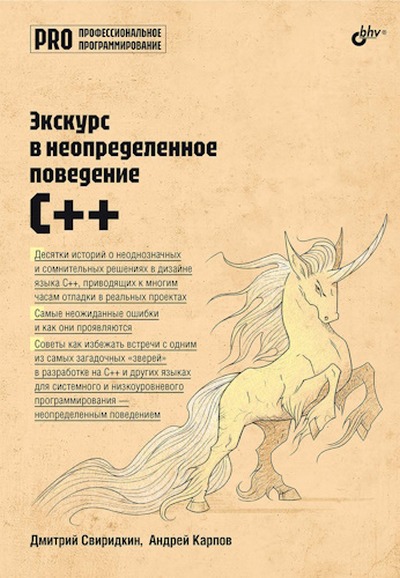
Андрей Карпов, Автор:Дмитрий Свиридкин | Экскурс в неопределенное поведение C++ (2025) [PDF]
1.0 MB · 1600×1600
Андрей Карпов, Дмитрий Свиридкин | Экскурс в неопределенное поведение C++ (2025) [PDF] Автор: Андрей Карпов, Дмитрий Свиридкин
Издательство: БХВ-Петербург
Серия: Профессиональное программирование
ISBN: 978-5-9775-2073-7
Жанр: Компьютерная литература, С++
Формат: PDF
Качество: Изначально электронное (ebook)
Иллюстрации: Отсутствуют
Описание:
Книга представляет собой обширный справочник типичных, а также очень редко встречающихся ошибок, характерных для программ на C++, Rust и других языках для низкоуровневого и системного программирования, в частности на ассемблере. Все рассмотренные проблемы так или иначе связаны с неопределенным, неуточненным и определяемым реализацией поведением языковых конструкций. Наибольшее внимание уделено неопределенному поведению, возможным признакам его присутствия в программах и методам поиска, диагностики и устранения такого поведения. Оглавление:
От автора, или Коротко о том, зачем и почему......................................................... 9
От научного редактора ................................................................................................ 11
Введение.......................................................................................................................... 13
Что такое неопределенное поведение и как оно проявляется..................................... 13
Как искать неопределенное поведение? ....................................................................... 15
ГЛАВА 1. Целые и вещественные числа.................................................................. 19
Переполнение целых знаковых чисел ........................................................................... 19
Сужающие преобразования и неявное приведение типов .......................................... 30
Integer promotion.............................................................................................................. 35
Что происходит? ...................................................................................................... 36
К чему это приводит? .............................................................................................. 36
Что делать? ............................................................................................................... 36
Тип char и знаковое расширение ................................................................................... 37
Что делать? ............................................................................................................... 38
Унарный минус и беззнаковые числа............................................................................ 39
Числа с плавающей точкой ............................................................................................ 40
Плавающая точка и шаблоны ................................................................................. 41
ГЛАВА 2. Нарушение жизненного цикла объектов ............................................... 45
Висячие ссылки, указатели и use-after-free: общие случаи ......................................... 45
Автовывод типов и висячие ссылки.............................................................................. 51
Проблема явного указания типа ............................................................................. 51
Проблемы автоматического вывода типа .............................................................. 54
Что за зверь std::string_view? ......................................................................................... 56
Самоинициализация........................................................................................................ 59
std::vector и инвалидация ссылок................................................................................... 62
Списки захвата лямбда-функций................................................................................... 64
Создание кортежей ......................................................................................................... 66
Внезапная мутабельность............................................................................................... 69
Такие разные контейнеры ....................................................................................... 69
Короткие строки и длинные баги ........................................................................... 70
Как бороться? ........................................................................................................... 72
Proxy-объекты и неявные ссылки.................................................................................. 73
Паттерн Proxy и proxy-объекты.............................................................................. 74
Больше неожиданностей!........................................................................................ 76
Что еще нужно сделать и почему нужно быть бдительным? .............................. 77
Что делать и как бороться? ..................................................................................... 78
Ситуация use-after-move ................................................................................................. 78
std::vector и другие похожие контейнеры.............................................................. 80
std::string ................................................................................................................... 82
std::optional ............................................................................................................... 83
Что же делать?.......................................................................................................... 83
Циклы по диапазонам ..................................................................................................... 84
Стандарт С++23 ....................................................................................................... 87
Продление времени жизни объектов............................................................................. 87
Прямая инициализация и ссылочные поля ................................................................... 94
Значения по умолчанию для ссылочных полей .................................................... 96
Тернарный оператор и временные объекты ................................................................. 97
Корутины и ссылки....................................................................................................... 104
ГЛАВА 3. (Не)работающий синтаксис.................................................................... 121
Забытый return ............................................................................................................... 121
Самое раздражающее правило синтаксического анализа ......................................... 123
Неконстантные константы ........................................................................................... 125
Const и оптимизации..................................................................................................... 127
Const, время жизни и происхождение указателей ..................................................... 130
Семантика перемещения .............................................................................................. 132
Накладные расходы ............................................................................................... 132
Что случается после............................................................................................... 133
Эллипсис и функции с произвольным числом аргументов ...................................... 135
Оператор "запятая" ....................................................................................................... 138
Перегрузки оператора "запятая"........................................................................... 139
Многомерный operator[] ............................................................................................... 141
try-блок функций........................................................................................................... 144
Типы нулевого размера ................................................................................................ 148
Массив нулевого размера...................................................................................... 151
Теговая диспетчеризация ...................................................................................... 152
Послесловие к оптимизации размеров структур ................................................ 153
(Не)явное приведение типов ........................................................................................ 154
Неявное приведение к bool........................................................................................... 161
Пользовательские операторы сравнения в C++20 ..................................................... 163
Атрибут [[assume]] ........................................................................................................ 166
Конструктор по умолчанию и =default ....................................................................... 169
ГЛАВА 4. Стандартная библиотека ........................................................................ 173
NULL-терминированные строки ................................................................................. 173
Длина строки .......................................................................................................... 173
С++ и std::string ...................................................................................................... 174
C++ и std::string_view ............................................................................................ 174
Как бороться? ......................................................................................................... 176
Конструкторы std::shared_ptr ....................................................................................... 176
Всё как обычно плохо............................................................................................ 179
Функция std::shared_from_this ..................................................................................... 180
Потоки ввода-вывода.................................................................................................... 188
Грабли первые: состояние объекта i/ostream....................................................... 188
Грабли вторые: глобальная локаль....................................................................... 189
Грабли третьи: кодировка путей к файлам и fstream.......................................... 189
Грабли четвертые: бинарный режим.................................................................... 190
Грабли пятые: ошибки чтения и конец потока ................................................... 191
Грабли шестые: readsome ...................................................................................... 192
Функции стандартной библиотеки как параметры.................................................... 193
Что же делать?........................................................................................................ 196
Представление std::ranges::views ................................................................................. 199
Библиотека std::ranges ........................................................................................... 199
Концепты ................................................................................................................ 200
А теперь стреляем с двух рук! .............................................................................. 200
Конструкция std::views::transform | filter..................................................................... 207
Как же это всё получилось и кто в этом виноват? .............................................. 212
Что же делать?........................................................................................................ 213
operator[] для ассоциативных контейнеров................................................................. 216
std::enable_if_t против std::void_t................................................................................. 218
Тип std::aligned_storage................................................................................................. 223
Перегруженные конструкторы стандартной библиотеки ......................................... 228
Класс std::uniform_int_distribution ............................................................................... 229
Функция std::vector::reserve и метод std::vector::resize .............................................. 231
Применение std::make_unique_for_overwrite ....................................................... 236
Функция-член std::basic_string::resize_and_overwrite ......................................... 236
Класс-шаблон std::function ........................................................................................... 237
Спецэффект 1: вариантность ................................................................................ 237
Спецэффект 2: отломанный const......................................................................... 241
Спецэффект 3: move-only не поддерживается..................................................... 242
Функция std::forward..................................................................................................... 243
ГЛАВА 5. Исполнение программы.......................................................................... 247
Бесконечные циклы и проблема остановки................................................................ 247
Рекурсия......................................................................................................................... 250
Ложный noexcept........................................................................................................... 252
Условный noexcept................................................................................................. 253
Переполнение буфера ................................................................................................... 254
Поддержка сборщика мусора (неактуально для C++23 и новее) ............................. 257
(N)RVO против RAII..................................................................................................... 260
Pазыменование нулевых указателей ........................................................................... 264
Фиаско со статическим порядком инициализации .................................................... 268
SIOF и неиспользуемые заголовки....................................................................... 271
Смешиваем static и inline.............................................................................................. 273
Нарушение правила ODR ............................................................................................. 280
Что же делать?........................................................................................................ 282
Зарезервированные имена..................................................................................... 288
Нарушение правила ODR и разделяемые библиотеки ....................................... 290
Тривиальные типы и ABI ............................................................................................. 296
Неинициализированные переменные.......................................................................... 300
Как избежать неинициализированные переменные ........................................... 303
И последнее ............................................................................................................ 306
Бесконечные диапазоны в С++20 ................................................................................ 306
Нам поможет std::unreachable_sentinel................................................................. 310
Невиртуальные виртуальные функции ....................................................................... 312
Освобождение ресурсов в деструкторах с использованием
вспомогательных функций.................................................................................... 316
Массивы переменной длины........................................................................................ 324
Владение, исключения и ошибки ................................................................................ 330
ГЛАВА 6. Происхождение указателей .................................................................... 335
Невалидные указатели.................................................................................................. 335
Размещающий оператор new и массивы ..................................................................... 338
Невыровненные ссылки................................................................................................ 339
Правило strict aliasing и практика type punning .......................................................... 343
Что же делать?........................................................................................................ 349
ГЛАВА 7. Асинхронность и параллелизм .............................................................. 351
Гонка данных................................................................................................................. 351
Потокобезопасен ли указатель std::shared_ptr? .......................................................... 354
Ожидание потоков ........................................................................................................ 355
Повторный захват мьютекса ........................................................................................ 356
Сигнало(не)безопасность ............................................................................................. 358
Как бороться? ......................................................................................................... 360
Примитив сondition_variable, или Как сделать всё правильно
и уйти в deadlock ........................................................................................................... 360
Гонки за vptr .................................................................................................................. 363
Асинхронное выполнение кода с помощью std::async .............................................. 366
Конкурентный доступ к файловой системе................................................................ 371
Послесловие: статический анализ и неопределенное поведение ....................... 373
Интернет-источники и литература.......................................................................... 375 Скриншоты:
---->https://s01.pic4net.com/di-CHME6Q.jpeg<----
---->https://s01.pic4net.com/di-V38VK5.jpeg<----
---->https://s01.pic4net.com/di-L28UC6.jpeg<----
---->https://s01.pic4net.com/di-PGE41Z.jpeg<----
Время раздачи: с 10 до 20 (минимум до появления первых 3-5 скачавших)
Джон Шовик, Алан Симпсон | Python. Все в одном для чайников. 7 книг в одной. 3-е издание (2026) [PDF]
«Python. Все в одном для чайников» – это всеобъемлющее руководство для начинающих программистов, желающих освоить язык Python с нуля.
В издании последовательно разобраны базовые конструкции языка, работа с данными, функции, классы и объекты, обработка исключений, а также основы работы с файлами и модулями. Особое внимание уделено практическим примерам и пошаговым ( Читать дальше... )Жанр: Программирование, Разработка программного обеспечения, Язык Python, Языки программированияПеревод: В.М. СапуноваИздательство: Бомбора (Эксмо)Формат: PDFКачество: Изначально электронное (ebook)

Джон Шовик, Алан Симпсон | Python. Все в одном для чайников. 7 книг в одной. 3-е издание (2026) [PDF]
1.0 MB · 1600×1600
Джон Шовик, Алан Симпсон | Python. Все в одном для чайников. 7 книг в одной. 3-е издание (2026) [PDF] Автор: Джон Шовик, Алан Симпсон
Перевод: В.М. Сапунова
Издательство: Бомбора (Эксмо)
Серия: Для чайников
ISBN: 978-5-04-201503-8, 978-5-04-249203-7
Жанр: Программирование, Разработка программного обеспечения, Язык Python, Языки программирования
Формат: PDF
Качество: Изначально электронное (ebook)
Иллюстрации: Черно-белые
Описание:
«Python. Все в одном для чайников» – это всеобъемлющее руководство для начинающих программистов, желающих освоить язык Python с нуля.
В издании последовательно разобраны базовые конструкции языка, работа с данными, функции, классы и объекты, обработка исключений, а также основы работы с файлами и модулями. Особое внимание уделено практическим примерам и пошаговым инструкциям, которые помогут закрепить теорию на практике.
Книга подойдет как для самостоятельного изучения, так и в качестве справочного пособия на первых этапах работы с Python Оглавление:
ВВЕДЕНИЕ 17
Об этой книге 17
Ошибочные заблуждения 18
Что вам нужно для будущей работы 19
Условные обозначения 21
Помимо книги 21
Что делать дальше 22
РАЗДЕЛ 1. НАЧАЛО РАБОТЫ 23
Глава 1.
Начало работы с Python 25
Почему Python так популярен 26
Выбор правильной версии Python 27
Инструменты для успешной работы 29
Установка Python и VS Code 30
Установка расширения Python 31
Использование ИИ для написания кода на Python 32
Использование GitHub Copilot 33
Использование Jupyter Notebook для программирования 35
Глава 2.
Использование интерактивного режима, получение справки
и создание приложений 38
Использование интерактивного режима Python 39
Открытие терминала 39
Определение версии Python 40
Вход в интерпретатор Python 41
Ввод команд 41
Использование встроенной справки Python 42
Выход из интерактивной справки 44
Поиск помощи в сети 45
Обилие бесплатного материала 45
Организация папки с кодом 46
Набор, редактирование и отладка кода Python 46
Написание кода на Python 48
Сохранение кода 49
Запуск Python в VS Code 49
Изучение основ отладки 51
Закрытие файла 52
Написание кода в Jupyter Notebook 52
Создание папки для Jupyter Notebooks 52
Создание и сохранение блокнота Jupyter 53
Глава 3.
Элементы и синтаксис Python 56
Дзен Python 56
Знакомство с объектно ориентированным программированием 58
Почему отступы имеют огромное значение 59
Использование модулей Python 61
Понимание синтаксиса импорта модулей 62
Использование псевдонима с модулями 63
Глава 4.
Создание вашего первого приложения на Python 64
Открытие файла приложения Python 65
Написание и использование комментариев в Python 66
Понимание типов данных в Python 67
Числа 68
Слова (строки) 70
Логический тип данных 72
Работа с операторами Python 73
Арифметические операторы 74
Операторы сравнения 75
Логические операторы 76
Создание и использование переменных 77
Имена переменных в Python 78
Создание переменных в коде 79
Манипуляции с переменными 79
Сохранение работы 81
Запуск вашего Python- приложения в VS Code 81
Понимание синтаксиса и его важности 83
РАЗДЕЛ 2. ПОНИМАНИЕ БАЗОВЫХ КОНСТРУКЦИЙ
PYTHON 89
Глава 1.
Работа с числами, текстом и датами 91
Работа с числами, текстом и датами 91
Вычисления с помощью функций 92
Дополнительные математические функции 95
Форматирование чисел 98
Форматирование с помощью f-строк 98
Отображение денежных сумм 100
Форматирование процентных чисел 101
Форматирование ширины и выравнивания 105
Работа с необычными числами 108
Двоичные, восьмеричные и шестнадцатеричные числа 108
Комплексные числа 110
Манипуляции со строками 111
Манипулирование строками с помощью методов 117
Знакомство с датами и временем 119
Работа с датами 120
Работа со временем 124
Учет часовых поясов 131
Работа с часовыми поясами 134
Глава 2.
Управление действиями 138
Основные операторы управления действием программы 138
Принятие решений с помощью if 140
Добавление else к логике if 144
Обработка нескольких операторов else с помощью elif 146
Тернарные операции 149
Повторение процесса с помощью цикла for 150
Перебор чисел в диапазоне 150
Перебор строки в цикле 152
Перебор элементов списка 154
Выход из цикла 155
Цикл с continue 157
Вложенные циклы 157
Циклы while 158
Перезапуск циклов while с помощью continue 161
Прерывая циклы while с break 162
Глава 3.
Быстрая работа со списками и кортежами 165
Определение и использование списков 165
Обращение к элементам списка по позиции 166
Перебор элементов списка 168
Проверка наличия элемента в списке 169
Определение длины списка 170
Добавление элемента в конец списка 170
Вставка элемента в список 171
Изменение элемента в списке 172
Объединение списков 173
Удаление элементов списка 174
Очистка списка 176
Подсчет количества вхождений элемента в список 177
Поиск индекса элемента списка 178
Сортировка списков по алфавиту 180
Обратный список 183
Копирование списка 183
Использование списковых включений 184
Что такое кортеж и зачем он нужен? 187
Работа с множествами 189
Глава 4.
Работа с большими данными с помощью словарей 193
Понимание структуры словарей данных 194
Создание словаря 196
Доступ к данным словаря 198
Определение длины словаря 200
Проверка наличия ключа в словаре 201
Получение данных из словаря с помощью get() 202
Изменение значения ключа 203
Добавление или изменение данных словаря 204
Перебор элементов словаря 206
Методы словарей 209
Копирование словаря 210
Удаление элементов словаря 210
Развлекаемся с многоключевыми словарями 214
«Загадочные» методы fromkeys и setdefault 217
Вложенные словари 220
Создание словаря с помощью включений 223
Глава 5.
Управление большими фрагментами кода 224
Создание функции 225
Комментирование функции 226
Передача информации в функцию 227
Необязательные параметры со значениями по умолчанию 230
Передача нескольких значений в функцию 231
Использование именованных аргументов (kwargs) 233
Передача нескольких значений в списке 235
Передача произвольного количества аргументов 239
Возвращение значений из функций 240
Анонимные функции (лямбда- функции) 242
Глава 6.
Python и классы 251
Осваиваем классы и объекты 252
Создание класса 255
Создание экземпляра класса 257
Наделение объекта атрибутами 258
Создание экземпляра класса 260
Изменение значения атрибута 263
Определение атрибутов со значениями по умолчанию 264
Добавление методов в класс 267
Передача параметров в методы 269
Вызов метода класса через имя класса 271
Использование переменных класса 273
Использование методов класса 275
Использование статических методов 278
Понимание наследования классов 279
Создание базового (основного) класса 282
Определение подкласса 284
Переопределение значения по умолчанию в подклассе 286
Добавление новых параметров в подкласс 287
Вызов метода базового класса 292
Использование одного и того же имени дважды 293
Глава 7.
Обход ошибок 298
Понимание исключений 299
Корректная обработка ошибок 302
Конкретизация исключений 304
Предотвращение сбоев приложения 307
Добавление блока else 309
Использование try except else finally 312
Создание собственных исключений 314
На рисунке 7 7 показан полный код этого примера 317
РАЗДЕЛ 3. РАБОТА С БИБЛИОТЕКАМИ 319
Глава 1.
Работа с внешними файлами 321
Понимание текстовых и двоичных файлов 322
Открытие и закрытие файлов 323
Чтение содержимого файла 332
Перебор содержимого файла 334
Перебор с помощью readlines() 334
Построчное чтение с помощью readline() 336
Добавление в конец файла или перезапись 338
Использование tell() для определения позиции указателя 340
Перемещение указателя с помощью seek() 341
Чтение и копирование двоичного файла 342
Работа с CSV-файлами 345
Открытие CSV-файла 347
Преобразование строк 350
Преобразование в целые числа 352
Преобразование в дату 352
Преобразование в логический тип 355
Преобразование в числа с плавающей точкой 355
Преобразование данных из CSV в объекты и словари 358
Импорт CSV в объекты Python 358
Импорт CSV в словари Python 364
Глава 2.
Работа с данными JSON 368
Организация данных JSON 369
Понимание сериализации 372
Загрузка данных из JSON-файлов 373
Преобразование даты Excel в дату JSON 375
Перебор JSON-файла с ключами 377
Преобразование временных меток Firebase в даты
Python 379
Загрузка JSON без ключей из строки Python 380
Загрузка ключевых JSON-данных из строки Python 382
Изменение данных JSON 384
Удаление данных из словаря 384
Выгрузка данных Python в JSON 386
Глава 3.
Взаимодействие с интернетом 390
Как работает интернет 391
Разбираемся в загадочном URL 391
Исследование HTTP-заголовков 393
Открытие URL из Python 395
Отправка веб-запросов с помощью Python 397
Веб-скрейпинг с помощью Python 398
Парсинг части страницы 402
Сохранение обработанного контента 403
Сохранение собранных данных в JSON-файл 406
Сохранение собранных данных в CSV-файл 407
Глава 4.
Библиотеки, пакеты и модули 410
Понимание стандартной библиотеки Python 410
Использование функции dir() 412
Использование функции help() 414
Изучение встроенных функций 415
Изучение пакетов Python 416
Импорт модулей Python 418
Создание собственных модулей 421
Управление виртуальными окружениями 424
Создание виртуального окружения 425
Активация виртуального окружения 426
Создание файла requirements txt 427
Деактивация виртуального окружения 428
РАЗДЕЛ 4. ИСПОЛЬЗОВАНИЕ ИСКУССТВЕННОГО
ИНТЕЛЛЕКТА 431
Глава 1.
Демистификация искусственного интеллекта 433
ИИ — это набор методов 434
Нейронные сети 435
Машинное обучение 441
TensorFlow — фреймворк для глубокого обучения 443
Текущие ограничения ИИ 444
Глава 2.
Создание нейронной сети 445
Понимание нейронных сетей 447
Слои нейронов 448
Веса и смещения 451
Функция активации 451
Функция потерь 452
Построение простой нейронной сети на Python 453
Программный код нейронной сети на Python 454
Разбор кода 458
Запуск кода нейронной сети 463
Использование TensorFlow для той же нейронной сети 466
Установка библиотеки TensorFlow для Python 467
Построение нейронной сети на Python с использованием
TensorFlow 468
Загрузка данных 470
Определение модели нейронной сети и ее слоев 470
Компиляция модели 470
Настройка и обучение модели 471
Оценка модели 471
Разбор кода 472
Проверка результатов 477
Изменение на трехслойную нейронную сеть
в TensorFlow и Keras 480
Глава 3.
Практическое машинное обучение 483
Поиск решений там, где их нет 484
Создание нейронной сети для распознавания типов одежды 486
Настройка программной среды 487
Получение данных из набора Fashion- MNIST 490
Обучение сети 490
Тестирование сети 490
Разбор кода 492
Проверка результатов обучения и оценки 494
Тестирование отдельного тестового изображения 495
Тестирование на внешних изображениях 497
Результаты, раунд 1 498
Код модели СНС 500
Результаты, раунд 2 503
Визуализация с помощью Matplotlib 503
Изучаем машинное обучение глубже 507
Глава 4.
Игра с искусственным интеллектом — на картах
микроконтроллерах и в облаке 508
Изучаем ограничения Raspberry Pi и ИИ 509
Добавление аппаратного ИИ к Raspberry Pi 512
Исследуем способы использования ИИ в облаке 514
Google Cloud 515
Amazon Web Services 516
IBM Cloud 517
Microsoft Azure 517
ИИ на графической карте 518
Где найти больше интересного про ИИ на Python 521
РАЗДЕЛ 5. DATA SCIENCE ИЛИ НАУКА О ДАННЫХ 523
Глава 1.
Понимание пяти областей науки о данных 525
Работа с по-настоящему большими данными 526
Объем 526
Многообразие 527
Скорость 528
Управление объемом, многообразием и скоростью
данных 529
Полный вперед: пятиэтапный процесс науки о данных 529
Сбор данных 530
Обработка данных 530
Анализ данных 531
Представление результатов 533
Поддержка данных 534
Глава 2.
Исследование больших данных 535
Знакомство с NumPy, pandas и Matplotlib 536
NumPy 536
Matplotlib 538
Выполнение вашего первого проекта по науке о данных 539
Бриллианты — лучшие друзья специалиста по анализу
данных 539
Разбор кода 543
Визуализация данных с помощью Matplotlib 544
Глава 3.
Использование больших данных из Google Cloud 552
Что такое большие данные? 553
Понимание Google Cloud и BigQuery 553
Платформа Google Cloud 554
BigQuery от Google 554
Компьютерная безопасность в облаке 555
Регистрация в BigQuery 556
Чтение больших данных Medicare 556
Настройка проекта и аутентификации 557
Первый код для работы с большими данными 559
Разбор кода 562
Проведение анализа данных 565
Процент оплаты по штатам 567
Теперь перейдем к визуализации 568
Поиск самого загрязненного города в мире в режиме
реального времени 569
РАЗДЕЛ 6. ВЗАИМОДЕЙСТВИЕ С ОБОРУДОВАНИЕМ 571
Глава 1.
Введение в физические вычисления 573
Физические вычисления — это действительно увлекательно 574
Что такое Raspberry Pi? 574
Создание проектов, которые двигаются и взаимодействуют
с окружающим миром 577
Восприятие окружающей среды с помощью Raspberry Pi 579
Порты GPIO 579
Библиотеки GPIO 580
Покупка и сборка оборудования для «Hello World» 581
Управление светодиодом с помощью Python 585
Но это еще не все 587
Глава 2.
Никакой пайки! Использование разъемов Grove для
конструирования 590
Работа с системой Grove 591
Выбор базового блока Grove 591
Базовый блок Arduino 592
Базовый блок Raspberry Pi 593
Защита от ошибок с помощью разъема Grove 594
Разъемы Grove 597
Цифровой Grove — все о единицах и нулях 597
Grove аналоговый: Когда единиц и нулей недостаточно 599
Grove UART (или последовательный интерфейс) —
побитовая передача 600
Grove I2C — использование I2C для понимания
окружающего мира 602
Подключение с помощью кабелей Grove 604
GPS-модуль Adafruit Ultimate 606
Глава 3.
Считывание данных об окружающем мире 608
Понимание I2C 609
Включение I2C на Raspberry Pi 611
Оборудование для измерения температуры и влажности 612
Считывание температуры и влажности с I2C-устройства
с помощью Python 616
Разбор программы 619
Измерение кислорода и пламени 622
Аналого- цифровые преобразователи (АЦП) 623
Датчик кислорода Grove 624
Подключаем оборудование для эксперимента
с кислородом 625
Разбор кода 628
Интерпретация результатов 629
Что дальше? 631
Глава 4.
Приводим механизмы в движение 632
Изучаем электродвигатели 633
Малые двигатели постоянного тока 633
Сервоприводы 634
Шаговые двигатели 635
Управление двигателем постоянного тока 636
Драйвер двигателя Grove I2C 637
Программное обеспечение для двигателей постоянного
тока на Python 640
Управление сервоприводом 644
Программное обеспечение сервопривода на Python 648
Разбор кода 649
Заставляем шаговый двигатель шагать 651
Программное обеспечение для шагового двигателя
на Python 659
Разбор кода 662
РАЗДЕЛ 7. СОЗДАНИЕ РОБОТОВ 663
Глава 1.
Введение в робототехнику 665
Робот не всегда похож на человека 665
Не у каждого робота есть руки или колеса 666
Робот-пекарь от Wilkinson 668
Бакстер, робот- бариста 668
Тостер Griffin с поддержкой Bluetooth 670
Понимание основных составляющих робота 671
Компьютеры 671
Двигатели и актуаторы 672
Коммуникации 672
Датчики 673
Программирование роботов 673
Глава 2.
Создание вашего первого робота на Python 675
Знакомство с марсоходом PiCar- B 676
Что нужно для сборки 677
Знакомство с компонентами робота 678
Сборка робота 688
Тестирование робота 690
Калибровка сервоприводов 690
Подготовка к запуску тестов вашего ровера на Python 693
Установка программного обеспечения для тестирования
PiCar- B на Python 693
Тестовый код PiCar- B на Python 694
Тестирование видео с камеры Pi 695
Глава 3.
Программирование вашего робота-ровера 697
Создание простого высокоуровневого интерфейс а на Python 697
Функция motorForward() 698
Функция wheelsLeft() 699
Функция wheelsPercent() 699
Выполнение одиночного движения с помощью Python 700
Функции класса RobotInterface 701
Функции управления передними светодиодами 702
Функции для управления светодиодной лентой 703
Функция ультразвукового датчика расстояния 706
Основные функции управления двигателем 707
Функции сервоприводов 708
Общая функция для сервоприводов 711
Тестирование интерфейса робота на Python 711
Координация движений моторов с датчиками 715
Создание Python- мозга для нашего робота 719
Обзор программного обеспечения Adeept 727
Что дальше? 728
Глава 4.
Использование искусственного интеллекта в робототехнике 729
Проекты этой главы: все для собак 730
Настройка первого проекта 731
Машинное обучение с использованием TensorFlow 732
Код 735
Как работает код 737
Результаты 741
Тестирование обученной сети 742
Код 743
Как работает код 745
Результаты 747
Распознавание кошек и собак нашим роботом 750
Код 751
Как это работает 754
Результаты 754
Настройка второго проекта 757
Программа FindAndChaseTheBall py на Python 758
Структура программы 759
Поток ультразвукового датчика 760
Поток отображения видео 760
Поток анализа кадров OpenCV 761
Основная программа 766
Конфигурация программы 766
Настройка цвета мяча 767
Погоня за мячом 769
Примечания к программе 770
ИИ и будущее робототехники 772
ПРЕДМЕТНЫЙ УКАЗАТЕЛЬ 773
Об авторах 794
Благодарности авторов 794
Посвящение 795 Скриншоты:
---->https://s01.pic4net.com/di-Z6KDLI.jpeg<----
---->https://s01.pic4net.com/di-RU35J2.jpeg<----
---->https://s01.pic4net.com/di-50ZNB6.jpeg<----
---->https://s01.pic4net.com/di-GOO5HG.jpeg<----
Время раздачи: с 10 до 20 (минимум до появления первых 3-5 скачавших)
Mangesh Budkule | Optimizing Cost for Microsoft Workloads on AWS. Strategies, Tools, and Techniques for Cloud Efficiency (2025) [PDF] [EN]
Implementing Microsoft on AWS Optimization is a practical guide for professionals managing Microsoft workloads on AWS. This book explores strategies, tools, and techniques to reduce costs, improve efficiency, and ensure regulatory compliance, making it an essential resource for cloud practitioners
Beginning with an overview of AWS cost optimization, the book introduces ( Читать дальше... )Жанр: Microsoft Programming, Cloud Computing, Computer ScienceЯзык: АнглийскийИздательство: ApressФормат: PDFКачество: Изначально электронное (ebook)
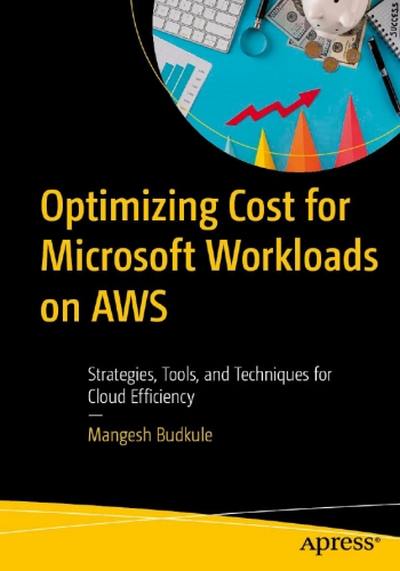
Mangesh Budkule | Optimizing Cost for Microsoft Workloads on AWS. Strategies, Tools, and Techniques for Cloud Efficiency (2025) [PDF] [EN]
1.0 MB · 1600×1600
Mangesh Budkule | Optimizing Cost for Microsoft Workloads on AWS. Strategies, Tools, and Techniques for Cloud Efficiency (2025) [PDF] Автор: Mangesh Budkule
Издательство: Apress
ISBN: 979-8868817656, 979-8-8688-1766-3
Жанр: Microsoft Programming, Cloud Computing, Computer Science
Язык: Английский
Формат: PDF
Качество: Изначально электронное (ebook)
Иллюстрации: Цветные и черно-белые
Описание:
Implementing Microsoft on AWS Optimization is a practical guide for professionals managing Microsoft workloads on AWS. This book explores strategies, tools, and techniques to reduce costs, improve efficiency, and ensure regulatory compliance, making it an essential resource for cloud practitioners
Beginning with an overview of AWS cost optimization, the book introduces readers to foundational concepts, including the Well-Architected Framework and AWS Cloud Financial Management principles. It delves into selecting the right EC2 instances and EBS storage for Microsoft workloads, offering actionable insights into balancing performance and costs. Licensing is a major focus, with dedicated chapters on Windows and SQL Server licensing strategies. Readers will learn how to leverage BYOL (Bring Your Own License) options, optimize CPU usage, and consolidate instances to cut costs. Additionally, elasticity through Auto Scaling, workload automation, and appropriate pricing models, such as Spot Instances and Reserved Instances, are explored in-depth. It also highlights AWS cost management tools and services, teaching readers how to monitor and optimize cloud spending efficiently. Modernizing Microsoft workloads is another key topic, showcasing how adopting cloud-native approaches can unlock significant savings and long-term benefits. This book equips readers with the knowledge to master cost management for Microsoft workloads on AWS. Whether you're an IT manager, cloud architect, or business leader, this guide leads the way to achieving cost-efficient cloud success.
What you will learn:
What are the top cost optimization strategies for Microsoft workloads on AWS.
Explore AWS tools and automation for streamlined cost optimization.
How to optimize compute and storage costs by selecting the right AWS resources.
How to identify and eliminate wasteful spending to drive savings and create value.
Who this book is for:
This book caters to professionals involved in AWS Cloud projects. It is also ideal to for cloud architects, developers, CTOs, and CFOs. About the Author xiii
Acknowledgments xv
Introduction xvii
Book Disclaimer xxi
Chapter 1: Mastering AWS Cost Management: Key Principles 1
Chapter 2: Optimizing EC2 Instance Selection for Microsoft Workloads 51
Chapter 3: AWS Storage Strategies for Performance and Cost Balance . 93
Chapter 4: Windows License Management and Cost Optimization 167
Chapter 5: SQL Server License Management and Cost Efficiency 215
Chapter 6: AWS Cost Models and Purchase Optimization 279
Chapter 7: Smart Resource Elasticity and Cost Management 331
Chapter 8: AWS Cost Intelligence: Leveraging Native Tools for Savings 357
Chapter 9: Strategic Modernization and Financial Impact 411
Chapter 10: AI-Driven Cost Optimization: Modernizing Microsoft Workloads on AWS 485
Index 527 Скриншоты:
---->https://s01.pic4net.com/di-WTEX4I.jpeg<----
---->https://s01.pic4net.com/di-UHLVRH.jpeg<----
---->https://s01.pic4net.com/di-YGQB3M.jpeg<----
---->https://s01.pic4net.com/di-42T889.jpeg<----
Время раздачи: с 10 до 20 (минимум до появления первых 3-5 скачавших)
Thársis T. P. Souza, Jonathan K. Regenstein Jr. | Large Language Models: The Hard Parts. Open Source AI Solutions for Common Pitfalls (2026) [PDF, EPUB] [EN]
Large language models (LLMs) have transformed natural language processing, but deploying them in applications introduces numerous technical challenges. Large Language Models: The Hard Parts offers a clear, practical examination of the limitations developers and AI engineers face when building LLM-based applications. With a focus on implementation pitfalls (not just ( Читать дальше... )Жанр: Natural Language Processing, Software Development, Computer ScienceЯзык: АнглийскийИздательство: O'Reilly MediaФормат: PDF, EPUBКачество: Изначально электронное (ebook)
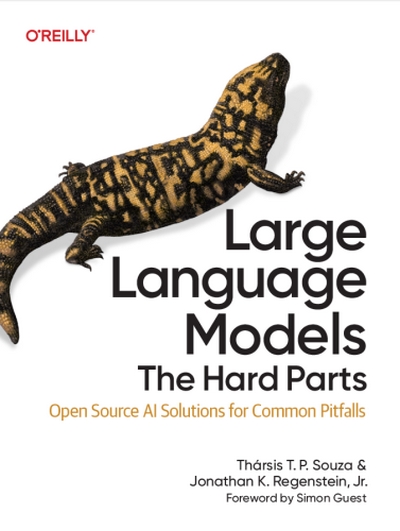
Thársis T. P. Souza, Jonathan K. Regenstein Jr. | Large Language Models: The Hard Parts. Open Source AI Solutions for Common Pitfalls (2026) [PDF, EPUB] [EN]
1.0 MB · 1600×1600
Th rsis T. P. Souza, Jonathan K. Regenstein Jr. | Large Language Models: The Hard Parts. Open Source AI Solutions for Common Pitfalls (2026) [PDF, EPUB] Автор: Th rsis T. P. Souza, Jonathan K. Regenstein Jr.
Издательство: O'Reilly Media
ISBN: 979-8341622524
Жанр: Natural Language Processing, Software Development, Computer Science
Язык: Английский
Формат: PDF, EPUB
Качество: Изначально электронное (ebook)
Иллюстрации: Цветные и черно-белые
Описание:
Large language models (LLMs) have transformed natural language processing, but deploying them in applications introduces numerous technical challenges. Large Language Models: The Hard Parts offers a clear, practical examination of the limitations developers and AI engineers face when building LLM-based applications. With a focus on implementation pitfalls (not just capabilities), this book provides actionable strategies supported by reproducible Python code and open source tools.
Readers will learn how to navigate key obstacles in application evaluation, input management, testing, and safety. Designed for builders and technical product leads, this guide emphasizes practical solutions to real-world problems and promotes a grounded understanding of LLM constraints and trade-offs.
Design testing and evaluation strategies for nondeterministic systems
Manage context, RAG, ; long-context retrieval
Address output inconsistency and structural unreliability
Implement safety and content moderation frameworks
Explore alignment challenges and mitigation techniques
Leverage open source models locally Foreword xiii
Preface xv
1. First Principles: What to Consider Before We Start Building with LLMs 1
2. The Evals Gap 17
3. Evaluation Tools for LLM-Based Applications 53
4. From Data to Context 83
5. Structured Data Output 133
6. LLM Safety Considerations 161
7. Evaluating LLMs for Safety 179
8. LLM Alignment: A Case Study 227
9. Epilogue: LLMBAs in the Era of Falling Costs 279
Appendix. Tools for Local LLM Deployment 283
Index 303 Скриншоты:
---->https://s01.pic4net.com/di-B2XMOA.jpeg<----
---->https://s01.pic4net.com/di-6CDT1A.jpeg<----
---->https://s01.pic4net.com/di-T3Y0AU.jpeg<----
---->https://s01.pic4net.com/di-8MMJM9.jpeg<----
Время раздачи: с 10 до 20 (минимум до появления первых 3-5 скачавших)
Syed Rehan | Cybersecurity with AWS. Fortifying Digital Frontiers (2025) [PDF] [EN]
Learn the most important topics in securing AWS environments through a strategic combination of fundamental principles, real-case studies, and hands-on practice to battle new generations of cyber-attacks. The book offers a definitive guide to AWS cybersecurity, ranging from identity and access management, Zero Trust architecture, and cloud threat intelligence through ( Читать дальше... )Жанр: Computer Network Security, Cloud Computing, Computer NetworkingЯзык: АнглийскийИздательство: ApressФормат: PDFКачество: Изначально электронное (ebook)

Syed Rehan | Cybersecurity with AWS. Fortifying Digital Frontiers (2025) [PDF] [EN]
1.0 MB · 1600×1600
Syed Rehan | Cybersecurity with AWS. Fortifying Digital Frontiers (2025) [PDF] Автор: Syed Rehan
Издательство: Apress
ISBN: 979-8868815539, 979-8-8688-2655-9
Жанр: Computer Network Security, Cloud Computing, Computer Networking
Язык: Английский
Формат: PDF
Качество: Изначально электронное (ebook)
Иллюстрации: Цветные и черно-белые
Описание:
Learn the most important topics in securing AWS environments through a strategic combination of fundamental principles, real-case studies, and hands-on practice to battle new generations of cyber-attacks. The book offers a definitive guide to AWS cybersecurity, ranging from identity and access management, Zero Trust architecture, and cloud threat intelligence through advanced detection methods, forensics, and incident response strategies.
We start with a deep dive into AWS security fundamentals, such as the shared responsibility model, security pillars, reference architecture, and compliance frameworks like NIST, ISO/IEC 27001, PCI DSS, GDPR, and HIPAA. We then demystify cloud security by explaining threat modeling, risk analysis, network security, secure configurations, and automated security monitoring with AWS-native services such as AWS Security Hub, GuardDuty, WAF, and IAM.
In addition to the fundamentals, this book explores attacker tactics, techniques, and procedures (TTPs)—taking a deep dive into cyber adversary activity, such as reconnaissance, lateral movement, persistence, privilege escalation, and exfiltration methods in AWS environments. You will discover how cyber attackers take advantage of poorly configured IAM roles, AWS exposed credentials, cloud reconnaissance methods, and AI-powered phishing campaigns—and learn how to successfully fight back. Next few chapters offer prescriptive security advice for new technologies such as serverless computing, containerized workloads, hybrid and multi-cloud security, IoT security issues, and cryptocurrency threats. We cover Zero Trust frameworks, presenting real-world implementations founded on NIST SP 800-207, Forrester ZTX, and CSA Zero Trust Architecture principles.
The book finishes with a forward-looking discussion of AI-powered threats such as deepfake attacks, AI-powered malware, and next-generation adversarial attacks and defense countermeasures founded on AI-powered detection and automation. Furthermore, detailed incident response and forensic techniques provide readers with the know-how to examine AWS security incidents, create playbooks, and employ proactive defense.
You Will:
Examine and remediate cloud security threats using comprehensive risk analysis, proactive monitoring, and AWS-native security tools
Get hands-on implementation of Zero Trust architectures, identity-based security, and least privilege principles in AWS
Find out how to detect and respond to sophisticated cyberattacks, including credential theft, cloud-aware malware, and AI-powered phishing campaigns
Learn to Mitigate ransomware threats in AWS, including prevention, detection, response, and disaster recovery techniques
Explore how to secure multi-cloud and hybrid deployments, IoT, serverless apps, and containerized workloads
Understand practical approaches to automating cloud security, monitoring compliance, and creating efficient detection pipelines
Who This Book Is For
The book caters to beginner-to-intermediate cybersecurity professionals, AWS users, solution architects, developers, and cloud security enthusiasts seeking a comprehensive understanding of AWS security. About the Author xv
About the Technical Reviewer xvii
Acknowledgments xix
Introduction xxi
Chapter 1: Building Secure Cloud Infrastructures: A Cybersecurity Overview 1
Chapter 2: Cloud Security Responsibilities and the AWS Security Ecosystem 15
Chapter 3: Understanding Attacker Tactics and Framework-Aligned Defense Strategies in the Cloud Era of AI 73
Chapter 4: Implementing Zero Trust Security Frameworks: Cloud-First Approaches with AWS 115
Chapter 5: Implementing Identity-Centric Zero Trust with IAM Policies and Roles 133
Chapter 6: Strategic Data Protection: Implementing Encryption and Data-Centric Zero Trust Security 153
Chapter 7: Continuous Monitoring, Anomaly Detection, Compliance, and Incident Response in AWS: Strategies and Automation 169
Chapter 8: Advanced Threat Protection and UEBA: Strategic Network Security on AWS 189
Chapter 9: Advanced Security Operations in AWS 209
Chapter 10: Generative AI and Cybersecurity in AWS 257
Chapter 11: AWS Security Best Practices and Future Outlook: Compliance, Post-Quantum Readiness, and Strategic Advantage 269
Index 285 Скриншоты:
---->https://s01.pic4net.com/di-PPJM89.jpeg<----
---->https://s01.pic4net.com/di-QFVH0G.jpeg<----
---->https://s01.pic4net.com/di-SUDCPL.jpeg<----
---->https://s01.pic4net.com/di-53IDXJ.jpeg<----
Время раздачи: с 10 до 20 (минимум до появления первых 3-5 скачавших)
Kedeisha Bryan, Taamir Ransome | Cracking the Data Engineering Interview. Land your dream job with the help of resume-building tips, over 100 mock questions, and a unique portfolio (2023) [PDF] [EN]
Get to grips with the fundamental concepts of data engineering, and solve mock interview questions while building a strong resume and a personal brand to attract the right employers
Key Features
Develop your own brand, projects, and portfolio with expert help to stand out in the interview round( Читать дальше... )Жанр: Data Warehousing, Data Modeling & Design, Data ProcessingЯзык: АнглийскийИздательство: Packt Publishing Ltd.Формат: PDFКачество: Изначально электронное (ebook)

Kedeisha Bryan, Taamir Ransome | Cracking the Data Engineering Interview. Land your dream job with the help of resume-building tips, over 100 mock questions, and a unique portfolio (2023) [PDF] [EN]
1.0 MB · 1600×1600
Kedeisha Bryan, Taamir Ransome | Cracking the Data Engineering Interview. Land your dream job with the help of resume-building tips, over 100 mock questions, and a unique portfolio (2023) [PDF] Автор: Kedeisha Bryan, Taamir Ransome
Издательство: Packt Publishing Ltd.
ISBN: 978-1-83763-077-6, 978-1837631070
Жанр: Data Warehousing, Data Modeling ; Design, Data Processing
Язык: Английский
Формат: PDF
Качество: Изначально электронное (ebook)
Иллюстрации: Цветные и черно-белые
Описание:
Get to grips with the fundamental concepts of data engineering, and solve mock interview questions while building a strong resume and a personal brand to attract the right employers
Key Features
Develop your own brand, projects, and portfolio with expert help to stand out in the interview round
Get a quick refresher on core data engineering topics, such as Python, SQL, ETL, and data modeling
Practice with 50 mock questions on SQL, Python, and more to ace the behavioral and technical rounds
Purchase of the print or Kindle book includes a free PDF eBook
Book Description
Preparing for a data engineering interview can often get overwhelming due to the abundance of tools and technologies, leaving you struggling to prioritize which ones to focus on. This hands-on guide provides you with the essential foundational and advanced knowledge needed to simplify your learning journey. The book begins by helping you gain a clear understanding of the nature of data engineering and how it differs from organization to organization. As you progress through the chapters, you’ll receive expert advice, practical tips, and real-world insights on everything from creating a resume and cover letter to networking and negotiating your salary. The chapters also offer refresher training on data engineering essentials, including data modeling, database architecture, ETL processes, data warehousing, cloud computing, big data, and machine learning. As you advance, you’ll gain a holistic view by exploring continuous integration/continuous development (CI/CD), data security, and privacy. Finally, the book will help you practice case studies, mock interviews, as well as behavioral questions.
By the end of this book, you will have a clear understanding of what is required to succeed in an interview for a data engineering role.
What you will learn
Create maintainable and scalable code for unit testing
Understand the fundamental concepts of core data engineering tasks
Prepare with over 100 behavioral and technical interview questions
Discover data engineer archetypes and how they can help you prepare for the interview
Apply the essential concepts of Python and SQL in data engineering
Build your personal brand to noticeably stand out as a candidate
Who this book is for
If you’re an aspiring data engineer looking for guidance on how to land, prepare for, and excel in data engineering interviews, this book is for you. Familiarity with the fundamentals of data engineering, such as data modeling, cloud warehouses, programming (python and SQL), building data pipelines, scheduling your workflows (Airflow), and APIs, is a prerequisite. Table of Contents
The Roles and Responsibilities of a Data Engineer
Must-Have Data Engineering Portfolio Projects
Building Your Data Engineering Brand on LinkedIn
Preparing for Behavioral Interviews
Essential Python for Data Engineers
Unit Testing
Database Fundamentals
Essential SQL for Data Engineers
Database Design and Optimization
Data Processing and ETL
Data Pipeline Design for Data Engineers
Data Warehouses and Data Lakes
Essential Tools You Should Know About
Continuous Integration/Continuous Development for Data Engineers
Data Security and Privacy
Additional Interview Questions Скриншоты:
---->https://s01.pic4net.com/di-REWNA7.jpeg<----
---->https://s01.pic4net.com/di-X3F5JF.jpeg<----
---->https://s01.pic4net.com/di-OPH9KK.jpeg<----
---->https://s01.pic4net.com/di-6ALKKS.jpeg<----
Время раздачи: с 10 до 20 (минимум до появления первых 3-5 скачавших)
Tim O'Brien | Building Complex Multi-Agent Systems Using Pattern Prompting. A guide to building robust and secure GenAI applications using software engineering best practices (2026) [PDF] [EN]
Learn how to build GenAI applications using proven software engineering patterns instead of rapidly changing frameworks. This book helps engineers build secure, scalable agentic systems with familiar tools and practical, engineer-to-engineer architectural guidance.
You will connect GenAI concepts such as agentic workflows, embeddings, and vector databases to enterprise ( Читать дальше... )Жанр: Systems Architecture, Natural Language Processing, Cloud Computing, Artificial IntelligenceЯзык: АнглийскийИздательство: Packt PublishingФормат: PDFКачество: Изначально электронное (ebook)
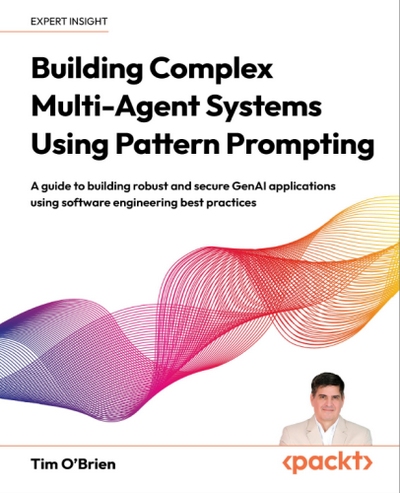
Tim O'Brien | Building Complex Multi-Agent Systems Using Pattern Prompting. A guide to building robust and secure GenAI applications using software engineering best practices (2026) [PDF] [EN]
1.0 MB · 1600×1600
Tim O'Brien | Building Complex Multi-Agent Systems Using Pattern Prompting. A guide to building robust and secure GenAI applications using software engineering best practices (2026) [PDF] Автор: Tim O'Brien
Издательство: Packt Publishing
ISBN: 978-1806114283, 978-1806114290
Жанр: Systems Architecture, Natural Language Processing, Cloud Computing, Artificial Intelligence
Язык: Английский
Формат: PDF
Качество: Изначально электронное (ebook)
Иллюстрации: Цветные и черно-белые
Описание:
Learn how to build GenAI applications using proven software engineering patterns instead of rapidly changing frameworks. This book helps engineers build secure, scalable agentic systems with familiar tools and practical, engineer-to-engineer architectural guidance.
You will connect GenAI concepts such as agentic workflows, embeddings, and vector databases to enterprise patterns, including components, adapters, and microarchitectures. Established GoF and enterprise design patterns help explain agentic behavior and system design, enabling you to reason about architecture rather than memorize tools. The book also shows you how to generate multi-agent and GenAI patterns as RabbitMQ configurations for scalable orchestration and communication.
Using language-agnostic examples and widely used messaging, orchestration, and data technologies, you will build production-ready systems that integrate with existing infrastructure without unnecessary complexity. You will also use our Topologos prompt to build, modify, and test deploy-ready multi-agent systems quickly while improving robustness and maintainability. By the end of this book, you will be able to design reliable GenAI systems, make informed architectural decisions, and adapt confidently as tools and frameworks evolve.
*Email sign-up and proof of purchase required
What you will learn
Build GenAI applications that are secure, reliable, and scalable
Apply enterprise patterns to architect reliable GenAI systems
Understand the core concepts behind LLMs needed for application development
Use practical engineering approaches for agentic architecture design
Generate RabbitMQ configurations for multi-agent GenAI systems
Build and test robust multi-agent systems using our Topologos prompt
Who this book is for
This book is written for experienced software engineers, architects, and technical leads who want to add GenAI to their toolbox without abandoning the engineering principles that define good software.
It assumes familiarity with basic programming and software development, but does not require prior experience with AI, machine learning, RabbitMQ, or Airbyte. All necessary concepts and tools are introduced in contexts. Table of Contents:
Introduction: Patterns, Abstractions, and the GenAI Landscape
Embeddings: The Language of AI
Building with GenAI: Parameters, Tuning, and Project Phases
Building Your First RAG App
Starting Your Data Migration Project
Ingesting Data Using Airbyte and Pinecone
Tips and Best Practices
Pattern-Guided Coding: Using Patterns as the Design Vocabulary for GenAI Systems Built on RabbitMQ
Implementing the ReAct Pattern Over RabbitMQ
The Future and Limitations of LLMs
Appendix A: Pattern Reference: GoF, Enterprise Integration, Reliability, and GenAI Microarchitecture Patterns
Appendix B: Topologos User Manual Скриншоты:
---->https://s01.pic4net.com/di-2JV71W.jpeg<----
---->https://s01.pic4net.com/di-075NNL.jpeg<----
---->https://s01.pic4net.com/di-BAOKTN.jpeg<----
---->https://s01.pic4net.com/di-IHO1KG.jpeg<----
Время раздачи: с 10 до 20 (минимум до появления первых 3-5 скачавших)
Патрик Виафоре | Надежный Python. Пишем чистый код, который удобно поддерживать (2023) [PDF, DJVU]
Современные проекты на языке Python непрерывно растут, развиваются и при этом неизбежно усложняются. Добиться надежности кода Python при сохранении гибкости, понятности и расширяемости приложений позволяет система типов, которая в данной книге подробно исследована в рамках парадигмы ООП. Особое внимание уделяется аннотированию и проверке типов, а также созданию пользовательских ( Читать дальше... )Жанр: Компьютерная литература, PythonИздательство: БХВ-ПетербургФормат: PDF, DJVUКачество: Изначально электронное (ebook), OCR

Патрик Виафоре | Надежный Python. Пишем чистый код, который удобно поддерживать (2023) [PDF, DJVU]
1.0 MB · 1600×1600
Патрик Виафоре | Надежный Python. Пишем чистый код, который удобно поддерживать (2023) [PDF, DJVU] Автор: Патрик Виафоре
Издательство: БХВ-Петербург
ISBN: 978-5-9775-1174-2
Жанр: Компьютерная литература, Python
Формат: PDF, DJVU
Качество: Изначально электронное (ebook), OCR
Иллюстрации: Цветные и черно-белые
Описание:
Современные проекты на языке Python непрерывно растут, развиваются и при этом неизбежно усложняются. Добиться надежности кода Python при сохранении гибкости, понятности и расширяемости приложений позволяет система типов, которая в данной книге подробно исследована в рамках парадигмы ООП. Особое внимание уделяется аннотированию и проверке типов, а также созданию пользовательских специализированных типов. Продвинутые главы книги посвящены вопросам тестирования, линтинга и обеспечения надежности программ на Python. Оглавление:
Введение 11
Глава 1. Введение в надежный Python 19
ЧАСТЬ I. АННОТАЦИИ ТИПОВ 37
Глава 2. Введение в типы Python 39
Глава 3. Аннотации типов 49
Глава 4. Ограничивающие типы 59
Глава 5. Коллекции 75
Глава 6. Настройка проверки типов 91
Глава 7. Внедрение проверки типов 106
ЧАСТЬ II. ОПРЕДЕЛЕНИЕ ВАШИХ СОБСТВЕННЫХ ТИПОВ 119
Глава 8. Пользовательские типы: перечисления 121
Глава 9. Пользовательские типы: классы данных 132
Глава 10. Пользовательские типы: классы 144
Глава 11. Определение своих интерфейсов 162
Глава 12. Создание подтипов 178
Глава 13. Протоколы 193
Глава 14. Проверки во время выполнения с помощью pydantic 204
ЧАСТЬ III. РАСШИРЯЕМЫЙ КОД 219
Глава 15. Расширяемость 221
Глава 16. Зависимости 231
Глава 17. Компонуемость 248
Глава 18. Событийно-ориентированная архитектура 263
Глава 19. Подключаемый код 274
ЧАСТЬ IV. ВАША СТРАХОВОЧНАЯ СЕТКА 285
Глава 20. Статический анализ 287
Глава 21. Стратегия тестирования 299
Глава 22. Приемочное тестирование 315
Глава 23. Тестирование на основе свойств 326
Глава 24. Мутационное тестирование 338
Об авторе 351
Об обложке 352 Скриншоты:
---->https://s01.pic4net.com/di-SC46SV.jpeg<----
---->https://s01.pic4net.com/di-N0ID8U.jpeg<----
---->https://s01.pic4net.com/di-FDW9K7.jpeg<----
---->https://s01.pic4net.com/di-1KY7TP.jpeg<----
Время раздачи: с 10 до 20 (минимум до появления первых 3-5 скачавших)
Гиниш Мадаппарамбат, Расс МакКендрик | Kubernetes. Полное руководство по развертыванию и управлению Kubernetes в облачных и локальных средах. Второе издание (2026) [PDF]
В новом издании описываются передовые методы безопасности и приемы бесперебойного развертывания и масштабирования, гарантирующие неизменную доступность сервисов. Получите навыки создания приложений, готовых к продакшену, обеспечьте безопасность сред разработки и станьте настоящим гуру в области защиты. К концу работы с этим исчерпывающим руководством вы будете обладать ( Читать дальше... )Жанр: Компьютерная литература, DevOps, KubernetesИздательство: Спринт БукФормат: PDFКачество: Изначально электронное (ebook)

Гиниш Мадаппарамбат, Расс МакКендрик | Kubernetes. Полное руководство по развертыванию и управлению Kubernetes в облачных и локальных средах. Второе издание (2026) [PDF]
1.0 MB · 1600×1600
Гиниш Мадаппарамбат, Расс МакКендрик | Kubernetes. Полное руководство по развертыванию и управлению Kubernetes в облачных и локальных средах. Второе издание (2026) [PDF] Автор: Гиниш Мадаппарамбат, Расс МакКендрик
Издательство: Спринт Бук
ISBN: 978-601-12-8674-9
Жанр: Компьютерная литература, DevOps, Kubernetes
Формат: PDF
Качество: Изначально электронное (ebook)
Иллюстрации: Черно-белые
Описание:
В новом издании описываются передовые методы безопасности и приемы бесперебойного развертывания и масштабирования, гарантирующие неизменную доступность сервисов. Получите навыки создания приложений, готовых к продакшену, обеспечьте безопасность сред разработки и станьте настоящим гуру в области защиты. К концу работы с этим исчерпывающим руководством вы будете обладать всеми необходимыми навыками и знаниями, чтобы оркестрировать свои контейнерные приложения с ювелирной точностью, добиваясь их максимальной производительности и масштабируемости. Оглавление:
Об авторах 21
О научных редакторах 22
Предисловие 24
Введение 26
Глава 1. Основы Kubernetes 34
Глава 2. Архитектура Kubernetes: от образов контейнеров к работающим подам .71
Глава 3. Установка первого кластера Kubernetes 115
Глава 4. Запуск контейнеров в Kubernetes 143
Глава 5. Использование многоконтейнерных подов и паттерны проектирования . 181
Глава 6. Пространства имен, квоты и лимиты для реализации мультитенантности в Kubernetes 218
Глава 7. Настройка подов с помощью объектов ConfigMap и Secret 248
Глава 8. Публикация подов с помощью сервисов 281
Глава 9. Постоянное хранилище в Kubernetes 326
Глава 10. Запуск рабочих нагрузок производственного уровня в Kubernetes 366
Глава 11. Использование объекта Deployment для управления рабочими нагрузками без cохранения состояния 384
Глава 12. Объект StatefulSet: развертывание приложений с сохранением состояния 420
Глава 13. Объект DaemonSet: запуск одного пода на каждом узле 457
Глава 14. Работа с Helm-чартами и операторами 474
Глава 15. Запуск кластера на платформе Google Cloud Platform (GCP) с помощью Google Kubernetes Engine (GKE) 515
Глава 16. Запуск кластера на платформе Amazon Web Services с помощью Amazon Elastic Kubernetes Service 537
Глава 17. Запуск кластера на платформе Microsoft Azure с помощью Azure Kubernetes Service 561
Глава 18. Безопасность в системе Kubernetes 587
Глава 19. Продвинутые методы планирования подов 641
Глава 20. Автоматическое масштабирование подов и узлов в Kubernetes 668
Глава 21. Продвинутые возможности Kubernetes 705 Скриншоты:
---->https://s01.pic4net.com/di-PGLB19.jpeg<----
---->https://s01.pic4net.com/di-K0L2VP.jpeg<----
---->https://s01.pic4net.com/di-DLY3HG.jpeg<----
---->https://s01.pic4net.com/di-07A73Q.jpeg<----
Время раздачи: с 10 до 20 (минимум до появления первых 3-5 скачавших)
Джон Хортон | Разработка Android-приложений с нуля. 3-е издание (2023) [PDF]
Доступно изложены основы программирования на Java для Android, включая объектно-ориентированное программирование. Описаны установка и настройка среды разработки Android Studio, создание функциональных пользовательских интерфейсов с помощью визуального редактора Android Studio. Раскрыты принципы материального дизайна. Рассмотрены компоновки CardView и ScrollView, ( Читать дальше... )Жанр: Java, ОС Android, Программирование, Программирование на Java, Продукты Google, Разработка мобильных приложений, Разработка приложенийПеревод: Игорь ДонченкоИздательство: БХВ-ПетербургФормат: PDFКачество: Изначально электронное (ebook)

Джон Хортон | Разработка Android-приложений с нуля. 3-е издание (2023) [PDF]
1.0 MB · 1600×1600
Джон Хортон | Разработка Android-приложений с нуля. 3-е издание (2023) [PDF] Автор: Джон Хортон
Перевод: Игорь Донченко
Издательство: БХВ-Петербург
Серия: С нуля
ISBN: 978-5-9775-6855-5
Жанр: Java, ОС Android, Программирование, Программирование на Java, Продукты Google, Разработка мобильных приложений, Разработка приложений
Формат: PDF
Качество: Изначально электронное (ebook)
Иллюстрации: Цветные и черно-белые
Описание:
Доступно изложены основы программирования на Java для Android, включая объектно-ориентированное программирование. Описаны установка и настройка среды разработки Android Studio, создание функциональных пользовательских интерфейсов с помощью визуального редактора Android Studio. Раскрыты принципы материального дизайна. Рассмотрены компоновки CardView и ScrollView, обработка касаний экрана, захват данных, использование в приложении звука и анимации, поддержка различных версий Android и нескольких языков интерфейса. Затронута тема хранения данных во встроенной базе данных SQLite. Показаны паттерны проектирования, используемые профессионалами для создания современных мобильных приложений. Оглавление:
Предисловие 17
Глава 1. Начало работы с Android и Java 24
Глава 2. Первое знакомство: Java, XML и визуальный редактор 48
Глава 3. Android Studio и структура проекта 77
Глава 4. Начало работы с компоновками и материальный дизайн 103
Глава 5. Красивые компоновки на основе CardView и ScrollView 136
Глава 6. Жизненный цикл Android 157
Глава 7. Переменные, операторы и выражения Java 173
Глава 8. Условия и циклы Java 190
Глава 9. Методы Java 210
Глава 10. Объектно-ориентированное программирование 227
Глава 11. Больше объектно-ориентированного программирования 239
Глава 12. Стек, куча и сборщик мусора 266
Глава 13. Анонимные классы. Оживление виджетов Android 280
Глава 14. Диалоговые окна Android 307
Глава 15. Массивы, словари Map и случайные числа 337
Глава 16. Адаптеры и классы Recycler 354
Глава 17. Сохранение и совместное использование данных 371
Глава 18. Локализация 392
Глава 19. Анимация и интерполяторы 400
Глава 20. Рисование и графика 422
Глава 21. Потоки. Разработка приложения для интерактивного рисования 441
Глава 22. Системы частиц и обработка касаний экрана 469
Глава 23. Поддержка различных версий Android, звуковые эффекты и виджет Spinner 488
Глава 24. Шаблоны проектирования, множество компоновок и фрагменты . 503
Глава 25. Создание приложения простой галереи изображений 526
Глава 26. Расширенный пользовательский интерфейс с Navigation Drawer и Fragment 534
Глава 27. Базы данных Android 551
Глава 28. Краткое напутствие перед расставанием 568
Предметный указатель 574 Скриншоты:
---->https://s01.pic4net.com/di-PT4HJ5.jpeg<----
---->https://s01.pic4net.com/di-SM9FCZ.jpeg<----
---->https://s01.pic4net.com/di-IQTO68.jpeg<----
---->https://s01.pic4net.com/di-PJRR2G.jpeg<----
Время раздачи: с 10 до 20 (минимум до появления первых 3-5 скачавших)
Alex Rodriguez | RESTful API Design Principles. A practical guide to the architecture of the web (2026) [EPUB] [EN]
As a vast network of interconnected devices on the web sets the stage for the future of human cognition, RESTful APIs operate quietly behind the scenes. Representational State Transfer (REST) defines the architectural style of the web to produce distributed, loosely coupled systems that enable and extend this network.
Highly recommended for software architects and ( Читать дальше... )Жанр: Programing Languages & Tools, Web Development & Design Programming, Tech Culture & Computer Literacy, Computer AlgorithmsЯзык: АнглийскийИздательство: BPB PublicationsФормат: EPUBКачество: Изначально электронное (ebook)
Alex Rodriguez | RESTful API Design Principles. A practical guide to the architecture of the web (2026) [EPUB] [EN]
1.0 MB · 1600×1600
Alex Rodriguez | RESTful API Design Principles. A practical guide to the architecture of the web (2026) [EPUB] Автор: Alex Rodriguez
Издательство: BPB Publications
ISBN: 978-93-65891-409
Жанр: Programing Languages ; Tools, Web Development ; Design Programming, Tech Culture ; Computer Literacy, Computer Algorithms
Язык: Английский
Формат: EPUB
Качество: Изначально электронное (ebook)
Иллюстрации: Черно-белые
Описание:
As a vast network of interconnected devices on the web sets the stage for the future of human cognition, RESTful APIs operate quietly behind the scenes. Representational State Transfer (REST) defines the architectural style of the web to produce distributed, loosely coupled systems that enable and extend this network.
Highly recommended for software architects and technical leaders interested in core philosophy, this book is not just another technical manual. Readers move beyond basic API endpoints to engage with the technical rationale in REST's constraints: client-server, stateless, cacheable, layered, uniform interface, and code on demand. The author examines interactions between the building blocks of the web to explain the why behind these architectural elements, not just the how. For students, engineers, or software developers actively working on REST web services, this book invites you to think like an architect. It treats API design as a serious discipline of software architecture, based on first principles. By the end, readers gain the expertise needed to solve the most complex API design problems through a comprehensive skill set grounded in the timeless architecture of the web itself. This book provides an essential foundation to create APIs that stand the test of time.
What you will learn
How and why REST became so popular.
Principle of addressability, a close look at the API surface.
Understanding HTTP methods intentionally.
Improving resources step-by-step.
Advantages of self-guided systems.
Using layers to protect REST APIs from attacks.
Architectural strategies that win the future.
Who this book is for
This book is for aspiring and experienced software architects, engineers, and API designers with a working background in web development and HTTP who wish to master the principles of RESTful API design. Table of Contents
1. Breaking Points
2. Resource Identification
3. Resource Manipulation
4. Resource Representation
5. Resource State Management
6. API Security
7. Performance and Scale
8. Further Readings Скриншоты:
---->https://s01.pic4net.com/di-KLYCFK.jpeg<----
---->https://s01.pic4net.com/di-OJSJQX.jpeg<----
---->https://s01.pic4net.com/di-J3VBD9.jpeg<----
---->https://s01.pic4net.com/di-SSF74O.jpeg<----
Время раздачи: с 10 до 20 (минимум до появления первых 3-5 скачавших)
Nothing in this category yet.